
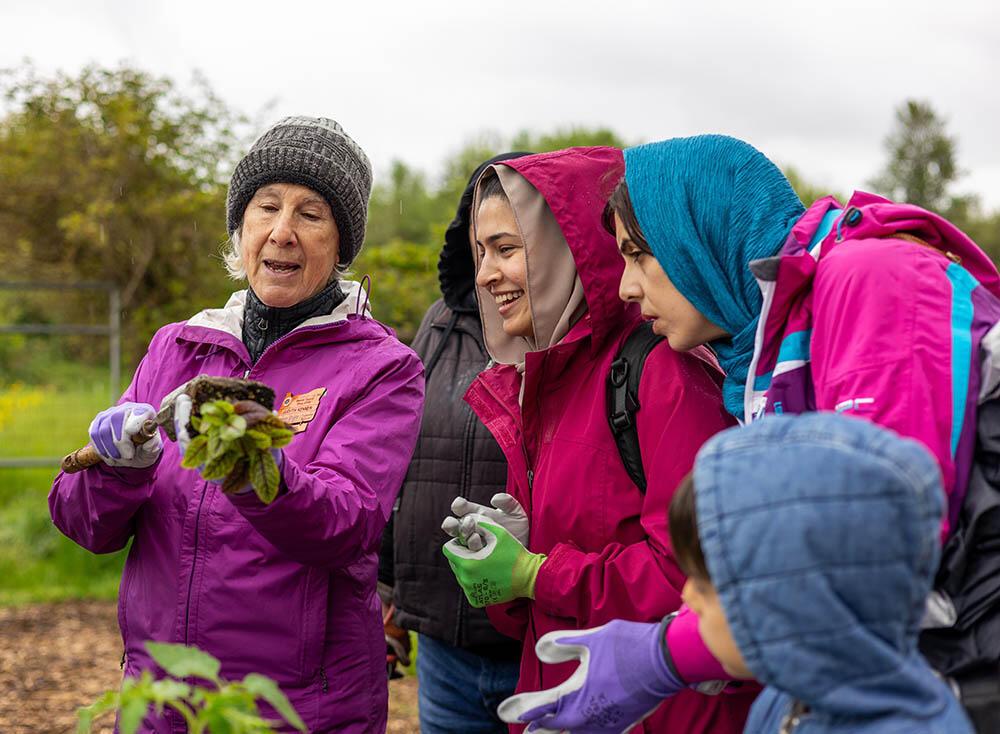
Welcome! This toolkit gives you the information and resources you need to create a successful farmer network in your county, region or state. It is intended for farmers, Extension agents, community organizers and other agricultural professionals.
Introduction
A farmer network — often meeting as a discussion group, gathering, or conference — is a way for farmers to exchange information, socialize, learn and connect with peers on a regular, ongoing basis. What is most important about a farmer network and sets it apart from, for example, traditional Extension-based classes, is that the farmers decide what they want to learn and create together, and often farmers are viewed as the “experts.” Through the network, farmers can also organize subgroups based on their interests, such as organic farming, women farmers or specific commodities.
Why is a farmer network important?
A farmer network is important because it:
- Builds community by creating new friendships and business partnerships and by deepening existing ones.
- Provides education and mentoring opportunities.
- Can target specific audiences with shared interests and concerns.
- Gives farmers a venue for peer-to-peer discussion, which often results in innovative production and marketing strategies.
- Provides an effective way for agricultural professionals to reach and increase the success of sustainable agriculture producers.
Data suggest that when farmers convene, new opportunities arise for increased economic viability, improved quality of life and greater community interaction.
What is the history of this toolkit?
In 2007–2008, the authors of this toolkit spearheaded two women’s agricultural networks in Oregon, the League of Women Farmers and the Willamette Women’s Farm Network. Network members participate in regularly scheduled events, which have included farm tours, book club meetings, film screenings, skill-building sessions, potlucks, retreats and production and business classes. This toolkit is based on the experiences of those networks.
How is this toolkit organized?
This toolkit is divided into two parts: an instruction guide and a toolbox. The instruction guide is organized around eight topics, designed to help you establish, promote and manage a successful farmer network:
- Getting your network started
- Planning your program
- Surveying farmers
- Choosing an organizational structure
- Communicating with your network
- Facilitating network meetings
- Maintaining your network
- Moving your network into the future
The toolbox includes resources — tips, examples and worksheets — to support your efforts. Throughout the instruction guide a plus icon (+) will direct you to relevant resources in the toolbox.
Getting your network started
To start your network, you need to identify your target audience and define the network's mission. Once you have recruited members, it is important to focus on how to maintain their participation. The following outlines key steps in launching a successful farmer network.
Identify your target audience
In the early planning stages, determine the farmer populations you are interested in recruiting as members.
Two important considerations are whether the network will target a specific group of farmers for a specific purpose (such as beginning farmers, veteran farmers, mushroom growers or heritage grain growers) or a broader population of farmers.

Keep in mind that a more broadly defined network might strengthen the knowledge base and provide a greater breadth of learning opportunities, while a network for a specific group of farmers might provide commonality and highly specific learning useful to that group
You can begin the process of identifying your target audience by asking what you want your network to achieve.
For example, will it foster relationships between farmers in a local region? Provide skill-building and educational opportunities? Serve as a vehicle for cooperative marketing? Act as a support system for new farmers?
Create a mission statement
An effective mission statement clearly articulates the network’s purpose. If you are unsure what your network’s mission should be, get help by convening a focus group of farmers. Invite a group of interested farmers to brainstorm about your network. Introduce the concept of a farmer network and lead a discussion based on three or four questions you’ve prepared. For example, ask the group: “What agricultural skills and knowledge would you like more classes on?” Or, “What would be your primary interest in participating in a farmer network?” Focus group sessions last typically 60 minutes.
Set the geographic area of the network
When considering the geographic boundaries for your network, factor in driving time, road accessibility, climate differences, types of farm production systems and meeting frequency. If the main goal is to develop a network of farmers with diverse enterprises and experience levels, you may need to define a broad geographic area to include a diverse membership. Keep in mind that the larger the area, the more creative you may need to be in communicating with and assembling members. Alternatively, you may choose to convene your network virtually, which removes barriers that a place-based network often has.
Recruit members
Once you have identified who your network will target and what it has to offer area farmers, you are ready to begin recruiting members. Some key considerations in your recruitment efforts are:
Timing
Try to avoid busy seasons when potential members are consumed with other activities. Instead, plan to recruit farmers when they feel that the network is a benefit and not just another commitment. Schedule the first few network events prior to the start of the busy season so the network can gain some momentum.
Coordinate your recruitment efforts with other outreach activities. For example, if the farmer population you hope to attract will be attending another organization’s annual meeting, ask for a few minutes on the agenda to talk about your network and its benefits.
Materials
Prepare interesting and eye-catching recruitment materials that are easy to reproduce. Some useful outlets for distributing materials are:
- Newsletter or newspaper articles
- Press releases
- Brochures or fliers
- Websites
- Social media
Methods
Tailor your recruitment method to your target audience.
For broad recruitment, tap into:
- Advertisements or articles in the local or regional area newspapers
- Listservs, websites, social media or partner organizations
For targeted recruitment:
- Identify existing farmer groups.
- Encourage engaged farmers to share with others. Have a presence at marketing venues or specific meetings and conferences.
- Social media.
- Use a specific mailing or email list.
To create a mailing list, try to access:
- Membership lists from partnering organizations
- Distribution information from market managers
- County tax databases
As you recruit new members, consider asking them to sign release forms to:
- Share contact information among network members. This can be especially useful if you are trying to organize carpooling to an event.
- Have their photo taken at events. Photographing or videoing classes and workshops is an important part of keeping records for your network. Photos or videos can also be shared on online social networking sites.
Develop a strategy for maintaining members
Once you have recruited members and the network has begun to meet, consider setting up an advisory committee comprised of a few active members.
An advisory committee can help your network maintain its focus and support your leadership.
Plan an appropriate method to keep track of your membership’s contact information as they sign up to participate in the network. Consider sharing this information through a network directory.
Be aware that people may choose different levels of membership involvement. For example, if your network communicates through an email listserv or social media, expect that some members may participate by following online activity instead of attending meetings or activities. Periodically reassess members’ needs to more effectively plan network activities and maintain membership.
Planning your program
Now that you have identified the purpose of your network and recruited members, the fun part begins! Start by brainstorming a list of workshop and meeting topics that are exciting and relevant to your members. The following is a list of potential topic ideas, organized by category.
There are an infinite number of topics to cover, so be creative, solicit ideas from members or through needs assessment, and keep your ear to the ground for any new, hot topics in the world of agriculture that are relevant to your audience.
Skill-building sessions
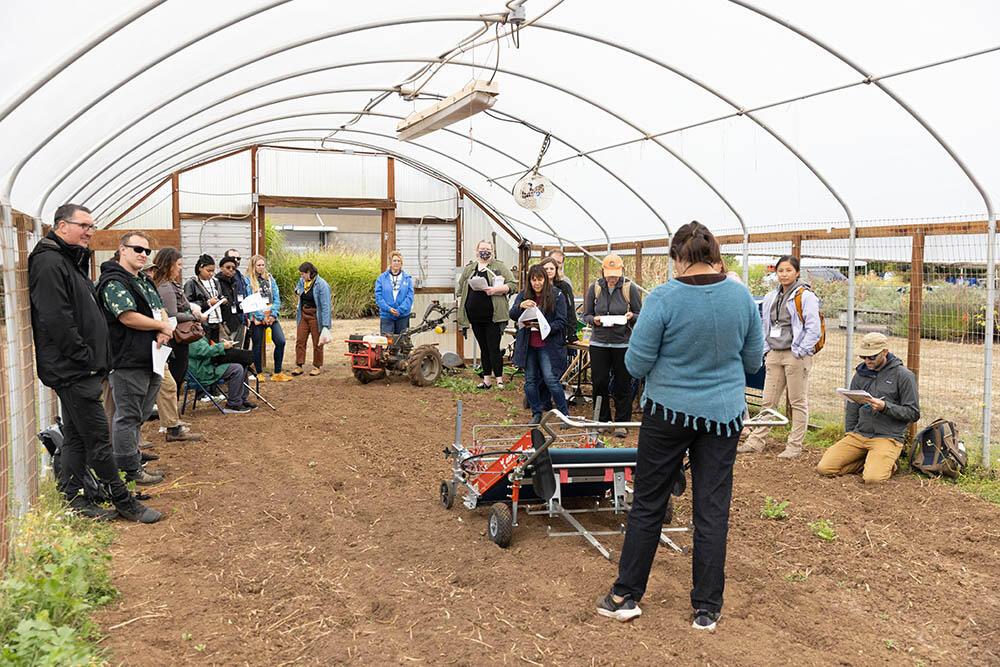
When organizing a skill-building session, pay careful attention to the student-teacher ratio. A good ratio for skill-building sessions is 10:1 or less. Hire a teacher who is both highly skilled and a good instructor. Make sure to have participants sign a waiver if they are using potentially dangerous equipment. Consult your university, organization or landowner regarding liability insurance.
Skill-building classes are often most effective when they focus on a specific project from start to finish. Examples include building a chicken coop or welding a gate. Ask a network member whether they are willing to host the session on their farm and cover some of the project materials.
Possible skill-building topics include:
- Carpentry for farmers
- Welding for farmers
- Fence building and repair
- Tree-pruning
- Tractor use or maintenance
- Tractor implement use
- Irrigation setup and repair
Production classes or workshops
These meetings can be hosted either on a farm or in a classroom. If they are held on a farm, set aside 30 to 60 minutes for a farm tour.
You may want to invite an agricultural professional or a specialist to help teach production classes or workshops. The agricultural professional can provide a formal structure for the class, with a presentation and/or handouts and a list of resources. (Note: If the topic includes pesticides, even organic pesticides, make sure the speaker has the appropriate license and endorsements.) Once the agricultural professional has given an overview of the topic, you can invite one or two farmers with experience in this area of production to discuss their operations.
Possible topics include:
- Beekeeping
- Pasture management
- Introduction to raising poultry
- Small-scale orchards
- Seed-saving
- Berry production
- Organic vegetable production
- Season extension
- Integrated pest management
Marketing/business classes or workshops
These meetings can be set up in a similar way to the production classes or workshops, by inviting an agricultural professional and one or more farmers as your speakers.
Possible topics include:
- Value-added products
- Managing cash flow
- Online marketing
- Finding niche markets
- Financial record-keeping
- Conducting market research
- Succession planning
- Cooperative marketing
Discussions
You can also set up meetings to share ideas on certain topics. These meetings do not require an invited speaker but will need some facilitation.
Possible topics include:
- Balancing farming and family
- Rural living
- Preserving surplus food
- Politics of agriculture
- Negotiating with neighbors
Annual meetings
You may want to have a general meeting once a year to bring together as many of your network members as possible. Make sure to give members plenty of notice and schedule the meeting at an optimal time. The winter months are often the best time for farmers to meet. Annual meetings should be fun and festive, and should also provide time for an open discussion about the previous year’s network events and future goals. Have a dry-erase board or butcher-block paper to record brainstorming ideas for planning the upcoming year.
Social/cultural gatherings
Network meetings are also an opportunity for farmers to socialize.
Consider organizing:
- Film screenings of agriculture-related movies
- Agricultural book club
- Farm storytelling night
- End of harvest celebration and potluck
Surveying farmers
Surveys are a useful tool for gathering information on how to structure your farmer network and evaluating its progress. Data measuring the impacts of your farmer network can be reported in professional journals or grant proposals.
Surveys collect qualitative, quantitative, or both types of information. Qualitative questions are open-ended and solicit descriptive, subjective answers from participants.
Quantitative questions are yes or no questions, or ask participants to rate an activity or statement using a scale.
Surveys can capture specific types of information, such as:
- Best times/days of the week for people to meet
- Frequency with which people would like to meet
- Topics people would like covered during meetings
- Skills or information learned during trainings
- Business relationships that develop out of the network
Surveys can be administered in writing (using a paper form), verbally (either in person or over the phone), through e-mails, or through an online survey program. An advantage of online survey programs is that they can generate charts and graphs once the information has been gathered. However, a potential challenge is getting people to take the time to fill out an online survey. For online surveys, you may need to send multiple reminders to achieve good participation.
Choosing an organizational structure
Every organization has an inherent structure, whether or not the members of the group have chosen it consciously. Groups tend to be more successful if members have thought about the type of structure that best matches their goals and attributes. Most farmer networks have a simple organizational structure.
Identifying an organizational structure is critical to a successful farmer network. An established structure provides members a road map for how to move forward with decisions and how to settle differences of opinion. A structure also gives network members a sense of shared vision and values by providing meaning and identity to individuals within the group and to the group as a whole.
Core elements
Organizational structures have three core elements:
Type of governance. The governing person or group makes decisions for the organization. In a farmer network, this could be the coordinator or a small group of committed members.
Rules by which the organization operates. Informal and formal rules should be clear to all members. Informal rules often help describe the organization’s culture (for example, most events are also potlucks). Formal rules define how the organization operates. Formal rules to consider for your farmer network are:
- Membership dues
- Minimum requirements for joining (e.g., commercial producer in business)
- Minimum requirements for being a member in good standing
Distribution of work. Developing and maintaining a functioning farmer network requires time and effort. As the founder and/or facilitator of a farmer network, consider what work you will take on and what you will delegate. Organizational work includes:
- Recruiting members
- Scheduling and announcing meetings
- Surveying members to assess areas of interest
- Facilitating meetings
- Contacting speakers or instructors
- Maintaining membership list
- Bookkeeping
- Developing and maintaining a vision and/or mission statement
- Communicating with membership
Common roles
While every group is different, most organizations share some common administrative roles and responsibilities. This list describes a wide variety of administrative roles that can be part of an organization. Farmer networks typically have a simple organizational structure and use only two or three of these roles. As you read through the list, consider which ones would best serve your network:
Steering committee is the group of people who start the organization. This group often will create the initial plan and vision. Steering committees usually dissolve once the organization is established. Steering committees typically consist of five to 11 members.
Coordinating council (also referred to as the executive committee or the executive council) is made up of staff members and co-chairs of other councils. The coordinating council oversees the organization's overall objectives and strategies, and responds to input from individuals or subcommittees.
Executive director, network coordinator, program director or president often takes the place of the coordinating council or serves as its head. This is sometimes a paid position with responsibilities such as coordinating, managing, inspiring, supervising, and supporting the work of other members of the organization. In the case of a farmer network, this may be an agricultural professional who is paid to facilitate the organization.
Task forces are made up of members who work together on topic-specific objectives. These groups integrate their ideas with the work being done in the greater community outside of the network.
Support committees are groups that help ensure that the other committees have the resources and opportunities necessary to realize their vision. For example, a farmer network may have a support committee to facilitate media relations, conduct fundraising or maintain financial records.
Board of directors or board of trustees provides overall direction, advice, and resources to members of the support committees. Board members are often people directly affected by the issue or leaders in the greater community.
Grantmakers are private companies and foundations, or local, county, state or federal government organizations that provide funds for organizations. Grants specific to farmer networks include funding to support risk management education for new and beginning farmers, and for socially disadvantaged farmers and ranchers.
Support organizations give your organization the technical assistance it needs. University research groups and private organizations often fill this role.
Partner organizations are other groups working on some of the same issues as your organization. With online networking, partnerships may also include groups around the country and the world.
Networks often start with an individual who recruits a small group to serve as the steering committee. Once a core group has been established, network members may elect a board or create subcommittees to tackle certain responsibilities. Members may rely on an agricultural professional to coordinate and lead their farmer network; however, leadership among members creates greater investment in and ownership of the network.
Communicating with your network
As you think about organizing a farmer network, consider the many different options for communicating with and recruiting potential members. In general, use multiple communication tools to share information with your network members.
The following list describes the advantages and disadvantages of various communication tools.
Phone calls and texts
If you have time, initial phone calls or text messages offer opportunities to make personal connections with members or potential members. Although time-consuming, phone interactions and personal texts can result in members having a better understanding of and commitment to a network.
Advantages of phone calls and texts:
- One-on-one personal contact is a more effective way of engaging prospective members during the recruitment phase and reconnecting with individuals whose memberships have lapsed.
- Phone calls with members can result in longer conversations that elicit useful information.
- Texts can be personalized and a text conversation can happen at the convenience of both the organizer and the member.
- You know why an individual hasn’t been able to attend the last few meetings or provide feedback on a recent skill-building session.
Disadvantages of phone calls and texts:
- Many people do not answer their phones.
- People often lose track of texts.
- Calling or texting each individual member of a network can be time-consuming.
- Calling through a list of members often results in leaving numerous phone messages, which can be frustrating.
Listservs
Listservs are electronic mailing lists. A listserv works well when you want to send a single e-mail message to many recipients.
Guidelines for using a listserv:
- Make sure your post is addressed to the correct recipients.
- Be aware that sometimes a person will inadvertently send everyone a message that was only intended for one person.
- Discourage members from using “reply all” when responding to an e-mail.
- Be aware that the high volume of e-mails received via the listserv may frustrate some of your members.
- Edit your email messages. Make sure your grammar, punctuation, spelling and sentence structure are correct.
Advantages of listservs:
- One message can be shared with a large audience.
- It can be a useful platform for exchanging ideas.
Disadvantages of listservs:
- Messages that are meant for one person may be inadvertently sent to the entire list.
- Unsubscribing can be difficult, depending on the listserv.
Email newsletters
Email marketing companies provide stylish, easy-to-use templates and maintain lists of your email contacts. Services (from companies such as Vertical Response, Constant Contact, iContact and MailChimp) range from a simple notification of an upcoming event to a comprehensive newsletter with articles, links and photographs. Depending on the company, the cost of email marketing is based on either a monthly or pay-per-use fee.
Advantages of email newsletters:
- Email newsletters are attractive and tend to be easier to read. Your members are more likely to forward e-mail newsletters formatted with color and photos to friends, neighbors and potential new members.
- Once you send out an email newsletter, you can monitor how many of your members opened the email and how many clicked on embedded links. This feature allows you to evaluate how members are engaging with the e-mails you send.
- Many email marketing companies also provide technical support.
Disadvantages of email newsletters:
- Many people do not check email regularly or may delete or overlook emails that are not personal.
- While email newsletters may increase the likelihood of members opening and reading e-mail correspondence, they can also be time-consuming to create and edit.
- Email newsletters cost money, whereas emails and listservs are free.
- Bandwidth issues in rural areas with dial-up access can make downloading all but text-only newsletters slow and frustrating.
Mailing postcards
Mailing postcards within a specific geographical area can be an effective way to target potential network members. It’s easy to get mailing lists from the county assessor’s office, and receiving a postcard in the mail is unusual these days. Ironically, receiving a piece of “snail mail” can seem novel and may garner more attention than an email or text. Create an eye-catching postcard that clearly describes the network's intention and provides information about the upcoming meeting.
Advantages of mailings:
- Most groups and organizations use e-mail more than regular mail, so a letter may have a greater chance of catching someone’s attention.
- Letters are more formal than e-mails or phone calls and may be more appropriate as an initial invitation to join a network or attend an annual meeting.
Disadvantages of mailings:
- Printing and postage can be expensive.
- Some people tend to throw away mail that is not clearly a personal letter or a bill.
Instant messaging apps
Apps like WhatsApp and Signal can be an effective way to reach a group of people in a timely manner.
Advantages of instant messaging apps:
- Avoids many of the typical problems with groups texts in terms of caps on numbers of members and different types of phones (iPhones versus Androids).
- Easy to use
- Allows for real-time communication and multimedia sharing
Disadvantages of instant messaging apps:
- Compatibility issues: Not all messaging apps are compatible with every device or operating system, which can limit communication options.
- Dependency on Internet: Instant messaging apps require a stable internet connection, which can be a limitation in areas with poor connectivity.
Social media
Online social networks are web-based communities where members can socialize online with friends or professional colleagues. These are friend-of-a-friend networks, meaning that when you join, you note who else on the network is your “friend,” and then others can see these associations. These platforms are designed for network members to frequently update one another. The most popular social networking sites in the United States are Facebook and Instagram. LinkedIn is an example of a professional social network.
If you are uncertain about or overwhelmed by online networking, try it on your own. Ask other farmer network members how they work and how other organizations use them. It is highly likely that some of your members are already using OSNs for their farm businesses. Ask your members what OSNs they currently use, and research the demographics of various OSN sites you’re considering. For example, some OSNs target younger audiences, while others target more professional populations.
Advantages of social media:
- There are usually no fees to join a social networking site.
- You can create a unique group profile or fan page for the farmer network. Members and other network supporters can link to the organization as a “friend” or “like” the organization, organically extending the organization’s visibility.
- Once the farmer network has a profile, you can use the page as an outreach tool to attract new members, encourage existing members to attend events and gatherings, and raise awareness of your network’s function among partners and other interested parties.
- Members of the network can post questions and responses in discussion areas on various platforms as applicable. This discussion increases visibility for the network and establishes its connection to a specific topic or issue.
- Members can share photos with each other.
- Members can post new information about related, relevant topics.
Disadvantages of social media:
- Many people avoid social media platforms or use them infrequently.
- Network members may want to keep their social networking activities separate from their professional and volunteering activities.
- Members may be asked to link to others as “friends” on social networking sites, but they may not want to do so with everyone. Encourage members to respect that some people may want to keep their social media activities separate from their business or organizational relationships.
- Many social media platforms are not accessible for people who have certain disabilities and use assistive technologies.
Facilitating network meetings
Meeting management
Marya Axner writes in The Community Toolbox: “The more you know about how to shape and run a good learning and planning process, the more your members will feel empowered about their own ideas and participation, stay invested in your organization, and take on responsibility and ownership, and the better your meetings will be.” To create an environment where members feel safe and confident to share their ideas and work together, you need to develop some essential facilitation skills.
As the facilitator of a network meeting or gathering, your job is to draw out members’ opinions and ideas, while remaining objective and focused on the process. Facilitators should be aware of the meeting's goals and the objectives of the attendees. A good facilitator includes all participants and leads people in a democratic discussion and decision-making process, while moving the meeting forward. The ability to diffuse conflict and manage people with differing viewpoints in a positive and productive way is an invaluable skill.
An effective facilitator:
- Is organized.
- Communicates well (summarizes key actions, checks with individuals to ensure they feel comfortable, allows for constructive conversation).
- Remains alert, flexible and sensitive to group and individual needs.
- Maintains a positive attitude. (For example, they encourage participation and comments from all individuals.)
- Is an active listener.
- Encourages group and individual discussion.
- Clearly identifies logistics, such as meeting times, places, agendas, etc.
- Is process-oriented and effective at managing group dynamics
As a facilitator organizing a meeting, consider three important details: environment, logistics and ground rules.
Environment
The environment is where the meeting is held. Aspects of the meeting location, including size and lighting, will set the tone for the participants’ experience. When choosing a location, think about what is comfortable and familiar.
Accessibility is also important, including being able to accommodate participants with disabilities and keeping the location close to where most members live.
When deciding on room size, try to create an intimate atmosphere based on the group’s size. If you opt for an outdoor meeting, make sure that participants will be comfortable.
Meeting logistics
Think about how you set up the room and arrange chairs to encourage conversation. What sort of tools will you need? Will you have food (in farmer groups, potlucks are always popular)? Will you take attendance? Consider the following checklist for meeting supplies:
- Sign-in sheet
- Evaluation form
- Utensils, plates, cups
- Easels with pens
- Dry-erase board and markers
- Laptop and projector
Ground rules
Before facilitating any group process, it is important to establish ground rules. You may choose to use Robert’s Rules of Order or adopt other rules that work for your group. In one of the first gatherings of your farmer network, you may choose to use a group process to develop common ground rules, such as:
- Only one person may speak at a time.
- Members should raise their hands if they have something to say.
- Members should maintain respectful communication at all times by listening to what others are saying and avoiding any derision of their ideas.
- Members should arrive at meetings on time and return from breaks in a timely way (especially if it’s a long meeting).
Common meeting places
Choose an appropriate venue for your meeting. Consider these common meeting locations:
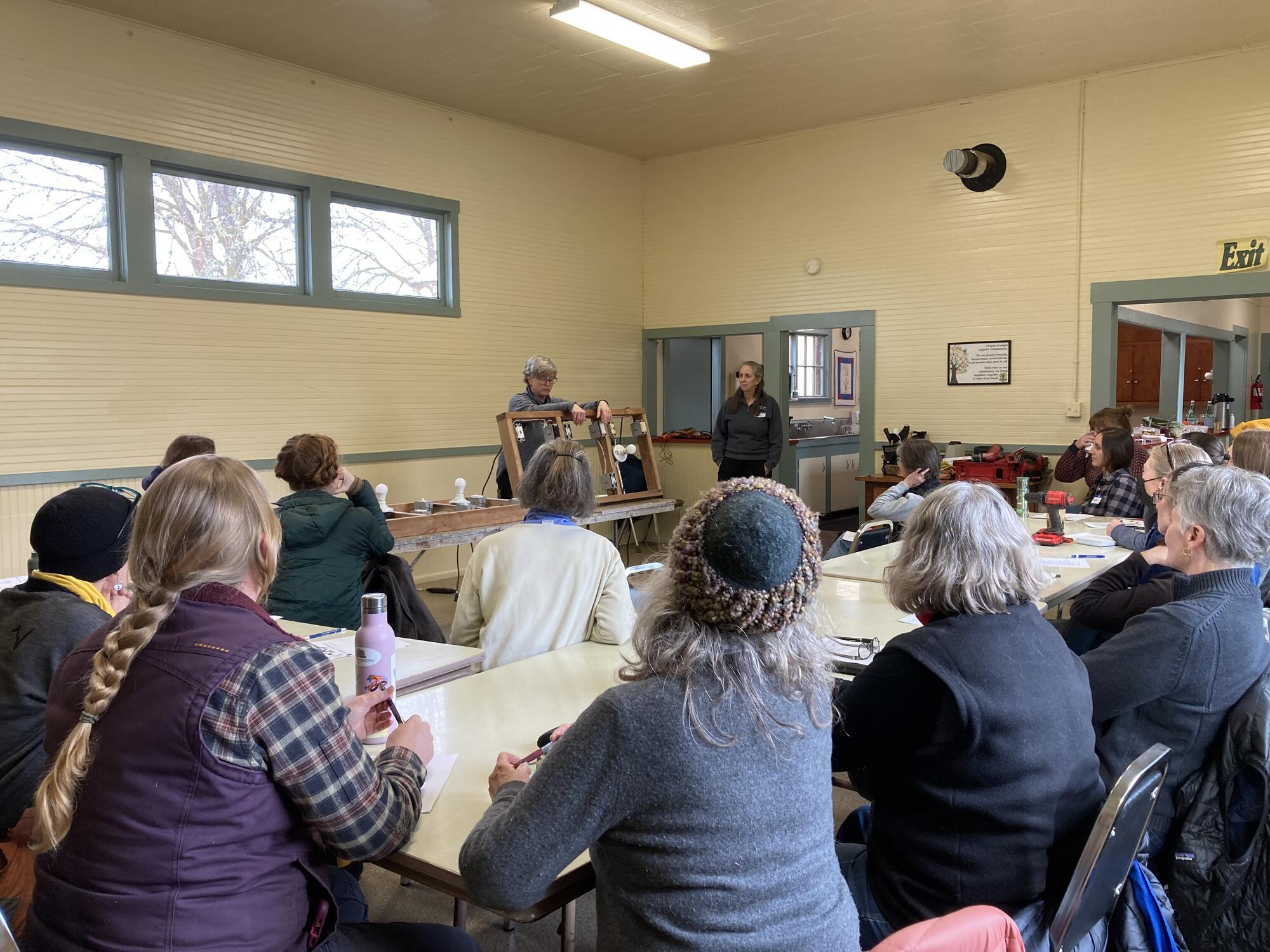
- Granges
- Extension offices
- Community centers
- Farms
- Libraries
Running meetings
The structure of your meetings will depend on the goals and content of the particular meeting. Examples of farmer network meetings include:
- Presentations by invited speakers or panel discussions
- Topical discussions
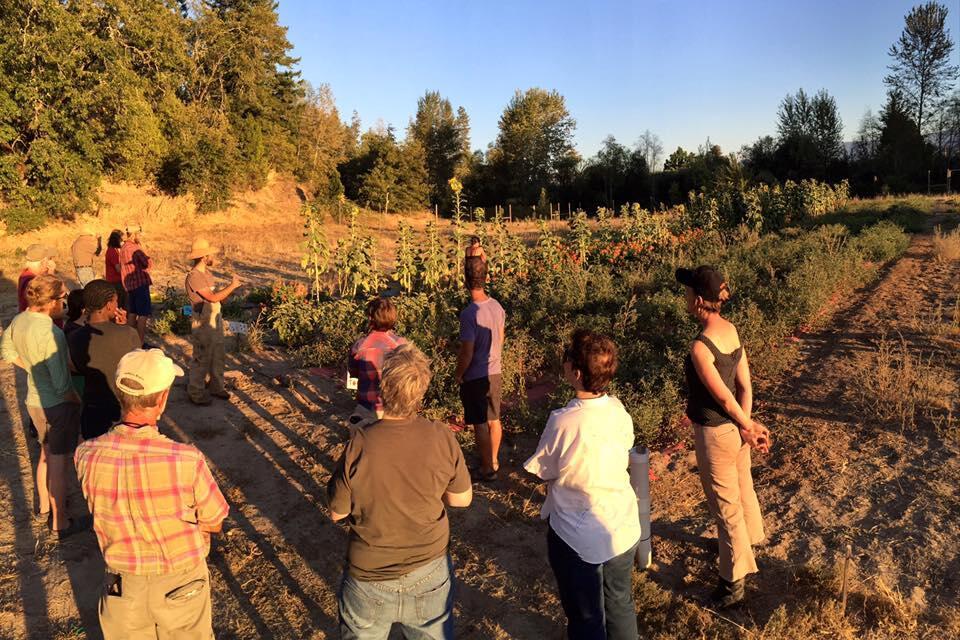
- Farm tours
- Informal networking events
- Brainstorming meetings to generate ideas for future gatherings or classes
- Business meetings to discuss network vision or structure
- Social events, like annual picnics or holiday parties
As a facilitator, it is your task to start and end meetings on time. Begin the meeting with an enthusiastic welcome and have members introduce themselves. You may want to set the length of introductions based on the number of participants. For example, if you have more than 30 participants, encourage people to limit their introductions to their name, farm name and location. For groups of 10 members or fewer, there may be enough time for people to briefly describe their farm businesses and mention their interest in attending.
You can also include an icebreaker activity to help participants become comfortable in a group meeting setting.
For all meetings, establish a clear agenda with objectives. Sticking to the agenda will help meetings run smoothly. Assign a member to take notes or record on butcher paper or a dry-erase board the ideas, outcomes, objectives, and commitments that are discussed. To stay focused on the process, as facilitator, you should not also serve as a meeting recorder. Ensure that you cover all agenda items and, at the end of the meeting, review the commitments made by members. Conclude the meeting with a reminder about the next gathering time and place, and any announcements.
Online meetings
Many meetings and gatherings are being held in online spaces like Zoom and Teams. Online meetings address some key challenges of assembling groups of people — namely, physical geography and the time and energy it takes to commute to and from meetings. Online meetings allow people to log on just as a meeting begins from the comfort of their own homes or work environments. Online meetings also encourage the formation of farmer networks that may include membership from across the country or even around the world. (Disparate times zones can make setting meeting times more challenging.)
Facilitators of online meetings have some special considerations to take into account. These include:
Connectivity and audio
- Unstable internet: Can cause audio/video lag or disconnections. Encourage participants to use wired connections or sit close to their router.
- Bandwidth management: Ask participants to turn off video if bandwidth is low, or use Zoom’s “low data mode.”
- Echo or feedback: Often caused by multiple devices in the same room or poor microphone placement.
Video problems
- Camera not working: Participants may need to check permissions or restart Zoom.
- Poor lighting or framing: Encourage good lighting and camera positioning for better engagement.
- Virtual background glitches: These can cause visual artifacts if lighting or hardware is inadequate.
Screen sharing
- Permissions: Hosts and co-hosts should enable screen sharing for participants as needed.
- Lag or delay: Especially with video playback. Optimize for video when sharing.
- Privacy risks: Remind users to close sensitive documents or notifications before sharing.
Breakout rooms
- Confusion or disconnection: Participants may not know how to join or return from rooms.
- Lost participants: Keep an eye on who’s in which room and be ready to assist.
- Broadcasting messages: Use the broadcast feature to communicate with all rooms.
Security and access
- Zoom bombing: Use waiting rooms, passcodes and authenticated users to prevent disruptions.
- Screen share control: Limit screen sharing to hosts unless needed.
- Lock meeting: Once all participants have joined, consider locking the meeting.
Recording and privacy
- Consent: Inform participants if the meeting is being recorded.
- Storage: Know where recordings are saved (local vs. cloud) and manage access securely.
Platform updates
- Outdated Zoom clients: Can cause compatibility issues. Encourage participants to update Zoom regularly.
- New features: Stay informed about new tools (AI Companion, enhanced whiteboards) that could enhance facilitation.
Additionally, successful facilitators are aware of:
Engagement
- Interactive tools: Use polls, chat, whiteboards or breakout rooms to keep participants involved.
- Check-ins: Start with a quick icebreaker or check-in to build rapport.
- Encourage participation by Inviting input from quieter participants and managing dominant voices.
Accessibility and inclusion
- Time zones: Schedule meetings at times that are reasonable for all participants.
- Language and clarity: Speak clearly, avoid jargon and provide written summaries when possible.
- Accessibility features: Enable captions, provide materials in advance and consider diverse needs.
Technical backup plans
- Plan B: Know what to do if the platform fails (switch to phone, for example, or another tool).
- Support contact: Have a tech support person or contact ready if issues arise.
Farm tours, speaker presentations and panel discussions
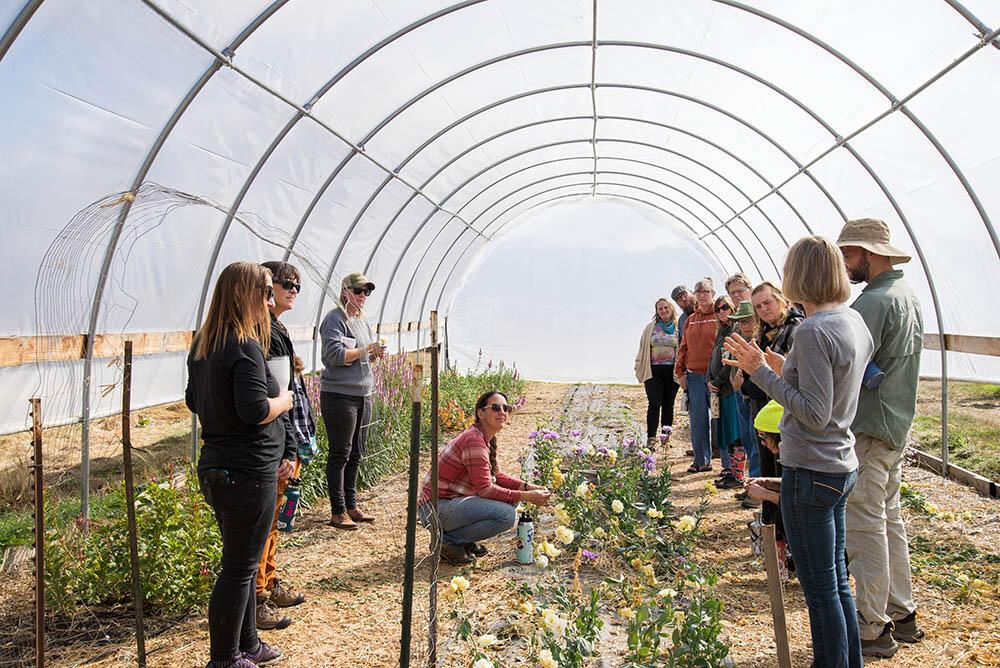
You can help keep the speakers or farm tour hosts on topic and following the schedule. Share the farm tour planning tool with farm tour hosts to help them prepare for your members’ visit. Encourage discussion among participants and invited guest or farm tour hosts.
Ask open-ended questions, if group members do not ask them, to elicit essential information and support discussion. The structure of these types of gatherings will depend on the content being delivered and your style and level of facilitation expertise.
In preparation for on-farm events, make sure to set aside time to plan with your host. You will want to discuss logistics such as parking, setup, expectations, concerns, and your roles and responsibilities during the visit. Will you need portable sanitary stations and handwashing stations? How can you limit negative impact on the host’s property? Hosting an event takes time and energy, so be sensitive to the needs of your host and express gratitude for his or her efforts.
Consider ways to make the farm tours accessible to all people, which may include accessible parking or wide paths for wheelchairs.
Topical discussions and informal networking events often have an informal structure. During group discussions, you can help facilitate the conversation by preparing a list of thought-provoking questions beforehand and posing them to the group if the conversation begins to wane or move off track.
You may also want to monitor participation levels among individuals and create opportunities for quieter members to speak. Even the most informal meetings should have a clearly defined beginning and end.
Brainstorming and business meetings may require a more clearly defined structure. Many organizations use Robert’s Rules of Order, which are based on English parliamentary law, to conduct meetings. Robert’s Rules of Order has the advantage of being a well-known, straightforward style of facilitating meetings.
However, your farmer network will need to decide if it wants to adhere to this structure, which uses a majority rule to make decisions. Some organizations opt to use a consensus or consensus-minus-one decision-making process. The steering committee should decide how meetings are run and how decisions are made within the farmer network.
Annual conferences or retreats can be a great way to re-enliven a network but will take foresight, planning and more organizing than a regular meeting. Consider setting up a conference or retreat committee to help with planning logistics of venue, meals, activities and agenda. Annual conferences and retreats can be an excellent opportunity to brainstorm events and topics for the network for the upcoming year. They also offer members more time to get to know each other. You may also be able to secure grant funding to offset the cost of the conference for members.
Evaluating your network’s success
Evaluating your network’s success will take planning, time, and energy, but the data you generate will be useful for membership outreach, grant writing, and project reporting. Here are some general guidelines:
- Short-term impacts are measured immediately after a class or workshop. A written evaluation — either a paper copy distributed at the end of a meeting or an email survey sent out shortly after the meeting — is best. Short-term impacts measure the specific knowledge or skills learned during a class.
- Midrange impacts are measured through surveys or interviews conducted between six months and two years after attending a specific class or participating in the network. They address changes in people’s attitudes or behavior as a result of attending an educational event or participating in the network. Midrange impacts can be gathered through quantitative or qualitative questions. Quantitative questions have “yes” or “no” responses, or ask participants to use a rating scale. Qualitative questions ask open-ended questions that have longer answers. Answers to qualitative questions can be used as quotes in impact reporting.
- Long-term impacts are measured through surveys or interviews at least two years after attending a specific class or participating in the network. Long-term input surveys document the social, environmental or economic changes that occurred as a result of attending an educational event or participating in the network. As with midrange impacts, both qualitative and quantitative questions can be used.
Maintaining your network
An active farmer network can take considerable time to manage. At this point, you have some decisions to make. Do you continue to devote the time necessary to effectively coordinate the network? Do you seek grant or contract funding to hire a qualified person to help? Or do you turn to the network itself for leadership?
See “Moving your network into the future.” Perhaps the network has served its purpose?
Training members to become network leaders
Many farmers are natural coordinators. As part of their operations, they prioritize tasks, understand the steps required to complete work, and delegate when possible.
While some farmers may not feel they have the leadership skills or confidence necessary to coordinate a network, you can help them overcome these feelings with support, encouragement and opportunities for practice.
A first step is to ask for help from your membership. Identify network members who are excited and motivated about the opportunities provided by the farmer network. Likely, these are the same members who actively participate and attend events. Ideally, they’ll also be individuals who have writing, social networking, public speaking, business management or community organizing skills. Invite five or six of these farmers to a committee meeting and let them know that you need their expertise and energy to help move the network forward. Be sure to mention the benefits they will gain from their leadership roles (for example, strengthened résumés, increased experience with software). Determine the time commitment you require from them and the specific tasks with which you need assistance. One person might take the lead, or a small group might share responsibilities. Having consistent leadership within the network will increase member investment and create a stronger organization.
Steps for training new leaders:
- Create opportunities for them to learn and practice new skills that will build their confidence.
- Encourage and help them plan a network event on a topic in which they are personally interested.
- Share tips on how to effectively organize network events.
- Share meeting management ideas.
- Review this toolkit together.
Funding for networks
One aspect of maintaining your network is to consider how to fund it. You may need funding for several reasons, including compensating a coordinator or paying for ongoing activities.
There are many types of funding streams to consider:
- Grants: Many grant opportunities recognize farmer networks as an emerging educational tool and service. Writing grants to fund a coordinator position is one way to maintain your network. Some examples of federal funding opportunities are USDA’s National Institute of Food and Agriculture and Risk Management Agency, and Sustainable Agriculture Research and Education.
Most of the USDA grant programs and sustainable agriculture grants will support salary for an initiative focused on farmer networks. - Membership dues: Some networks may charge an annual membership fee. This raises money to support classes and field trips, and to sponsor the membership of new and beginning farmers.
- Class fees: A fee charged for a class can be used to cover expenses for that class; extra money can go back to support the network.
- Sponsorships: Explore partnerships with local, state or regional businesses such as feed stores and tractor suppliers that can sponsor some of your activities. Many businesses invest in local activities because part of their mission is to promote social responsibility. Sponsorship is also a positive marketing tool for a business’s corporate image in the community.
- Donations: Increasingly, the public is interested in supporting local farms, farmers and farmer networks. Private individuals sometimes donate generously to support an effective, visible and well-respected local farming network.
Moving your network into the future
It’s important to continually ask yourself if the network is serving its members, and if not, how you can adjust the structure or content of meetings and communications to do so. Evaluation and survey responses should provide important information. It’s possible that many of the objectives of your network have already been met, so scaling down to an annual meeting or the use of a listserv for information sharing is all that’s needed. It’s also helpful to remember that some networks fulfill their goals and can gracefully sunset. Consider ways to help members find closure if a network has come to a natural conclusion. You may want to gather members for a final meeting to talk about how the network has supported them or share positive memories they have from meeting interactions.
Toolkit
About the authors


This project was funded by a grant from the Western Sustainable Agriculture Research and Education Program. Material in this publication related to meeting facilitation is adapted from The Community Toolkit.
Trade-name products and services are mentioned as illustrations only. This does not mean that the Oregon State University Extension Service either endorses these products and services or intends to discriminate against products and services not mentioned.

© 2013 Published and distributed in furtherance of the Acts of Congress of May 8 and June 30, 1914, by the Oregon State University Extension Service, Washington State University Extension, University of Idaho Extension and the U.S. Department of Agriculture cooperating. The three participating Extension services offer educational programs, activities and materials without discrimination on the basis of race, color, national origin, religion, sex, gender identity (including gender expression), sexual orientation, disability, age, marital status, familial/ parental status, income derived from a public assistance program, political beliefs, genetic information, veteran’s status, reprisal or retaliation for prior civil rights activity. (Not all prohibited bases apply to all programs.)
