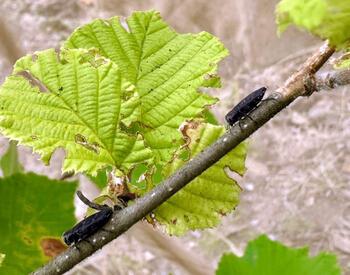
Parasitoid wasps are difficult for gardeners to recognize: Many are quite small (less than 5 millimeters), and physical details are hard to see while the insects are in flight. Learn to identify parasitoid wasps in your garden and understand their role in helping to control pest populations.
Parasitoid wasps are among the most commonly available insects to purchase for biological controls. Purchasing insects for pest control is most effective in greenhouses or other enclosed growing situations like conservatories. However, a few wasps are available and effective for home garden use.
Because they are so small, it is more common for gardeners to see signs of parasitoid wasp presence than the wasps themselves. This gallery provides pictures of representative members of the major families of parasitoid wasps. We share examples of host insects with signs of parasitic wasp presence when possible.
Host insects are those on which the parasitoid wasp lays its eggs. Larvae feed on this host insect, develop inside or on the host and eventually emerge as adults.
For more detailed information, see Encouraging beneficial insects in the garden, PNW 550.
Family Aphelinidae
-
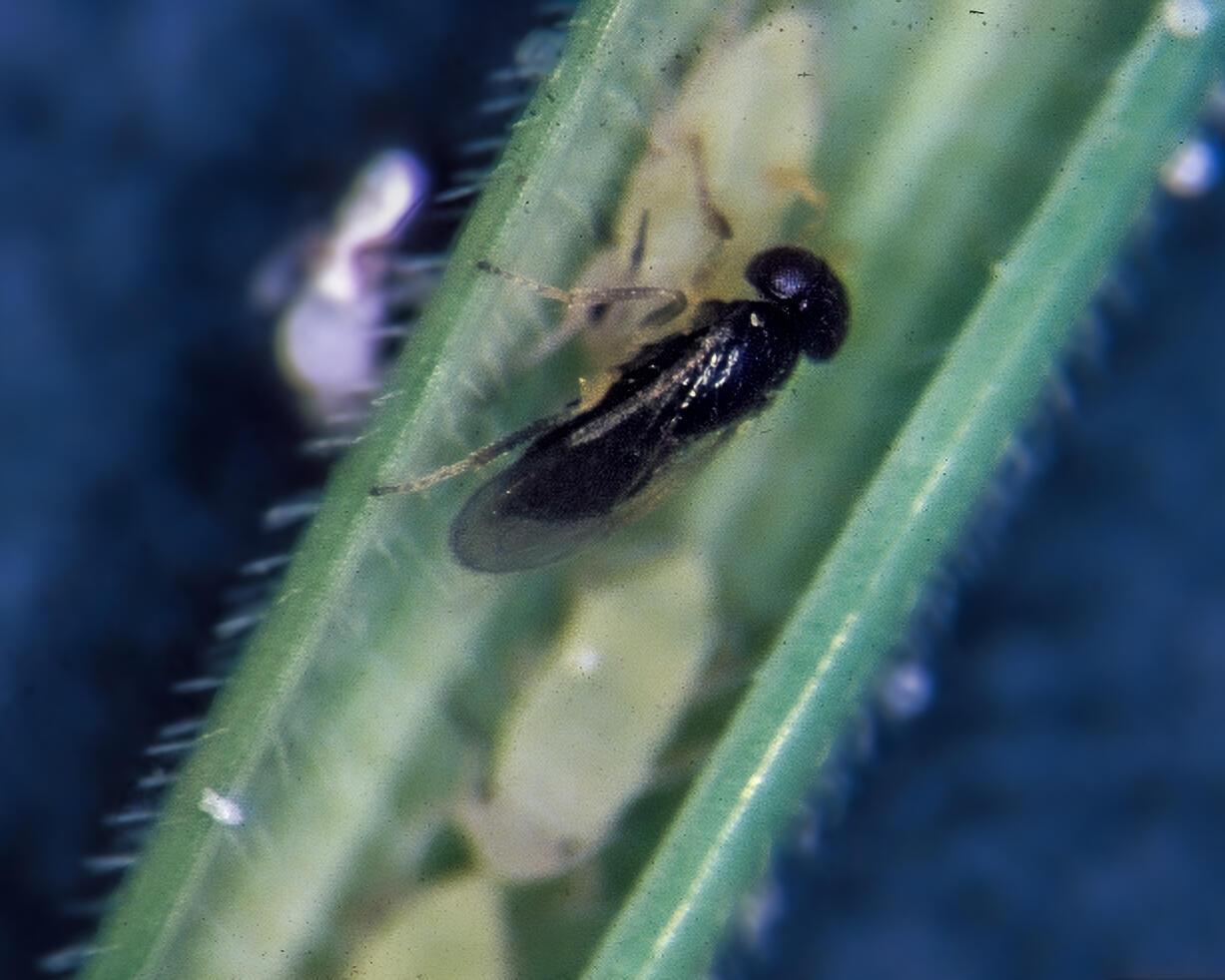
Most of the tiny Aphelinid wasps are parasites of Hemiptera, the “true bugs.” A few Aphelinids, such as this one, are parasites of aphids.
Credit: Frank Peairs, Colorado State University, bugwood.org -
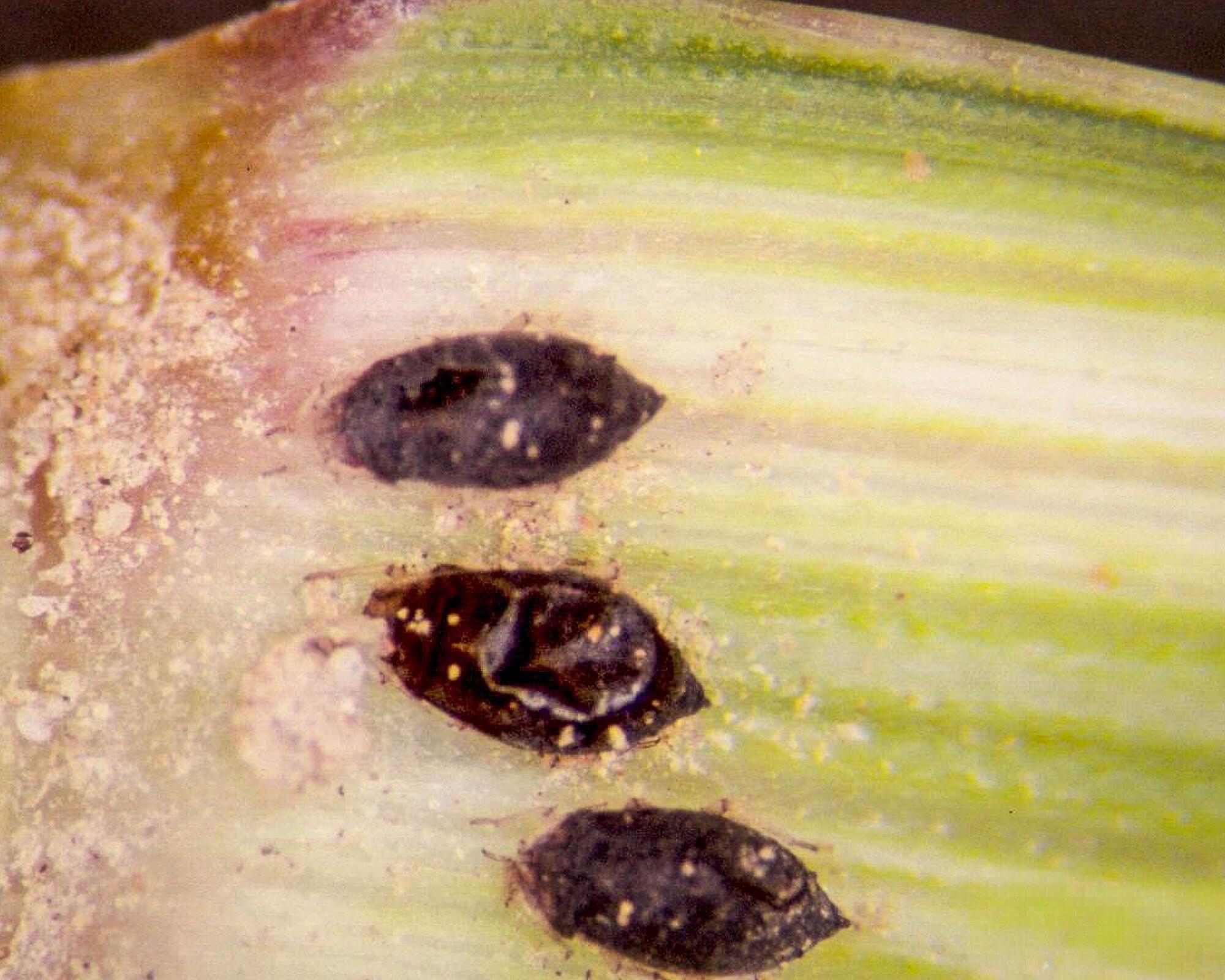
Aphids that have been parasitized by this wasp turn black when they are “mummified” — feeding by the parasitoid larvae has depleted the aphids’ bodies.
Credit: Frank Peairs, Colorado State University, Bugwood.org -
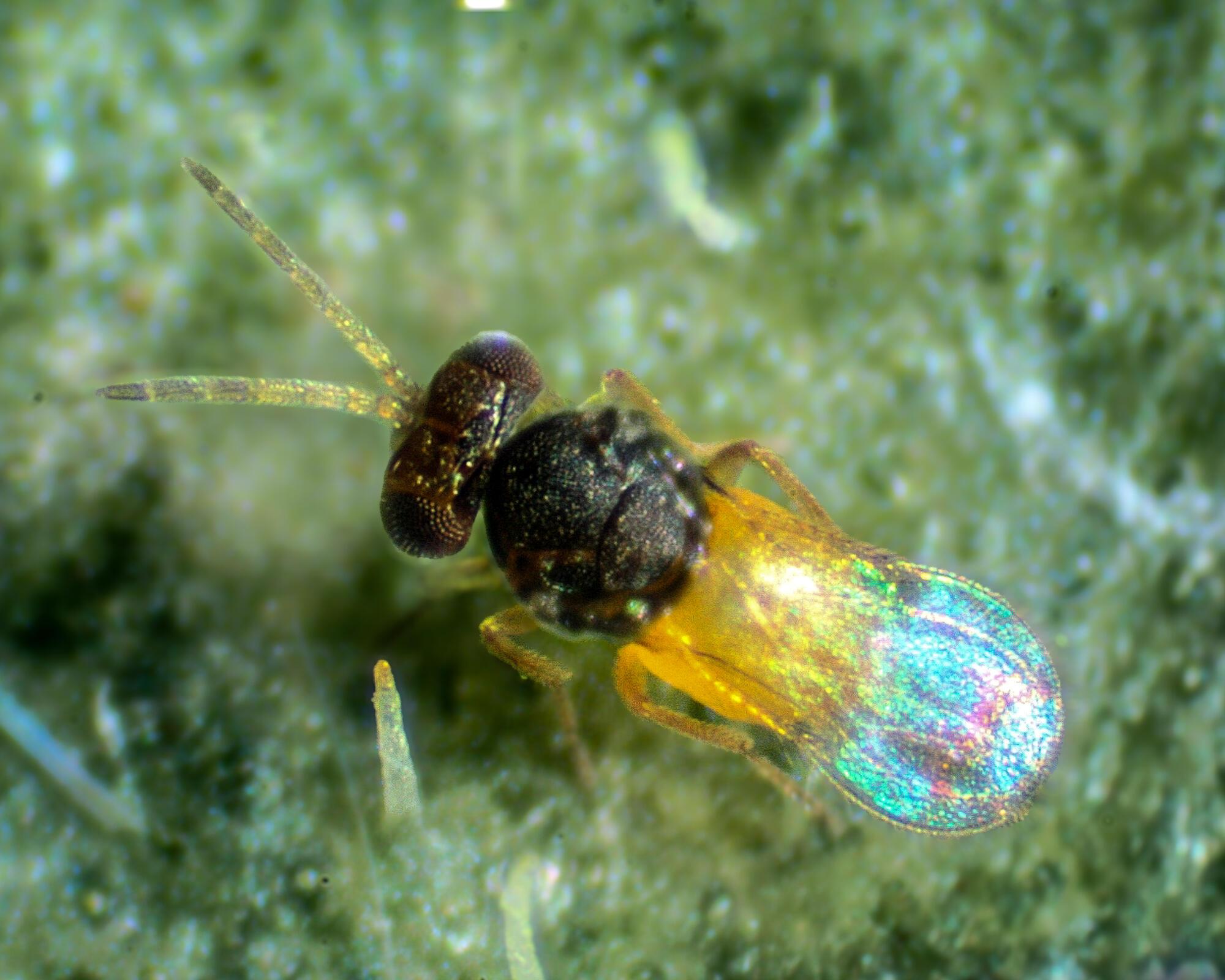
Encarsia Formosa, the whitefly parasitoid, is a widely used insect for biocontrol.
Photo: David Cappert, Bugwood.org -
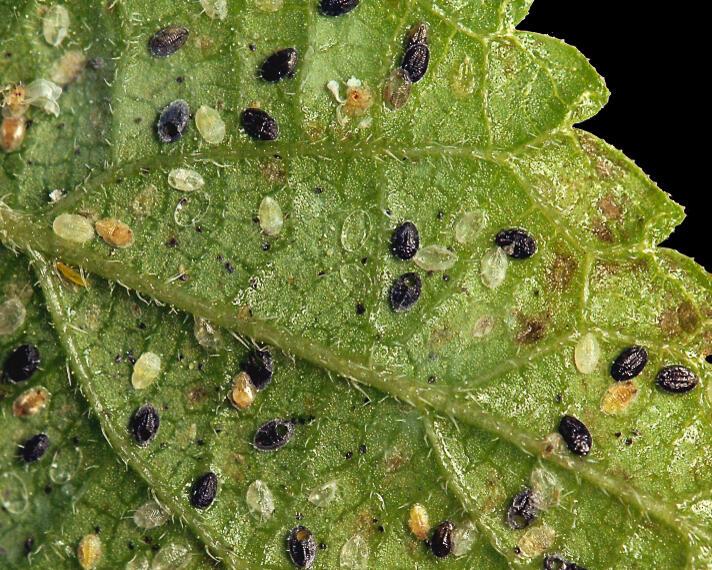
Whitefly parasitized by Encarsia formosa turn black but remain attached to the leaf underside. A high ratio of “mummies” in a pest population indicates parasitic wasps are providing some pest control.
Photo: David Cappert, Bugwood.org




Aphidiinae – a subfamily of Braconidae
-
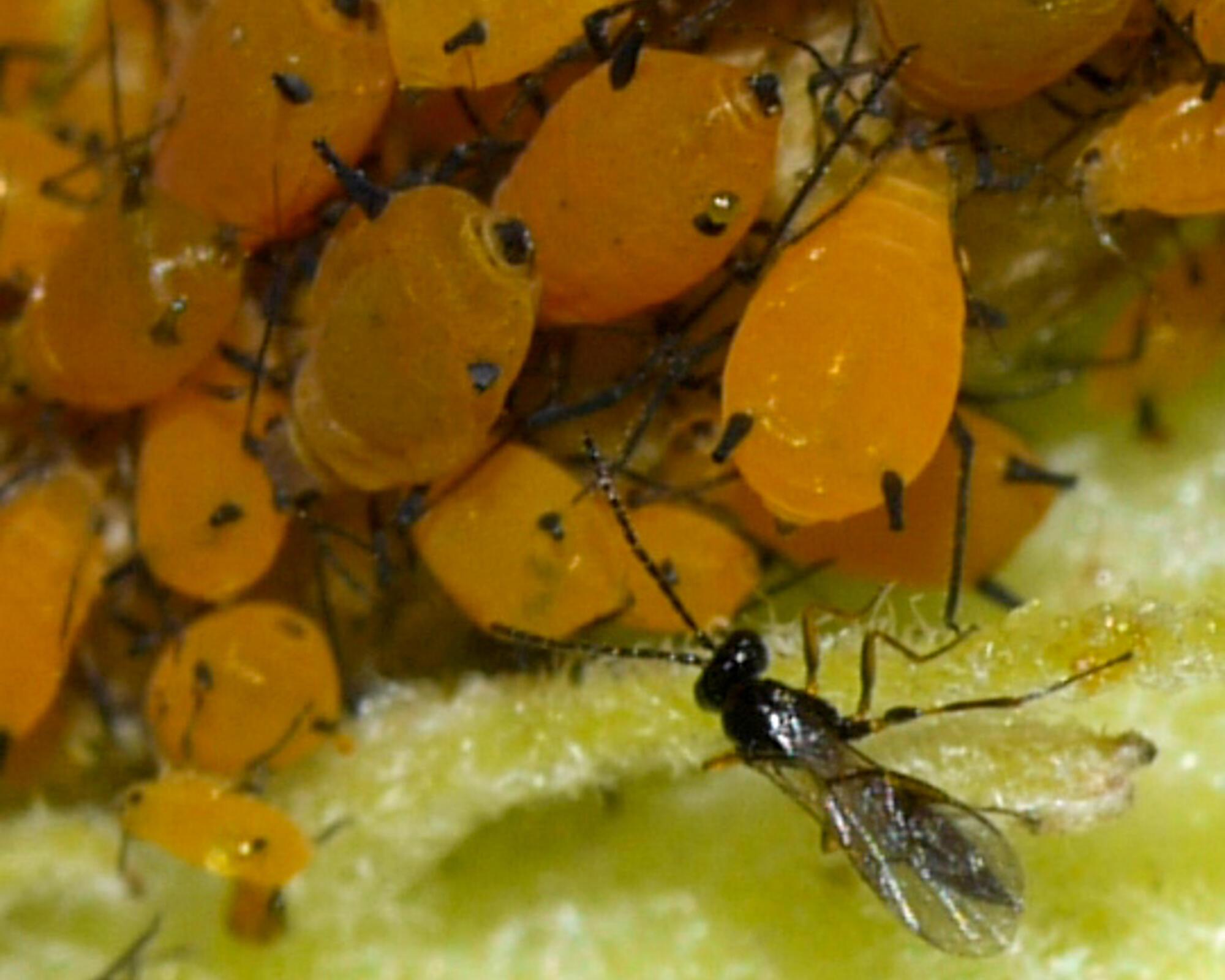
Wasps of this subfamily of the Braconidae are parasitoids that specialize in aphids. While too expensive to be cost-effective in most home garden situations, several members of this group are commonly used as pest control agents in greenhouses and other controlled environments.
Credit: Ilona Loser, Cross Plains, WI -
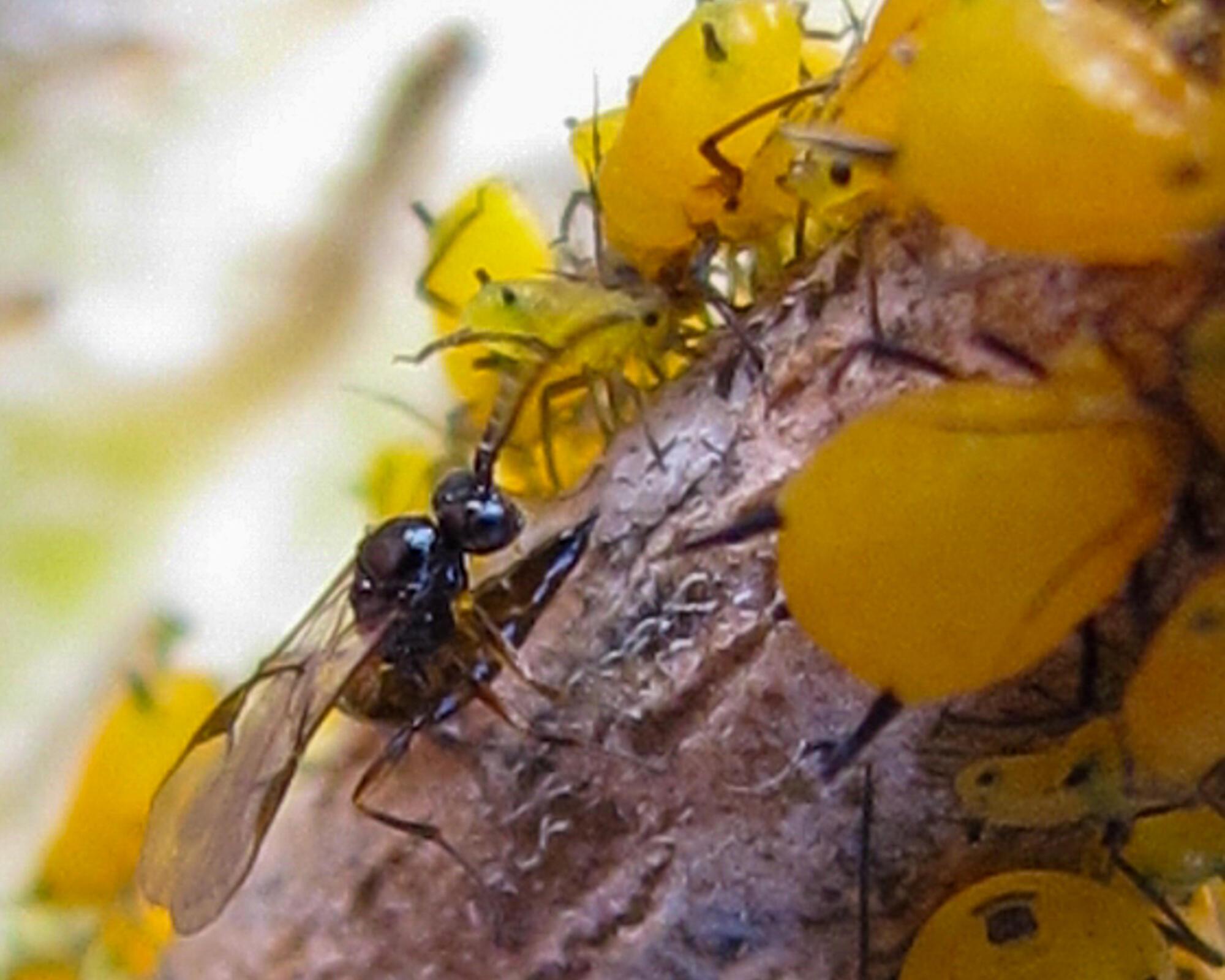
They also occur naturally across the world, wherever aphids are found. Aphids parasitized by this group of wasps may continue to eat, live and develop for a period while the wasp larvae grows inside its body, before becoming a tan or golden — colored “mummy.”
Credit: Ilona Loser, Cross Plains, WI -
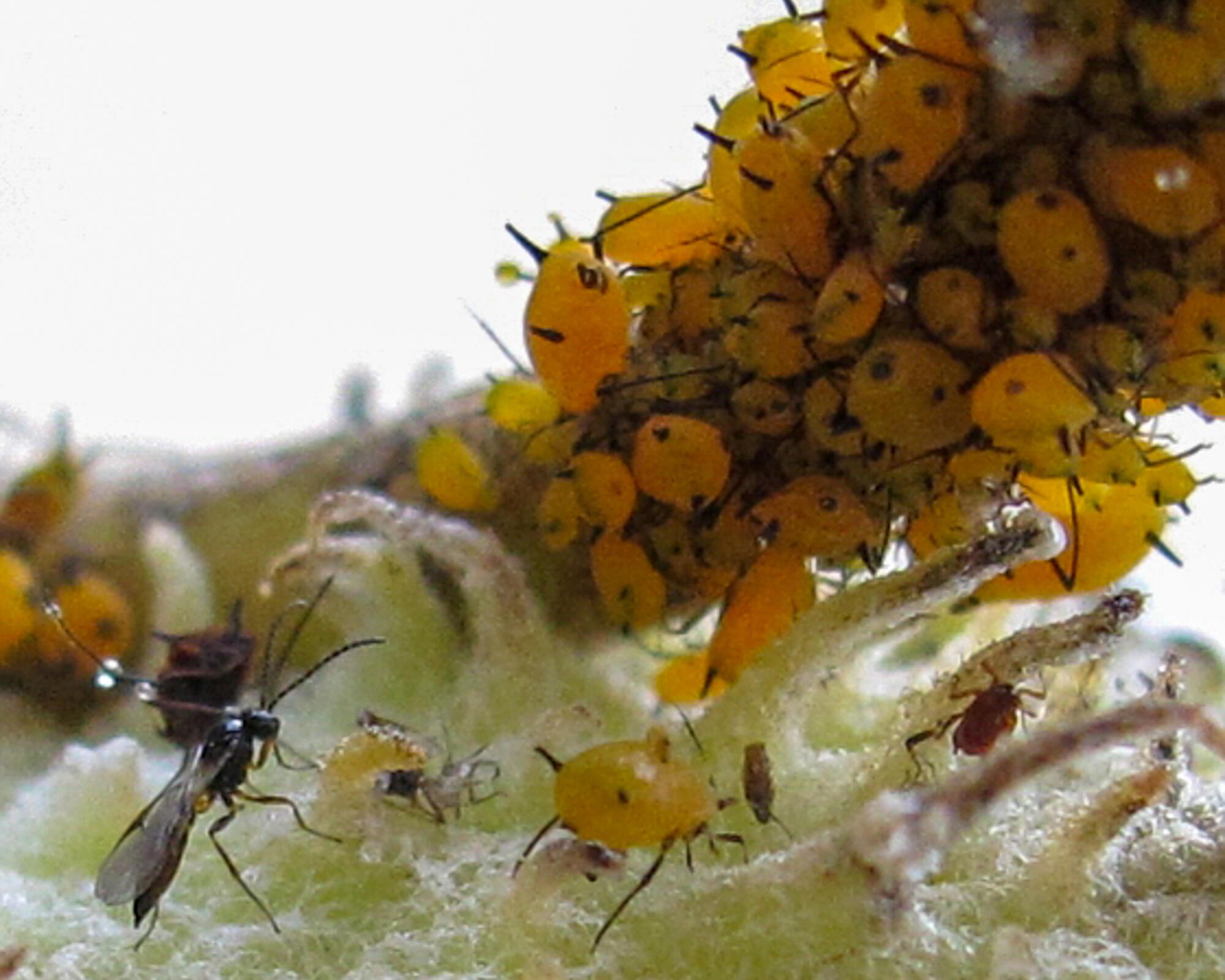
The wasp’s exit hole is often visible on the aphid mummy, indicating that aphid control is underway.
Credit: Ilona Loser, Cross Plains, WI



Family Braconidae
-
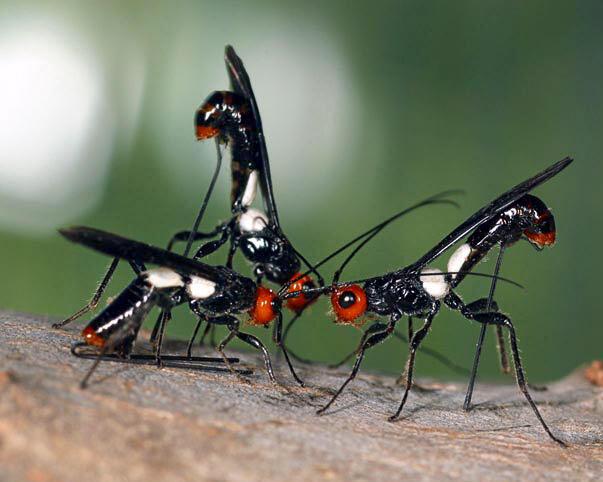
This huge wasp family includes parasites of moths, beetles and flies.
Credit: Dong-Hwan Choe, University of California, Bugwood.org -
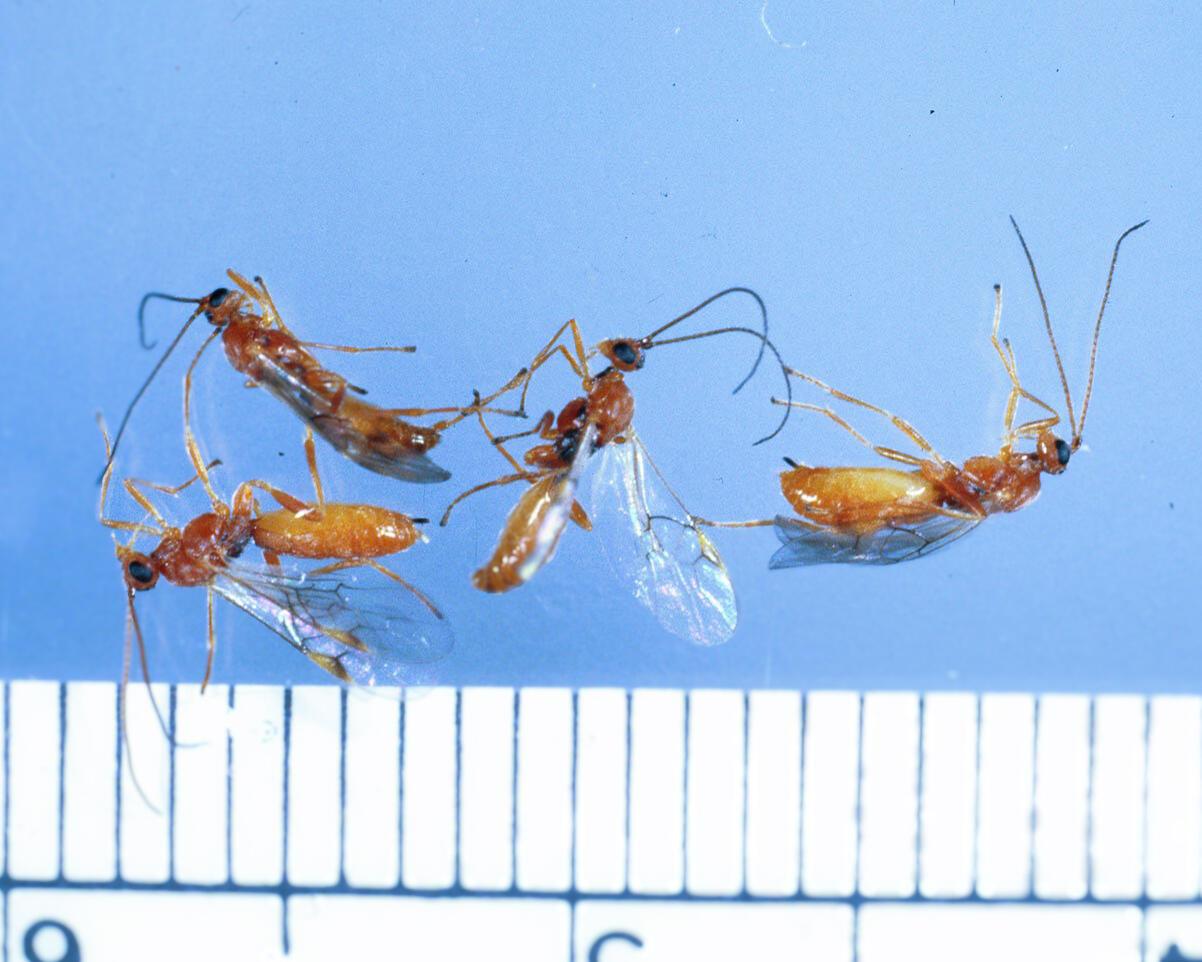
Depending on the species, the female wasp may lay eggs in the eggs, larvae, or pupae of the host insect. Some members of this wasp family exit the host body to pupate, and may pupate in silken cocoons on or near the host insect.
Credit: Jim Occi, BugPics, Bugwood.org -
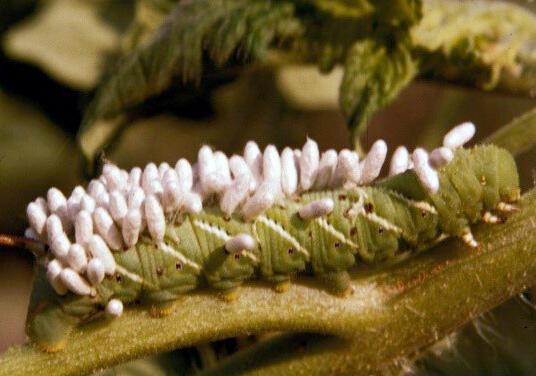
Most widely recognized are parasitoids of the hornworms.
Credit: Clemson University-USDA Cooperative Extension Slide Series -
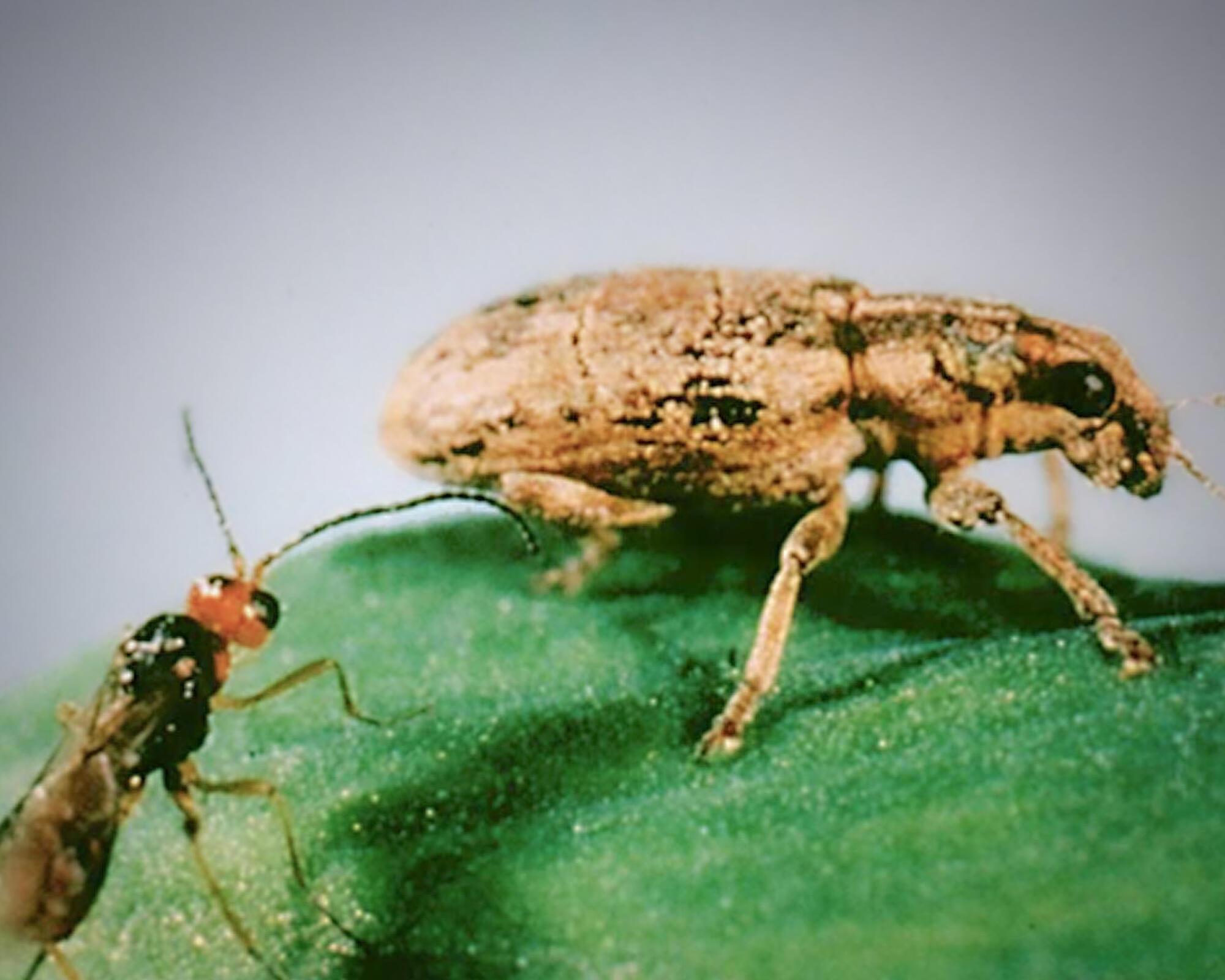
Other members pupate inside the host.
Credit: Mark McNeill, AgResearch Invermay, Bugwood.org




Family Chalcidae
-
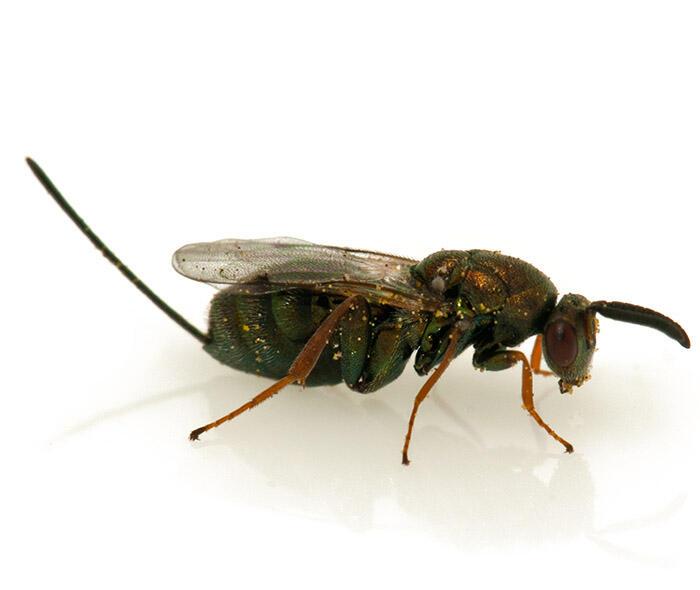
Some of the 2,000 species of Chalcid wasps are parasites of scale, a common garden pest of woody plants. Other species of Chalcids parasitize insects we consider beneficial — such as mason bee cocoons.
Credit: 2019 Lincoln R. Best -
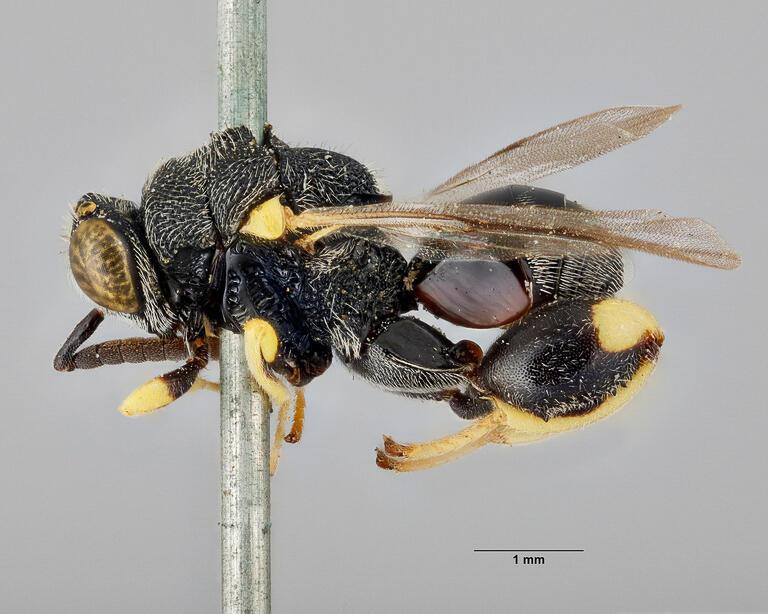
Chalcids may also parasitize fly or moth larvae and pupae. Many Chalcids are just a millimeter or two in length, making them difficult to identify in the garden.
Credit: Paul Langlois, Museum Collections: Hymenoptera, USDA APHIS PPQ, Bugwood.org -
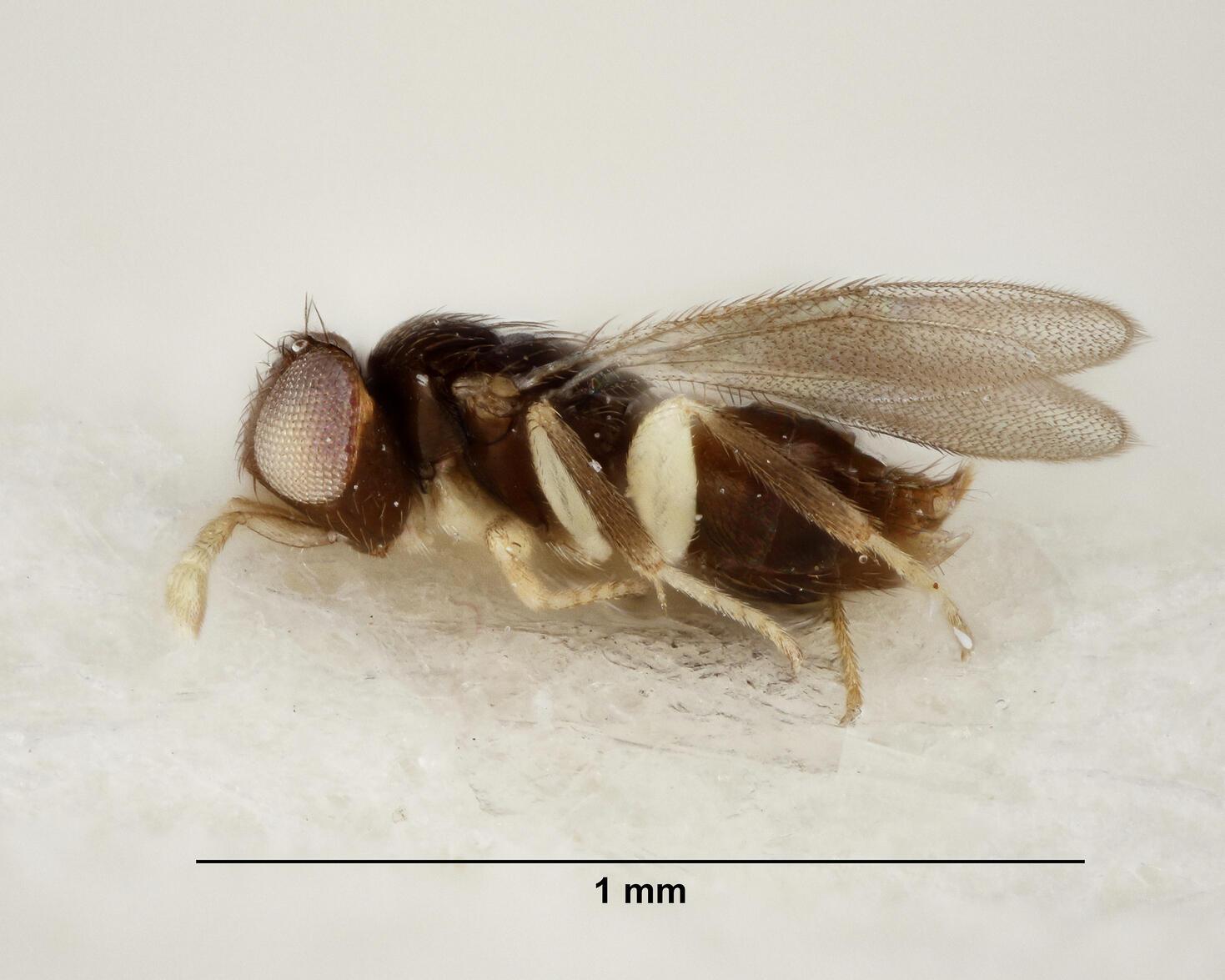
Chalcids that are large enough to observe with the naked eye might be recognized for their shiny, sometimes metallic-looking bodies, and greatly enlarged segments of the hind legs.
Credit: Paul Langlois, Museum Collections: Hymenoptera, USDA APHIS PPQ, Bugwood.org



Family Encrytidae
-
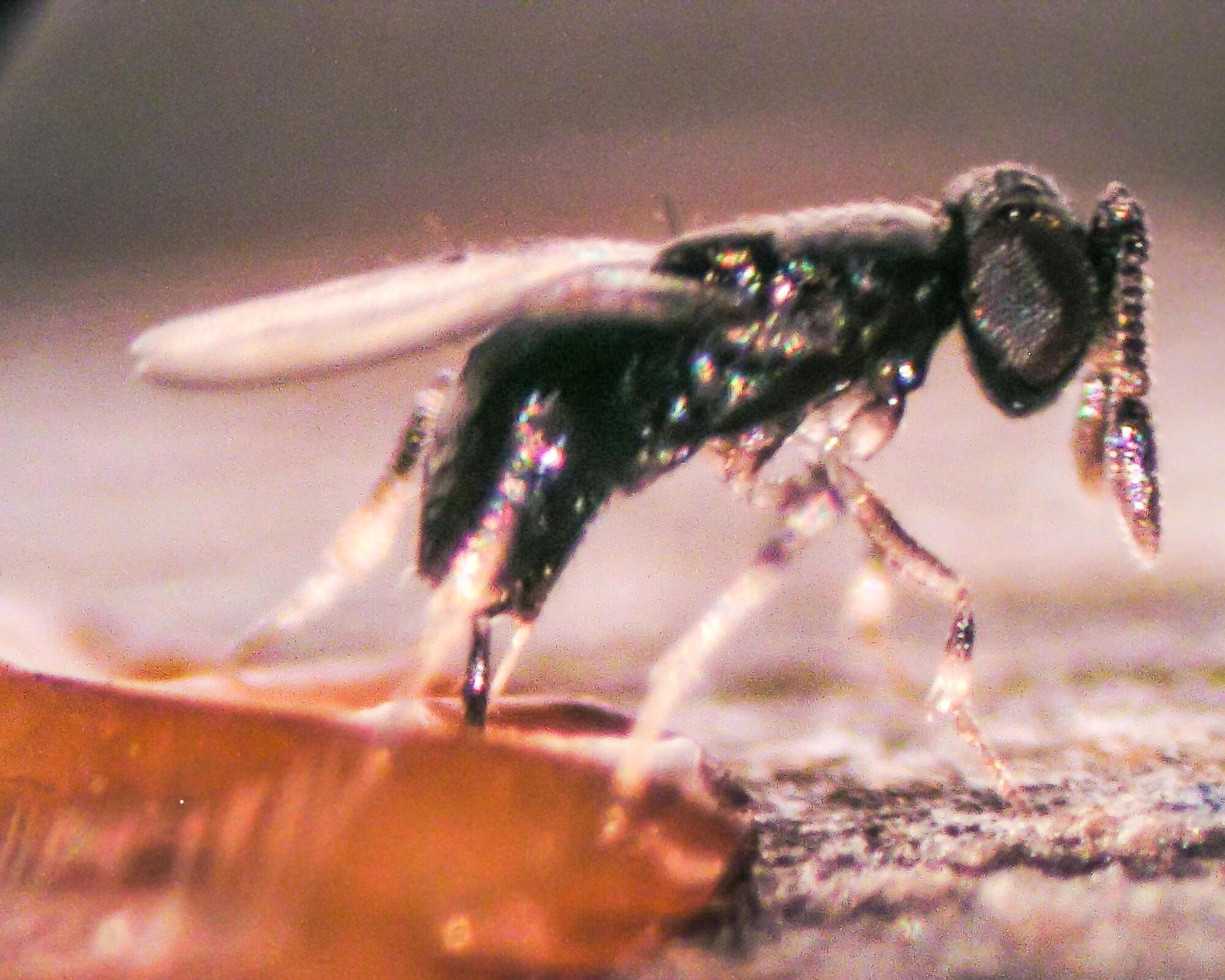
This family of tiny wasps, usually 2 millimeters or less in length, includes parasites of some of our most common garden pests — aphids, scale, mealybugs and whiteflies. Encrytid wasps are considered important naturally occurring biocontrols for these common garden pests. A few species are available for purchase, including Anagyrus pseudococci, a predator of mealybugs sometimes recommended for home grow rooms and greenhouses.
Credit: Debbie Miller, USDA Forest Service, Bugwood.org -
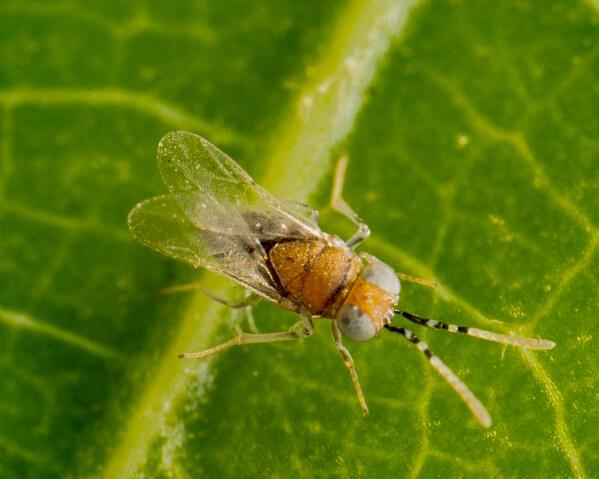
Anagyrus kamali is native to south Asia but is found all over the world due to its use as a biocontrol for mealybug.
Credit: Jeffrey W. Lotz, Florida Department of Agriculture and Consumer Services, Bugwood.org -
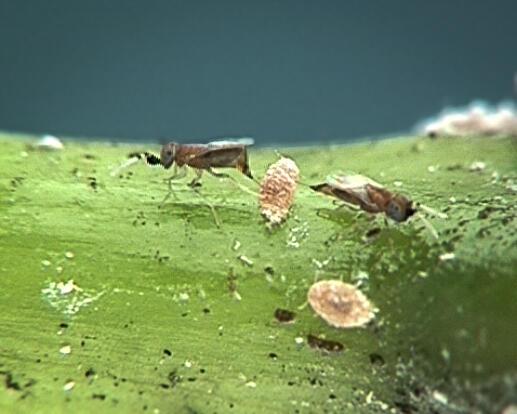
Oobius agrili, a parasite of the invasive emerald ash borer, is pictured here depositing an egg into an emerald ash borer egg.
Credit: Jeffrey W. Lotz, Florida Department of Agriculture and Consumer Services, Bugwood.org -
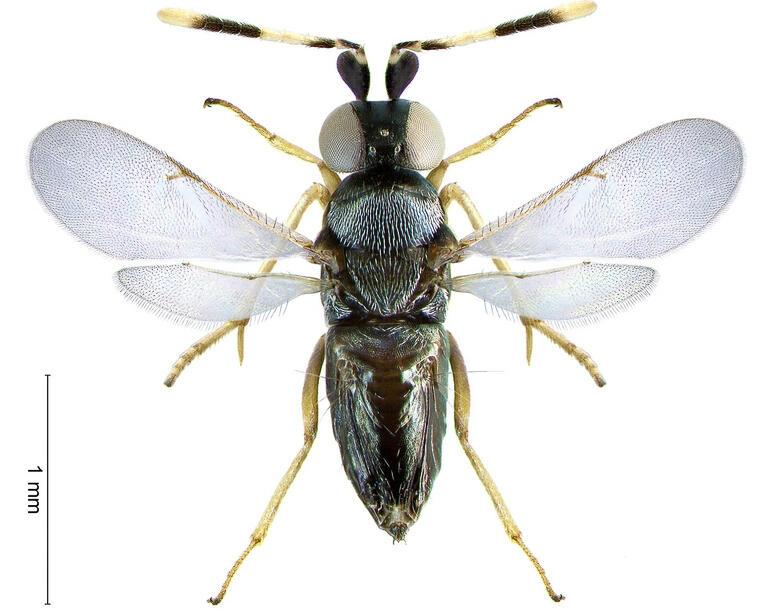
An unusual characteristic of this wasp group is called polyembryony: As many as ten to 1,000 wasp larvae may develop from a single egg.
Credit: Georg Goergen, IITA, Bugwood.org




Family Eulophidae
-
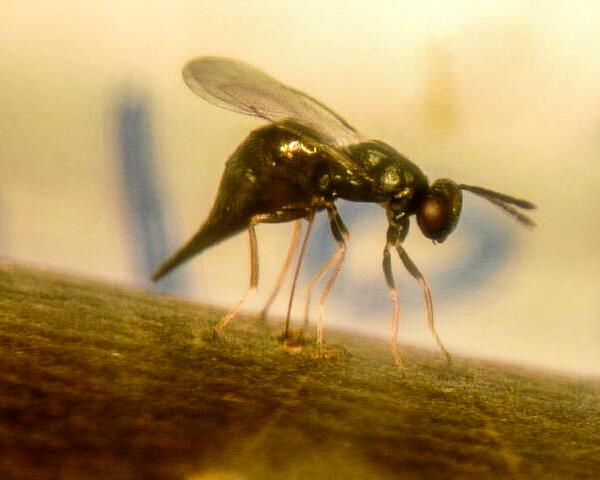
About 600 species of Eulophid wasps have been identified in the U.S. Adult females may lay eggs in plant tissue with pest larvae inside (above), into beetle larvae or into other insects.
Credit: Houping Liu, Michigan State University, Bugwood.org -
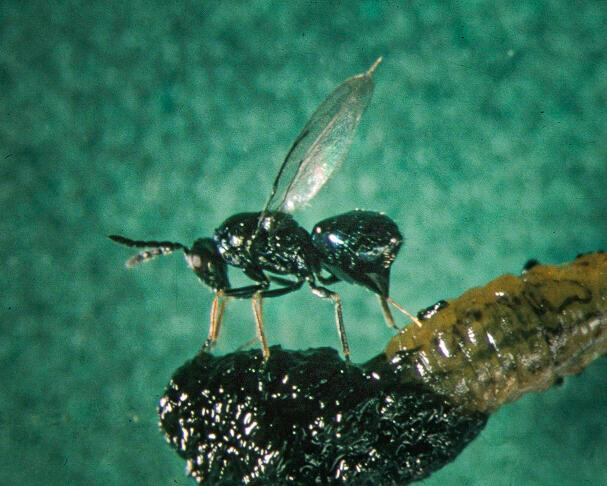
An eulophid wasp lays an egg inside an insect.
Credit: Tim Haye, Universität Kiel, Bugwood.org -
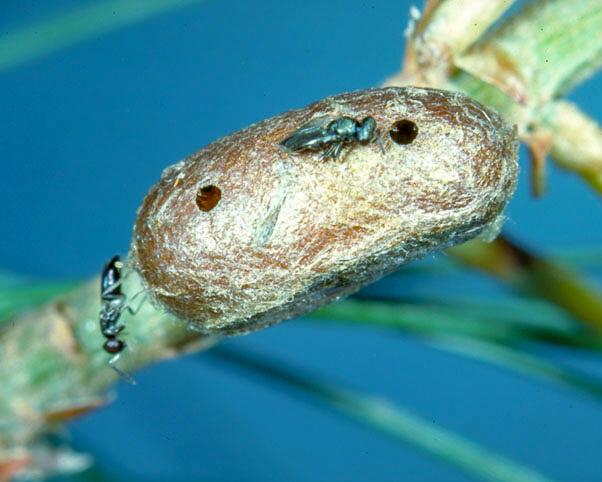
Biology and life cycle vary widely in this group. Adults are usually 1–2 millimeters and often have a metallic sheen, such as these emerging from a sawfly pupa.
Credit: John Ghent, Bugwood.org -
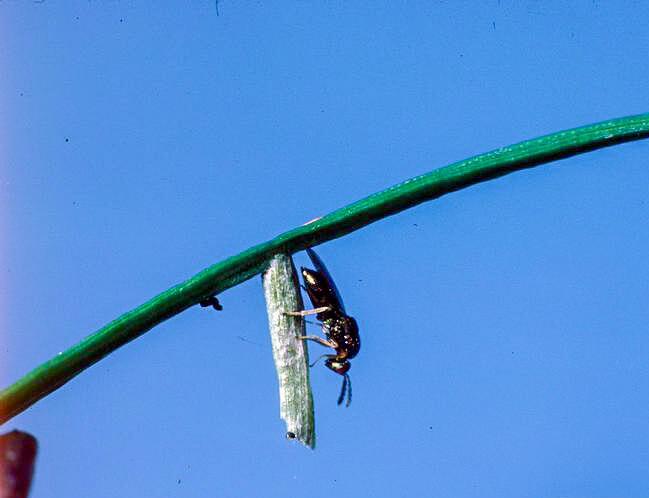
Eulophids most beneficial in the home garden parasitize thrips, mites, scales and other wasps.
Credit: Roger Ryan, USFS PNW Station, Bugwood.org -
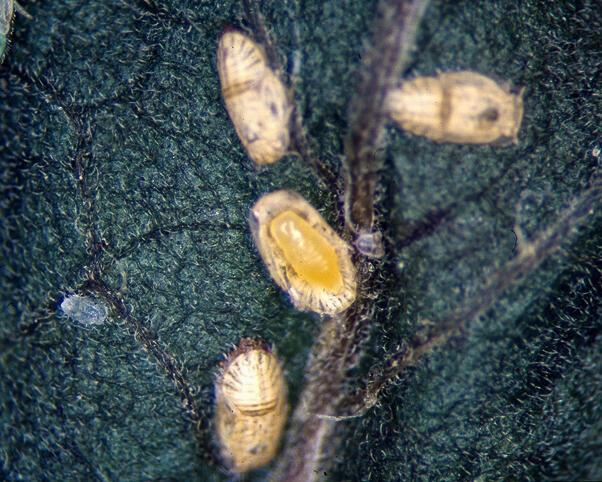
Some species parasitize psyllids, evident when the psyllid bodies are flipped over and the wasp larvae is visible.
Credit: Whitney Cranshaw, Colorado State University, Bugwood.org





Family Ichnuemonidae
-
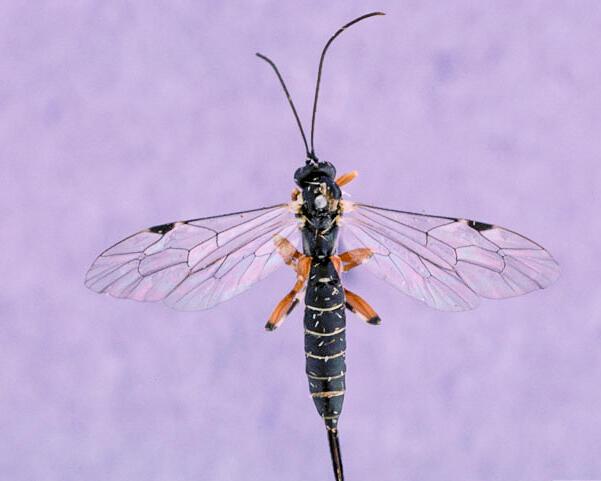
Ichnuemonids, one of the largest of all insect families, include some larger parasitic wasps that are easier to identify in the garden. Ichnuemonids have long, slender bodies and many-segmented antennae that may be half or more as long as the insect body.
Credit: Gerald J. Lenhard, Louisiana State University, Bugwood.org -
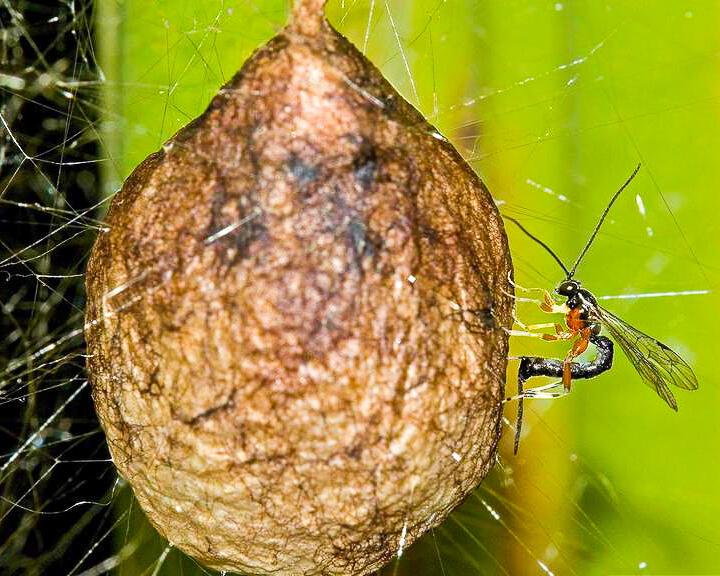
Some species are specialists, including those that specialize in spider egg sacs. Others are generalists, with larvae able to fully develop on a variety of insect hosts.
Credit: David Cappaert, Bugwood.org -
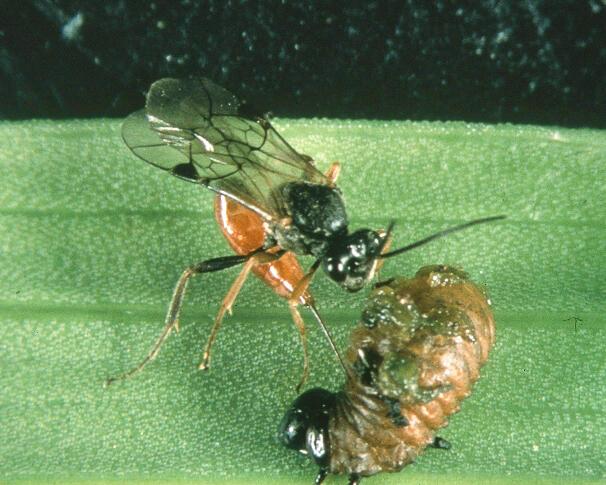
Adult females lay eggs on or near the host insect, depending on species.
Credit: Tim Haye, Universität Kiel, Bugwood.org -
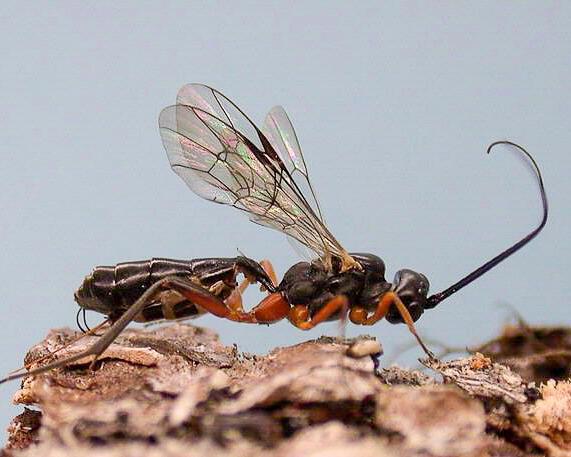
The largest Ichnuemonids in the U.S. are up to 40 millimeters long and parasitize hornworms and wood-boring beetle larvae. These wasps use an extra long ovipositor (egg laying appendage) to insert eggs inside wood tissue so that the resulting larvae can reach the wood-boring beetle larvae inside the tree.
Credit: Jessica Price, Natural Resources Canada, Bugwood.org




Family Pteromalidae
-
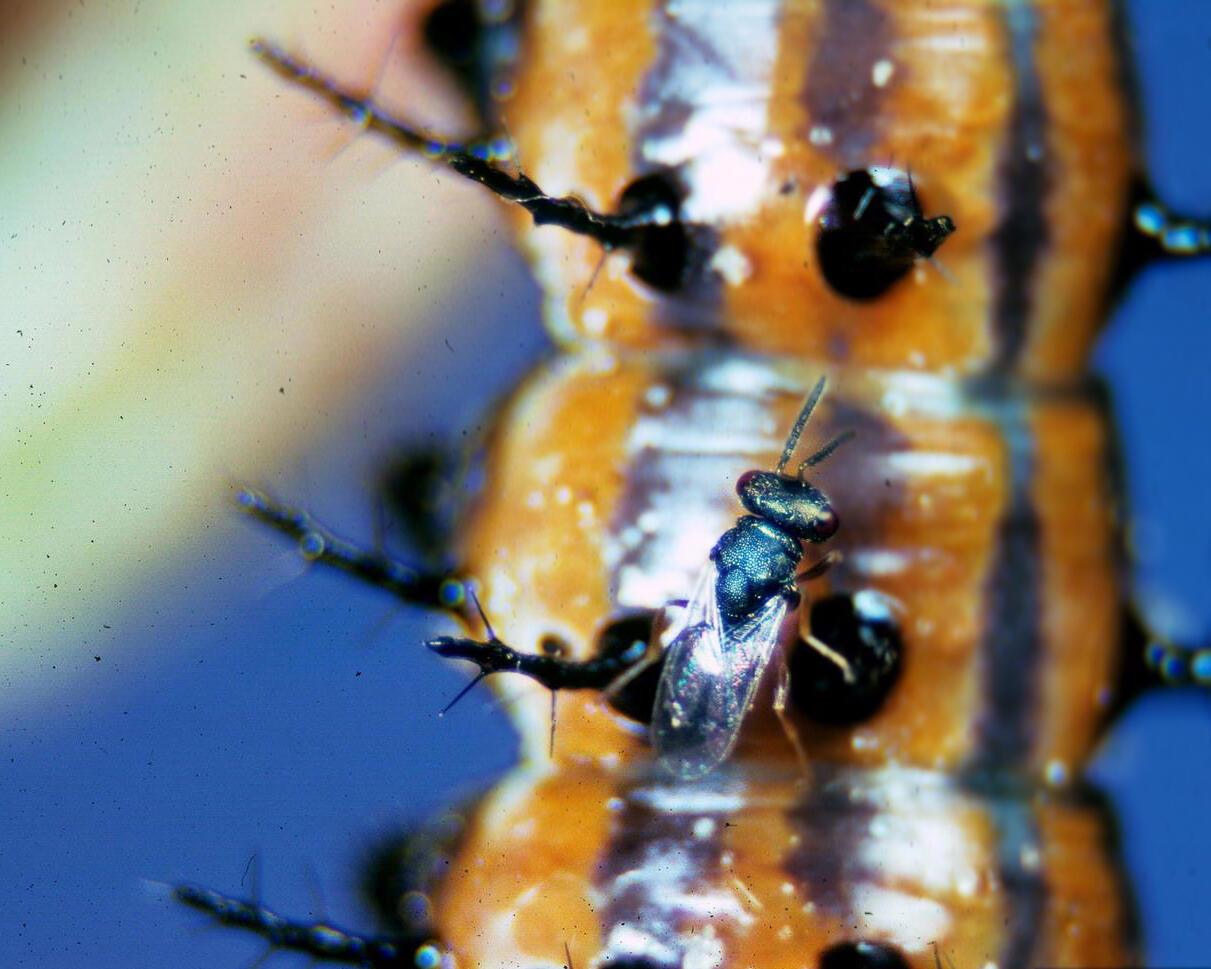
Ranging in size from 1 to 8 millimeters, Pteromalids are typically a metallic black, blue or green. The parasitic members of this family lay eggs in fly, beetle and wasp eggs and larvae. A few species parasitize insects much larger than the Pteromalid wasp, like caterpillars (above).
Credit: Sturgis McKeever, Georgia Southern University, Bugwood.org -
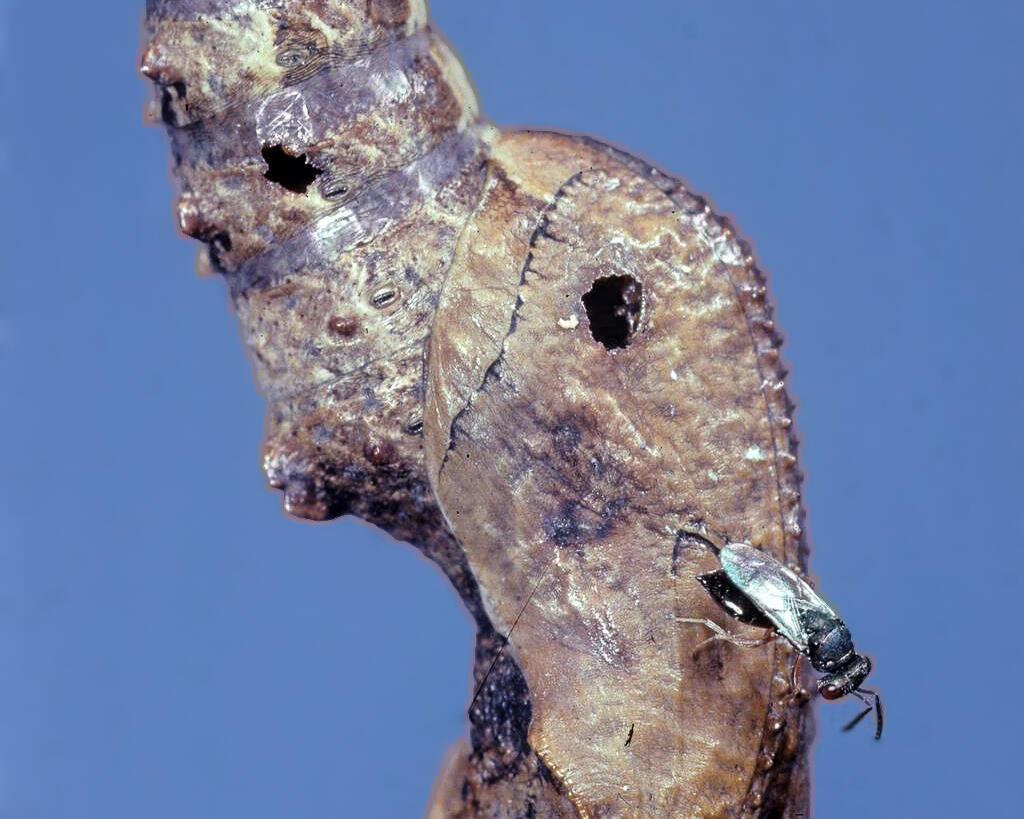
Adults emerge from the larvae or pupae of the host insect (above). A few members of this family have larvae that prey on other insect eggs and larvae without parasitizing them.
Credit: Sturgis McKeever, Georgia Southern University, Bugwood.org


Family Trichogrammatidae
-
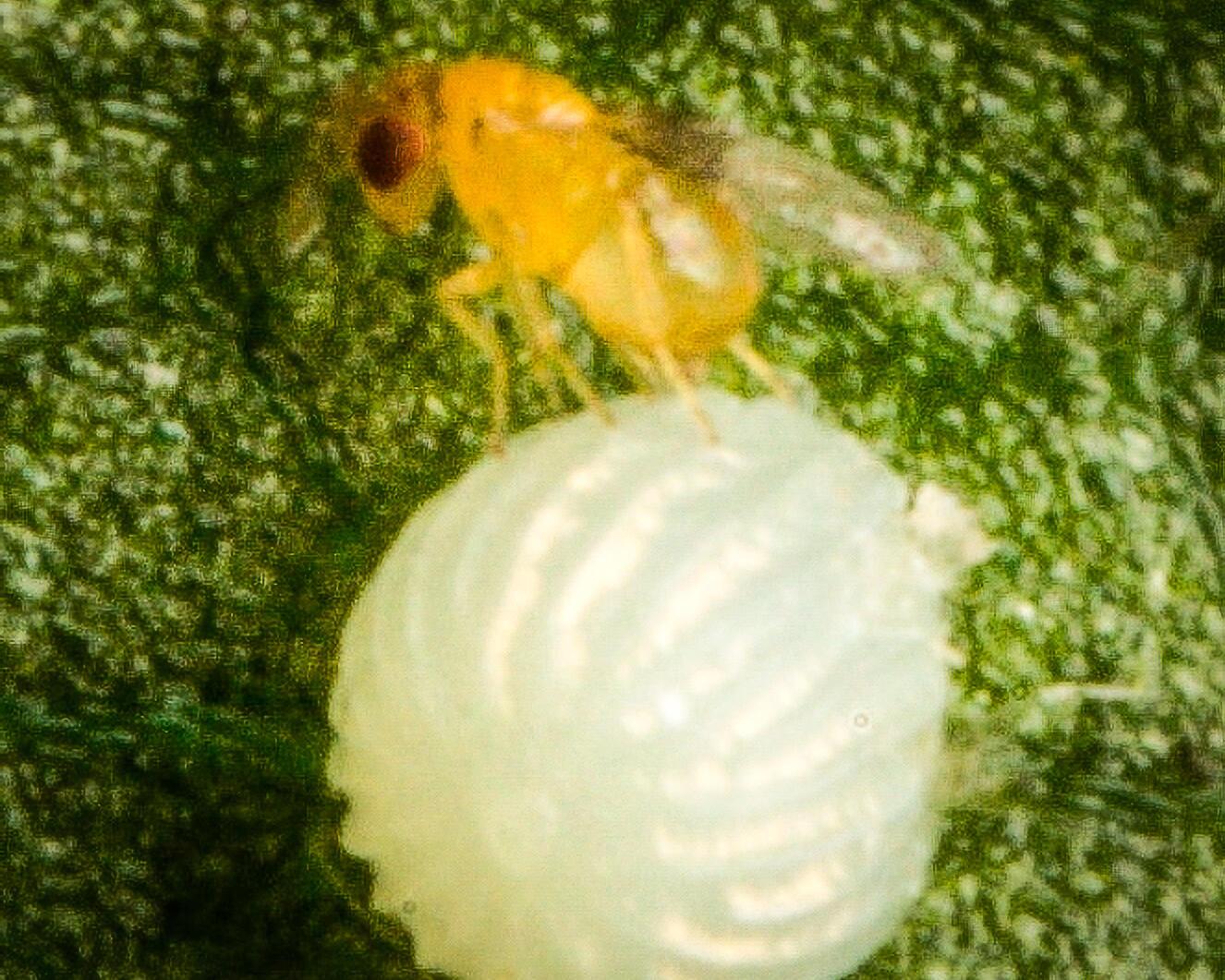
Trichogrammatids are among the smallest of the parasitic wasps. Most are less than 1mm in length and parasitize various kinds of insect eggs (above). One genus of this family parasitizes thrips eggs and is only .18 millimeter in length. Because they are so small, these wasps are difficult to observe in the garden, though several species have been used successfully as biological control. Parasitized eggs often turn black.
Credit: Peggy Greb, USDA Agricultural Research Service, Bugwood.org