
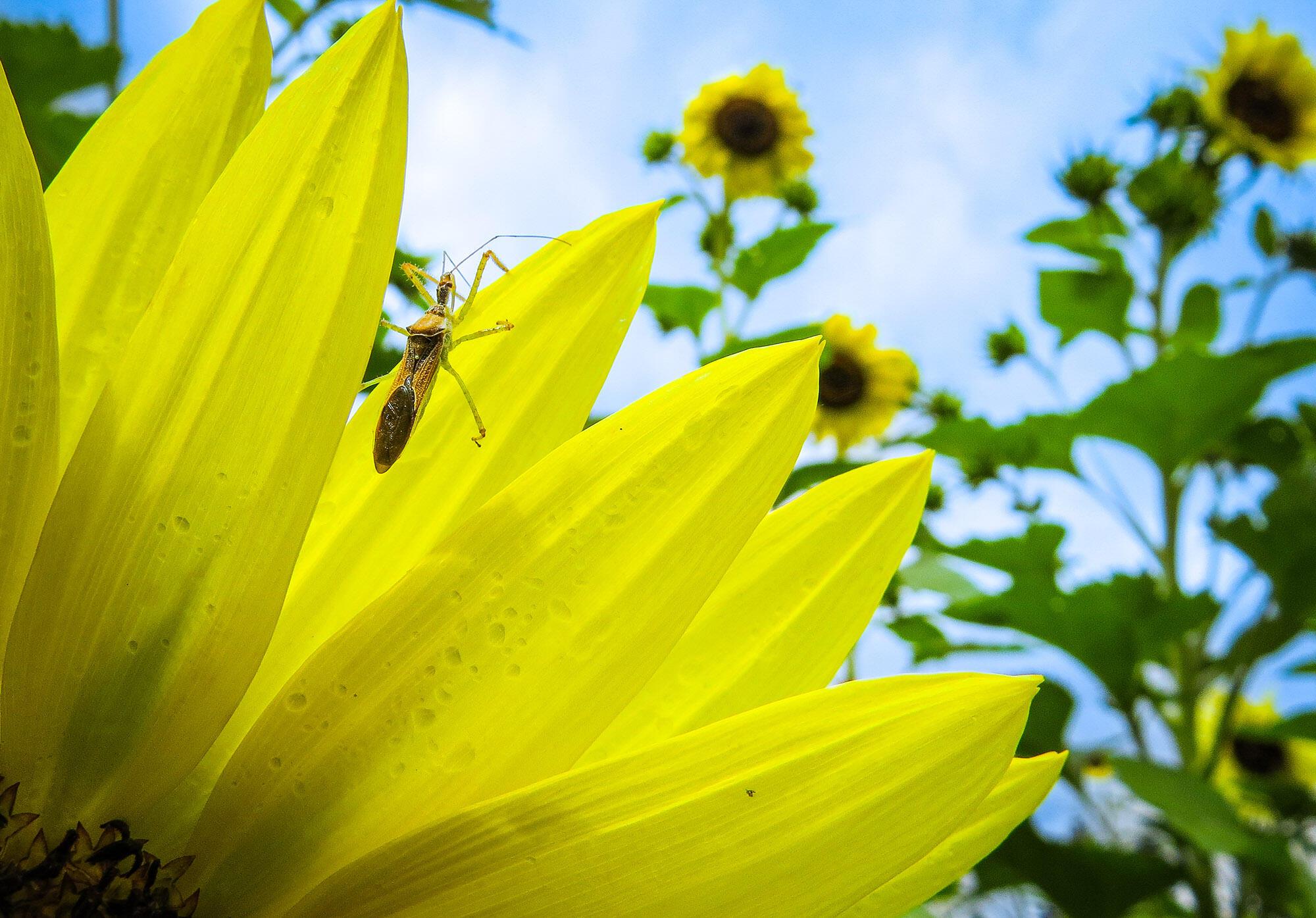
Which insects are beneficial?
Many insects are considered “beneficial” because they have natural behaviors that benefit humans. Honey bees make honey and wax. Many insects provide pest control by eating undesirable insects or laying eggs inside them in what’s known as parasitism. Soil-dwelling insects break down organic matter in the soil, converting nutrients into forms best used by plants. Many different kinds of insects are pollinators, contributing to the reproduction of plants. The roles that beneficial insects perform in the garden are sometimes referred to as “ecosystem services” — processes that occur in the ecosystem that happen to benefit humans.
By contrast, pest insects damage ornamental and food plants by feeding on them or by creating habitat from plants or their parts. Other insect pests bite or sting, transmit disease or are found in human homes. Pest insects draw widespread attention because they present challenges to people, but there are far more species of insects that are beneficial.
What makes an insect a pest? That may depend on the situation, not just the insect species. Termites in the forest break down wood and return it to the soil, where it becomes available to sustain new plants. This is a beneficial process in the forest. Termites eating wood in a structure, however, are pests. If untreated, the damage could become a safety issue.
The benefits some insects provide vary with species and life stage. Insects might be helpful in one life stage but not another. For instance, butterflies are considered beneficial pollinators, but their larvae (caterpillars) eat plants. By contrast, hover flies are predators while young (in the larval stage), but pollinators as adult flies.
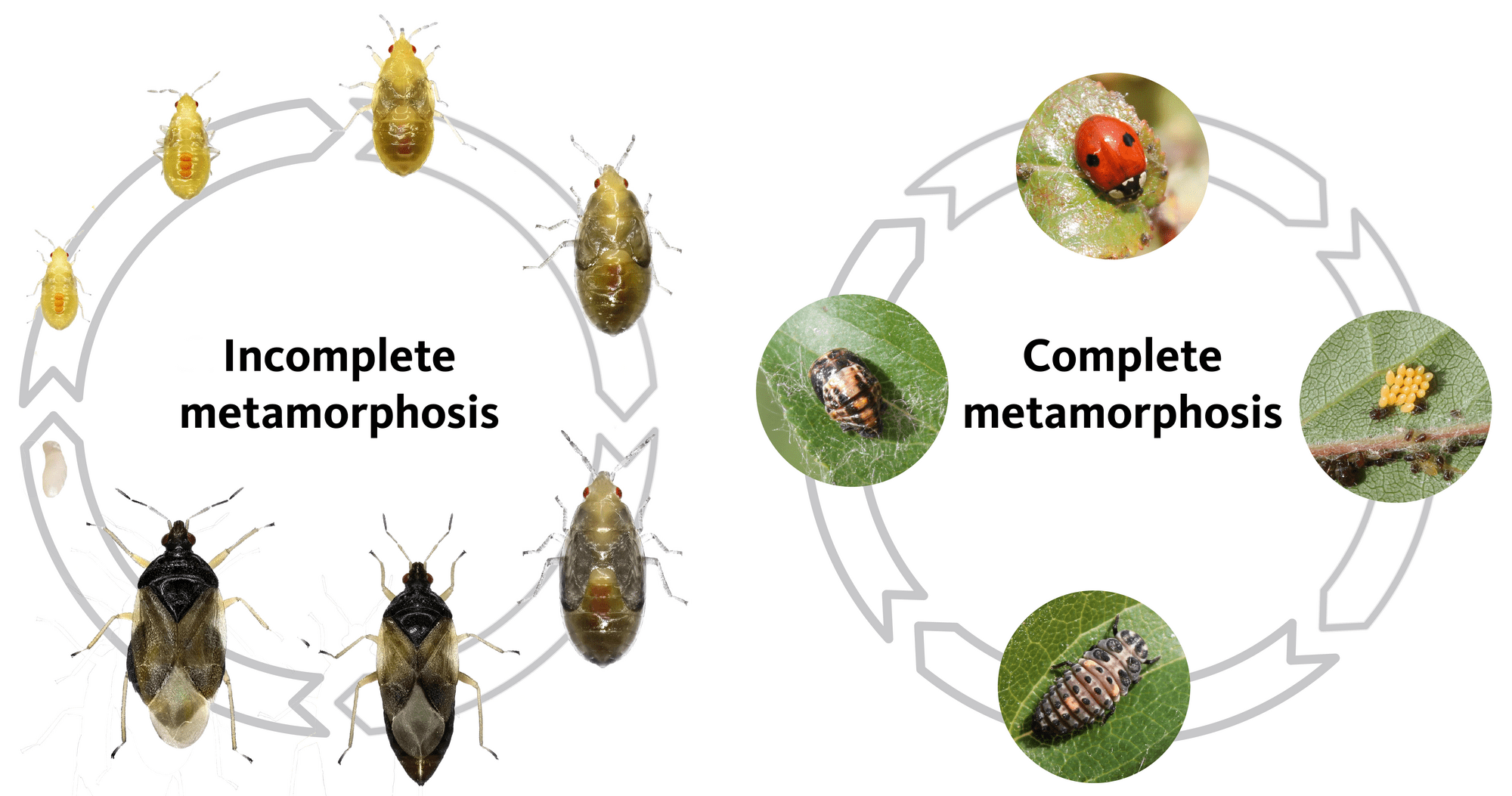
Adult beneficial insects often look completely different from the form they have when young.
Adult beneficial insects often look completely different from the form they have when young. Learning to identify the different species of beneficial insects and their appearance in various life stages informs pest management decision-making.
Beneficial insects and their roles in the garden
Each type of beneficial insect has distinct food and shelter needs and behaviors. In nature, each insect species fills a niche — a specific role and position that it occupies in the landscape — including its interaction with available resources. The keys to welcoming beneficial insects into the garden are the variety of plant types, flower shapes and blooming times. We call this diversity in the garden. A diverse garden has many ecological niches that different insects can fill.
Insects that help us with pest control by eating or parasitizing pests can greatly reduce populations of pest insects. It’s rare for beneficial insects to completely eliminate a pest population. Instead, beneficial insects help create a balance that usually results in much less damage to plants.
Gardeners hoping to support beneficial insects must tolerate a few pest insects in the garden. Some predatory insect species can survive on pollen and nectar in the absence of pests, but most need a few pests around for continued survival.
In this document, we’ll examine the types of beneficial insects and their helpful behaviors. We’ll also cover what gardeners can do to encourage beneficial insects.
For simplicity, we group beneficial insects into categories: pollinators, predators, parasitoids and decomposers. We list plants that can help you welcome specific insect types, as well as resources that add more detail. Plant a variety of plant and flower types so there are blooms throughout the season. This supports the widest variety of beneficial insects in our garden systems.
Insect life stages
Insects go through different life stages. Young insects molt by shedding their exoskeleton, a hardened outer covering, like skin (think of a shrimp or crab). Most insects molt several times as they mature. Some insects have immature, larval stages that resemble the adult, which is considered incomplete metamorphosis (Illustration 2).
An example of a beneficial insect with incomplete metamorphosis is the minute pirate bug. Overall, minute pirate bugs have a similar shape through each developmental stage, though sometimes with different coloring. During the last juvenile stage, minute pirate bugs have “wing buds,” which are the beginning of wing development. During the final life stage — adulthood — the wings are fully developed. Only adult insects have wings. See the photo gallery for pictures of predatory insects in different life stages.
Insects with larval stages that look quite different from the adult have complete metamorphosis. Complete metamorphosis includes a pupal stage. Butterflies are an example of a beneficial insect that has complete metamorphosis. Insects with complete metamorphosis often have different feeding requirements — even different mouthparts — in the juvenile and adult stages. This is an important consideration when evaluating an insect’s function in your garden. For example, fly larvae often have different mouthparts than adults (Illustration 2).
Insects that have complete metamorphosis often have different diets in the adult and larval stages. Butterflies feed on host plant foliage during the larval (caterpillar) stage. Most caterpillars rely on a specific group of plants as host (food) plants. Female butterflies will seek host plants on which to lay eggs. For example, monarch caterpillars can only survive on milkweed, whereas most swallowtail caterpillars need plants from the carrot family (called Apiaceae).
Once the caterpillars become adult butterflies, food requirements switch to flower nectar. Hover fly larvae are predators of pest insects such as aphids, but feed on pollen and nectar as adults.
Likewise, some insect predators or parasites prefer prey in specific life stages. Yellowjacket wasps seek out caterpillars for feeding their young, but do not eat moths or butterflies in the adult stage. Recognizing the different life stages of both beneficial and pest insects is important — both for supporting beneficial insects and for managing pests in the landscape and garden.
Beneficial insects in the garden can be loosely housed in four groups: pollinators, predators, parasitoids and decomposers. Each group serves a different role in the garden. They also tend to occupy very different spaces in the garden.
Becoming familiar with these insect groups and their roles in the garden is worth the effort. It’s possible to deduce from insect behaviors and physical features the beneficial category to which they belong.
Pollinators
Insect pollinators include many more species of insects than just honey bees. Native bees are also important pollinators, in addition to many species of beetles, butterflies, moths and flies. These insects provide ecosystem services by spreading the pollen among different plants of the same species, helping them complete their life cycles by producing seed.
However, pollination is not a goal of the insects. Pollination occurs as they move around the flowers, seeking nectar or pollen as food sources. Most insects that spread pollen when feeding often have hairs that hold onto and then transfer pollen among plants.
Bees
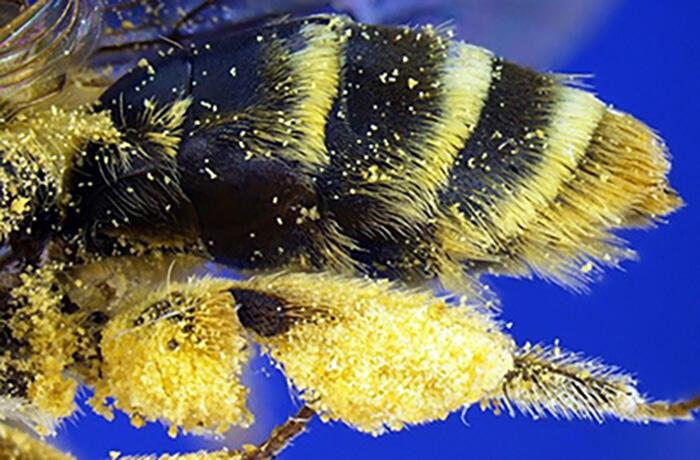
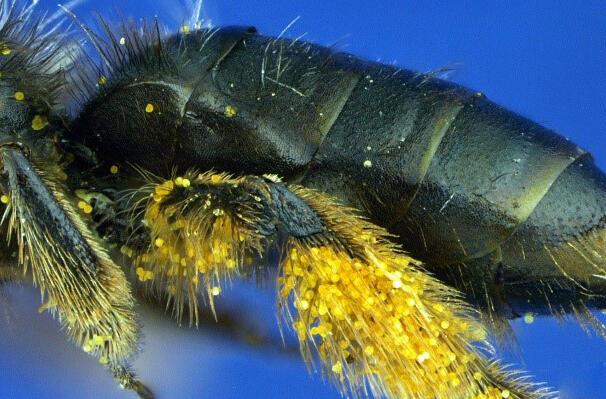
Bees’ bodies are the key to their importance as pollinators. Visits to numerous flowers for food would not result in pollination without hairy bee bodies. Bees have hair and structures designed for the collection and transport of pollen. Honey bees and bumble bees have basketlike collection devices on their hind legs called corbicula (Photo 1).
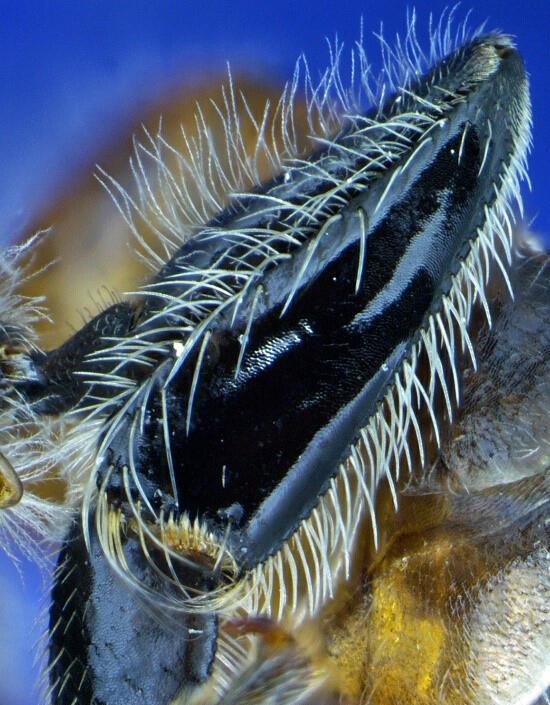
Numerous species of bees have brushlike arrangements of hairs called scopa that are ideal for pollen collection (Photos 2, 3). In addition, bee hairs are forked, which helps grasp pollen. As the bee moves through the garden, pollen is dropped or rubbed off during interactions with flowers, allowing pollination to occur.
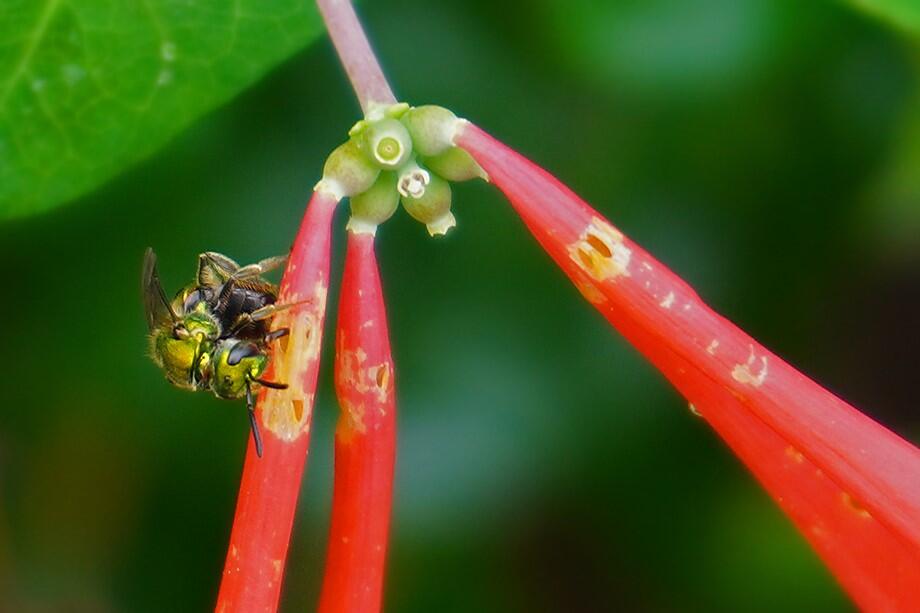
Bee species exhibit a variety of body sizes and structures, including tongue length. Body size and tongue length affect which specific flowers an individual bee can effectively use for pollen and nectar collection.
Tiny bees are more suited for tiny blossoms grouped in a single flower head, such as fennel flowers. Large bees with short tongues cannot easily get to the pollen inside a small, bell-shaped flower (Photo 4).
For detailed information on the native bees of Oregon and the plants they pollinate, see the Oregon Bee Project and the Oregon Bee Atlas (sidebars).
Butterflies
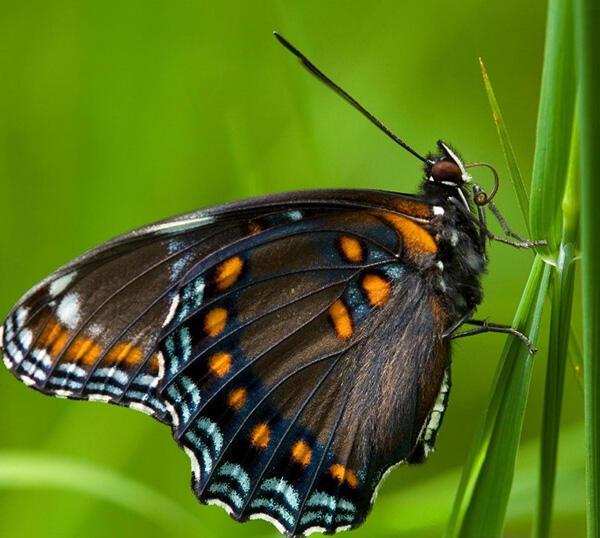
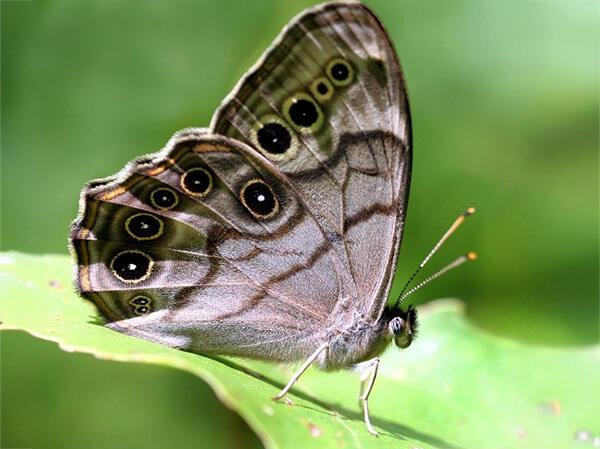
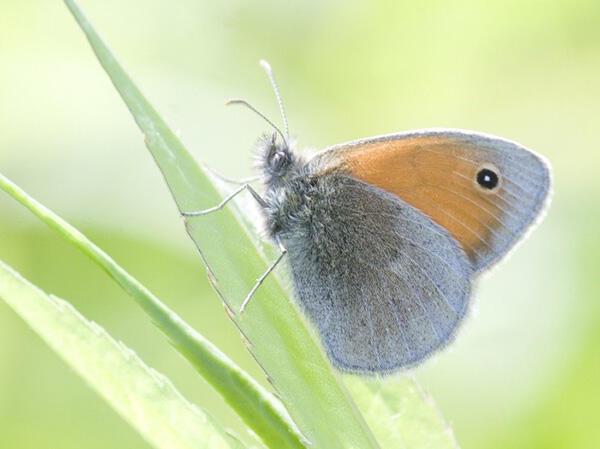
The beauty of butterflies inspires many gardeners to choose plants specific to butterfly needs (Photo 5). These include deeply throated flowers that contain nectar as well as flat daisy shapes that serve as easy landing pads. In the process of drinking nectar from flowers, butterflies collect pollen on their antennae, faces and wings and move it from one flower to the next (Photos 6, 7).
Butterflies are most attracted to brightly colored flowers in oranges, yellows and reds.
New butterfly gardeners are sometimes flustered by the feeding habits of baby butterflies, also known as caterpillars. The plants caterpillars feed on, known as host plants, are usually different from the plants adults of the same species depend on for nectar. Caterpillars may eat host plants to the ground, leaving no flowers for the adults.
When gardening specifically for butterflies, be prepared to sacrifice some food in the form of host plants for caterpillars. For example, some swallowtail caterpillars feed on dill and parsley, so butterfly gardeners may want to plant extra amounts of these herbs if they will be consumed by both caterpillars and people.
Flies, beetles and other insect pollinators
In the high desert portions of Oregon, where morning temperatures are cool, flies are important pollinators early in the day. Bees need temperatures between 50°F and 55°F to fly and visit flowers, whereas many flies actively visit flowers when temperatures are in the 40s.
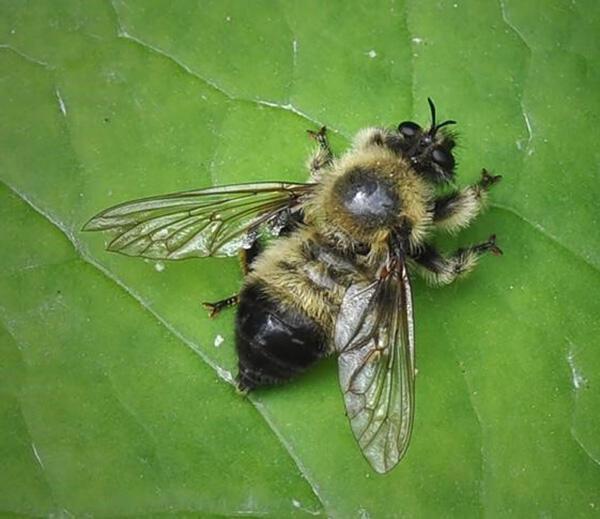
One family of flies called the Syrphids is beneficial in more than one life stage. Syrphids, also known as hover flies, are predators during their larval stage, feeding on other insects. As adults, however, hover flies are effective pollinators. The hairy bodies of some flies contribute to their effectiveness as pollinators (Photo 8).
Beetles, especially those with “hairy” faces or bodies that can capture and move pollen, can also be pollinators. Smooth-bodied beetles without hairs aren’t as effective at moving pollen from one plant to the next. Flowers pollinated by beetles, such as magnolia or hibiscus, tend to produce pollen from multiple stamens (the male fertilizing organ of the plant; see “Insect terms glossary”).
Some moth species are pollinators but are less frequently encountered because they’re mostly active at night. Moths are drawn to flowers with white color and sweet smells detectable at night.
Pollination syndrome
Different pollinators are attracted to different types of plants. A wide variety of plant shapes, colors and fragrances will attract a wide variety of pollinators. For example, bees are most attracted to blue, yellow and white flowers, while butterflies prefer brightly colored flowers with nectar (Table 1).
|
Flower trait |
Bats |
Bees |
Beetles |
Birds |
Butterflies |
Flies |
Moths |
Wind |
|---|---|---|---|---|---|---|---|---|
|
Color |
Dull white, green or purple | Bright white, yellow, blue or UV | Dull white or green | Scarlet, orange, red or white | Bright, including red and purple | Pale and dull to dark brown or purple; flecked with translucent patches | Pale and dull red, purple, pink or white | Dull green, brown or colorless; petals absent or reduced |
|
Nectar guides |
Absent | Present | Absent | Absent | Present | Absent | Absent | Absent |
|
Odor |
Strong, musty; emitted at night | Fresh, mild, pleasant | None to strongly fruity or fetid | None | Faint but fresh | Putrid | Strong sweet; emitted at night | None |
|
Nectar |
Abundant; somewhat hidden | Usually present | Sometimes present; not hidden | Ample; deeply hidden | Ample; deeply hidden | Usually absent | Ample; deeply hidden | None |
|
Pollen |
Ample | Limited; often sticky and scented | Ample | Modest | Limited | Modest | Limited | Abundant; small, smooth; not sticky |
|
Flower shape |
Regular, bowl-shaped — closed during day | Shallow; have landing platform; tubular | Large, bowl-like (magnolia) | Large, funnel-like; cups; strong perch support | Narrow tube with spur; wide landing pad | Shallow; funnel-like or complex and traplike | Regular; tubular without a lip | Regular: small and stigmas exerted |
Source: U.S. Forest Service
Insect ‘stratification’
In addition to preferring a specific type of flower, each type of beneficial insect may occupy a specific niche in both time and space in the garden. In other words, a niche for each insect type can be provided through careful plant selection. For instance, some native bees may be present in the garden only early or late in the growing season, while other species may be found from spring through fall. Long-tongued bees can feed from bell- and trumpet-shaped flowers, while short-tongued bees need flat flowers like daisies. Butterflies are active during the day, while most moths access flowers at night.
There is a beneficial insect for every flower type, time of day and part of the growing season — not all are present in the garden at the same time. The concept of different animals and plants in layers — both in time and in physical space — is sometimes referred to as stratification. Insects and flowers occur in various layers of the landscape, at different times of the day and at different times of the year. For more details on supporting pollinators, including plant selections and planting plans, see Enhancing urban and suburban landscapes to protect pollinators, EM 9289.
Predators
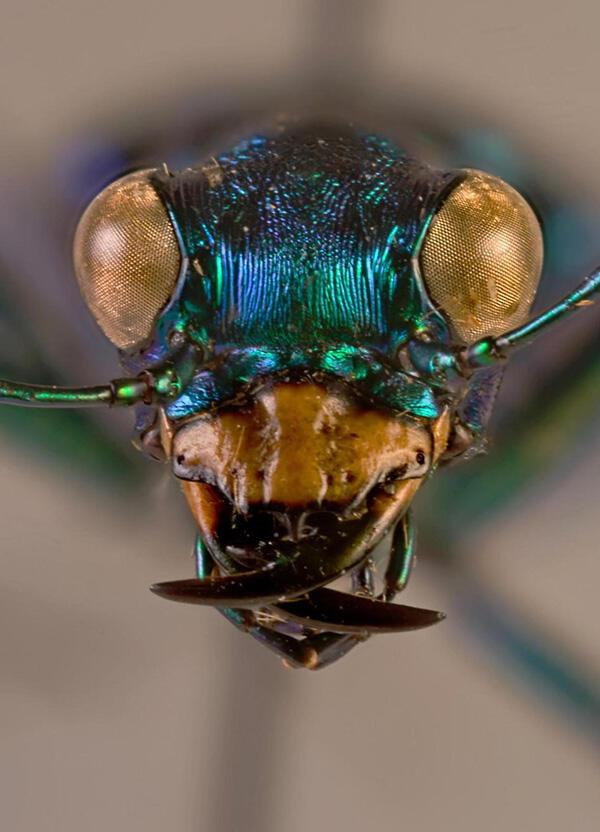
Insect predators usually eat other insects or other pests such as spiderlike mites. Like larger, more familiar predators, insect predators have physical features that help them see, chase, grasp and eat prey more easily. Predatory insects often have long, strong legs for running: Mantids and some predatory beetles have enlarged front legs well-suited for grasping. Large mandibles, (mouthparts similar to jaws) as well as large eyes relative to an insect’s body size, are also typical of predators (Photo 9).
For a quick overview of predator types and number of species, see Table 2, Insect predators and the pests they consume. See also Gallery of insect predators.
Some insect predators are specialists, feeding on only one type or group of insects. For example, the tiny aphid midge — a fly — feeds exclusively on aphids during the larval stage of its life. Most common garden insect predators are generalists that feed on a variety of insects.
The big-eyed bug is an example of a generalist — it has been documented feeding on more than 60 other insect species or their eggs. Praying mantids, one of the most easily recognized insect predators, feed mainly on larger insects like wasps, flies, bees and moths.
While effective predators, mantids do not usually feed on the insects that present common pest problems in the home garden.
Many types of insects can be predators, including flies, beetles and true bugs. Some of these insects are predatory throughout their lives, whereas others are not. In many cases, the immature stage of the insect feeds most heavily.
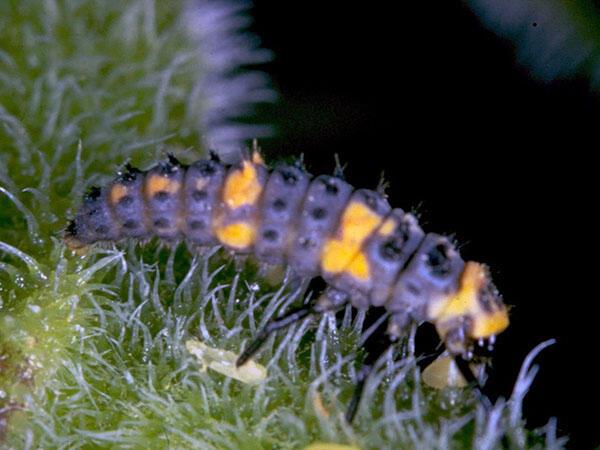
Recognizing immature predators that may look different from their adult counterparts can be challenging. For instance, most gardeners recognize several different species of adult lady beetles, but the predatory larvae of lady beetles are less commonly recognized, although just as predaceous (Photo 10).
Because they are easier to observe and recognize, insect predators are more familiar to gardeners than parasitoids. Below are some of the most common and easily recognized insect predators.
Assassin bugs
These insects are members of a group entomologists call “true bugs.” These predators lay in wait on flowers for prey insects. A bite from their needlelike mouthparts releases a paralyzing fluid that subdues the prey insect. Assassin bugs are sometimes brightly colored as immatures, but may be brown, gray, green or black as adults. The ambush bug, a type of assassin bug, is common in flowers in late summer throughout the Pacific Northwest. Its mottled coloration provides camouflage while it waits in flowers. Ambush bugs have “raptorial” front legs that help them grasp prey, often insects much larger than themselves (Photo 11).

Gallery of insect predators
Meet the beneficial insects that consume aphids and other pests.
Big-eyed bugs
These “true bugs” have incomplete metamorphosis, so the young and adults are similar in appearance. As the name suggests, the eyes of these insects are large in relation to body size and stick out from each side of the head.
Big-eyed bugs feed on more than 60 species of insects and insect eggs, and are found in lawns, vegetables and ornamental plantings. They can sustain some nourishment from plants when pest insect numbers are low. This may enable them to remain in a garden system even when there are fewer pests.
Ground beetles
Ground beetles include multiple species of predatory beetles that actively hunt insect prey on or near the ground. They can vary in size and color; however, adults of the most common species are usually black with long legs and parallel grooves in the outer wings that resemble stripes.
Ground beetles generally have visible jaws (mandibles) that they use for grasping their prey.
Ground beetles can be seen scurrying along the ground if disturbed. They prefer to remain hidden during the day and search for food at night.
Both adults and larvae are predators and feed on other insects or even slugs. Juvenile insects undergo complete metamorphosis and have little resemblance to adults.
Lacewings
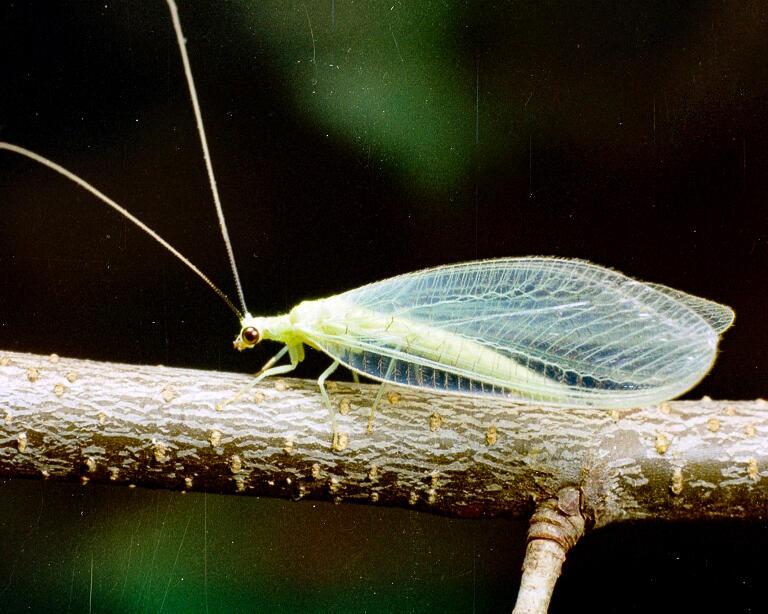
The lacewing is another insect that undergoes complete metamorphosis — lacewing larvae have no resemblance to adults. Larvae are generally green or brown, with soft, alligator-shaped bodies. Adults may be green, brown or golden.
Lacewings have large, clear wings with many veins that are held in an upright position, tented over the body. Female adult lacewings need nectar as part of their diet to lay eggs. Nectar-producing flowers may encourage these beneficial insects in the garden.
Lacewings are associated with many vegetable crops, especially those commonly infested by aphids.
Lady beetles
Lady beetles, or ladybugs as they are commonly known, are generalist predators, meaning they eat many kinds of prey. Both the adults and larvae are predatory.
Lady beetle larvae look quite different than adults: Larvae are soft-bodied and elongated, looking like mini-alligators (see Photo 10). The colors of the adults and larvae are usually red to orange and black, but adults of some species may be beige or yellow.
Lady beetles are most effective as aphid predators, especially when aphid populations are high. Depending on the species, an individual immature or adult female ladybug may eat several hundred aphids per day. Lady beetles will feed on insect eggs and other small insects when aphids are not present. They also need pollen in their diet.
Mantids
Young and adult forms of this large predator are easy to recognize. Mantids demonstrate a preference for large insects and don’t distinguish between pests and other beneficial insects.
While easy to identify, mantids are less likely to prey on common home garden pests like aphids, mites, thrips and whitefly. They prefer larger prey.
Minute pirate bugs
Among the smallest of the “true bugs,” minute pirate bugs can barely be seen without magnification. These insects specialize in feeding on small insects like thrips and insect eggs. They also feed on spider mites.
Like big-eyed bugs, minute pirate bugs can switch to plant material when pests and eggs are not present. This characteristic makes these insects more susceptible to systemic insecticides. Avoid or delay using systemic pesticides when these predators are present in the garden system.
Predatory mites
Predatory mites can be as small as 1/50 inch, and are teardrop- or pear-shaped with three to four pairs of legs, depending upon the life stage. They can vary in color from cream to green to red and are often smaller and faster-moving than the other mites and insects they feed upon.
All four life stages of mites feed on small arthropods, including fungus gnat larvae, as well as thrips and mites, such as spider, bulb and rust mites.
Predatory mites can be found naturally in farms and gardens and can also be purchased for use in humid spaces such as greenhouses.
Snakeflies
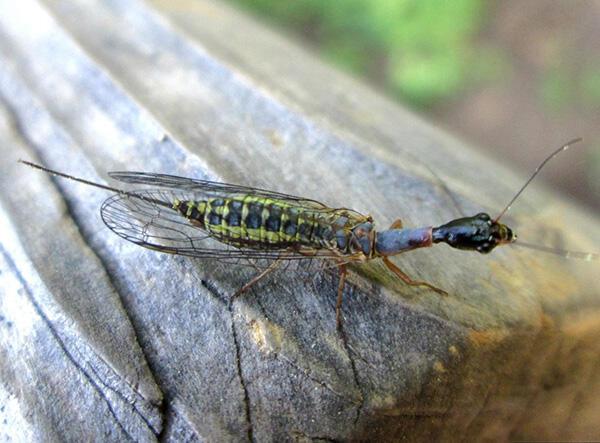
Gardeners have commented that this predator looks like several other insects combined. Adult snakeflies resemble a lacewing, with an extremely long thorax (the body segment between the head and abdomen), and can lift the head above the body into a pose somewhat like a striking snake. Snakefly adults are typically darker in color than lacewings (Photo 12).
Adults feed on aphids and mites. Larvae appear quite different from adults and live inside trees, where they feed on wood-boring insects.
Snakeflies are unusual in the insect world in that the pupa can move around and even bite when disturbed. Most insects are unable to move and react while in the pupal stage.
Sphecid and vespid wasps
These insect groups include hornets, paper wasps and yellowjackets. While often considered pests due to the painful stings and aggressive nature of some species, wasps are also important predators in the garden. Adults are known for attacking caterpillars and taking them back to the nest to feed larvae; however, some species will attack any insect available, including those that we consider beneficial. Larvae feed on insects provided by the adult female or parasitize other insects, depending on the species. See Vegetarians, parasitoids and predators: Lesser-known wasps of Oregon, EM 9426.
Hover fly larvae
Female hover flies lay single eggs among infestations of aphids or the eggs of other insects.
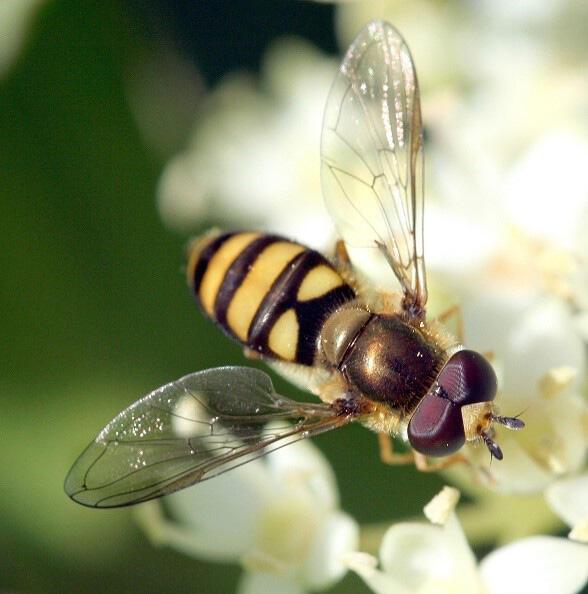
This diverse groups of insects have complete metamorphosis. The larvae are the predatory stage. Hover fly larvae feed on pest insects for two to three weeks before forming a pupa and becoming an adult. Adults often resemble bees and are frequently seen around flowers.
Hover flies can be distinguished from bees by their flight pattern — they can hover over flowers like a helicopter, while bees cannot.
Another major difference in appearance is the eyes. Flies have large eyes that take up most of the head, while bee eyes are much smaller and do not meet at the center of the head (Photo 13).
In plantings where many pests are present, hover flies will have multiple generations per year. Hover flies are important as pollinators when temperatures are too cool for bee flight, such as early in the growing season and early in the day. Thus, the niches of hover flies and bees are stratified by the time of day they are most abundant in the garden.
Noninsect predators in the garden
In addition to insects and predatory mites, a variety of other insect-feeders may be found in the home garden. These include bats, birds, spiders and centipedes.
While in-depth discussion of these creatures is outside the scope of this publication, it is worth noting that many of the same practices used for encouraging insects in the garden apply to noninsect predators. Diverse plantings and appropriate habitat can encourage their presence in the garden. Providing appropriate habitat may be as simple as leaving leaf litter at ground level among plants instead of maintaining an overly tidy garden space.
Spiders and predatory mites may be susceptible to some pesticides. Whenever possible, avoid broad-spectrum pesticides that kill a wide range of species.
Gallery of parasitoid wasps
Meet the beneficial wasps that lay their eggs into host insects.
Parasitoids
These insects spend at least part of their lives on or within the body of a host insect of a different species. Most parasitoids are small, stingless wasps or flies, which are harmless to humans. The host is another insect species — female parasitoids lay their eggs on either host insects or insect eggs. Some female parasitoids lay eggs on multiple individuals of an insect species, while others may lay many eggs in one host individual.
Wasps and flies have complete metamorphosis, so the larvae in the host insect will look completely different from the adult, flying insects.
As the parasitoid completes its development inside the host, the host insect is typically killed. After the parasitoid egg hatches and completes its development, an adult emerges from the dead host insect. Some parasitoids exit the host insect before pupating into an adult. For an overview of parasitoid types and diversity, see Table 2, Overview of parasitoid wasps and Table 3, Overview of parasitoid flies. See also Gallery of parasitoid wasps.
Parasitoids can be challenging to observe in the garden because some are very small, and all spend part of their lives inside other insects. Despite being difficult to see, parasitoids are important regulators of pest populations. Sometimes the most easily visible evidence of parasitoids at work is the presence of dead host insects with tiny holes in their bodies.
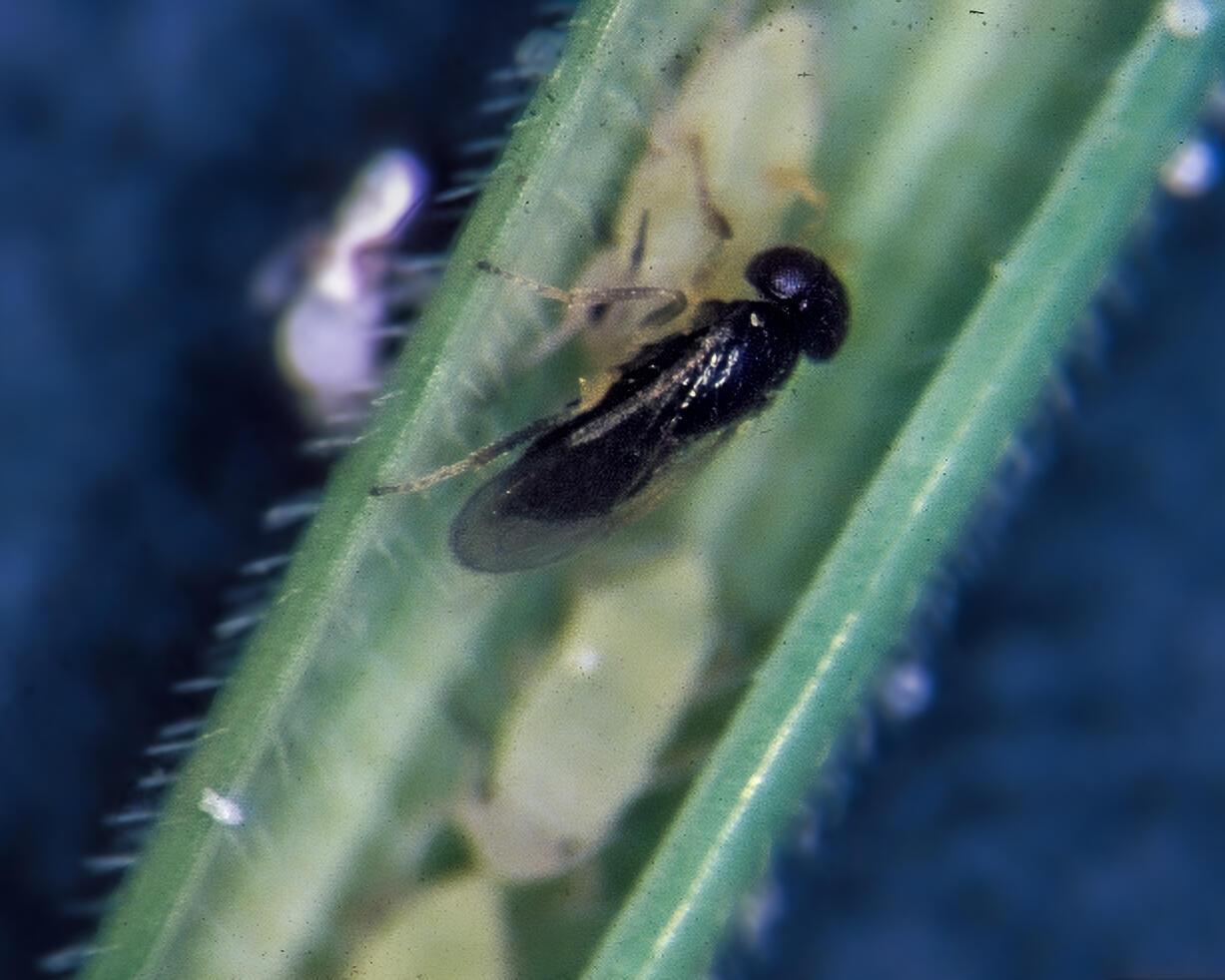
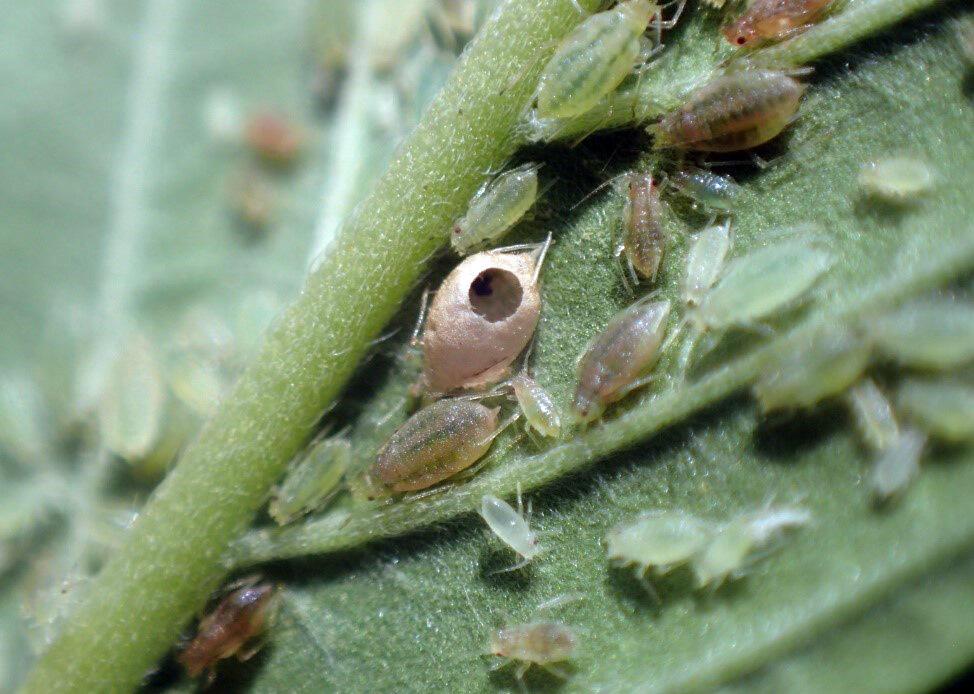
Wasps commonly parasitize aphids, leaving behind evidence in the form of shells called "mummies." Tiny wasps develop inside and exit through a small hole. Mummies are dry and may be gold, tan, brown or black in color, depending on the aphid and wasp species. Mummies are different in color than the live aphids nearby (Photo 14).
Parasitoids include some of the most effective and available insects accessible for purchase as biological control (biocontrol) agents for commercial producers. Biocontrol refers to the use of live organisms such as insects, mites, fungi and bacteria to control populations of pests.
While typically too expensive for a good return on investment in the home garden, naturally occurring parasitoid wasps provide important pest control that enables gardeners to use significantly fewer pesticides. The major groups of parasitoids that are likely to be present in the home garden include various species of wasps and flies.
Parasitoid wasps
- Aphidid wasps. This is a subgroup of Braconidae and includes wasps that parasitize aphids, killing them and leaving a “mummy” as described above. They are tiny at approximately 0.1 inch in size.
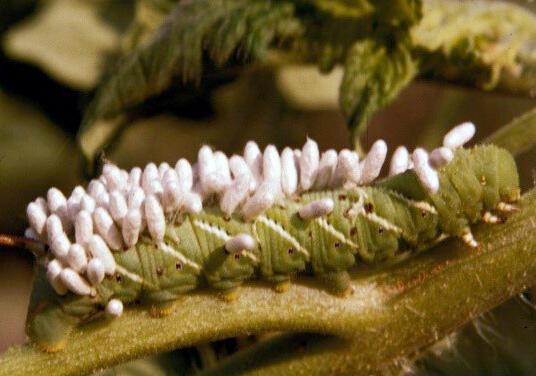
- Braconid wasps. These wasps vary in size from 0.04 (3/64) to 0.60 (19/32) inch and have many hosts including caterpillars, beetles and flies. Many lay their eggs within their hosts. The parasitoid eggs may develop immediately, or after the host insect hatches from the egg and is a larva (known as delayed development). In addition, many Braconid parasitoids pupate in silken cocoons on the outside of the host or even separate from the host. A common Braconid wasp that parasitizes tomato hornworm is found in many home gardens (Photo 15).
- Chalcid wasps. These are small wasps (1/50-1/16 inch) that are often dark in color or metallic blue or green. Their hosts include the eggs or larval stages of scales, moths, flies and grasshoppers.
- Ichneumonid wasps. This is a large group of parasitoids that vary in size from very small (1/8 inch) to large (approximately 1½ inches). These wasps have long, jointed antennae and a narrow “waist.” Some Ichneumonids have long ovipositors for laying eggs into caterpillars, beetles, flies, horntails or sawflies.
- Trichogramma wasps. Adults are extremely small at 1/25 inch. They are egg parasitoids of many insect species, particularly butterflies and moths, including the codling moth, a common Pacific Northwest pest of apple and pear trees. Parasitized eggs will often turn black. Look for these darkened eggs to detect parasitism by this group of wasps.
Parasitoid flies
Bombyliidae
Commonly known as “bee flies,” bombyliidae flies are bee mimics (Table 4). The adults use their proboscis (sucking mouthparts) to feed on nectar and are often seen hovering near flowers. Bee flies can be distinguished from hover flies by their hairy bodies and long proboscises.
The larvae of bee flies parasitize the ground-dwelling larval stage of various species of wasps, beetles and flies (Photo 8).
Tachinid flies
The Tachinids are a large family of flies that includes numerous parasites, with approximately 8,200 species worldwide. They vary in size and appearance; however, many are large (up to 2/3 inch) and look similar to house flies. Tachinid flies lay oval, whitish eggs on their prey. These eggs can often be seen on the surface of their hosts, which include caterpillars, sawflies, beetles or true bugs such as stink bugs.
Most parasitoid species attack only a single host species with which they have evolved closely. For example, an aphid parasitoid will not parasitize a caterpillar. Generally, most native insects have at least one parasitoid or predator that helps keep their populations in check.
Unfortunately, many invasive pests, which originate from other countries or regions, may not have parasites or predators present in the invaded area. This lack of natural enemies is a major reason why invasive insects are so problematic: The predators and parasites meant to help reduce pest populations are not part of the equation.
Invasive insects are typically not problematic pests in their native regions, where parasitoids and predatory insects exist. Outside of their native regions, some insects build up huge populations that severely impact crops and landscapes.
Decomposers and scavengers
In the soil and at the soil surface, decomposers benefit gardeners by contributing to healthy soil. Decomposers eat decaying plant matter, dead insects, dung and even natural mulches. These are broken down into smaller and smaller bits, eventually contributing structure to soil and nutrients to plants. Decomposers are a valuable part of a healthy soil ecosystem.
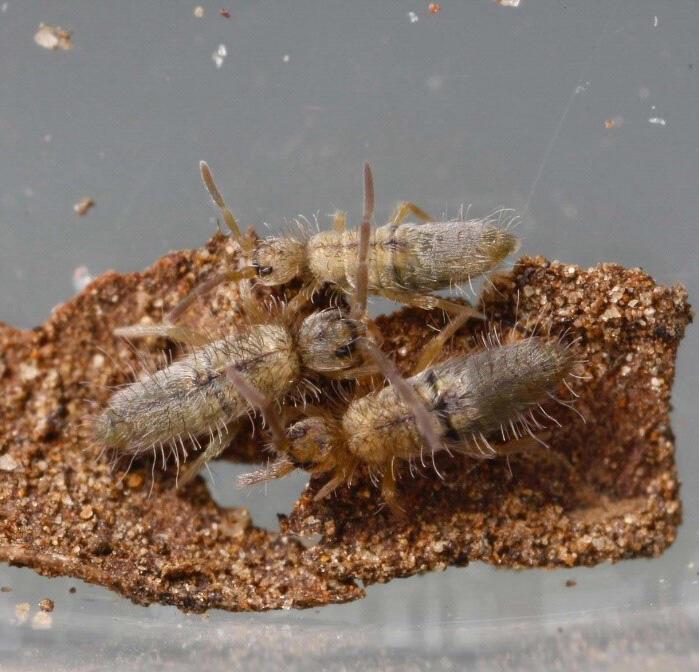
Decomposers and scavengers include both insects and noninsects. Insect decomposers include a variety of beetles, flies, termites and carpenter ants. The Collembola, a group of animals closely related to insects, are rarely seen (Photo 16) because they are tiny (1/10 to ¼ inch), and most species live in the soil. Collembola feed on decaying plant material, fungi and bacteria. They may also feed on insect feces, pollen and algae, providing ecosystem services as tiny soil “cleaners.”
Other noninsect examples of decomposers include earthworms, millipedes and numerous fungi and bacteria that can’t be seen without magnification. Together, these organisms are nature’s recycling service. In natural systems, decomposers even break down trees and animal carcasses.
You can encourage these beneficial organisms in the garden by maintaining healthy soil. Some practices that promote healthy soil include keeping the soil covered, maintaining diverse plant populations, increasing water filtration and avoiding tilling when possible.
Encouraging beneficial insects
Plant selection
Garden spaces well-suited for beneficial insects have a diversity of flower types, shapes and colors. Diverse flowers provide pollen and nectar for a broader range of insects.
Bee species are adapted to flowers of specific sizes and shapes. Bees with long tongues utilize deeper-throated flowers such as penstemons, while smaller bees with shorter tongues visit easily accessible, smaller blooms such as aster and goldenrod. Small insects, such as parasitoid wasps, need small flowers to forage upon.
Plants that bloom at different times are necessary so beneficial insects will have pollen and nectar sources throughout the growing season. Insects such as mason bees and hover flies are prominent early in the season, while insects such as the long-horned bee are commonly seen later, in summer through fall. Bumble bees are active all season and are one of the earliest pollinators seen in spring and among the latest in fall.
Consider growing host plants for caterpillars to feed on, as well as flowers that give nectar for adult butterflies.
Having multiple flower shapes and sizes in bloom from spring to fall will provide food to all these insects.
In addition, provide host plants for all stages of beneficial insect development. Many insects, especially those that undergo complete metamorphosis, have different feeding requirements for immature and adult life stages. Provide food sources for multiple life stages if possible. Consider growing host plants for caterpillars to feed on, as well as flowers that give nectar for adult butterflies.
When choosing plants for the garden or patio, consider which plants will provide nectar and pollen. Plants bred for ornamental purposes may not be ideal food sources. For example, breeders may be interested in increasing petal number to enlarge the bloom size, which adds a “pop of color” for consumers. However, this can reduce the amount or accessibility of the pollen and nectar. Single-flowered varieties are best for insects.
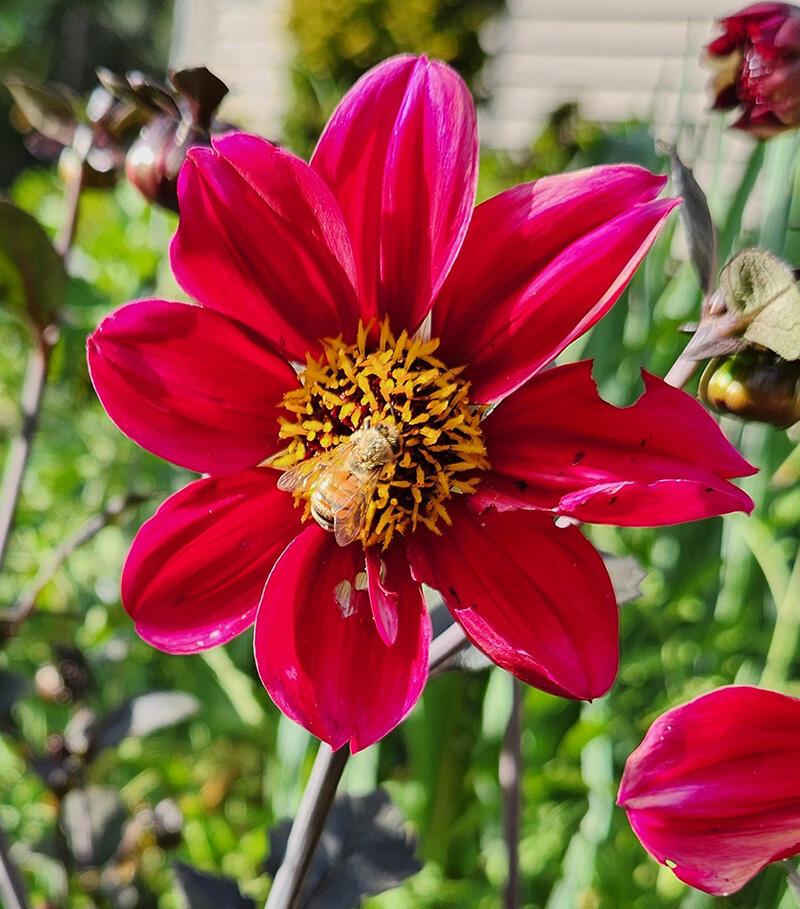
Florists are interested in growing flowers bred to be sterile, since pollen can be messy on tabletops, annoying customers. Plants most likely to have ample pollen and nectar for beneficial insects are simpler, single blooms (Photo 17), open-pollinated plants, or plants that are not hybridized.
Using native plants in the garden increases insect diversity. Native bees and insects prefer to forage on native plants. Although some non-native plants like lavender and catnip can be attractive to pollinators, they are often foraged on by non-native bees. Therefore, adding at least some native plants will help to increase the diversity of insects in a garden. Native plants may attract lesser-known species of bees that need specific conditions or plant species to thrive.
Grouping plants by family is one way to understand the types of beneficial insects that may be attracted to the garden or landscape. For suggested plant lists, see “Resources.”
Common plant families and the insects they attract
Carrot
Latin family name: Apiaceae
Examples: Dill, desert parsley, fennel
- Each “flower” is called an inflorescence and is a group of dozens of individual flowers.
- Individual flowers are shallow with easily accessible nectar.
- Attractive to small parasitic wasps and flies due to the small flower size.
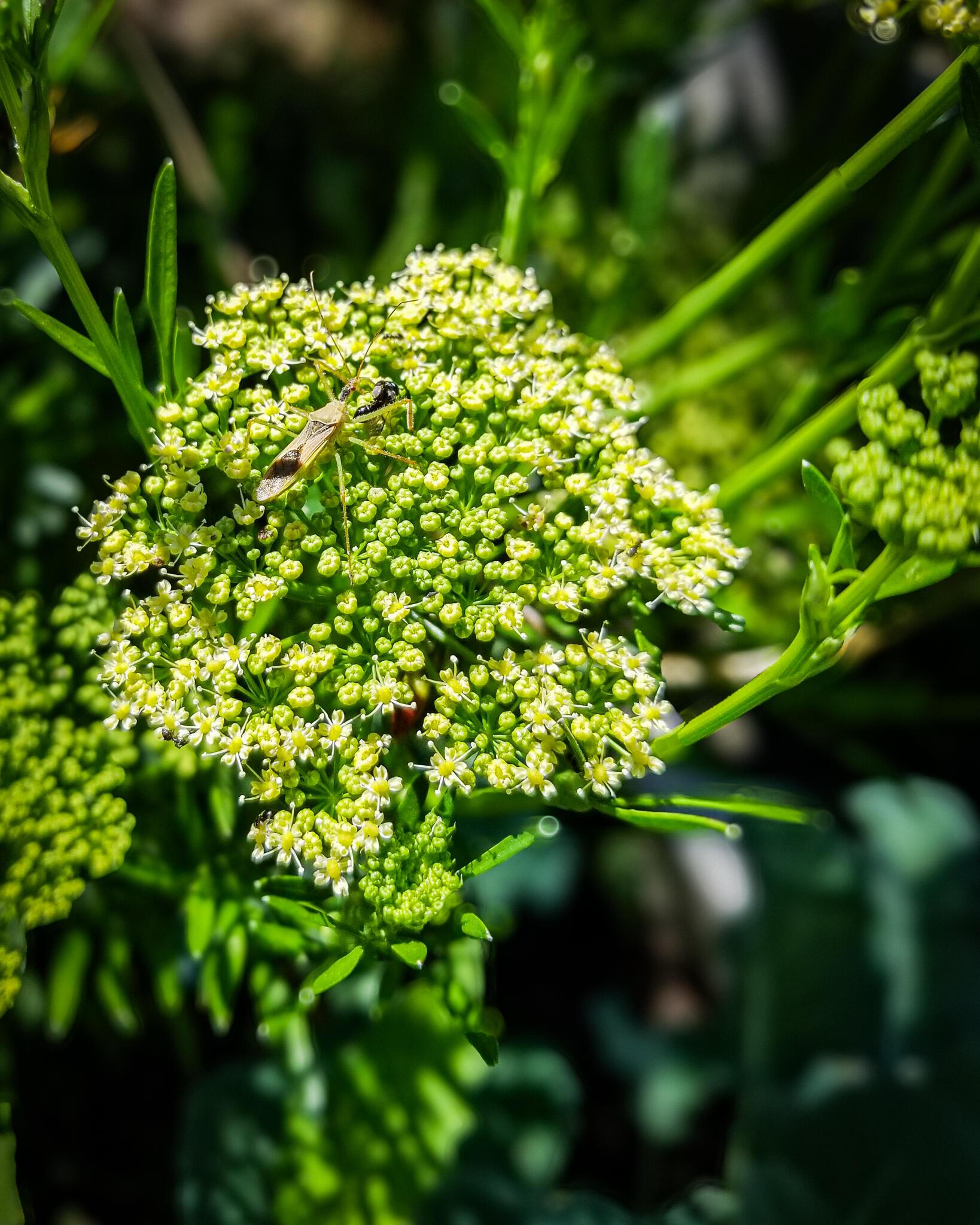
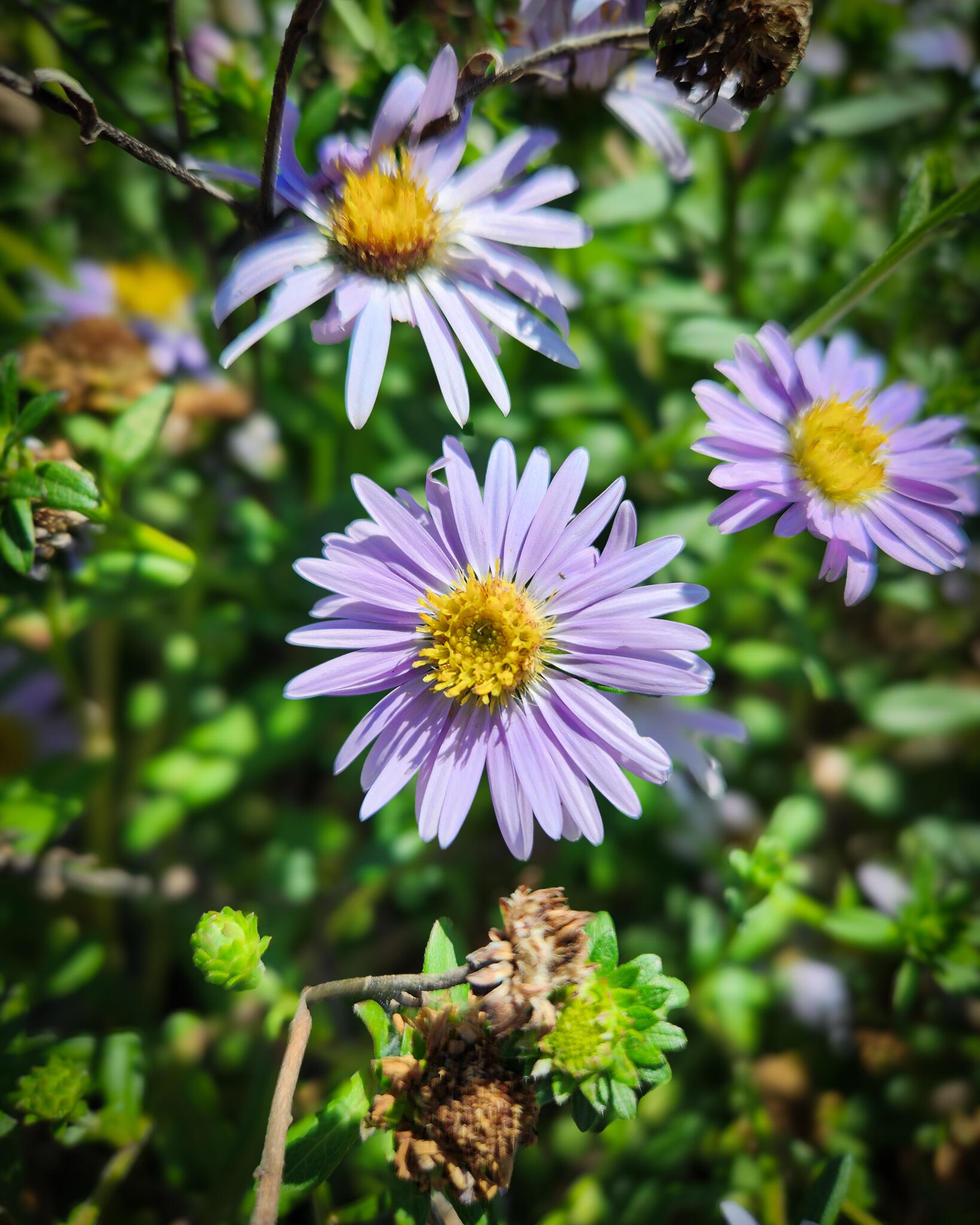
Aster
Latin family name: Asteraceae
Examples: Douglas aster (and others), goldenrod, Oregon sunshine, yarrow
- Each “flower” is a grouping of individual small flowers into a head shape.
- Heads are landing pads attractive to predators such as lady beetles and soldier beetles.
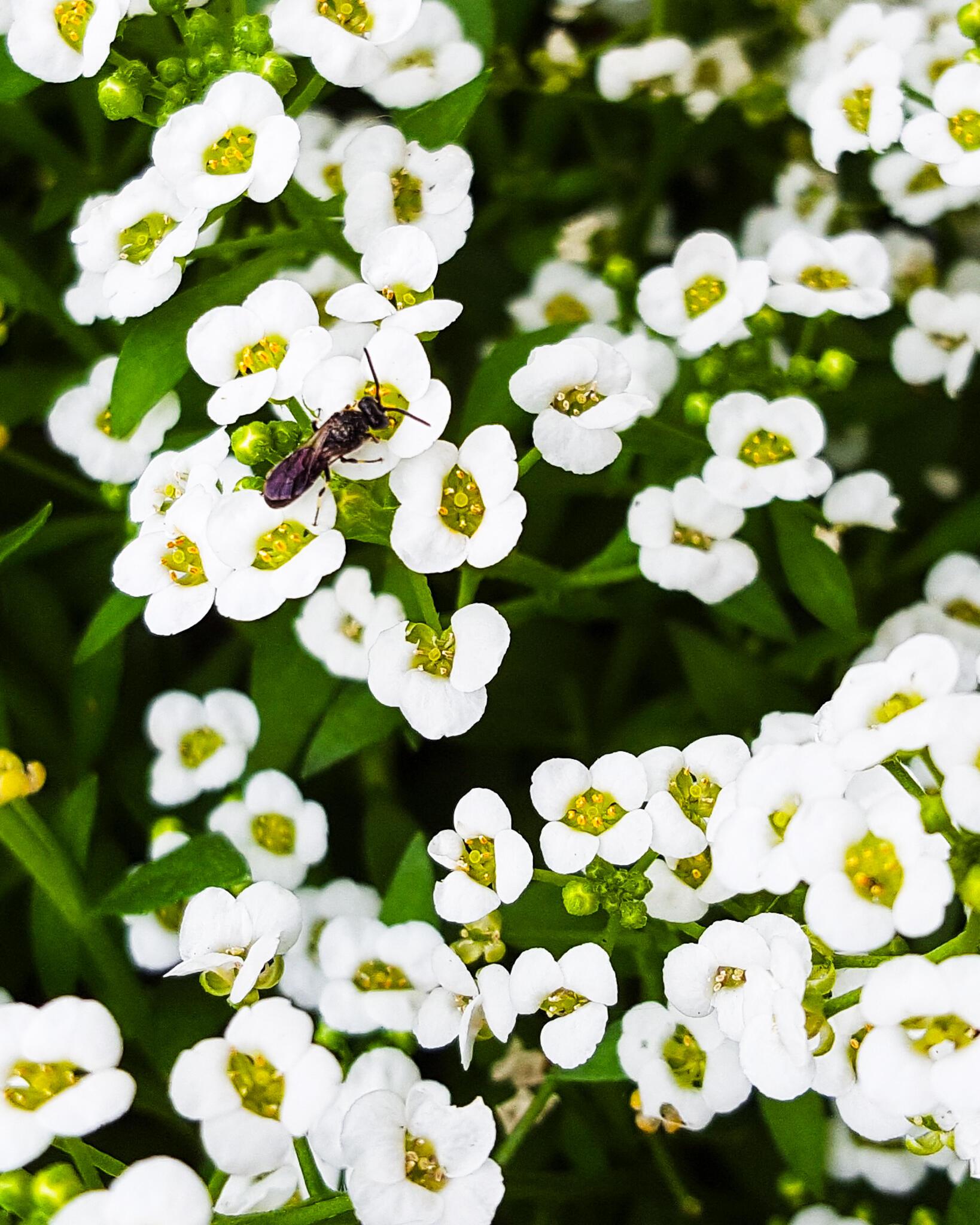
Mustard
Latin family name: Brassicaceae
Examples: Alyssum, radish, arugula, candytuft
- Shallow open flowers with four petals.
- Produce an abundance of pollen and nectar.
- Attract pollinators, hover flies, ladybugs.
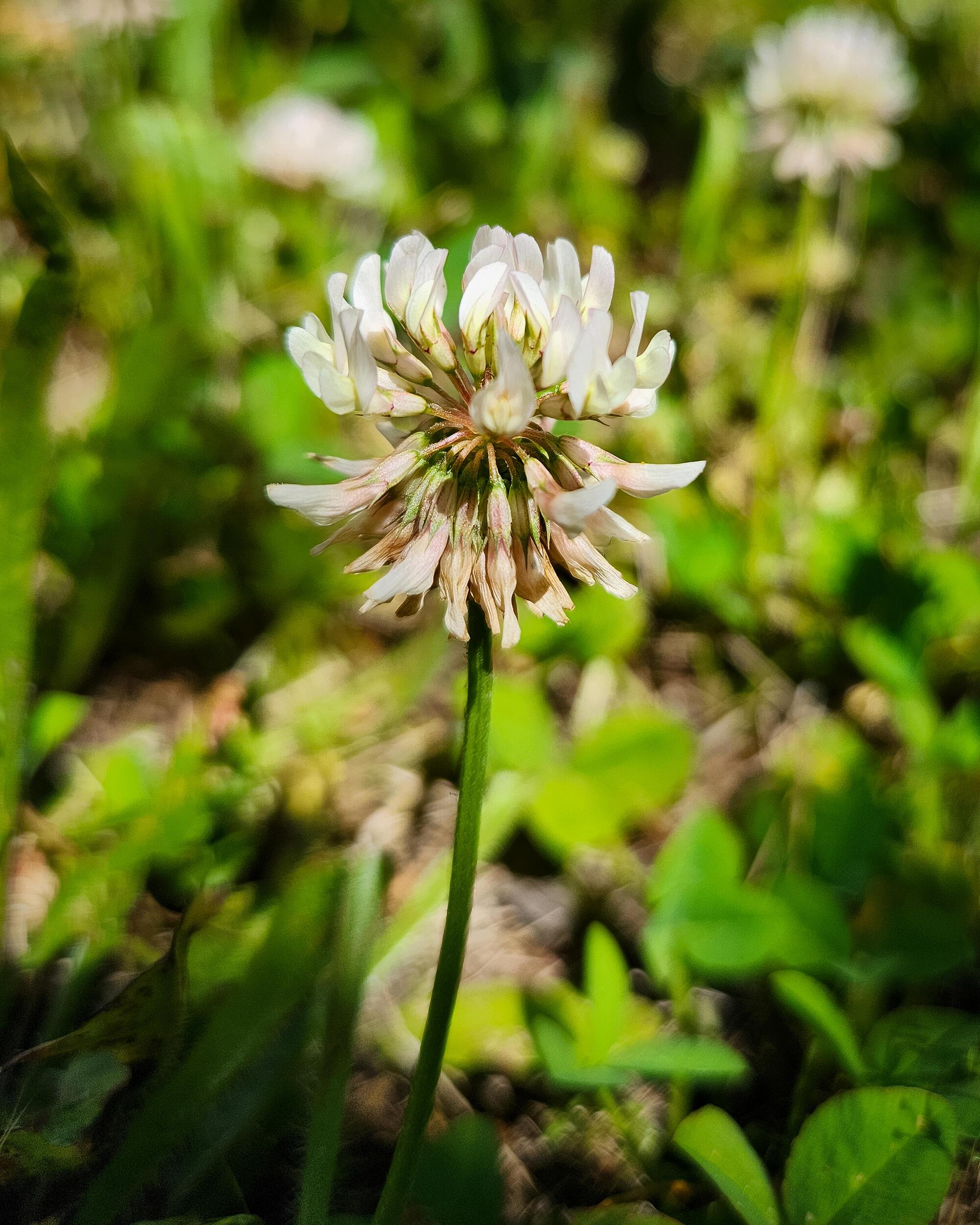
Bean
Latin family name: Fabaceae
Examples: Vetch, clover, lupine, false indigo
- Shallow open flowers with four petals.
- Produce an abundance of pollen and nectar.
- Attract pollinators, hover flies, ladybugs.
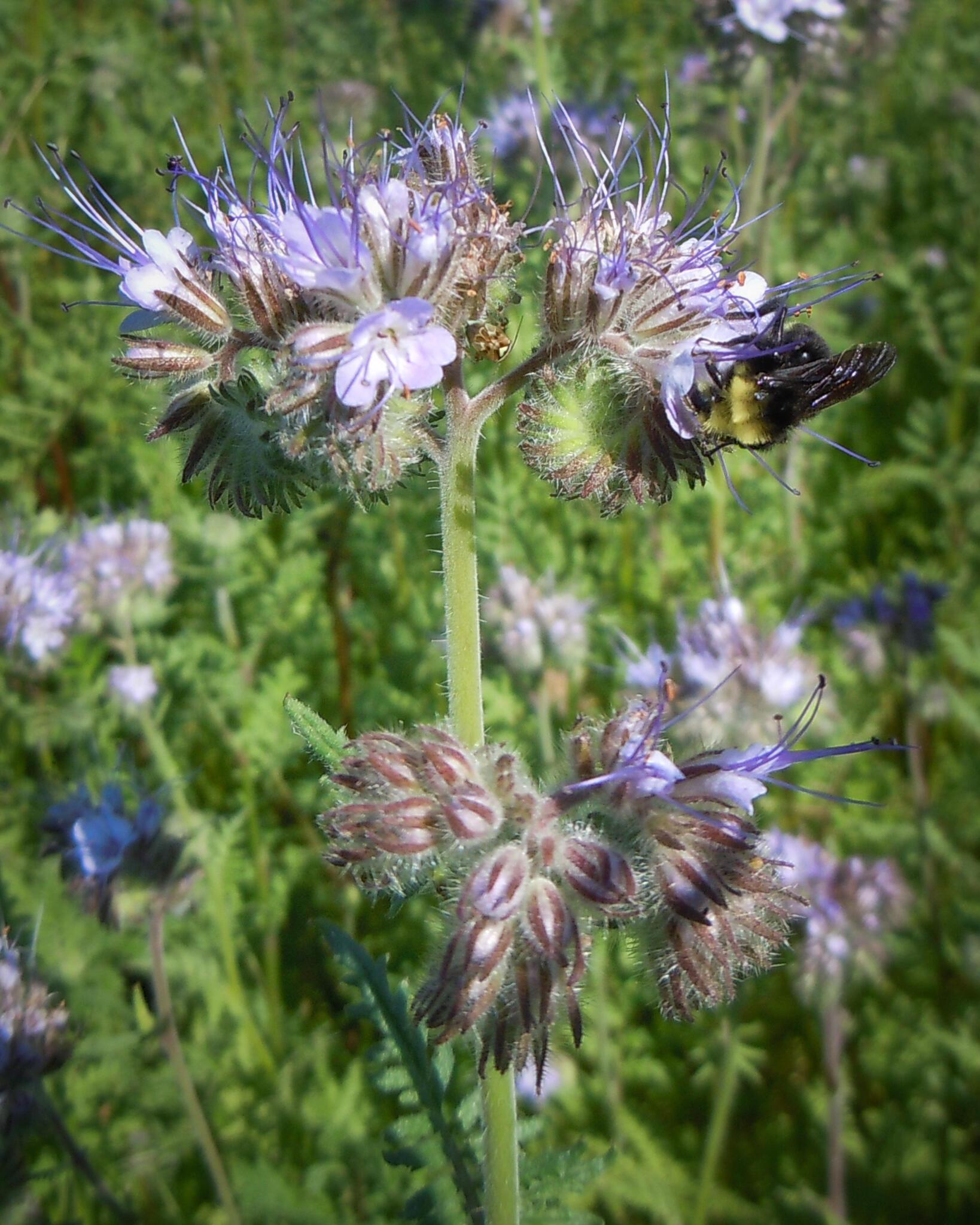
Waterleaf
Latin family name: Hydrophyllaceae
Examples: Phacelia, Pacific waterleaf
- Flowers open in succession.
- Attract bees, butterflies, hover flies and beneficial wasps.
- Provide nectar and pollen.
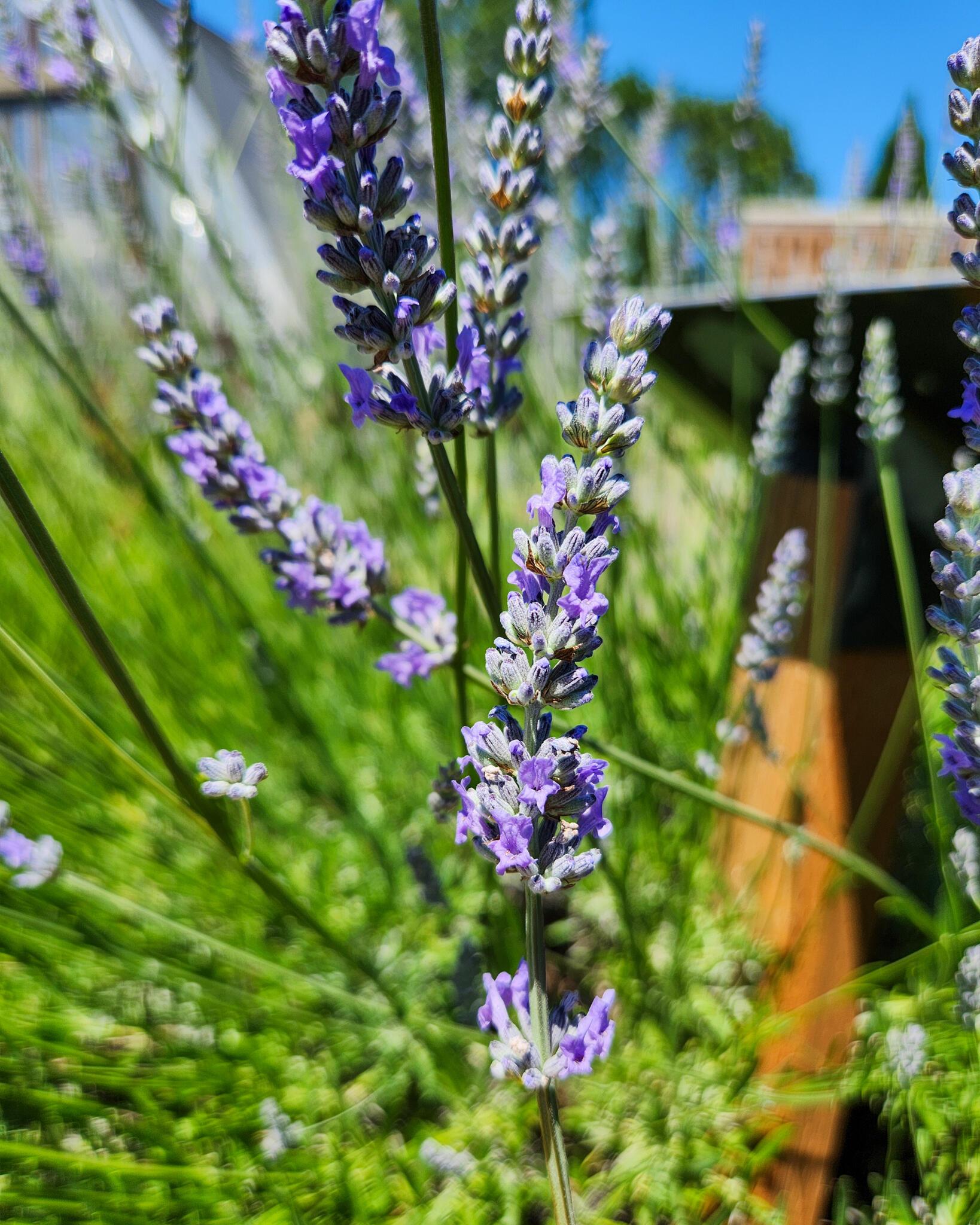
Mint
Latin family name: Lamiaceae
Examples: Lavender, bergamot, thyme, catmint
- Flowers often in clusters, providing many flowers in one stop.
- Sucrose-dominated nectar.
Plantain
Latin family name: Plantaginaceae
Example: Penstemon
- Bell-shaped corollas; can be a multitude of colors.
- Flowers are colored and shaped to suit their pollinators.
- Flowers contain nectar.
- Attract predators such as lady beetles, hover flies and bees.

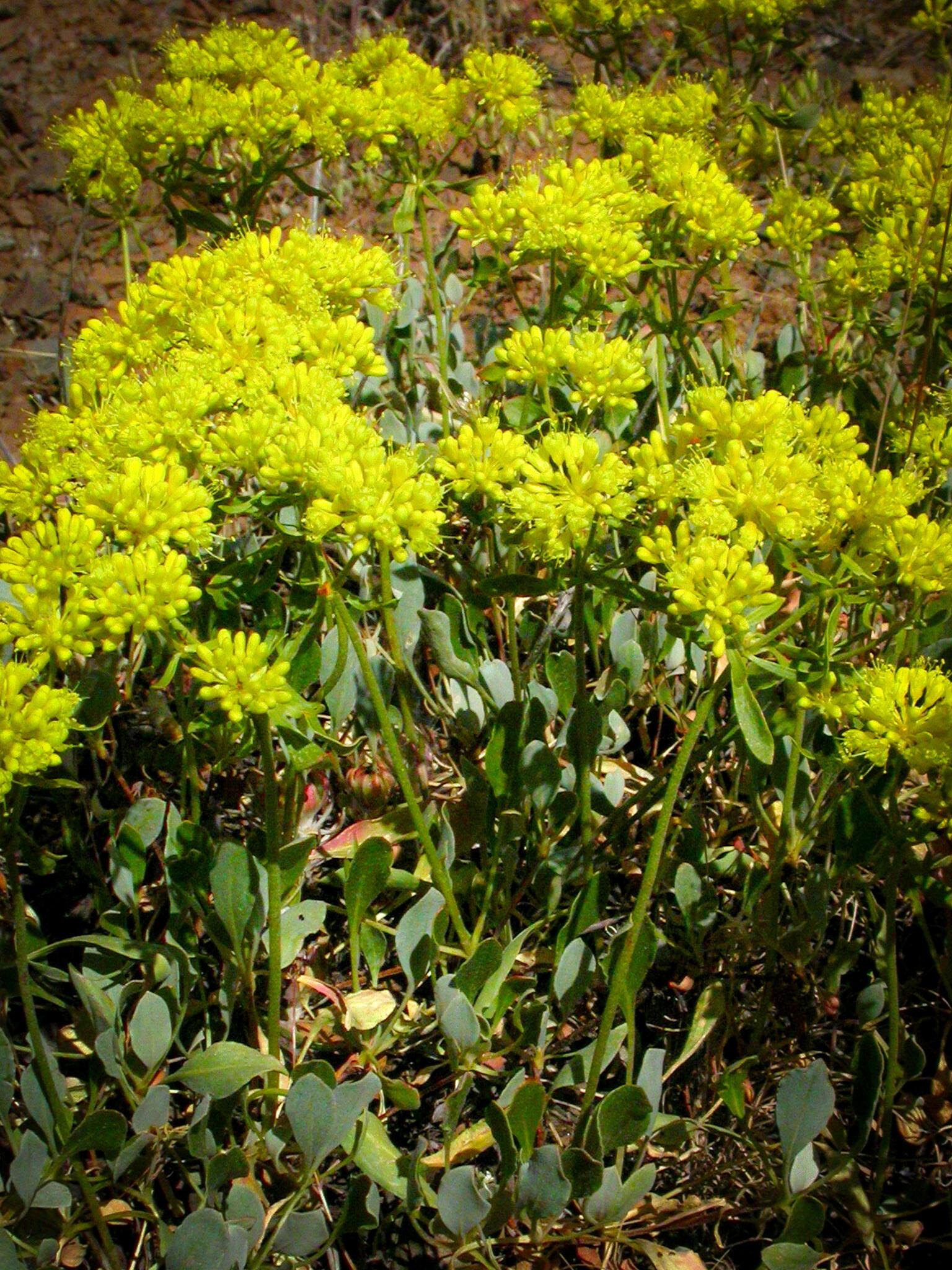
Buckwheat
Latin family name: Polygonaceae
Example: buckwheat
- Have easily accessible nectar.
- Flower prolifically.
- Drought-tolerant species available.
- Used commonly as a cover crop.
- Attract beneficial wasps, generalist predators, hover flies and bees.
Habitat
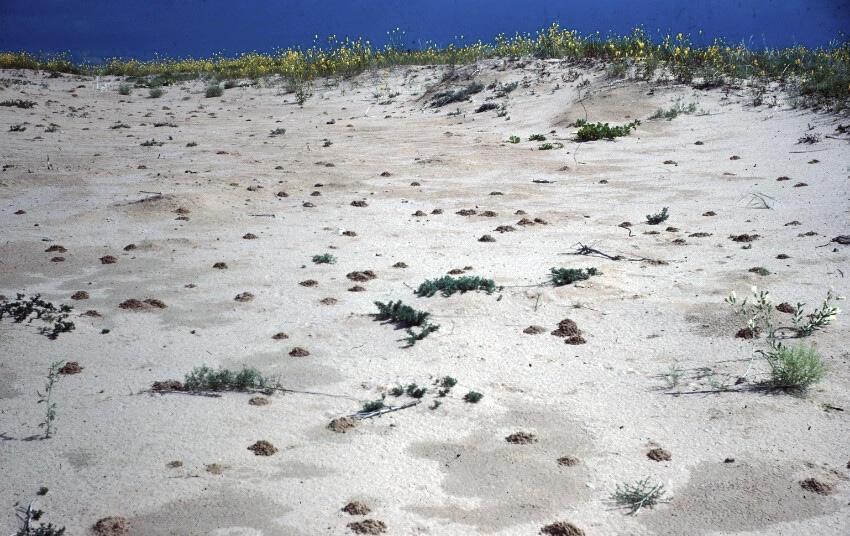
Insects need habitat to nest and live. Many native bees nest in the ground below open soil, or in old hollow stems from garden debris (Photo 18). Areas of tall grass and debris provide a safe space for ground beetles, which are predators of slugs, insect eggs and some species of weed seeds.
Soil disturbance harms ground-dwelling insects. Providing a garden habitat that is not perfectly maintained is helpful to beneficial insects. A less manicured garden gives insects space to hide, find food and nest.
Beneficial insects are more plentiful in a diverse habitat with many plant shapes and types, from bunch grasses to blooming trees. A landscape of only manicured lawn will not provide the habitat needed for most beneficial insects.
Purchasing beneficial insects
Some people purchase beneficial insects for pest control. This tactic is most likely to succeed in a greenhouse or high tunnel. Success is influenced by greenhouse temperature, degree of infestation, life cycle of the pest, and the appropriate ratio of beneficial insects for the job. Research is needed to match the situation with the best choice of beneficial insect.
Insect predators and parasites can be purchased either online or at a local garden center. Insects released into an open landscape or home garden often scatter rather than stay where needed to control pests. Lady beetles are commonly available in garden centers. These are collected in the wild in winter, then refrigerated. Due to their biology, these lady beetles typically disperse when released from their packaging.
Commercial insects may require specific temperature, humidity and prey conditions to become established. Without these appropriate conditions, it’s challenging and expensive to establish beneficial insect populations via release. Purchased insects may help the home gardener in the event of a severe outbreak, but long-term establishment of beneficial insects is likely best achieved by providing an inviting habitat.
In home gardens and landscapes, encourage predators and parasites by providing diverse resources. Beneficial insects need habitat, food sources for all life stages and water in an area without harmful pesticides. When these needs are met, beneficial insects are likely to be present. Use the strategies described in “Habitat.”
Pesticide use
Generally, pesticide use does not support beneficial insects in the garden. Even organic pesticides can harm beneficial insects when not used properly. A few holes in leaves are expected; do not automatically reach for a pesticide. Instead, check if the damage is affecting a harvestable part of the plant.
Plants can tolerate feeding damage in some situations. For example, beetles feeding on potato leaves early in the season will prevent proper tuber development. Later in the season, a few beetles feeding on leaves are less of a problem because most tubers have already developed.
Inspect plants regularly to identify and estimate the abundance of pests. Often, predators and parasitoids will establish themselves and manage pest populations. Beneficial insects may not be present at the beginning of a pest outbreak. Be patient and allow time for these insects to arrive, reproduce and reduce pests. Going straight to a pesticide disrupts this natural process. Regular scouting helps determine the number of pests relative to beneficial insects.
Unfortunately, invasive insects originally from other parts of the world may not be well managed by naturally occurring enemies. In this situation, physical insect removal or a change in practices may be helpful. Pesticides are usually a last resort. Contact your local Extension office for insect identification or assistance with developing a least-toxic management strategy.
Beneficial insects are susceptible to pesticides, just like pests. Consider beneficial insects when deciding which pesticide to use.
Beneficial insects are susceptible to pesticides, just like pests. Consider beneficial insects when deciding which pesticide to use. If a pesticide is needed, choose the least-toxic, yet effective pesticide for your situation. Avoid spraying blooming plants — pollinators can be affected when they visit flowers.
For detailed information about protecting beneficial insects when pesticides are needed, see How to reduce bee poisoning from pesticides, PNW 591.
Pesticides have different active ingredients or combinations of ingredients with varying formulations. Some products are less toxic and safer for beneficial insects than others. Insecticides can be broad-spectrum, meaning they kill a wide range of insects, or narrow-spectrum, meaning they are specific to particular kinds of insects. When possible, choose a narrow-spectrum product selected for the target pest. You need a proper insect identification to use these products, since they need to be matched to the specific pest. Your local Extension office can help you with pest identification.
Read insecticide labels to see which pests the product treats. Those with large lists of pests killed or statements such as “complete insect killer” indicate a broad-spectrum product. Some plant-derived products, such as neem, are broad-spectrum but are broken down quickly by the environment. These products are safer for beneficial insects because they are active for a shorter period.
Systemic insecticides, such as imidacloprid and other neonicotinoids, persist within a plant. The plant absorbs these products into its tissues. Depending on the formulation, the pesticide can remain active for a few weeks to a full year. An insect feeding on any part of a plant treated with systemic insecticides will be negatively affected. The insecticide can also be present in a plant’s nectar and pollen, where it can kill feeding beneficial insects. Avoid these products when gardening for beneficial insects. Whenever using pesticides, remember to follow the label exactly; the label is the law.
Putting it all together
Growing a garden that supports beneficial insects is not only rewarding but also beautifies your yard. The variety of plant types will provide habitat for insects, as well as other wildlife. Encouraging beneficial insects can improve pollination in the vegetable garden and home orchard, increasing food harvest.
In summary, when gardening for beneficial insects, we recommend the following practices:
- Plant a diversity of flowers. This includes plants with different bloom times, flower colors, sizes and shapes.
- Consider planting native plants and using plants with “simple blooms” rather than those bred for high petal count.
- Allow your garden space to be a little “messy,” creating habitat for beneficial insects.
- Be familiar with the identities and characteristics of common beneficial insects.
- Accept some insect feeding damage.
- Allow predatory and parasitic insects time to manage pests before reaching for pesticides.
- Reduce pesticide use and use the least toxic, yet effective, product for your pest.
Resources
The content of this document is intended to provide actionable ideas and information for use in the home garden and landscape. In recent years, appreciation for the value of pollinators and other beneficial insects has greatly expanded. This has resulted in a multitude of resources for gardeners seeking to encourage beneficial insects. Some of these additional resources are listed below.
Pollinators
- Mader, E., Smith, M., Vaughan, M., and The Xerces Society. 2011. Attracting Native Pollinators: Protecting North America's Bees and Butterflies: The Xerces Society Guide. Storey Publishing.
- Creating pollinator habitat, Colorado State University Extension.
- Enhancing urban and suburban landscapes to protect pollinators, EM 9289.
- Native plant picks for bees: 10 species you can grow to support wild bees in Oregon, EM 9363.
- Native Plants for Pollinators and Beneficial Insects: Maritime Northwest Region, The Xerces Society.
- Oregon Bee Project. Numerous references and publications are featured in the Resources section.
- Mader, E., Fowler, J., Vento, J., Hopwood J. The Xerces Society. 2016. 100 Plants to Feed the Bees: Provide a Healthy Habitat to Help Pollinators Thrive: The Xerces Society Guide. Storey Publishing.
- Pollinator Conservation Resources, Pacific Northwest Region, The Xerces Society.
- Shrubs and trees for bees: Attract a diversity of bees with plants native to Oregon, EM 9391.
- Wilson, J.S., and Carril, O.M. 2016. The Bees in Your Backyard: A Guide to North America’s Bees. Princeton University Press.
- Pyle, R.M. 2002. The Butterflies of Cascadia: A Field Guide to all the Species of Washinton, Oregon and Surrounding Territories. Seattle Audubon Society.
Beneficial insects
- Attracting Beneficial Insects, Clemson Cooperative Extension.
- Beneficial Insects of Utah, Utah State University Extension.
- How to reduce bee poisoning from pesticides, PNW 591
- Flint, M.L., and S.H. Dreistadt. 1998. Natural Enemies Handbook: The Illustrated Guide to Biological Pest Control. UC ANR Publication 3386, Oakland, California.
|
Predators |
Predatory life stage |
Approximate number of U.S. species |
Aphids |
Leafhoppers |
Spider mites |
Thrips |
Small caterpillars |
Insect eggs |
Soil insects |
Beetle larvae |
Fly eggs/ larvae |
Whitefly |
|---|---|---|---|---|---|---|---|---|---|---|---|---|
|
Ambush bugs |
Nymph, adult | 30 | *Eat larger insects (flies, bees, wasps); limited control of common garden pests. | |||||||||
|
Aphid midge |
Larvae | 2 | X | |||||||||
|
Assassin bugs |
Nymph, adult | 60 | *Eat larger insects (flies, bees, wasps); limited control of common garden pests. | |||||||||
|
Big-eyed bug |
Nymph, adult | 25 | X | X | X | X | X | X | ||||
|
Checker beetles |
Larvae, adult | 500 | X | X | X | |||||||
|
Damsel bug |
Nymph, adult | 40 | X | X | X | X | X | X | X | X | ||
|
Ground beetle |
Larvae, adult | 2,500 | X | X | X | X | X | X | ||||
|
Hover fly or syrphid fly |
Larvae | 900 | X | X | X | X | ||||||
|
Lacewing |
Larvae, adult | 150 | X | X | X | X | X | X | X | X | X | |
|
Lady beetle |
Larvae, adult | 475 | X | X | X | |||||||
|
Minute pirate bug |
Larvae, adult | 100 | X | X | X | X | X | X | ||||
|
Praying mantis |
Nymph, adult | 20 | *Eat larger insects (flies, bees, wasps); limited control of common garden pests. | |||||||||
|
Robber fly |
Larvae, adult | 1,000 | X | |||||||||
|
Rove beetle |
Larvae, adult | 3,000 | X | X | X | X | ||||||
|
Soldier beetle |
Larvae, adult | 470 | X | X | X | X | ||||||
|
Sphecid wasps |
Adult | 1,150 | X | X | X | |||||||
|
Spined soldier bug |
Nymph, adult | 1 | X | X | ||||||||
|
Stink bug (predatory types) |
Nymph, adult | 35 | X | X | X | X | ||||||
|
Vespid wasps |
Adult | 320 | X | X | X | |||||||
|
Wasp family |
Approximate number of U.S. species |
Primary host insect(s) |
Signs of parasitoid presence |
Commercially available for release |
How shipped |
|---|---|---|---|---|---|
|
Aphelinidae |
500 | Whitefly, aphids | Insect turns brown or black | 1 species, Encarsia formosa | |
|
Aphidiinae (subfamily of Braconidae) |
25 | Aphids — many species | Aphid mummies | Approximately 3 species | Pupae or adults |
|
Braconidae |
1,900 | Moth, beetle, fly larvae, moth eggs, insect pupae | Silky cocoons on/ near host | Approximately 3 species | Pupae |
|
Chalcidae |
2,000 | Scale, numerous others | “Empty” scales | 1 species, Aphytis melinus | Adults |
|
Encrytidae |
400 | Aphids, scale, mealybugs, eggs and larvae of beetles and flies | Dead pest insects | Approximately 4 species | |
|
Eulophidae |
600 | Flies, wasps, pupae, wood-boring beetle larvae | Paralyzed host insects, eggs on host | 1 species, Diglyphus isaea | |
|
Ichnuemonidae |
8,000 | Moth, butterfly, beetle, fly larvae and pupae | Cocoons on or near host | 1 species | Eggs, adult |
|
Pteromalidae |
500 | Larvae of flies, moths, wasps and beetles | No | n/a | |
|
Trichogrammatidae |
500 | Moth eggs | Eggs turn black | Approximately 3 species | Parasitized eggs |
Note: These wasp families do not have common names.
|
Fly family |
Approximate number of species worldwide |
Primary host insects — female flies lay eggs on these hosts |
Adult appearance |
|---|---|---|---|
|
Hump-backed flies, Acroceridae |
500 | Spiders | Tiny head for body size, humped back, long tongues |
|
Beelike flies, Bombyliidae |
5,000 | Wasps, beetles and flies | Very similar to bees, but only one pair of wings and larger eyes |
|
Blow-flies, Calliphoridae |
240 | Worms, slugs and snails | Often shiny or metallic, visible bristles on body |
|
Gall midges, Cecidomyidae |
1,200 | Aphids, spider mites, scale, whitefly, thrips | 2-3 mm body length, with long, stiltlike legs |
|
Thick-headed flies, Conopidae |
800 | Adult wasps and bumble bees | Many appear similar to small, narrow "waist" wasps. |
|
Tangle-winged flies, Nemestrinidae |
300 | Grasshoppers, scarab beetles | Adults beelike, often with striped or hairy abdomens |
|
Phoridae |
300 | Wasps, flies, beetles, moths, ispods | |
|
Pipunculidae |
1,000 | Leafhoppers, planthoppers, spittlebugs | |
|
Pyrgotidae |
350 | Scarab beetles | |
|
Rhinophoridae |
90 | Isopods | |
|
Sarcophagidae |
750 | Moths, grasshoppers true bugs, beetles, slugs and snails | |
|
Sciomyzidae |
100 | Snails and slugs | |
|
Tachinidae |
8,200 | Caterpillars, beetle and fly larvae, true bugs, beetles | Egg on host body |
Use pesticides safely!
- Wear protective clothing and safety devices as recommended on the label. Bathe or shower after each use.
- Read the pesticide label—even if you’ve used the pesticide before. Follow closely the instructions on the label (and any other directions you have).
- Be cautious when you apply pesticides. Know your legal responsibility as a pesticide applicator. You may be liable for injury or damage resulting from pesticide use.
About the authors


Related publications



© 2025 Published and distributed in furtherance of the Acts of Congress of May 8 and June 30, 1914, by the Oregon State University Extension Service, Washington State University Extension, University of Idaho Extension and the U.S. Department of Agriculture cooperating. The three participating Extension services offer educational programs, activities and materials without discrimination on the basis of race, color, national origin, religion, sex, gender identity (including gender expression), sexual orientation, disability, age, marital status, familial/ parental status, income derived from a public assistance program, political beliefs, genetic information, veteran’s status, reprisal or retaliation for prior civil rights activity. (Not all prohibited bases apply to all programs.)
