Many beneficial insects prey on common garden pests. Learn to recognize these "good bugs" in their various life stages. Protecting predators could help control pest populations.
For more detailed information, see Encouraging beneficial insects in the garden, PNW 550.
Ambush bugs
-
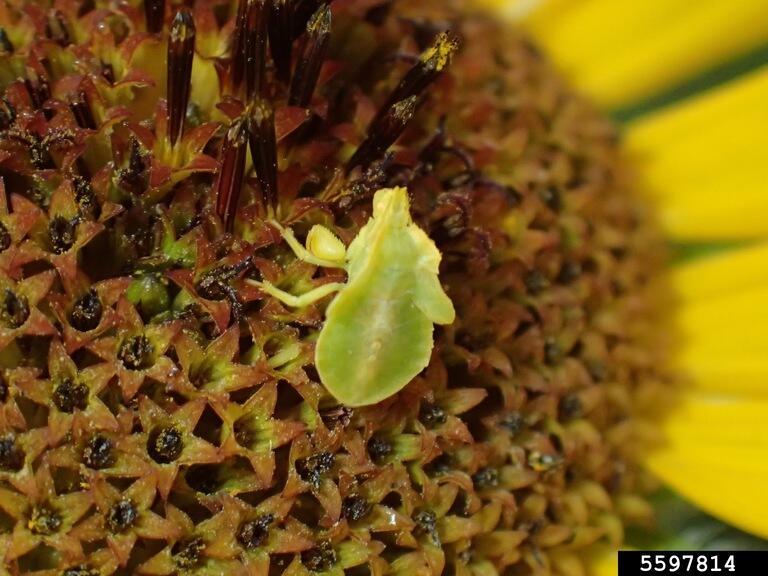
Ambush bug nymphs are yellow to light green, matching spring plant growth.
Photo: Melissa Schreiner, Colorado State University, Bugwood.org -
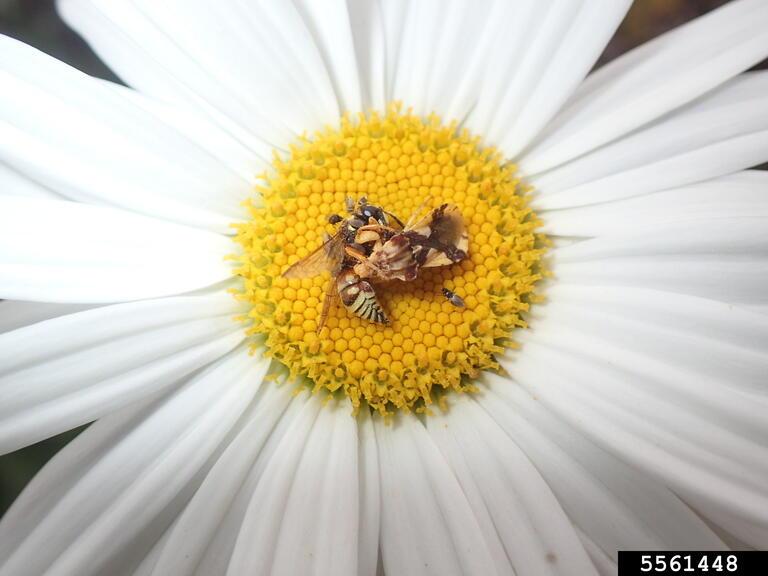
Adult ambush bugs are darker than nymphs, matching summer and fall colors. The jagged and spotted colors of adults provide concealment while they wait to ambush other insects on flowers and plants. Some species may be able to change colors to match the plant material they are hunting on.
Credit: Whitney Cranshaw, Colorado State University, bugwood.org -
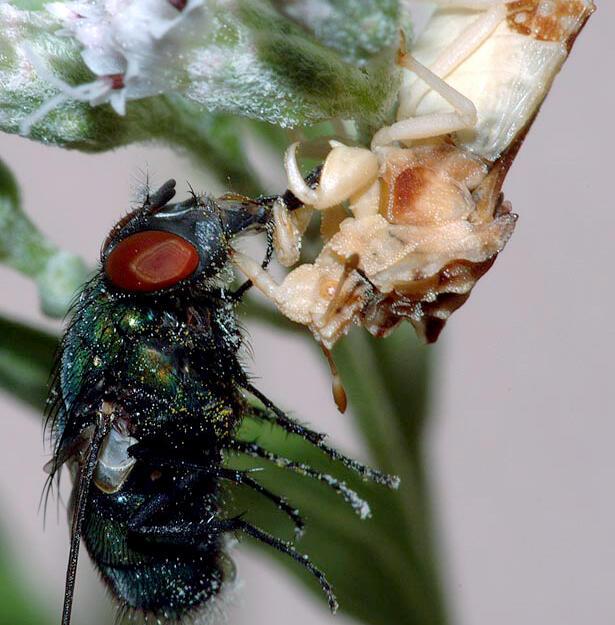
Ambush bugs can eat spiders, flies and bees, and often eat insects larger than themselves.
Photo: Susan Ellis, bugwood.org



Aphid midges
-
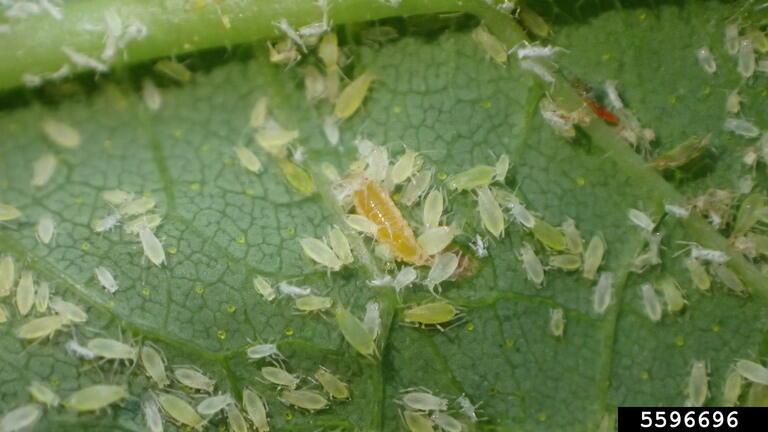
Aphid midge larvae do not have a distinct head capsule. Larvae may consume up to 50 aphids per day during this stage. Aphid midges are found on fruit, vegetable and ornamental crops, more commonly in coastal areas.
Credit: Whitney Cranshaw, Colorado State University, bugwood.org -
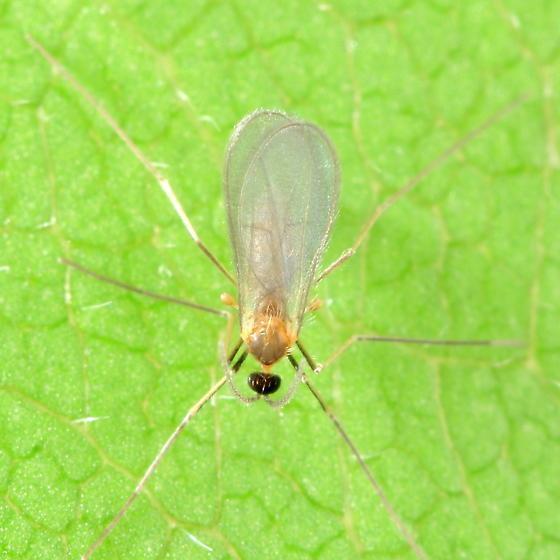
Aphid midge adults live one to two weeks. Females may lay up to 70 eggs during that time. Both larvae and adults are just a few millimeters in size.
Credit: Stephen Luk


Assassin bugs
-
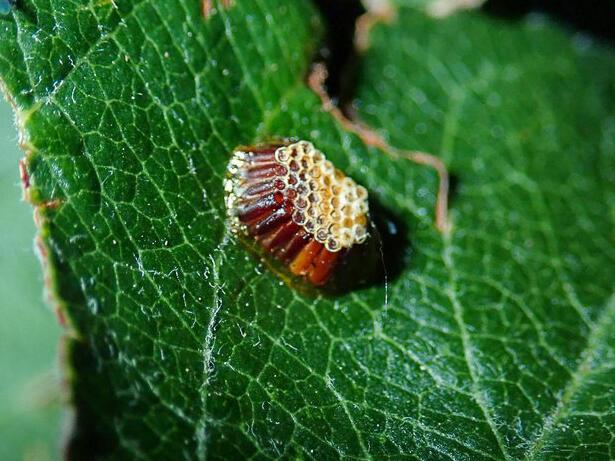
Assassin bugs lay eggs in groups on leaves. Many species lay dark eggs with a light or white-colored top.
Credit: Whitney Cranshaw, Colorado State University, bugwood.org -
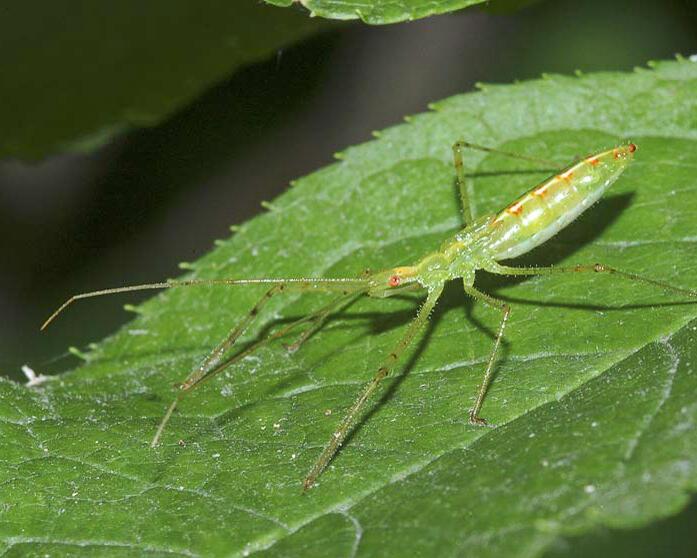
Assassin bug eggs hatch into nymphs that resemble wingless versions of adults.
Photo: Susan Ellis, bugwood.org -
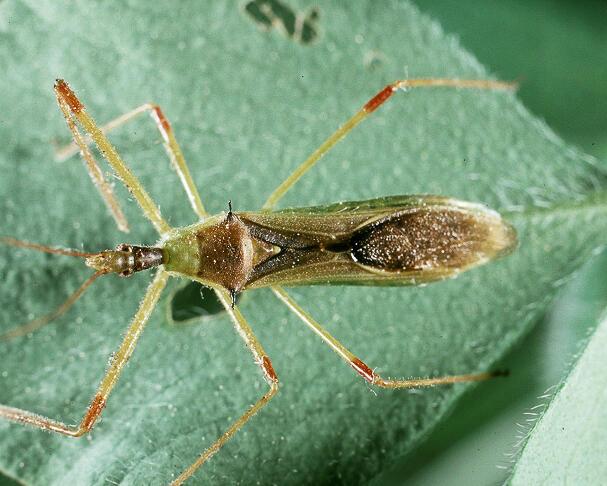
Assassin bugs use needle–like mouthparts to impale prey insects. There are one to two generations of assassin bugs per year.
Credit: Louis Tedders, USFA-ARS, bugwood.org -

The “wheel bug,” with a distinct, wheel-shaped thorax, is a member of this group.
Credit: Edward L. Manigault, Clemson University donated collection, bugwood.org




Big-eyed bugs
-

Big-eyed bugs are generalist predators known to feed on nearly 70 species of insects and eggs. Both nymphs, shown here, and adults are predaceous.
Credit: Whitney Cranshaw, Colorado State University, Bugwood.org -

Like other members of the order Hemiptera, big-eyed bugs have needle-like mouthparts and “half-wings” that are part hardened and part clear — the clear wing parts are visible toward the rear of the insects.
Credit: Russ Ottens, University of Georgia, Bugwood.org -
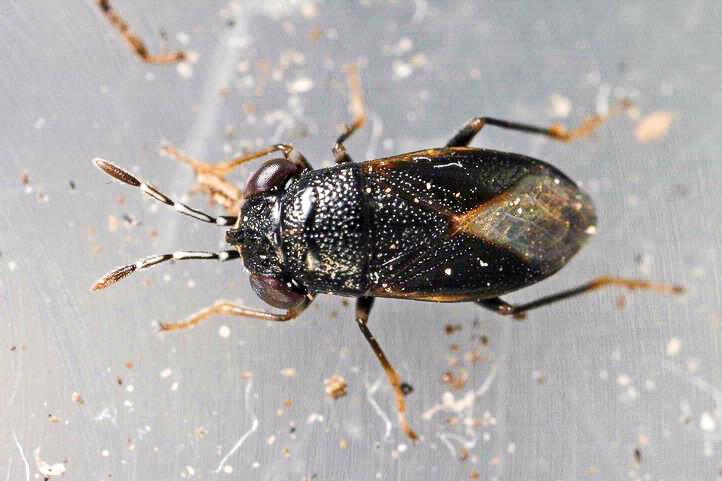
Large, bulging eyes on the sides of their heads are a distinguishing trait of big-eyed bugs.
Credit: Joseph Berger, Bugwood.org



Checker beetles
-

Depending on the species, checker beetles may be predators, scavengers or pollen feeders. Predatory checker beetles commonly feed on bark and wood-boring beetles. It is believed that checker beetles use pheromones to locate their prey.
Credit: Gerald J. Lenhard, Louisiana State University, Bugwood.org -
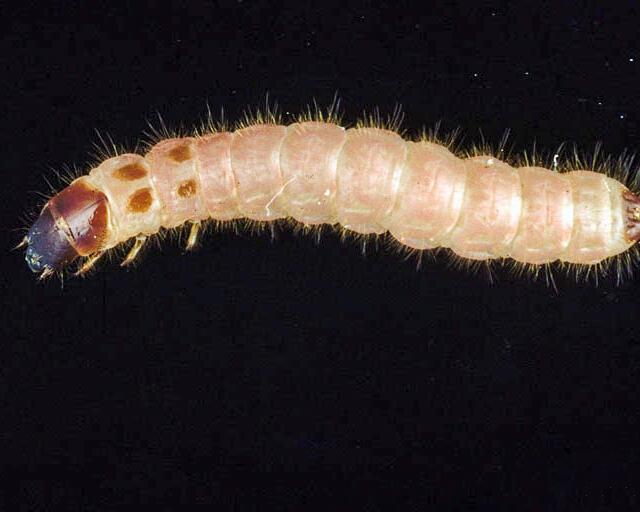
The beetles, shown here in the larval stage, are known to have impressive appetites. Some species help the environment by eating carrion, while other species eat grasshoppers and wasps.
Credit: Gerald J. Lenhard, Louisiana State University, Bugwood.org


Damselflies and dragonflies
-
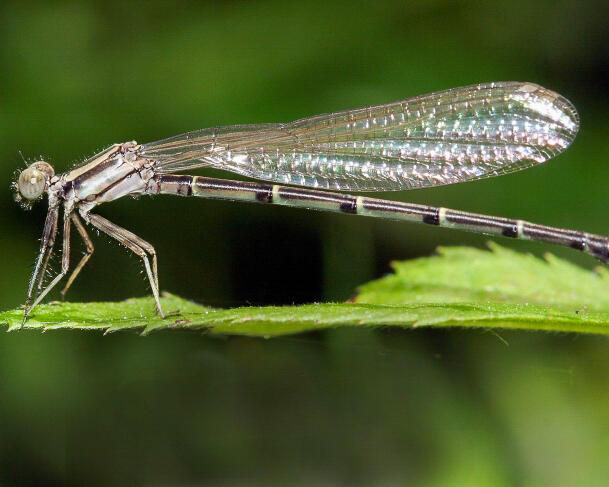
Damselflies (above) and dragonflies require standing water to complete development and therefore are not found in all garden settings. Damselflies hold their wings vertically over the body when at rest, while dragonfly wings are held out to the sides of the body.
Credit: David Cappaert, Bugwood.org -
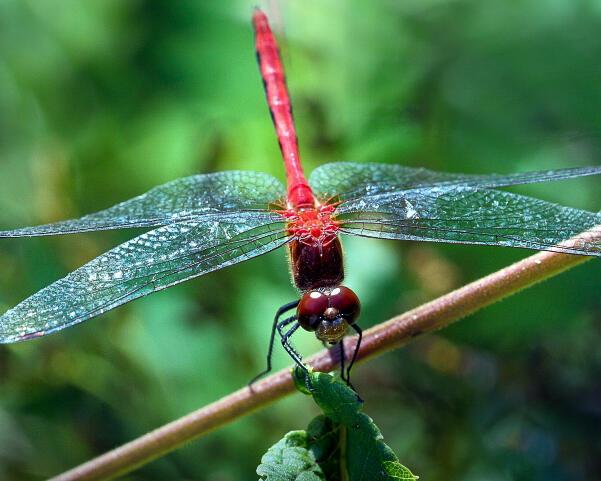
Dragonflies eat flies and mosquitoes and are even able to catch insects while in flight. Damselflies and dragonflies do not eat the pests of garden plants, but their diet of mosquitoes and flies may provide some benefit to the gardener.
Photo: David Cappert, Bugwood.org


Damsel bugs
-
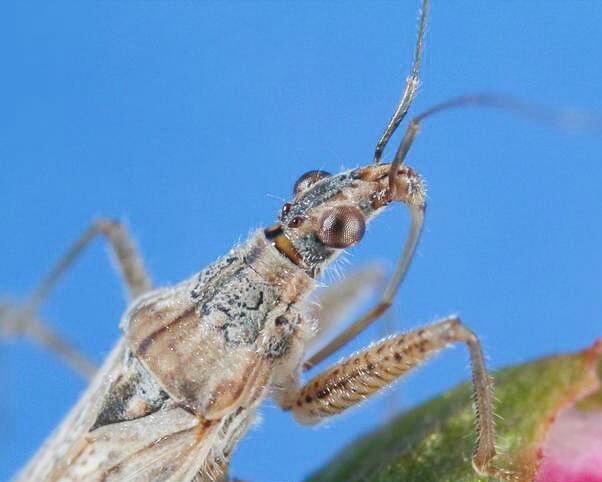
Damsel bugs have long, stiltlike legs and thick, hardened, strawlike mouthparts. Adults are gray or brown and have a narrow head with bulging eyes on the sides.
Credit: Joseph Berger, Bugwood.org -
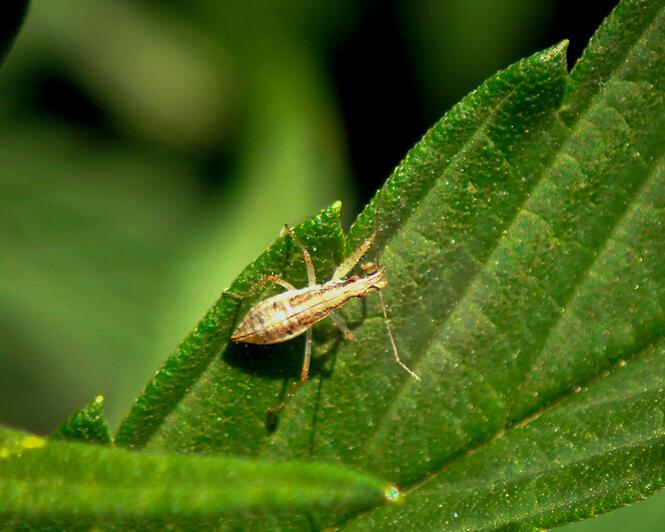
Damsel bugs are predatory as nymphs (above) and adults, and feed on a wide range of garden pests.
Credit: Whitney Cranshaw, Colorado State University, Bugwood.org -
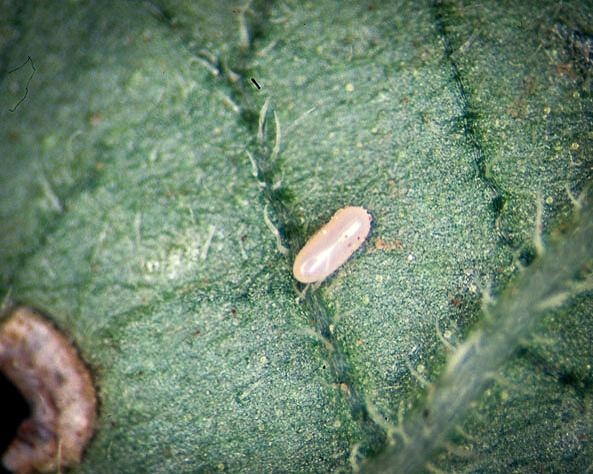
Damsel bug eggs are typically laid in plant tissue, with only a small portion of the egg visible.
Credit: Whitney Cranshaw, Colorado State University, Bugwood.org



Ground beetles
-
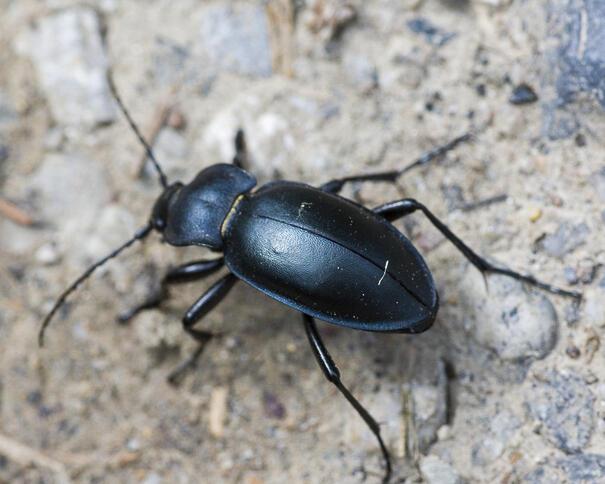
Ground beetles are predators as larvae and adults. Most are dark colored and active at night.
Credit: Mary C. Legg, Bugwood.org -
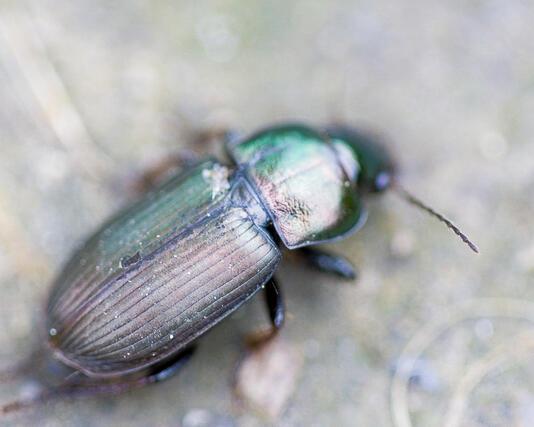
Ground beetles rarely fly but can run very fast. They are frequently found in leaf litter, under rocks or at the base of plants.
Credit: Mary C. Legg, Bugwood.org -

Ground beetles are important for controlling caterpillars and other pests.
Credit: "Insects and their Natural Enemies Associated with Vegetables and Soybean in Southeast Asia," Bugwood.org



Syrphids
-
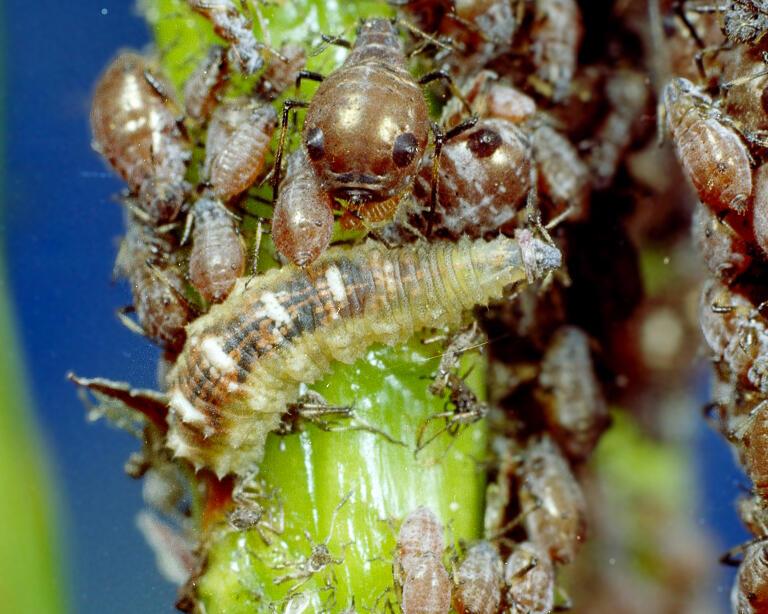
Syrphid larvae resemble caterpillars without distinct heads or legs.
Photo: Clemson University - USDA Cooperative Extension Slide Series, Bugwood.org -
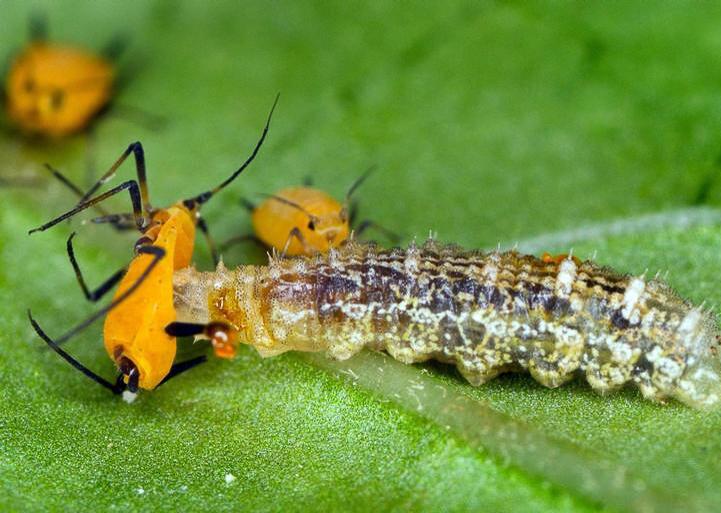
Syrphid larvae may be found among groups of aphids or insect eggs.
Credit: David Cappaert, Bugwood.org -

Many adult syrphids resemble bees. Syrphids can hover over flowers, but bees cannot. Syrphids have only two wings, and their eyes may meet or be very close, taking up most of the head.
Photo: Steven Katovich, Bugwood.org -
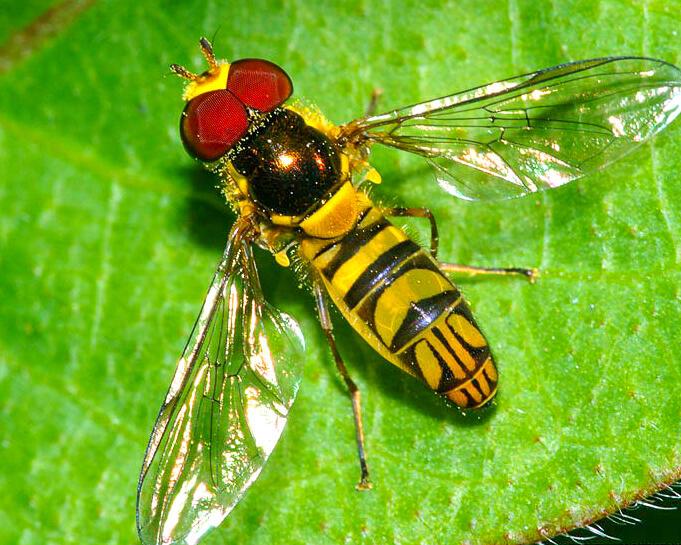
Syrphids have short antennae, unlike longer bee antennae. Adult syrphids feed on pollen and nectar, and thus pollinate as they move among flowers to feed.
Credit: Susan Ellis, Bugwood.org




Lacewings
-
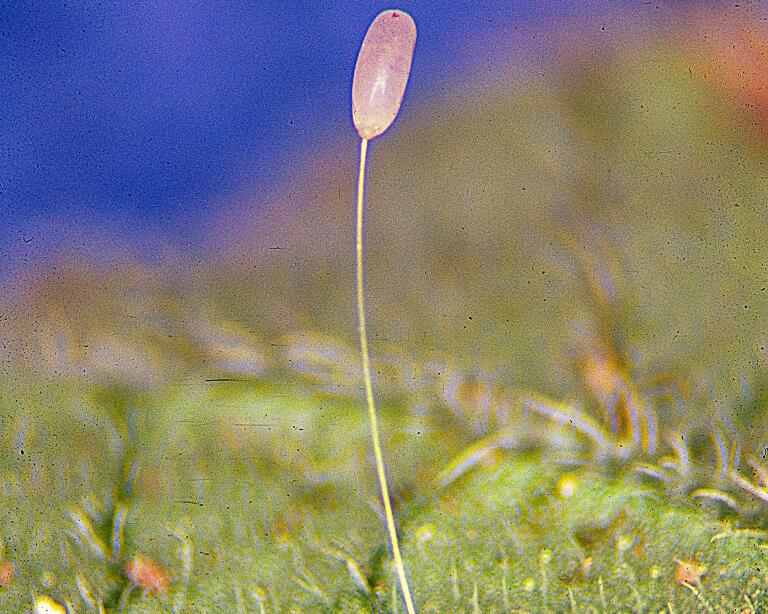
Lacewing eggs are easy to recognize. They look like tiny balloons on hair-sized strings.
Credit: Whitney Cranshaw, Colorado State University, Bugwood.org -
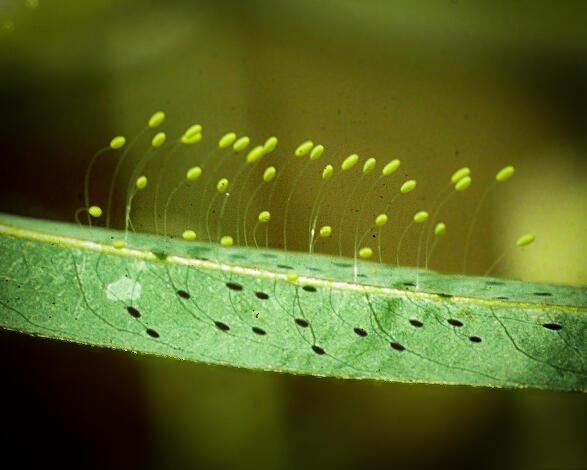
Lacewing eggs are found on the leaves of trees or plants.
Credit: Whitney Cranshaw, Colorado State University, Bugwood.org -
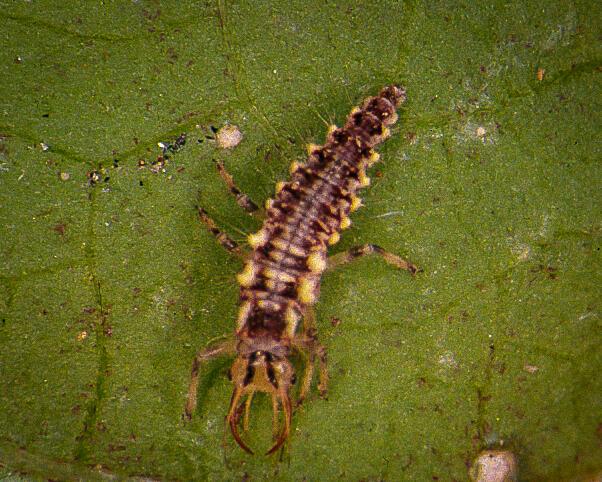
Lacewing larvae look like tiny alligators, with large mandibles and a tapered body.
Credit: Whitney Cranshaw, Colorado State University, Bugwood.org -
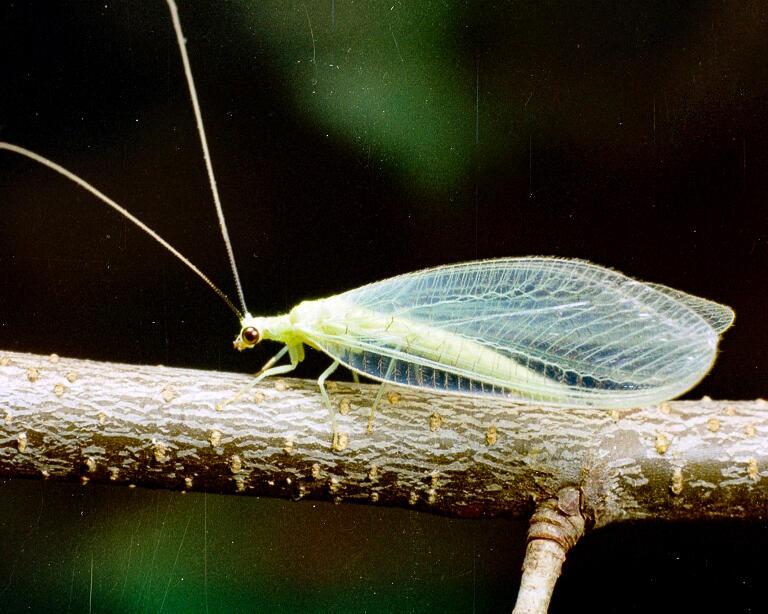
Both lacewing larvae and adults prey on pest insects. They are one of the few predator insects that are regularly available for home gardeners to purchase.
Credit: Clemson University - USDA Cooperative Extension Slide Series, Bugwood.org




Ladybugs
-

Ladybug eggs are yellow to orange, football-shaped and usually laid in groups.
Credit: R.L. Croissant, Bugwood.org -
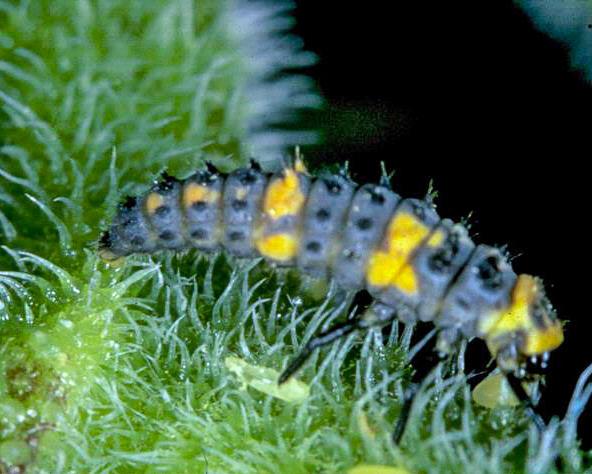
Ladybug larvae eat the most pest insects — possibly as many as 40 aphids per day. Larvae are alligator-shaped and usually red and black or orange and black in color.
Credit: Frank Peairs, Colorado State University, Bugwood.org -
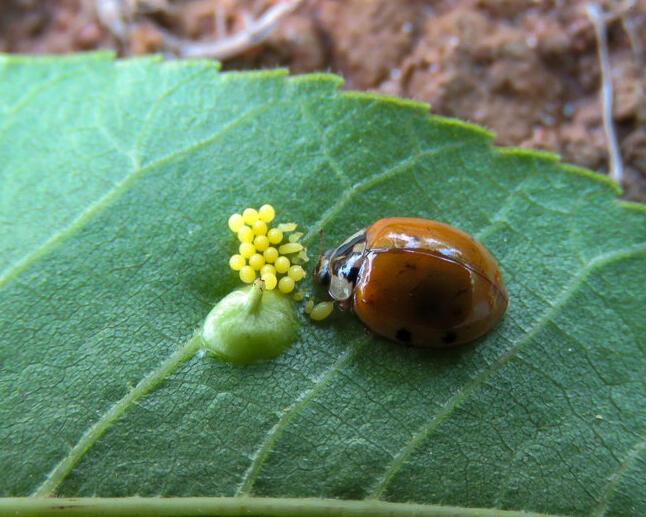
Most ladybug adults are easy to recognize, but there are also variations on the common orange/red with black spots.
Credit: Jonas Janner Hamann, Universidade Federal de Santa Maria, Bugwood.org -

The twice-stabbed lady beetle is black with two red spots. Some native lady beetles are completely black. Most of these are smaller than the most common species.
Credit: Tom Murray, Bugwood.org -
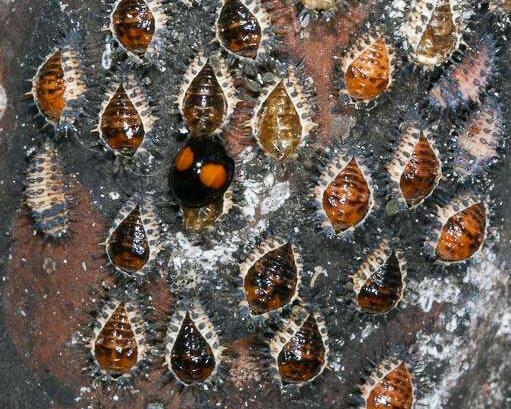
Ladybug pupae may be the most difficult stage to recognize. Pupal cases vary widely across species.
Credit: Michael Merchant, Texas Cooperative Extension, Bugwood.org





Minute pirate bugs
-

Like the name says, minute pirate bugs are tiny. Nymphs are brightly colored and smaller than aphids.
Credit: Adam Sisson, Iowa State University, Bugwood.org -
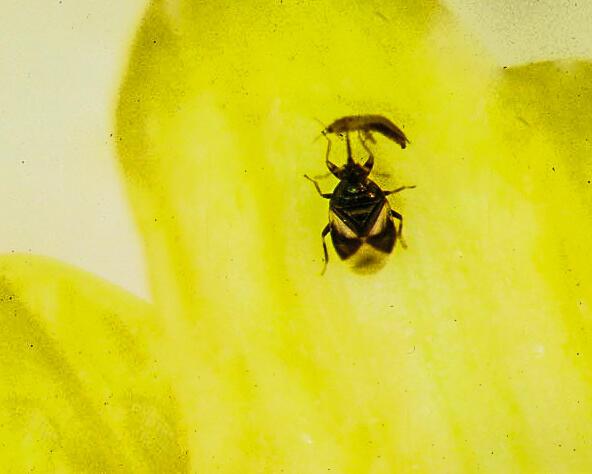
Adults are black with wing markings that somewhat resemble an “X.” Although small, minute pirate bugs may eat several dozen spider mites, thrips or insect eggs in a day. Minute pirate bugs are common in corn and other vegetable crops, and in mixed flower plantings. Eggs are laid in plant tissue and rarely seen.
Credit: Whitney Cranshaw, Colorado State University, Bugwood.org


Mantids
-

Mantid eggs are laid in groups of 100–200 in a foamy substance that hardens as it dries. Egg cases are found in any protected area like under a fence rail, under siding or in dense plant material.
Credit: Whitney Cranshaw, Colorado State University, Bugwood.org -
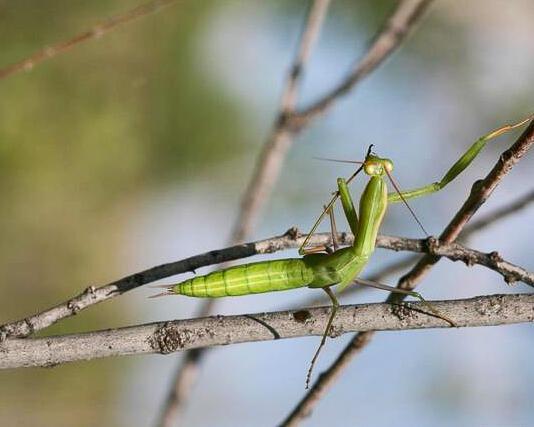
Nymphs and adults look very similar, but nymphs do not have wings. The nymph pictured above is nearly mature: wing “buds” are present that will develop into wings in the next development stage.
Credit: Whitney Cranshaw, Colorado State University, Bugwood.org -
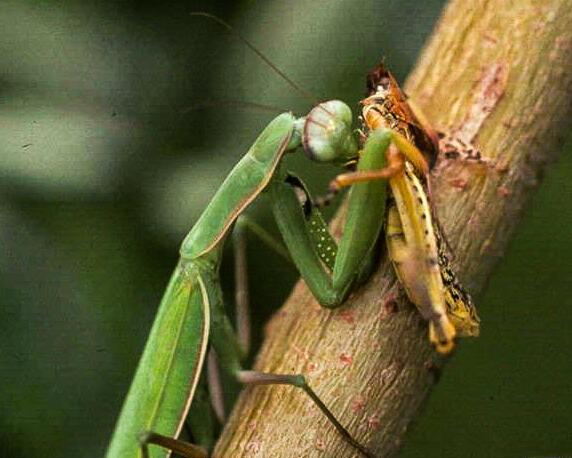
Both young and adults are active predators but feed mainly on large insects like bees, flies, crickets and grasshoppers. While they eat many insects, mantids are less likely than other predators to control the most common garden pests.
Credit: Whitney Cranshaw, Colorado State University, Bugwood.org



Robber flies
-
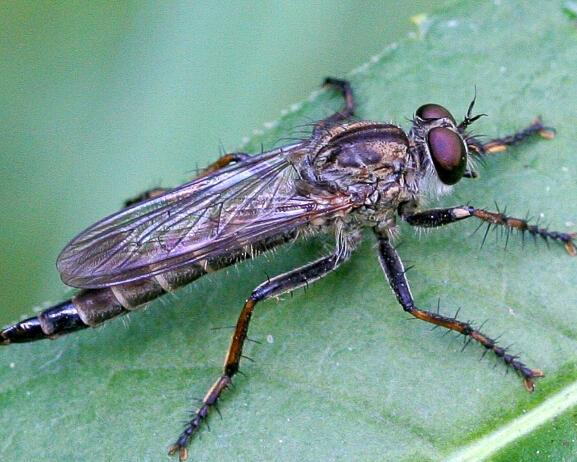
Robber fly adults have a range of body styles.
Credit: David Cappaert, Bugwood.org -
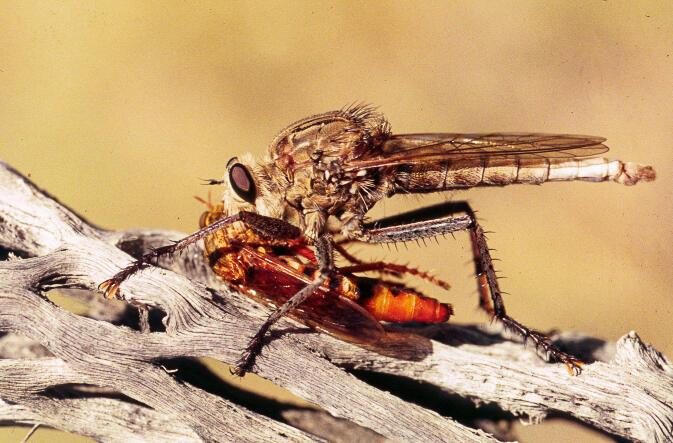
Most species have a long, thin abdomen that appears to sit high over the legs.
Credit: Whitney Cranshaw, Colorado State University, Bugwood.org -
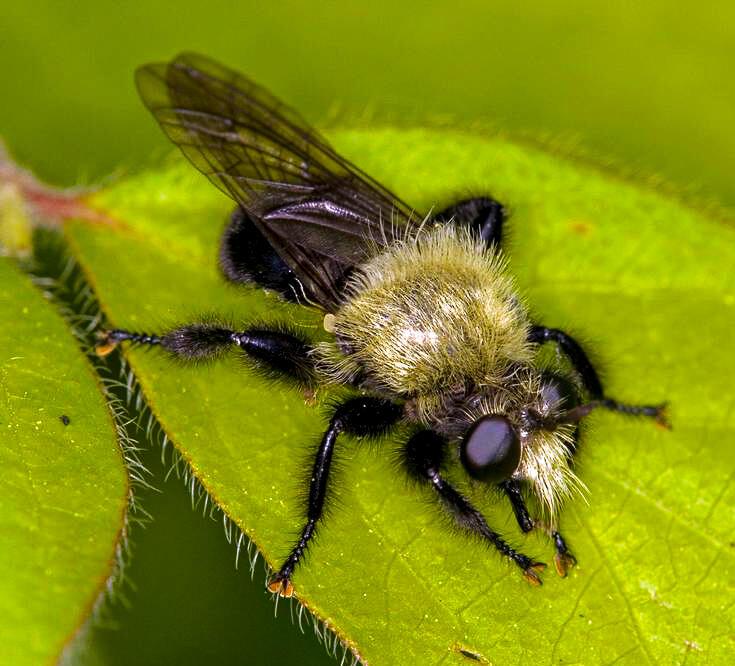
Some species resemble bumblebees with hairy bodies that assist with pollination. Eggs and larvae are in the soil where they are rarely seen by gardeners. Adult robber flies can catch other insects in flight.
Credit: David Cappaert, Bugwood.org



Rove beetles
-
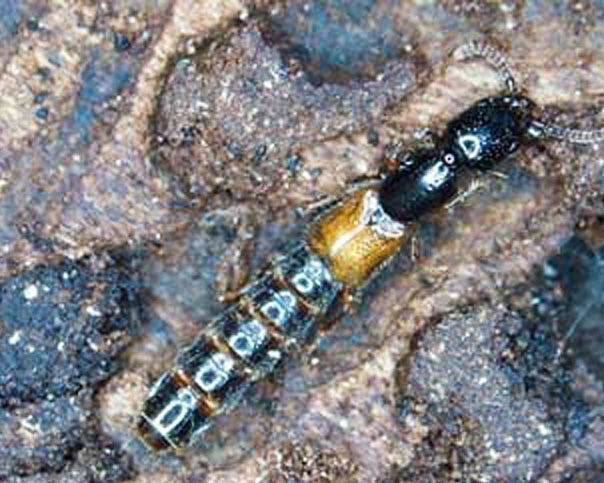
A key identifying feature of rove beetles is that most species have very shortened wings that don’t cover the abdomen like most beetle wings do.
Credit: Jiri Hulcr, Michigan State University, Bugwood.org -

Both adults and larvae spend most of their time in leaf litter eating soft-bodied insects and insect eggs. Some species have larvae that are parasites of other insects.
Credit: Jon Yuschock, Bugwood.org -
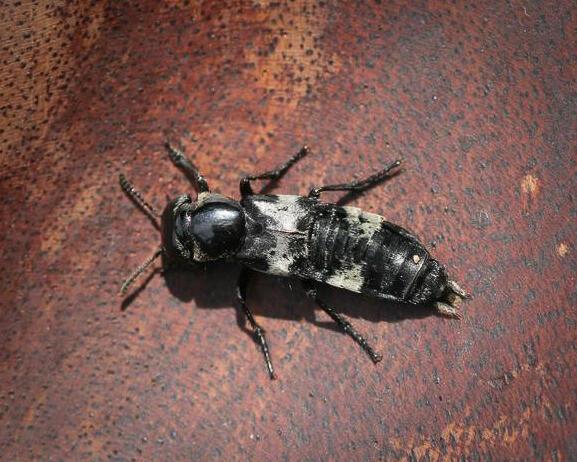
Rove beetles are found in numerous vegetable crops as well as mixed flower plantings. Both adults and larvae are predators.
Credit: Whitney Cranshaw, Colorado State University, Bugwood.org



Soldier beetles
-
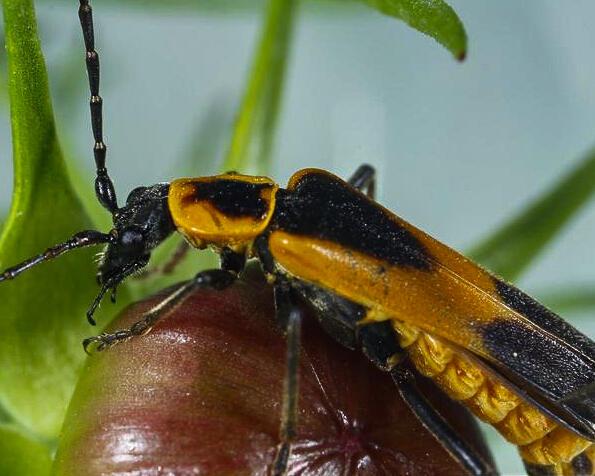
Soldier beetle adults have segmented antennae, a shield-shaped thorax and rounded elyra (outer wings). They are sometimes called “leatherwings.” Larvae are soil dwellers, eating soil insects and eggs.
Credit: Joseph Berger, Bugwood.org -
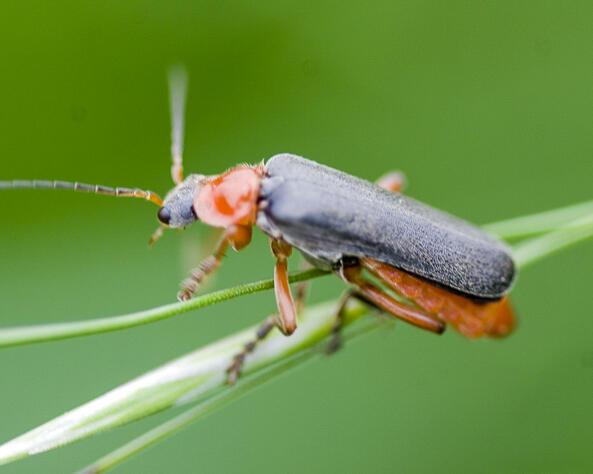
Depending on species, adults eat nectar and pollen, pest insects, or both. These insects are beneficial in the garden but not in livestock pasture: They are toxic to livestock when accidentally “harvested” with feed.
Credit: Mary C. Legg, Bugwood.org


Sphecid wasps
-
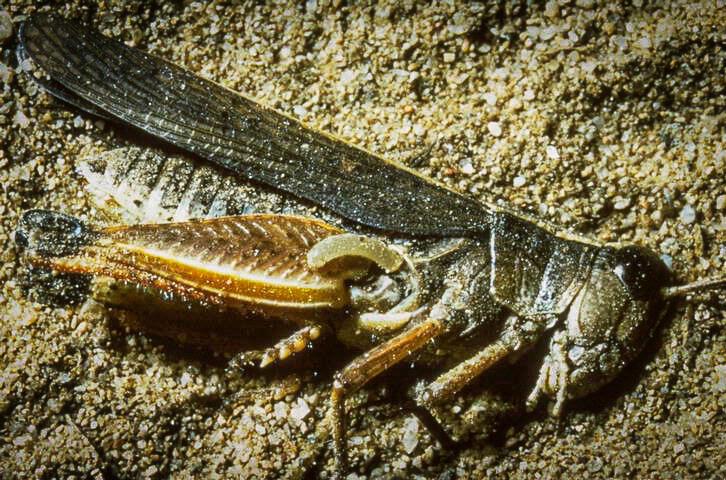
Some species of sphecid wasps prey on only one insect species while other sphecids are generalists that feed on many species. They may lay eggs on dead insects so that the hatching larvae may feed.
Credit: Howard Ensign Evans, Colorado State University, Bugwood.org -
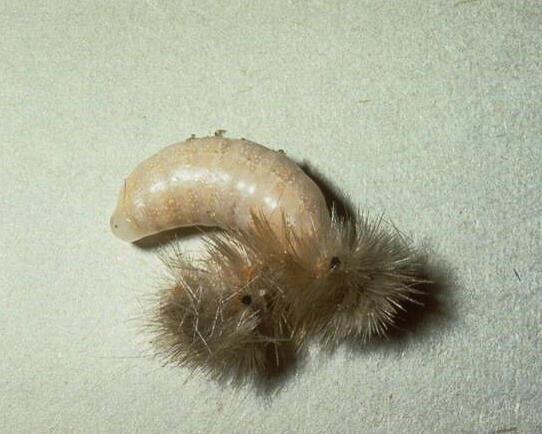
Both larvae (above) and adults are predatory. Other sphecids will kill insects and carry them to the nest to feed larvae.
Credit: Howard Ensign Evans, Colorado State University, Bugwood.org -
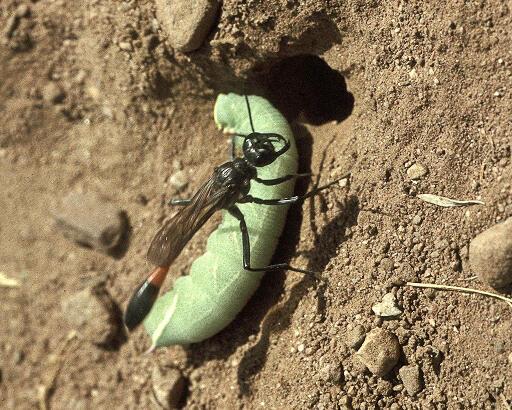
Adult sphecid wasps have extremely narrow “waists” and hold wings in a line over the body when not in flight. Most sphecids nest in the ground.
Credit: Whitney Cranshaw, Colorado State University, Bugwood.org



Spined soldier bugs
-
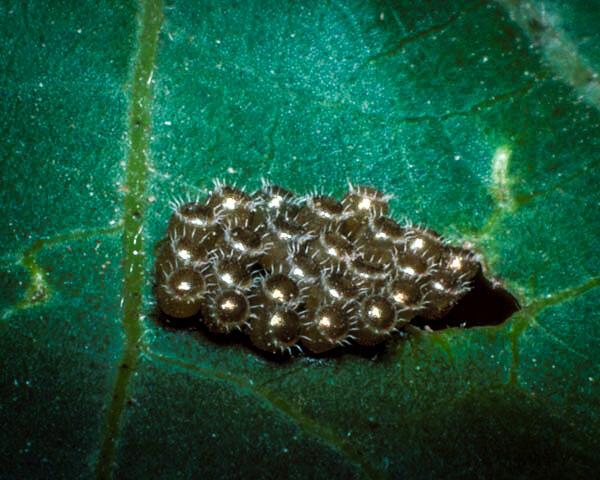
Spined soldier bugs are predatory “true bugs”— a group of primarily plant feeders. Eggs vary in color from gray to cream or gold, changing as eggs mature. Eggs are barrel shaped, laid in clusters and have spiny protrusions on top.
Credit: John Ruberson, Kansas State University, Bugwood.org -
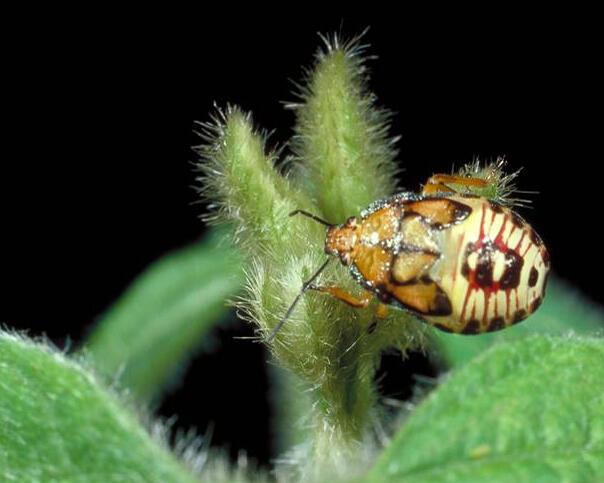
Nymphs have a more rounded body shape than adults, and change color/markings in each developmental stage.
Credit: Phil Sloderbeck, Kansas State University, Bugwood.org -
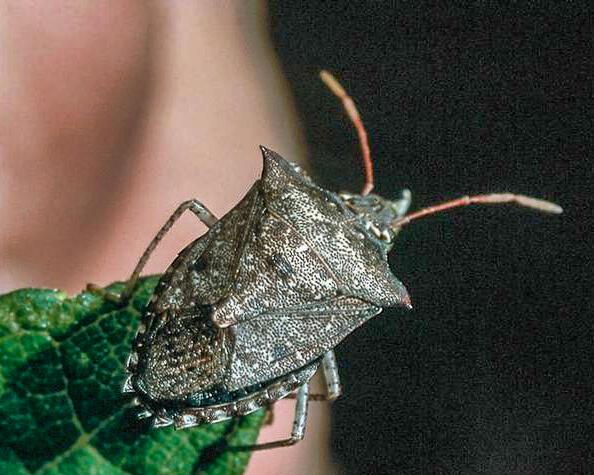
Adults look very similar to common stink bugs but have thorny-looking “spines” on the “shoulders” of their shield-shaped bodies.
Credit: Kansas Department of Agriculture, Bugwood.org -
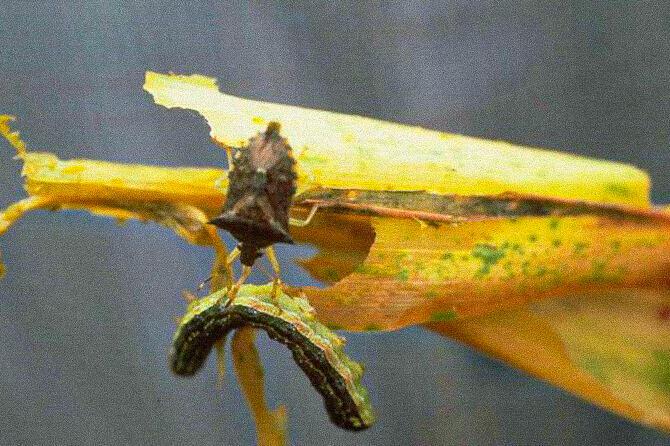
An adult spined soldier bug.
Credit: Frank Peairs, Colorado State University, Bugwood.org




Stink bugs
-
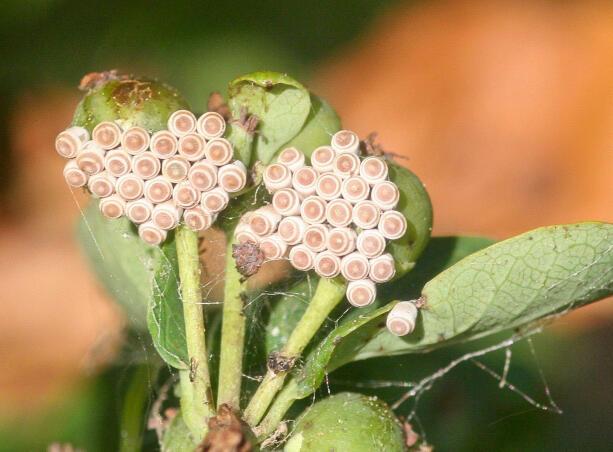
While most stink bugs feed on plants, a few are predators. Stink bugs have barrel-shaped eggs.
Credit: Whitney Cranshaw, Colorado State University, Bugwood.org -

Predatory stink bugs have more robust mouthparts than plant-feeding relatives and feed on over 100 species of insects and insect eggs. Predatory stink bugs are usually brightly colored compared to plant feeders.
Credit: Erich G. Vallery, USDA Forest Service, Bugwood.org


Vespid wasps
-
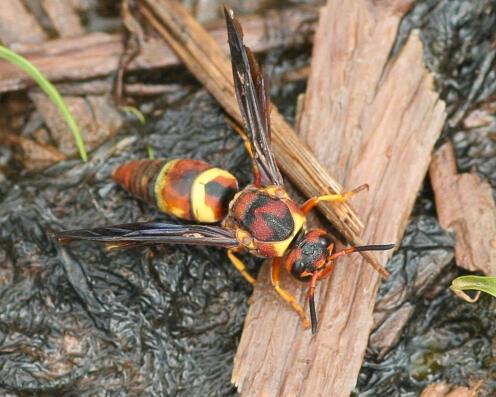
Vespid wasps, commonly called yellowjackets and hornets, feed on a wide variety of insects, especially small caterpillars.
Credit: Whitney Cranshaw, Colorado State University, Bugwood.org -
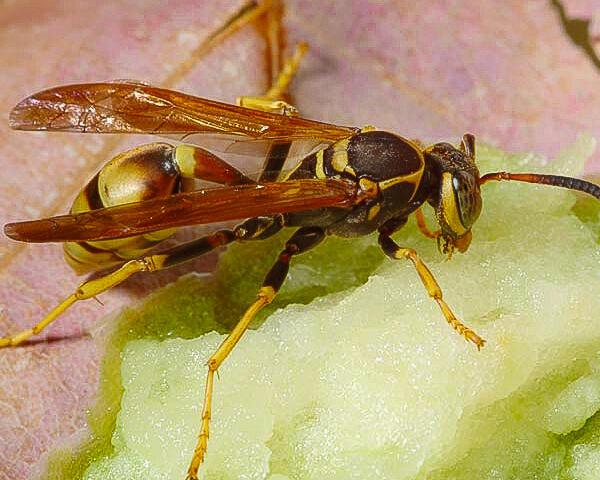
Adults often carry pest insects back to the nest to feed the larvae.
Credit: Joseph Berger, Bugwood.org