CORVALLIS, Ore. — Carol Ruggeri finds the community gardens at Calvin Presbyterian Church calm and serene.
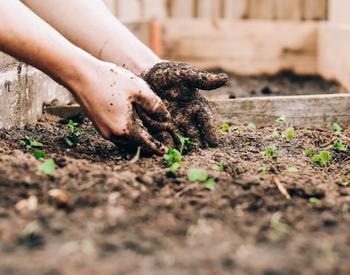
Birds sing, tall trees cast shade, and tidy beds wait for summer growth. In her plot, tomatoes, butternut and zucchini squash, lemon cucumbers and snow peas are thriving.
“Just to be able to plant a plot and water it and watch it grow is so peaceful,” Ruggeri said. “There’s no one here in the morning so I can wander around and look at the other gardens and get ideas and inspiration.”
“Post-treatment is a critical time for cancer survivors to work toward healthy lifestyle goals. Learning and practicing the art of vegetable gardening through participation in Hope Grows Here provides a structure to try to reach those goals with regular support from Master Gardener mentors.”
Ruggeri is a four-year pancreatic cancer survivor participating in Hope Grows Here, a mentorship study with Oregon State University Extension Service Master Gardener volunteers. Each spring, cancer survivors are matched with Master Gardener volunteer mentors who support them from seed to harvest.
Laurie Labbitt, a Master Gardener volunteer since 2008 and Ruggeri’s mentor, joined Hope Grows Here in its first year and returned because the experience was so rewarding.
“I like to garden and have lots of experience,” Labbitt said. “I enjoy working one on one with people, so it fits me better than teaching or other Master Gardener volunteer options.”
Ruggeri appreciates the guidance and the friendships. After moving to Corvallis during the pandemic, the program helped her connect with people and learn new skills.
Research shows promise
Hope Grows Here is coordinated by Candance Russo, project coordinator and program manager for OSU’s Moore Family Center for Whole Grain Foods, Nutrition and Preventative Health, with Emily Ho, director of OSU’s Linus Pauling Institute and principal investigator on a $50,000 Oregon Health and Science University grant that launched the program. An additional $100,000 grant from the Allen Foundation is supporting the study through 2024.
The program is modeled on Alabama’s Harvest for Health, a randomized study of 46 participants in which fruit and vegetable consumption increased by about one serving per day. More than 90% stayed in the study and 85% said they would do it again.
Though Hope Grows Here is in its second year, participant surveys already show improvements in mental health, physical activity and fruit and vegetable intake.
“Research shows the power of vegetables in preventing or slowing down cancer,” Ho said. “We want to know how we can get the science full circle and help high-risk people like cancer survivors have an easier way to adopt these behaviors and stay healthy.”
Gardening as a bridge to healthy habits
“Post-treatment is a critical time for cancer survivors to work toward healthy lifestyle goals,” Russo said. “Learning and practicing the art of vegetable gardening through participation in Hope Grows Here provides a structure to try to reach those goals with regular support from Master Gardener mentors.”
The study aims to connect science with community, Ho added. After treatment, survivors often face a gap in support. Gardening offers peer connection and gentle physical activity alongside nutritious harvests.
Mentors help gardeners thrive
Participants don’t need to be beginners. Janet Throop, a second-year mentor and Master Gardener volunteer for more than 40 years, saw her first mentee “gain a lot of relaxation and benefits” during a stressful time.
Her current mentee came in with experience and needed reassurance — plus practical support from the church site and program supplies such as tools, tomato cages, a beginner gardening book, fact sheets and topsoil.
“I think she has good ideas and I’m giving her reassurance,” Throop said. “We talk over her ideas, and I tell her, ‘Yes, that will work,’ and she just goes for it.”
Building community, one garden at a time
This year, 13 participants and 12 mentors across Linn and Benton counties joined Hope Grows Here. Mentees begin with a four-session gardening course, then meet regularly with their mentors. New get-togethers organized by Russo bring mentors and participants together to share experiences and tour gardens.
“It’s nice because you get to meet other people and tour gardens,” Ruggeri said. “I’m such a novice that it’s wonderful. I get so many suggestions.”
Additional collaborators include Samaritan Health Services and Pastega Regional Cancer Center, which assist with recruitment.