ONTARIO, Ore. — In 2015, the Soda Fire burned 280,000 acres in southwest Idaho and southeast Oregon, including large areas of Malheur County.
Over eight years, targeted grazing removed more than 6,000 tons of fine fuels from the ecosystem and saved participating ranchers a combined $50,000 in feed costs during fall and winter grazing periods.
One of the biggest contributors to that fire — and others like it — is invasive grasses, often called “fine fuels.” These grasses not only intensify wildfires but also outcompete native plants that support the unique biodiversity of the Northern Great Basin, where Malheur County is located.
Sergio Arispe, who has worked with the Oregon State University Extension Service since 2014, is deeply familiar with the impacts of invasive grasses on both ecosystems and the local cattle industry. As an associate professor with Extension and research appointments, Arispe prioritizes research questions that matter to the communities he serves.
Wildfires, invasive grasses and public lands are central concerns in Malheur County, where ranchers rely on healthy rangeland for grazing and nearly three-quarters of the county is public land.
When community members and the Vale District Office of the U.S. Bureau of Land Management asked Arispe for help managing fine fuels on public lands, he stepped in to help.
Over the past eight years, Arispe’s research has demonstrated that contracted grazing beyond traditional permits can significantly reduce combustible plant material. The approach has proven successful enough that Arispe recently received $515,132 from the Fuels Management and Community Fire Assistance Program within the Oregon/Washington Bureau of Land Management to continue the project and incorporate drone-sensing technology.
An intricate rangeland ecosystem
“Within the Northern Great Basin where we are in Malheur County, you go out and see birds of prey, apex predators like pumas and bobcats,” Arispe said. “You also see herbivores — elk, pronghorn antelope — smaller bird species, waterfowl and pheasants, along with insects, bacteria and moss.”
The region is both an ecological and recreational resource, he said.
“It’s a very active, intricate ecosystem that allows people to go out, take a deep breath and really appreciate the beauty,” Arispe said.
About 77% of Malheur County is rangeland, and cattle and dairy products account for 59% of the county’s agricultural sales by value. Malheur County has the second-largest cattle industry in Oregon, making forage availability and feed costs major concerns for producers.
Reducing feed costs while protecting natives
Arispe set out to address two challenges at once: lowering winter feed costs and reducing wildfire risk. Working with partner cattle producers, he asked whether cattle would graze invasive, fire-prone grasses during the fall and winter.
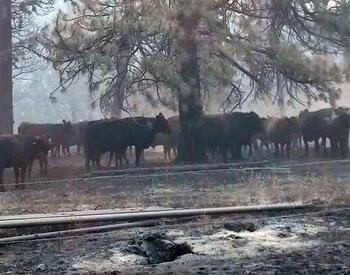
Cattle were turned out during the dormant season, when native plants were not actively growing and were therefore more resilient to grazing.
The results were significant. Over eight years, targeted grazing removed more than 6,000 tons of fine fuels from the ecosystem and saved participating ranchers a combined $50,000 in feed costs during fall and winter grazing periods.
Perennial bunch grasses — native species that provide better habitat and reduce wildfire risk — were not harmed.
“They are ideal grasses that we want,” Arispe said. “We’re not seeing any negative effects on the perennial bunch grass community.”
Expanding the research with new technology
Arispe and collaborators published the results in Rangeland Ecology & Management alongside partners from Boise State University, University of Idaho, Brigham Young University, USDA Agricultural Research Service, and the University of Nevada, Reno.
The next phase of the project will examine how cattle grazing behavior influences plant growth on public lands.
“We are going to use drone sensors to look at different stages of growth to improve degraded sagebrush,” Arispe said.
Previously titled Dormant-season grazing is a win for all, Extension researcher shows