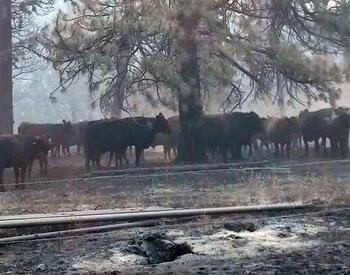
CORVALLIS, Ore. — Cattle ranchers east of the Cascade Range spent much of the summer evacuating herds from wildfires that scorched nearly 2 million acres.
Even when animals were moved safely away from flames, they faced another serious risk: smoke exposure.
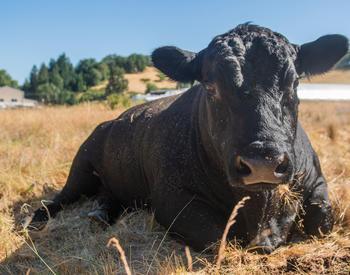
Across Oregon, on both beef and dairy operations, cattle have shown signs of illness. Juliana Ranches, an Oregon State University Extension Service beef specialist, describes hearing from ranchers whose cattle developed “runny noses, runny eyes and very heavy discharge.”
Ranches is working with Jenifer Cruickshank, OSU Extension’s statewide dairy specialist, to better understand how wildfire smoke affects cattle health.
“We hypothesize that inhaling smoke dries out the lungs, which may lead to bacterial development and illness,” Ranches said.
Studying smoke exposure
Researchers are examining smoke exposure in two ways: observing cattle naturally exposed during wildfire seasons and conducting controlled exposure studies.
Natural exposure studies are difficult, Cruickshank said, because wildfire behavior and smoke patterns are unpredictable. In one study conducted with the University of Idaho, researchers compared a herd in Corvallis with a herd in Moscow, Idaho.
“The design assumed Moscow would experience smoke and Corvallis would not,” Cruickshank said. “That was a reasonable assumption based on typical weather patterns, but it’s always a gamble.”
While Moscow did experience smoke, the exposure was mild, resulting in less definitive findings than hoped.
In a separate project led by Ranches, eight heifers were exposed to smoke in an enclosed barn for a week. Air quality reached unhealthy “purple-level” conditions on the Air Quality Index. Researchers monitored the animals continuously using camera feeds.
During and after both studies, cattle underwent health evaluations, including blood tests, lung ultrasounds and assessments of immune function.
Both Ranches and Cruickshank emphasized that the research is still in its early stages.
“We’re at a point where we have many more questions than answers,” Cruickshank said. “But understanding the effects of smoke exposure can help guide future management and intervention strategies.”
Smoke and stress
In addition to physical health impacts, researchers are also measuring stress indicators. Preliminary findings show increased cortisol levels, inflammation and immune responses in smoke-exposed cattle.
“It’s very stressful for the animals,” Ranches said. “While we may not be able to prevent wildfires, we can reduce other stressors.”
Ranches and Cruickshank recommend avoiding additional stressful events — such as weaning or vaccination — when cattle are exposed to wildfire smoke.
“Reducing the stacking of stressors is important,” Cruickshank said.
Next season, Ranches plans to test hydration-support solutions designed to reduce water loss in smoke-exposed cattle. As findings are confirmed, Extension specialists will share practical management recommendations with producers.
Planning for the worst
Until more guidance is available, Ranches said the most effective step producers can take is developing a strong evacuation plan.
“Producers have lost animals, pasture, property — everything,” she said. Some ranchers credit virtual fencing systems, which use GPS collars to move cattle, with saving their herds during fires.
“Hopefully they’ll never have to evacuate,” Ranches said. “But if they do, being prepared can make all the difference.”
Previously titled Extension cattle specialists seek to uncover how wildfire smoke affects cows