CORVALLIS, Ore. — When winter reduces natural food sources in Oregon yards, many birds turn to people and planted landscapes for help.
“Different birds are attracted to different foods and it’s good to have a variety,” said Dana Sanchez, a wildlife specialist for Oregon State University’s Extension Service. “In addition to bird feeders, which people sometimes forget to fill, they need plants to forage on.”
“Birds need a lot of energy to make it through cold nights. They can’t eat during the night, and they burn off whatever food calories they found during the day.”
This time of year, you will notice winter wrens, pine siskins, scrub jays, chickadees and robins. All are searching for food to give them the energy they need to survive the prolonged stress of cold and wet weather.
“Birds need a lot of energy to make it through cold nights,” Sanchez said. “They can’t eat during the night, and they burn off whatever food calories they found during the day.”
Feathers help birds stay warm. They fluff them, huddle together to reduce heat loss and even shiver to keep muscles warm. But they still need good food sources to produce energy. A few insects remain in winter, sometimes under moss and lichen. Some plants, such as thistle, hold on to seeds that birds can work into their diet. Plants with berries that are high in fat help, too.
Providing food in the landscape
Sanchez suggested looking around the yard and adding a few shrubs that keep berries into winter. That way, even if feeders run empty, birds still have something to forage on.
Plants with berries for birds
Dana Sanchez’s picks for plants with berries for birds:
- Oregon grape (Mahonia aquifolium) breaks out in brilliant yellow flowers in midwinter that leave behind bunches of blue-black berries. The state flower of Oregon grows to about 6 feet tall and 5 feet wide. Hardy to Zone 5.
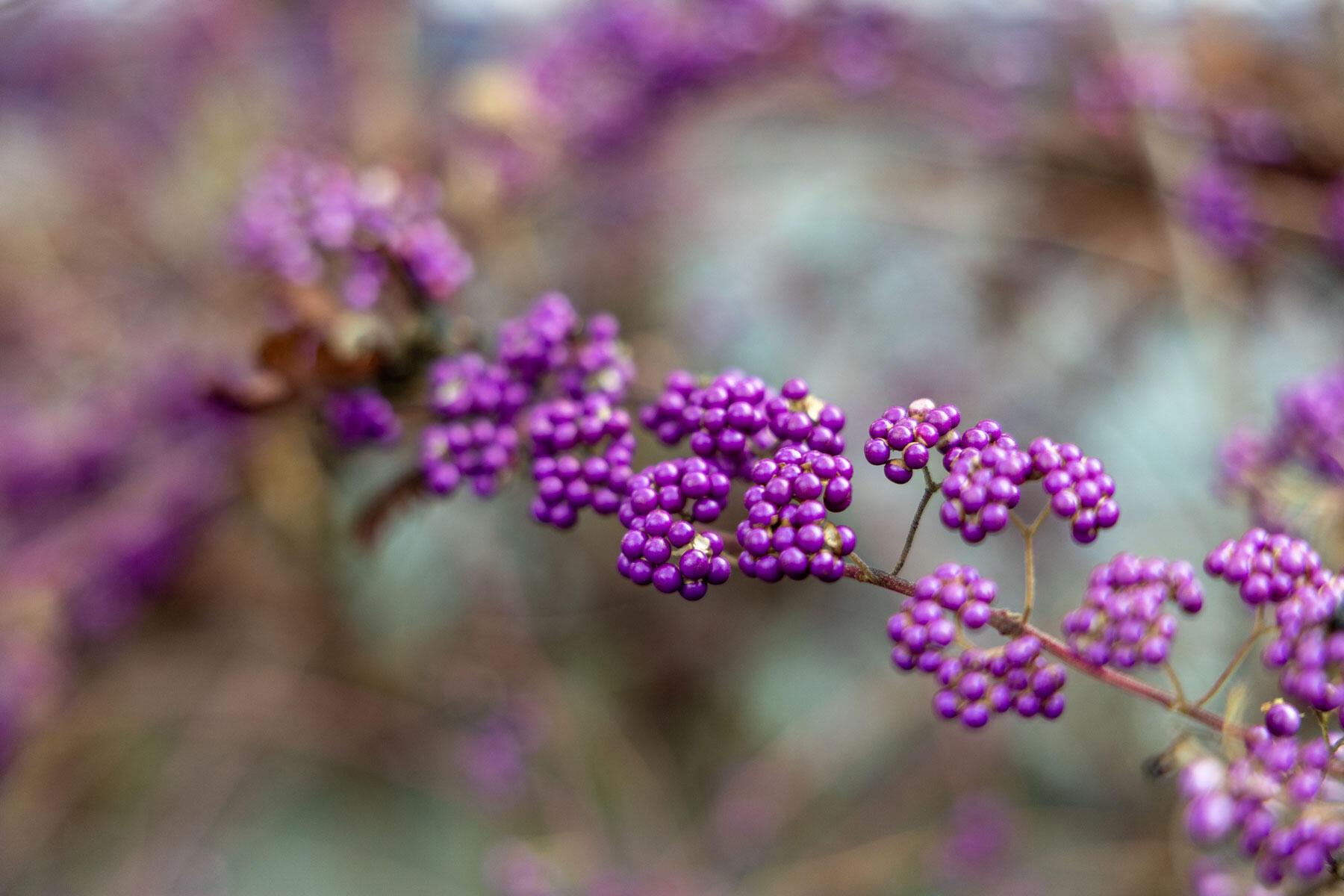
- Beautyberry (Callicarpa bodinieri) was named for a reason: The violet to purple berries in midwinter stop people in their tracks. This shrub shows well at the back of a border where its 6-by-6-foot size has room to develop. The cultivar ‘Profusion’ has especially abundant berries. Hardy to Zone 5.
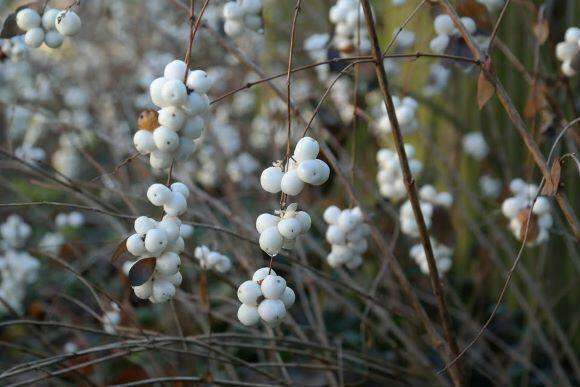
- Snowberry (Symphoricarpos albus) is recognized for clusters of white berries that last well into winter. At about 5 feet tall and 6 feet wide and somewhat rangy, snowberry works well in a bird-friendly hedgerow, and its vigorous roots help with erosion control on slopes. Hardy to Zone 3.
- Himalayan honeysuckle (Leycesteria formosa) needs space for its 6-foot height and width, but it pays off. Long clusters of white flowers with purple bracts hang from the shrub through summer and fall and are followed by berries that move from green to deep red to purplish black, often with all three colors on the plant at once. Hardy to Zone 6.
- Pacific wax myrtle (Myrica californica) is an evergreen that can reach 30 feet at maturity, so it is often used as a screen or small tree. A Pacific Northwest native, wax myrtle bears purplish berries in fall that persist into winter. Hardy to Zone 7.
Previously titled Feed birds in winter with berry-bearing plants