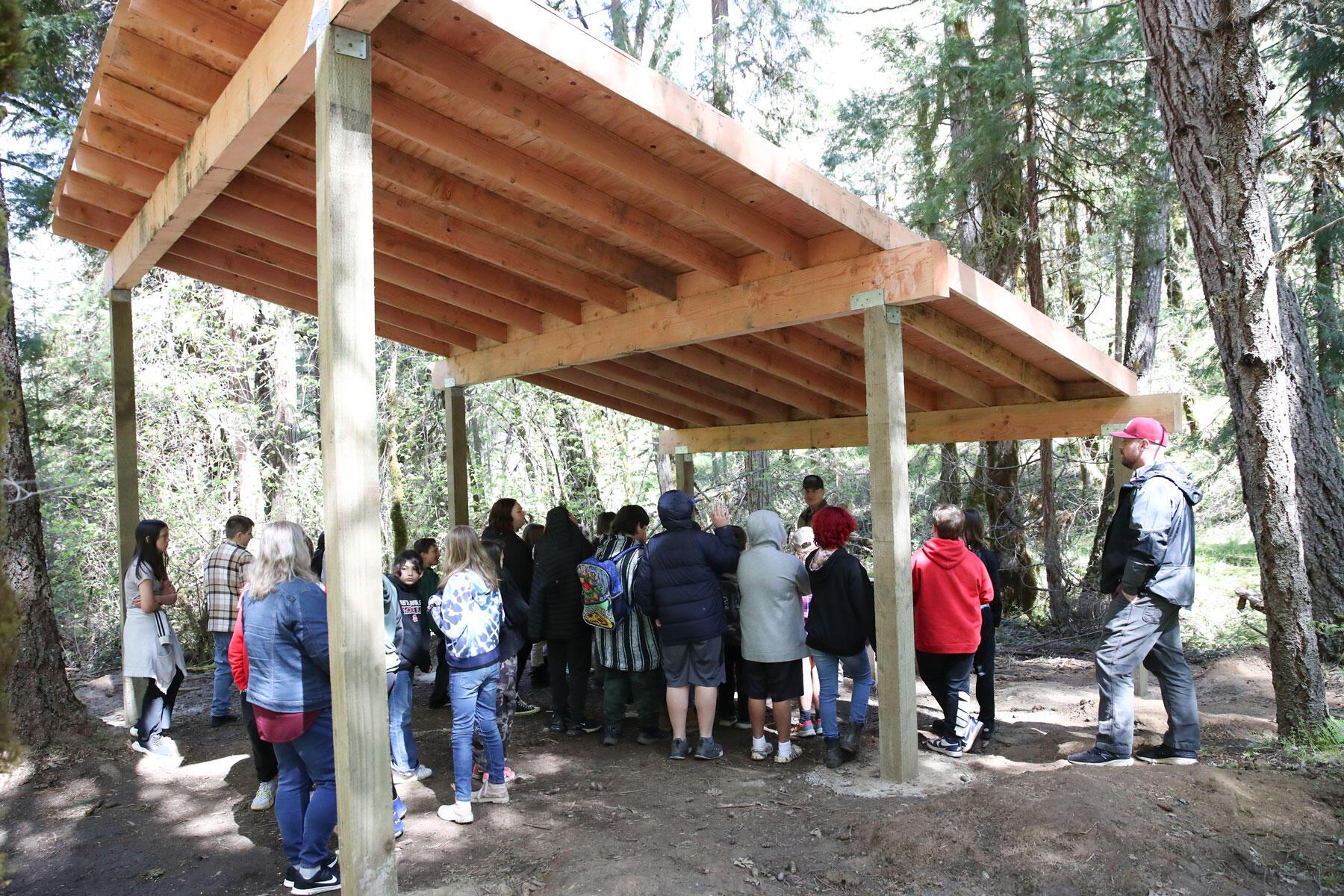
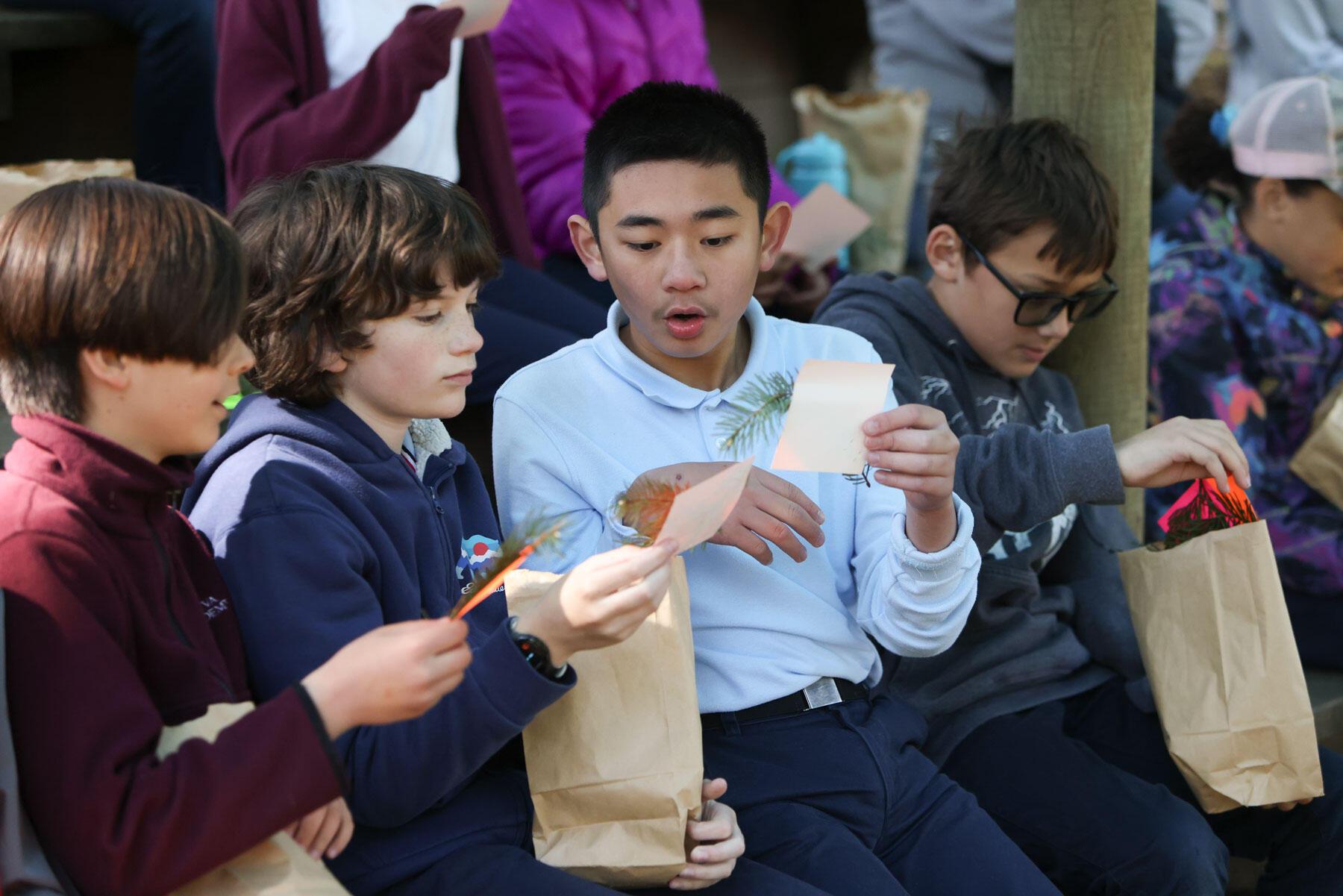
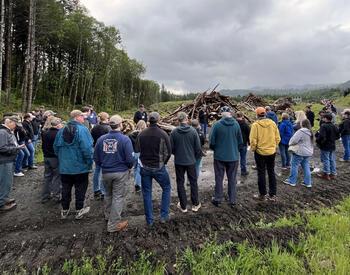
GLIDE, Ore. — Under the roof of an outdoor classroom in the Glide Educational Forest, students from North Douglas Elementary learned how wildfires start and how firefighters stop them.
They gathered around a model ridge and valley floor layered with wood shavings as Justin Grubbs, an advanced forest officer with the Douglas Forest Protective Association, explained the basic ingredients of fire.
Generations of Douglas County students have attended the forestry tour, now in its 61st year. Originally called “The Forestry Expo,” the event requires six months of planning.
“You have your fuel. You have your heat, which can be from lightning, a spark from dragging chains on a trailer or a campfire, and it will start a fire,” Grubbs said as he ignited a small patch of the model with a lighter. The flames drew excited reactions from the students.
Using a small bulldozer model, Grubbs demonstrated how fire crews create firebreaks. “Basically, you trap it,” he said. “And it will stop it.”
After correctly answering that water is needed to extinguish the fire, students moved to the next station to learn about Oregon fish species.
Fifth graders from across Douglas County explored wildfire science, forest ecology and natural resources during the annual Douglas County School Forestry Tour hosted by the Oregon State University Extension Service.
OSU Extension forester Alicia Christiansen said the forest stations make the event unique. Many of the structures are decades old, and she is using grants and private donations to rebuild them.
“Phase 1 has begun and it’s going to be a long and expensive process, but it adds a fun element to this historical event,” she said.
Generations of Douglas County students have attended the forestry tour, now in its 61st year. Originally called “The Forestry Expo,” the event requires six months of planning.
Deep roots in Douglas County
More than 50 volunteers support the three-day event. This year, two dozen public, private, Montessori and home-based schools participated, with 830 students attending. Instructors come from federal, state and local natural resource agencies, tribes, nonprofit organizations and private timber companies.
“This is the longest-running forestry and natural resources educational event in Douglas County,” Christiansen said. “The forestry industry has deep roots here. Roseburg calls itself the Timber Capital of the Nation, and our mills, private companies, agencies and nonprofits all work to maintain and sustain our forest resources.”
Learning stations and hands-on games
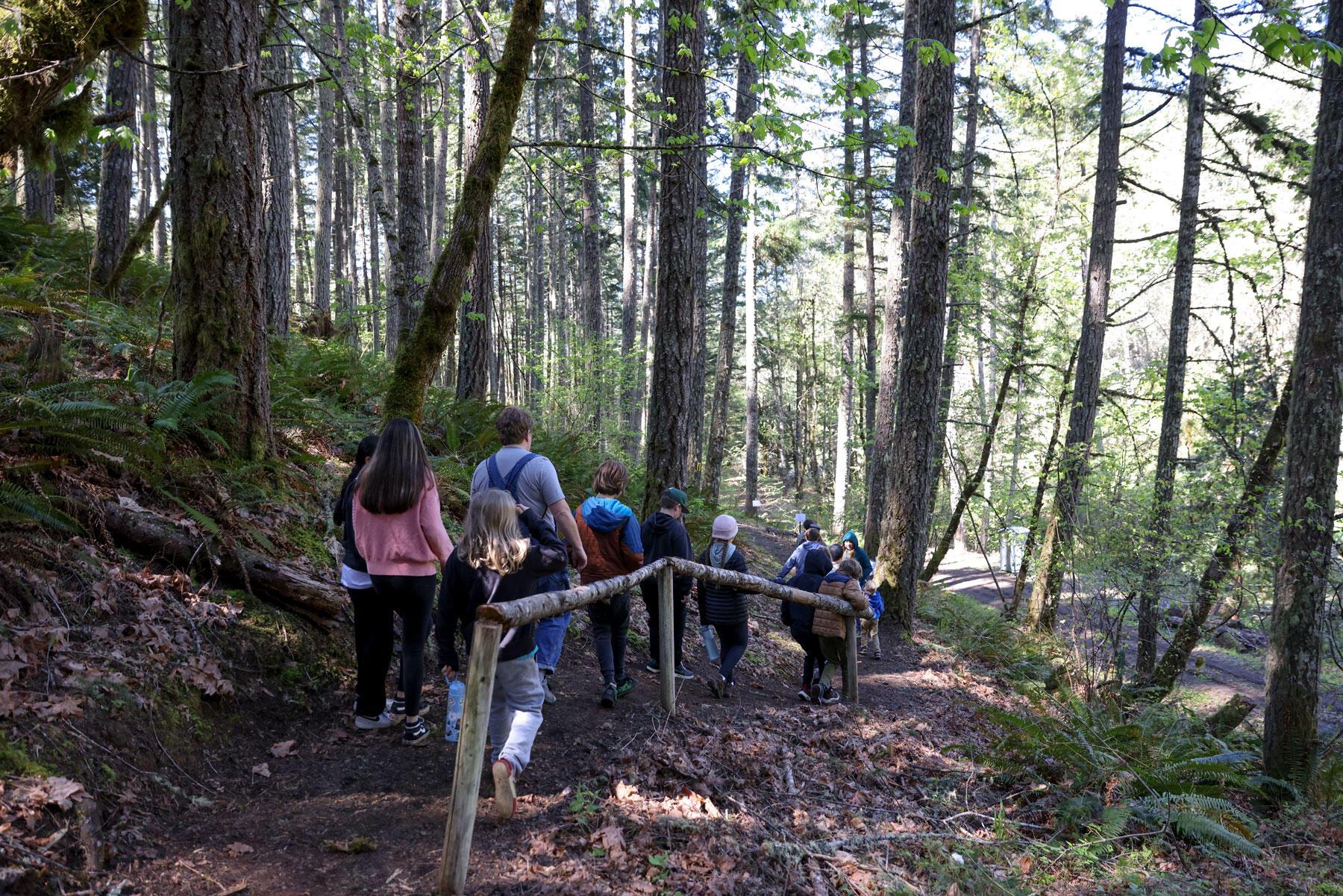
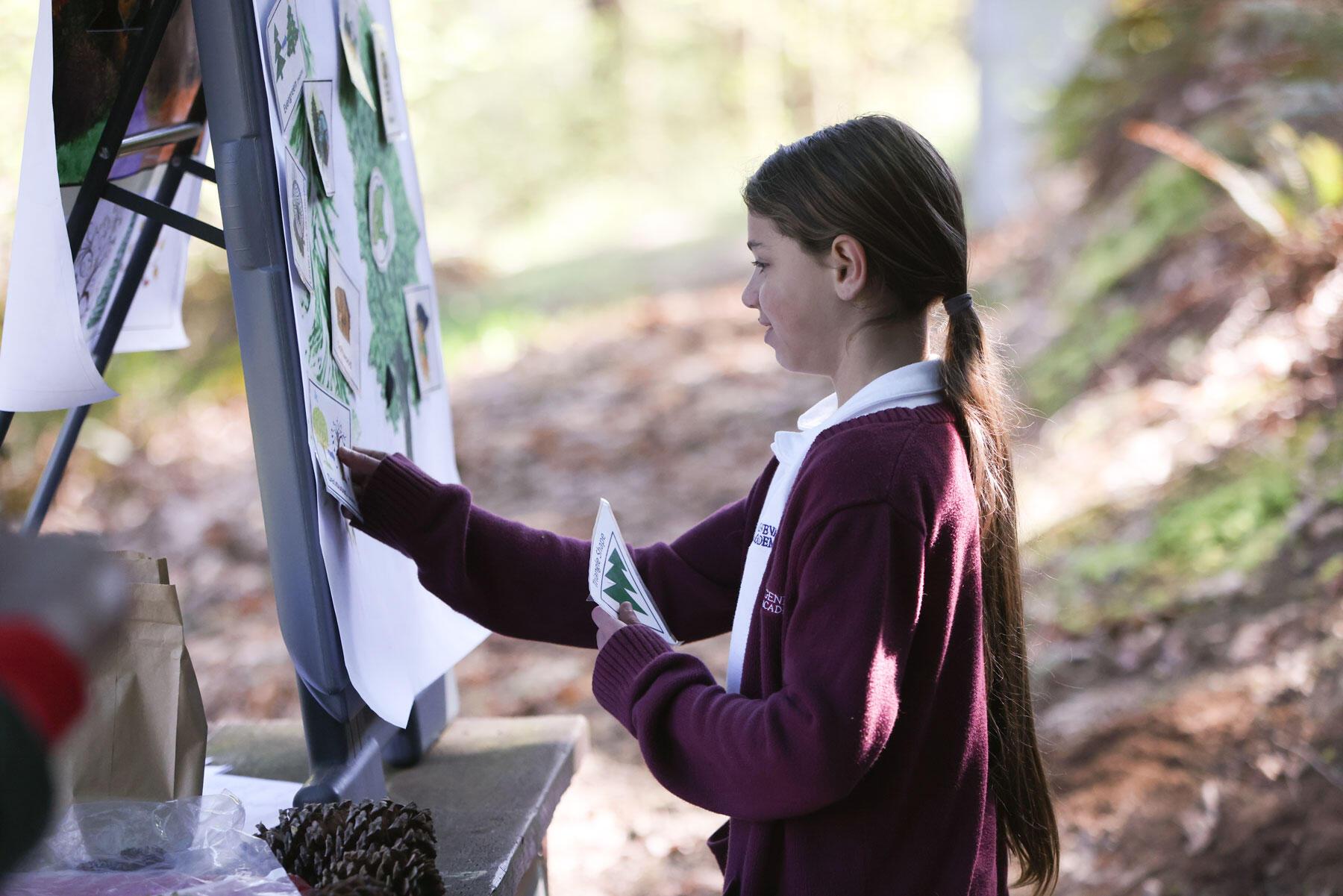
Each morning, classes rotate among seven learning stations on either the “Yellow Loop” or the “Green Loop.” Topics this year were:
- Forest management
- Fire management
- Fisheries
- Tree identification
- Archaeology
- Wildlife
- Forest products
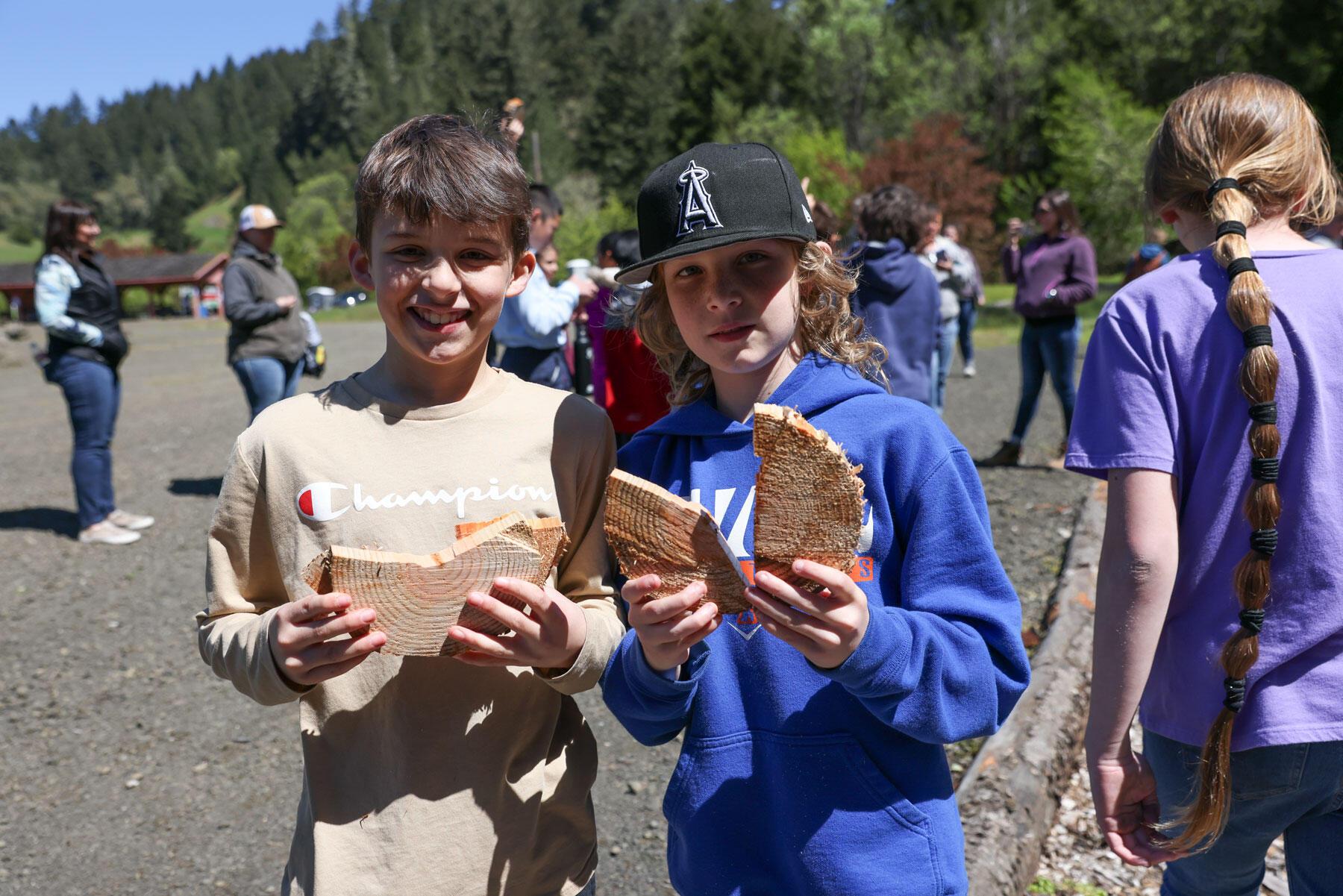
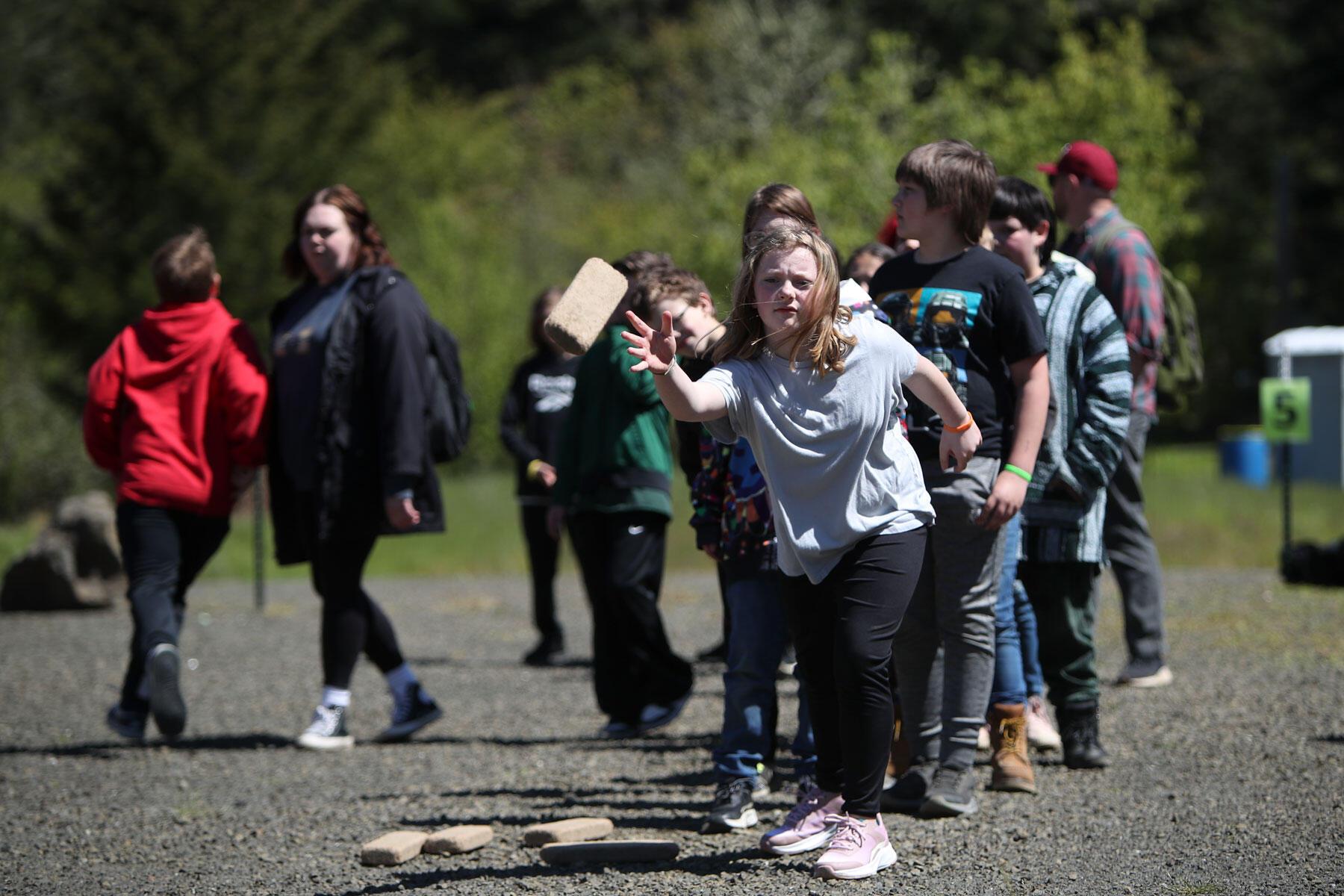
After lunch, students take part in traditional logging sports games. In the cross-cut saw activity, teams of two cut through a log under adult supervision and take home the slice they cut — a “wood cookie.” Another teamwork challenge, choker racing, has students set a miniature choker cable on a small log and pull it across a gravel lot.
Planting seedlings to take home
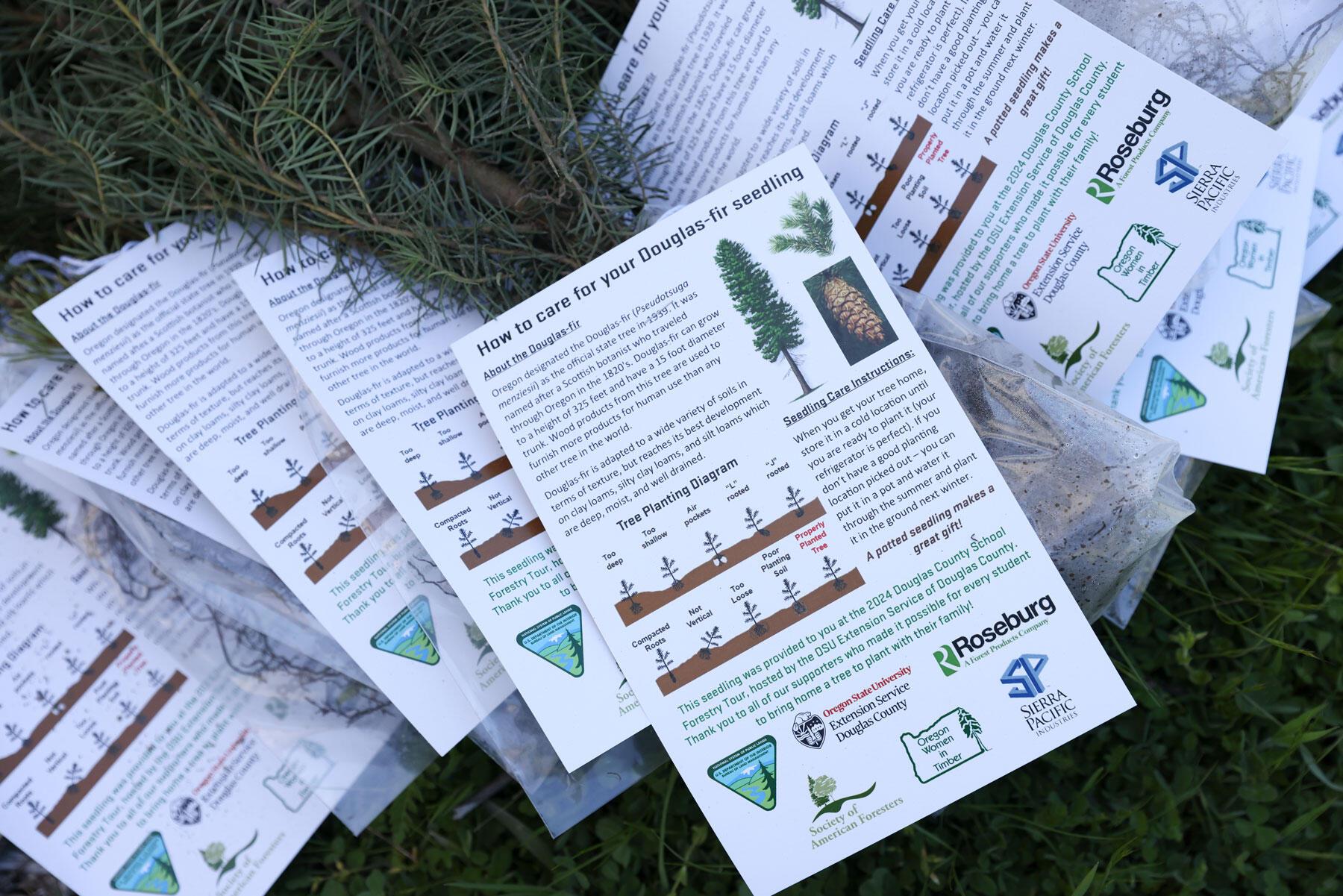
In 2022, Christiansen received a grant from the Society of American Foresters to launch a new station focused on planting and caring for native seedlings. Students practice proper planting techniques, receive Douglas-fir seedlings to take home and get an instruction card about Oregon’s state tree and forest ecosystems.
“Many of our county’s students live on forestland,” Christiansen said. “The kids get to practice planting a tree and then take home a seedling to plant at their house or share with a friend — and hopefully share some of their new forestry knowledge along the way.”