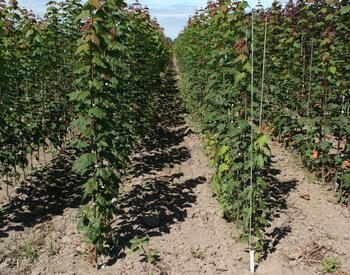
CORVALLIS, Ore. — Espaliered fruit trees combine beauty and practicality, producing fruit at eye level while fitting neatly into small gardens. They’re ideal for narrow spaces or along walls and fences — but they require patience, planning and regular pruning.
“The most important aspect of growing an espaliered tree — which can be any type of fruit but is usually an apple — is pruning."
“Espalier is one of many ways to prune — or design — a fruit tree,” said Cody Copp, horticulturist with the Oregon State University Extension Service. “It’s beautiful, it doesn’t take up a lot of room in the yard. There are a lot of reasons to do it, but it takes dedication and time. It’s like growing grapes or wisteria correctly.”
Espalier trees are typically trained flat along a trellis or wall, with branches guided horizontally along wires. Though they save space and simplify harvesting, Copp cautioned that they’re not less work than a regular tree.
“The most important aspect of growing an espaliered tree — which can be any type of fruit but is usually an apple — is pruning,” he said. “An espalier must be pruned several times during the growing season to keep it in control. That’s a lot of cutting.”
If you’re new to pruning, take time to learn before starting an espalier project. Oregon State University Extension’s pruning guides and workshops are good places to begin.
Setting up the trellis
To start, build a strong trellis to support the tree as it grows. Set posts 8 feet apart and stretch 12-gauge or heavier galvanized wire between them, with the first wire 18 inches above the ground. Add more levels — typically three — each 18 inches apart. You can install all the wires at once or add a new level each year as you train additional branches.
If you plan to attach the trellis to a wall, consider how it will look. Even though the trellis can be removed once the tree reaches its final, rigid shape, it may need to stay in place for up to 10 years.
Choosing and planting the tree
Buy a 1- or 2-year-old tree, preferably a dwarf variety, and plant it in the middle of the trellis in late winter, usually in February. Select two flexible side branches, called laterals, and attach them to the lowest wire — one to the left, one to the right. Prune out the thickest upright branch (the leader) and any other shoots.
As the tree grows, remove weak vertical shoots, known as suckers, by rubbing them off when small or pruning them out if thicker. Shorter, stubby shoots called spurs will appear — leave one about every 6 inches and remove the rest. Prune spurs down to three leaves during the growing season; this is where fruit will form after two years.
Training additional levels
In the second year, train two new lateral branches along the next wire, pruning away extra shoots. Repeat the process in the third year for the next level. After about four years, begin renewing spurs: remove all spurs along one branch on the bottom level to encourage new ones, then alternate sides each year as you move up the espalier.
With steady care and regular pruning, your espalier will mature into a sculptural, fruit-bearing focal point in the garden.
Learn more
For detailed guidance on espaliering and fruit tree care, consult the Oregon State University Extension Service publication Training and pruning your home orchard.
Previously titled Training a fruit tree into an espalier takes a good dash of dedication