Transcript
Episode 67: Think International (Airports) and Buy Local
This transcript was created by AI and edited by humans for errors in syntax, spelling, and punctuation.
Table of Contents
- 00:00:00 - Introduction to In the Woods Podcast
- 00:00:56 - Meet Ryan Temple: Sustainable Northwest Wood
- 00:01:35 - Ryan Temple’s Journey and Sustainable Practices
- 00:04:36 - Meet Ben Deumling: Zena Forest Products
- 00:05:13 - Ben Deumling’s Journey and Innovative Products
- 00:08:31 - The Portland Airport Renovation Project
- 00:19:54 - Challenges and Innovations in Wood Flooring
- 00:23:07 - Scaling Up: Building the Facility
- 00:23:48 - Challenges in Timing, Segregation, and Pricing
- 00:28:18 - Partnerships and Coordination
- 00:28:36 - Feedback and Future Projects
- 00:32:44 - Lessons Learned and Reflections
- 00:35:39 - Lightning Round: Favorite Tree Species
- 00:39:30 - Resources and Final Thoughts
Introduction to In the Woods Podcast
[00:00:00]
Lauren Grand: From the Oregon State University’s Extension Service, you are listening to In the Woods with the Forestry and Natural Resources Program. This podcast brings the forest to listeners by sharing the stories and voices of forest scientists, land managers, and enthusiastic members of the public. Each episode, we will bring you research and science-based information that aims to offer some insight into what we know and are still learning about forest science and management. Stick around to discover a new topic related to forests on each episode.
Meet Ryan Temple: Sustainable Northwest Wood
[00:00:56]
Scott Leavengood: Welcome back to the In the Woods Podcast, presented by the Forestry and Natural Resources Extension Program at Oregon State University. I’m Scott Leavengood, extension specialist in wood products, and I have the pleasure this episode of talking with a couple of leaders in Oregon’s forest products industry, both of whom I’ve had the pleasure of knowing for several decades.
Our guests are Ryan Temple with Sustainable Northwest Wood and Ben Deumling with Zena Forest Products, and both of them played key roles in the main terminal upgrade at the Portland International Airport, or as most Northwesterners know it, simply PDX. So let’s start with some introductions. I’ll start with you, Ryan. I think we first met when you were with the Healthy Forests, Healthy Communities Partnership, but for quite a few years now, you’ve been with Sustainable Northwest Wood as President and Founder, in fact. So tell us a bit about those organizations and what led you to create Sustainable Northwest Wood.
Ryan Temple’s Journey and Sustainable Practices
[00:01:35]
Ryan Temple: Yeah, that’s right, Scott. I think it was—I moved here in 2000. I think we met probably fairly shortly after that. Moved up from the Forest Stewards Guild where I was working in New Mexico to work for Sustainable Northwest, managing their Healthy Forests, Healthy Communities partnership. It was a network of about 40 or so different sawmills, mostly smaller family-owned businesses scattered across the Northwest. And the idea of the network was to find ways to support those rural businesses through technical assistance, small grants programs, networking, marketing, branding. But at the end of the day, one of the things we found was as much, I think, as those businesses appreciated the type of support that a nonprofit organization like Sustainable Northwest could offer, what they really needed was somebody to buy their wood. In other words, again, all of the support is fantastic, but if we’re not selling what we’re making, nothing else really matters.
And so at that point we started toying with the idea of creating a for-profit subsidiary because it didn’t really seem like any of the other lumberyards in the region were committed to stocking product from these businesses. They were okay bringing it on a special order basis, but we really wanted the local products from small producers to be available just as readily as anything else. And so in 2008, we started Sustainable Northwest Wood. It was a little bit of a gamble. Sort of the conventional wisdom was if this was a good idea, somebody would’ve already done this before. But of course, one could see the flaw in that. You know, innovation would never occur if there wasn’t a willingness to take a little bit of a risk.
So we started Sustainable Northwest Wood in 2008. So what’s that mean? 17 years under our belt? We’re still here. And there’s about 50 different mills across the Northwest that supply our lumberyard. Literally anything that you can imagine from the Pacific Northwest probably flows through this warehouse, but we try and specialize in products that may be, that aren’t in the mainstream. Northwest hardwoods would be a great example, right? Our madrones, our myrtle woods, our Oregon white oaks that aren’t readily available on the shelf. Let’s bring those things to market. Juniper would be another great example we can talk about a little bit later, but one common thread that runs through them is in addition to all being local, we try and celebrate the people, the places, and the forests that they come from. So we’re really looking for folks who are committed to the communities and committed to being good stewards of their land in the long haul.
So some people say, “Isn’t it challenging to run a business like that?” The opposite’s true. If we didn’t have those sorts of values, then we would just be one more lumberyard out there and have no real competitive reason to be.
Scott Leavengood: All right. Yeah. Thanks. I had no idea. I think if you’d asked me to guess, I would’ve said probably 10 years ago, but yeah, 17 years. Still going strong, huh?
Ryan Temple: Still kicking.
Meet Ben Deumling: Zena Forest Products
[00:04:36]
Scott Leavengood: Shifting to you now, Ben. Your website lists you as president, creator, and purveyor of big ideas for Zena Forest Products. And I guess I can attest to the big ideas part, given the number of years we’ve worked together and with you turning ideas into new products and having us at OSU put them through their paces through testing. Before we get to the part about the Portland Airport here, tell us a bit about Zena Forest Products.
Ben Deumling’s Journey and Innovative Products
[00:05:13]
Ben Deumling: Yeah. Thank you. And thanks so much for having me on, and Ryan and I both, this is really fun. It’s a fun opportunity to talk about this. And so in some ways, Ryan and I both started our businesses around the same time. We officially started Zena Forest Products in 2007. But it really is an outgrowth of this patch of farm family forest land that we’ve always had where I grew up. It’s this patch of forest in the middle of Willamette Valley. It’s got a lot of non-traditional species on it, not just Douglas fir. It’s got a lot of Oregon oak, bigleaf maple, some Oregon ash.
And in the early 2000s, we were really trying to figure out what do we do with this material? There was no infrastructure, there was no industry in Oregon to buy, purchase, process, manufacture anything out of these species. And Ryan, I appreciated your line about, “Well, no one’s done this. What are we missing?” We started building our own manufacturing infrastructure to initially saw our own logs, and very quickly, word got out that we were sawing Oregon oak, and the phone started ringing—people wanting to find a home for their oak logs and maple logs. And we’ve slowly grown ever since.
And as the forests of Oregon have changed over the decades, as my understanding about woods and technology has changed, we’ve leaned more and more into being a resource and a business that can support complex forest management. The future of our forests really requires complexity and resilience and growing forests that have more than just one species in them. And if you’re gonna have a forest with more than one species, you need to have markets for more than one species of tree. And so that’s really where we’ve tried to innovate, come up with interesting products that are workable, that we can make out of all these different trees and types of trees, not just the tall straight trees, but the crooked trees, the narrow trees, the small diameter trees that really need to be harvested in service of a complex and resilient forest landscape.
And through that end, we’ve had a lot of fun over the years, innovating and coming up with new products. And really, huge testament and thank you to you, Scott, for being a key ally all along the way, fielding my crazy questions and letting me use some of the resources you have in your testing facilities down at OSU. And I think now is probably the first time in maybe almost a decade I don’t actually have any wood in your chambers right now. So we have more in the pipeline that I want to bring down. So that’s a little bit of where we’ve been, and we really focus on flooring. Of all the different products we’ve tried and made and worked with over the years, it always comes back to flooring. It’s the key driver of our business and the best fit for the species that grow here in Oregon. And we make some things along with it—stair treads and trim and some paneling—but that’s all in service to the flooring.
Scott Leavengood: Excellent. Yeah. All right. Thank you to you both. And for our listeners here to understand that we’re setting the context here as far as this diverse range of species that are available in the Northwest and the ability to buy local.
The Portland Airport Renovation Project
[00:08:31]
Scott Leavengood: And so that sets the context, if you will, for the main focus of this episode, which is the recent renovations to PDX. Anyone who’s had a chance to be in the airport in recent months knows that the wow factor is really there. In fact, we’ve got some interns this summer that just started last week from, I think, six different countries. All of them have come here through the Portland Airport, and they were all talking with me about it just last week, saying how amazing and incredible the airport is. And so there’s wood pretty much everywhere you look there at Portland Airport. Can you talk about the impetus for this design and at what stage you got involved? And I think we could start with you, Ryan.
Ryan Temple: Yeah, I got involved probably about, gosh, eight years ago? I think so. I really started having conversations four or five years before product was needed for the airport. And Paul, it seemed like way early. I think it’s really important and the key lesson that these conversations began that early for a project of this magnitude.
Early on, I think the conversations were about metal versus wood, steel, right? Both in the aesthetics and the framing and the infrastructure and all of that, the roof. And a lot of folks thought wood just would not be up to the task. ZGF Architects, I think, played a key role in saying—and the Port and their commitment to wood—saying, “Nope, we’re gonna make this happen. We can do it with wood.” And then at that point, they chose to raise the bar a little bit further. As if the wood itself wouldn’t be challenging enough, they said, “We want all that wood to be local.” And that’s not that hard. We’re in the Pacific Northwest, right? This is the wood place. We can get wood locally here. So we check that box pretty quickly.
Then they said, “We want all this wood to come from well-managed forests.” That opens up a big conversation—well-managed forest, right? Sustainability, ecological forestry. It’s not a bright line. It’s a spectrum. But there again, they heard that we can get you wood from the state of Oregon, state of Washington, and it’s all meeting the Forest Practices Act, which is a really good thing that we’ve got, and everybody nodded their head in agreement. Yes, the Forest Practices Acts are a good thing. But we think that there’s some landowners out there who are looking to innovate a little bit further. They’re looking to push that envelope a little bit more. What can we do to incentivize and recognize them? And not just have it be about a single certification system, but really looking for tribes, community forests, family forests, public forests, a whole host of ownerships, different objectives, but all aligned and trying to raise the bar and doing the best possible forestry that we can have out there.
At that point, people said, “I don’t know. Now you’re really asking a lot.” We were one of the few voices in the room that said, “These people are out there. The forest managers, the mills behind the logs are out there. We can make this happen. We can make it happen locally, and we’ll even give you one more. Not only can we have it come from these forests, but we can trace it back to the forest.” So at the end of the day, not only do you know that this supported good forestry and communities, but you can really say which forest, which communities, which families, which businesses. And anybody’s been through the airport knows that once they knew this was a possibility, they really embraced that concept because it’s become very much all about storytelling. Not just that there’s a positive impact, but that positive impact is very real for real people. And it’s that evolution of thinking, beginning with sort of a fairly simple concept of “let’s do it with wood,” but then beginning to ask that evolution—what more, what next? What else can we do to innovate here?—which made it just a really fun project to be involved in.
Scott Leavengood: Maybe a little complication in there as well, huh? In the supply chain?
Ryan Temple: Yeah. Learning curve. Absolutely. Yeah. Bumps along the road, but they pulled it off.
Scott Leavengood: Yeah. The storytelling. Yeah. And just being able to link it back to the forest. I’ve seen stories in the news about that, which is pretty unique. How about you, Ben? What would you add to what Ryan just shared?
Ben Deumling: Yeah, similar to Ryan. I think it was… May of 2016 was when we started the conversations, and so it’s been a long run, and we’re still working on it. Phase two is still underway. 2016 was when we started the conversations, and it’s been a long run. And similar to Ryan’s story, we were focused very much on hardwoods and the flooring. Early on, the conversation was, “We want to put wood in this building.” And my advice was if you’re gonna do wood, you should do Oregon oak. And if you’re gonna do Oregon oak, you should do flooring. Just because oak is just one of the key species here in Western Oregon, at least, and so incredibly dense and durable and such a good fit for that. But again, like Ryan said, we had to prove it out. Is wood actually going to work? Is it going to hold up in a space like this?
And we ended up actually putting in some test floor patches years prior to construction that they put right in front of the rope lines at security for every single person to walk over for three years to just prove out this wood will work. It will hold up. Absolutely. And again, like Ryan said, we got in early, which meant so many things were possible. We had the time to do that kind of R&D, which you don’t normally have on a project. And I had the time to work with you, Scott, on a lot of testing in your facilities to test some things about the woods and the floor and how well it’s gonna work. We had that time.
But I think, really driven by the Port and ZGF, there was this determination to showcase Oregon and to not only have traceable local material that had a compelling story, but they were very interested in being an economic driver in the state. This is the largest public works project in Oregon history. They knew that they were gonna have an impact. Fun fact: largest public works project with zero public dollars. It’s fully paid for with airline fees, so it’s a public project paid for with private dollars, which gave them a unique opportunity to do things that you can’t on many projects.
And by investing in Zena, in us as a small business, and saying, “Look, we are going to buy a floor from you guys”—that was huge. That was, at that point in the early days of conversation, that was two years of our production in one project, and that gave us the confidence to invest, to grow, to build capacity for this project and come out the other side stronger for it. And not just us as a company stronger for it, but we are now one more key piece in the wood products industry in Oregon that didn’t exist before at that scale. And so the Port—there’s dozens of stories where the Port and ZGF, like they knew what they were doing by going above and beyond to invest in small local businesses. And those dividends are just continuing to pay off over time. And I can go into more detail, Ryan and I both, about the particular products we made, but that’s a little bit of the backstory of our role in that and the huge impact that this project had on the state of Oregon.
Scott Leavengood: Yeah, that’s really interesting. I have to say that despite some of the peripheral involvement I had, I had no idea of some of the backstory there, and then the fact that it had been that many years ago. We’re talking almost 10 years of conversations to get to this point. But yeah, dreaming big sometimes takes a little while, huh? Ben, you just shared the stat about the biggest public works project ever, but can either of you, maybe off the top of your head, do you know, like amount of wood used, number of species, the radius from where it was harvested in terms of miles? A lot to ask, maybe to come from memory, but yeah.
Ben Deumling: Ryan, why don’t you start with that? I think you have a bigger picture. I can speak particularly to our role, but you have a bigger picture on that, I feel like.
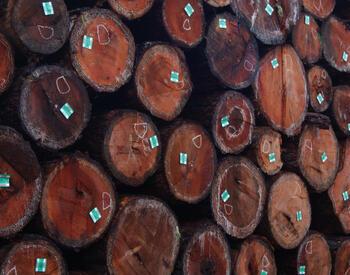
Ryan Temple: Yeah. One of my favorite ones connecting, really about us to you in Corvallis—83 miles of three by six. So if you were to take all of the three by six lattice work in that roof and place those boards end to end, I think that would pretty well get me from Portland to Corvallis without having to step off one of those three by sixes to get there. So an awful lot of wood. But that three by six lattice work came from 11 different family forests. Three of those being tribes, community forests, family forests, some of them FSC certified, all of them in Washington or Oregon.
Species used—I’m assuming that the plywood is just fir in the core, and if I’m right about that, then I think only two species actually went into the airport. A narrow palette, which is another—we can talk about that, the pros and cons of that approach. But actually relatively few species. And so in order to try and diversify the impact, there was really a conscientious effort to even reach across different eco-regions. Let’s make sure that some of that Doug fir is coming from the east side, from way up in the northeast corner of Wallowa County, right? Let’s distribute that impact as best we can, knowing that we’re just working with a limited palette of species on it.
Scott Leavengood: Interesting. Yeah. And the other one is Oregon white oak. Is that right? Yeah.
Ben Deumling: Absolutely, lots of it. And so not all from Zena, but the floors came from Zena. And again, it didn’t all come out of our own forest. We sourced from forests throughout the Willamette Valley, and that needs to track and trace to document the sourcing. It was challenging even for a mill at our scale where we keep very close tabs on where our wood comes from. But once it goes into our pool, as it runs through the sawmill, it gets co-mingled with everything else. And so we employed some tricks to figure out how much actually came out of our forest and how we were able to track more closely than normal this particular material.
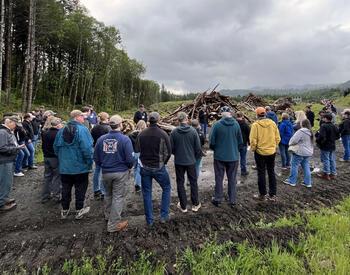
But it all came from a 60-mile radius of here, and here is—we’re just west of Salem, and we’re 60 miles south of the airport, so it all came from right here. And for us, interestingly, it coincided with the big 2021 ice storm that we had in February here in the Salem area that really severely damaged a lot of our forests. And so it just so happened that those salvage efforts happened around the same time as needing the wood for the airport. And not just from our forests, but from forests throughout the area. So a lot of the wood in the airport is actually salvaged from the 2021 ice storm that we had.
Scott Leavengood: Wow.
Challenges and Innovations in Wood Flooring
[00:19:54]
Scott Leavengood: Okay. I think you’ve both touched on this a little bit already, but what were some of the challenges that you faced in this project? If not your companies directly, challenges that you were made aware of as suppliers of materials. For example, I saw a mention of the opaque nature of the forest products industry supply chain and things like business as usual. We could start with you, Ben, on this one.
Ben Deumling: The big challenge for us was we ended up developing a brand new product for this floor. And because we’ve been having conversations for so long, we were trying to figure out how do you put a wood floor in a space like this, in a very large format space with a whole lot of traffic that then has to interface with carpet and terrazzo seamlessly. And for a long time, we were working with a tongue and groove product, which we were more familiar with. That was what we’ve been doing for many years. For a lot of technical reasons, that was gonna be challenging. And we kept running into problems with wood movement, with transitions, with supply chains.
And I pivoted in the midst of COVID and pitched what we call our edge grain tile to the project team, which is a completely new type of flooring that’s never been made in North America before. It was fairly common in Europe, but we took that idea and modified it for our species in this region and pitched that to the architects, the builder, and the Port. And they loved it and said, “Yes, we want to do this.” And then I had the job of figuring out how to make it. And so I didn’t really tell them when I pitched it to them—they didn’t actually know I didn’t fully know how to make this. And so we, in short order, figured out how to tool up and build a new facility, purchase a whole bunch of new machinery, and build an assembly line for our edge grain flooring tiles. And that was a huge challenge. It was a monumental challenge to scale up this kind of production in the midst of COVID and innovate a brand new product for a very large customer and make sure we weren’t gonna screw it up.
Scott Leavengood: No pressure.
Ben Deumling: But we prevailed, and it worked. And for us, the icing on the cake really was this was a win—it was a technical win for the floor in this space that was gonna work really well and perform well. It was a win, though, for us in… When we manufacture flooring, everybody wants wide boards and long boards. And what do you do with the small pieces of wood? What do you do with small diameter trees? The rest, the other half of the tree and the other half of the forest—it’s hard to merchandise. And our edge grain tile, which is composed of little three-quarter-inch sticks of wood held together with wire, that was a way for us to utilize so much more of the resource.
Scaling Up: Building the Facility
[00:23:07]
And now gives us the ability to really support a lot more restoration work throughout the state with this technology that, again, the Port didn’t buy the machines for us—we made that investment—but having a project at this scale gave us the confidence to invest in this facility. And coming out the other side, we have this facility and we can now make this at scale for more customers. And so it was an exciting project. It was pretty stressful at times, but it worked, and we really had very few hiccups along the way. And I think the floor is testament that things worked. It’s performing incredibly well and really exceeding all of our expectations.
Scott Leavengood: Yeah, that’s a cool story too that through this, you’re able to make better utilization of a really unique resource. All the little pieces that often just get thrown in the chipper and who knows what happens to them. They don’t go to a highest and best use for sure. Yeah.
Ben Deumling: No.
Challenges in Timing, Segregation, and Pricing
[00:23:48]
Scott Leavengood: How about you, Ryan? Challenges.
Ryan Temple: Yeah, I’ll maybe drop them into three categories: timing, segregation, and pricing. And then talk about the role that Sustainable Northwest Wood played as a buffer in those. On the timing, I think intuitively most people say, “Oh, was the problem getting all the wood to them in time for the job?” Really, the problem they ran into more was having wood available too soon. When they would pinpoint a specific forest and say, “Hey, we want wood. We love what that forest is doing. We want their wood.” It’s okay, they’re harvesting now. It’s a small family forest. They might not harvest again for five years. And you don’t need the wood for three years. So how do we plan this far ahead if you want to do that?
And so literally, going to get them to do that harvest and then slowing that wood through the system as much as we could after the harvest occurred. But eventually we, as a distributor, taking on the stocking inventory of that, saying we’re gonna hold this product here that’s ready, that you need, and you might not need it for another year or two, but we know this is what you want, and so we’re gonna do that for you. And there were times also when, “We like this forest. They’re not gonna harvest until two months before your project.” And so we’re gonna have to accelerate that one through the system. So timing and all the aspects of that was an issue. And it just required a lot of coordination, communication, and in some cases holding inventory until they’re ready for it.
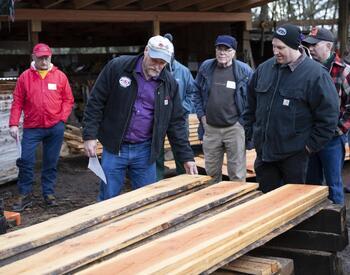
The segregation piece, I think for the mills—the larger mills especially—that was a bit of a challenge. It’s something that we do at Sustainable Northwest Wood all the time because we’re very much about the storytelling. Like this bunk of wood came from this place, and we’re gonna hold it and inventory it and have that knowledge embedded in it. As I think you know, Scott, most sawmills—and Ben referred to this in terms of even how they buy Oregon white oak—you buy the logs, it comes in, it gets mixed up in the system, and then it goes out the door, and you don’t really know exactly where anything came from.
So getting the mills to set up a different log deck and batch run it so that they could talk about where that wood came from was an ask. And it required some of the sawmills to do things a little bit differently than they normally did. And they were willing to do it because there was an opportunity there. It was large, it was significant. There was economic incentive for them. And I think they were also willing to do it because the mills and the forest owners, managers, loggers all came to realize that the Port really had set out to celebrate them and their work. And it’s an industry that’s not celebrated often. Sometimes it’s put through the ringer and given a black eye from time to time. And so I think having this urban constituency say, “We really want to provide praise and the accolades for the hard work that goes into your industry” made them say, “That’s fantastic. We’re willing to do things a little bit differently than we might otherwise to allow that to happen.” And it just created great partnerships and relationships that go on today because of that sort of mutual respect and understanding.
Pricing is the last one. All of this happened—it peaked right during that COVID period when lumber markets were going crazy. And when you had something that was bid a year ago and all of a sudden the lumber is two times, three times what its pricing was, and you had projects, you had budgets. And again, at Sustainable Northwest Wood, we were able to provide a bit of a buffer on that. Because of the early purchasing, we’d actually brought wood into inventory at some of those lower prices. And so even though the lumber market had gone crazy, our cost of goods sold on it was relatively modest. And we didn’t take advantage of where lumber markets were at that time. We said, “We had an agreement with you. We know where lumber markets are, but we can hedge and buffer this for you and try and stabilize that pricing piece for you.” I think pricing is always an issue when you have a long-term timeframe on a project like that. But it’s maybe especially complex when they have these other layers and requirements placed on the wood. They just can’t shift and say, “All right, we will go get it from another source.” They’d committed themselves to a source and a story. And so we also committed ourselves to them in delivering the timely product on budget.
Scott Leavengood: Yeah, it sounds like you might have needed a warehouse about as big as the Portland Airport there to house all that material for a little while there, huh?
Partnerships and Coordination
[00:28:18]
Ryan Temple: And this is where partnerships are so important. And so everybody along the supply chain, even if it was our money that was tied up, people along the supply chain helped out with space for us, which is fantastic.
Scott Leavengood: Yeah. Teamwork still matters, right?
Ben Deumling: Absolutely.
Feedback and Future Projects
[00:28:36]
Scott Leavengood: What sort of feedback have you received? So I’m thinking here in particular, has anyone contacted you for advice—maybe another major airport wanting to do something similar—or anything anywhere else around the country, around the world even, that says, “This is a cool story. Let’s talk to these guys. They know how to make this work.”
Ben Deumling: Yeah. Yes. Having your materials in the Portland Airport is a fantastic calling card. It’s highly visible. And the Port has done an incredible job of storytelling and of trying to tell the story of the local woods and where it came from and why. So that’s been incredibly valuable for us as a business. And the answer is yes. We are talking with other airports. We have an anecdote—we had an architect fly through the airport here a couple months ago, and she works in the Midwest designing high schools. And now she really was like, “This is amazing. Let’s put this floor in the next high school I design.” So those sorts of things are happening. And we’re incredibly—I feel incredibly fortunate and honored to be able to be part of this project and, as a result, then reap the benefits of having our material in such an incredible space and just so much celebration around that. Everybody is—there’s lots of positive feelings around that, and it’s been really wonderful for us.
Scott Leavengood: You become the unofficial consultant for anybody else wanting to do something similar, huh?
Ben Deumling: It’s—I’m a wood geek, and so the learning that went into this has just helped me communicate better with customers going forward about woods and different applications and where it can work well and where it doesn’t. It’s just a continuous learning journey for me about wood and wood technology and wood science. So it’s been really fun.
Scott Leavengood: Awesome. How about you, Ryan? What sort of feedback are you hearing?
Ryan Temple: Ditto everything that Ben said. That storytelling—people have come to appreciate that and know that it’s possible, and it’s compelling. That’s always been a core piece of our business. So it’s fantastic for us that folks are also seeing the value in it. But I think one of the game changers that the airport created was that it took that to scale, right? We’ve always worked with homeowners or smaller commercial projects who will buy a few thousand board feet of something for the project and do that storytelling around it. But I have a hunch that there’s always this assumption that that was always a niche boutique sort of thing, but it’s not something that you could do on a large public works, big scale commercial project. And the airport has proven that’s not true.
And this is where I will give up our dirty little secret here at Sustainable Northwest Wood: we don’t do a whole lot. We rely on other folks who do a whole lot. We’re a distribution yard. And our power is the power of these businesses and our ability to aggregate everything that they do into a single place that makes it readily available in the marketplace. And so suddenly, if we’re working with a couple small mills and places who might not be able to do a big project like that, by aggregating them here, then we open up that possibility in a way that previously might not have seemed possible. And yeah, the power of story is something that’s definitely resonated with folks. I think people want to replicate. But also, as they say at the airport, making the impossible possible, right? The assumption was like, this can’t be done. And proving that it can be done has been huge in terms of not just the impact for this project, but the impact that its dividends are paying now and into the future as well for so many different businesses.
Scott Leavengood: Oh yeah. Like you said, the economies of scale there that you help make that happen. Yeah.
Lessons Learned and Reflections
[00:32:44]
Scott Leavengood: Final official question anyway. Common question that people are asked when they are involved in such a major undertaking: If you had to do it all over again, what would you do differently? We’ll start with Ryan.
Ryan Temple: Yeah, and I’ll borrow on something that Ben said that really resonates with me, which is if you want to have diverse forests, then you need to have diverse products, right? The forests—our managed forests—they will grow what people want to consume. I get it that the forest—that the airport and the designers like this notion of a limited palette. We’re gonna have two species in there: the Oregon white oak and the Doug fir. And if I had to choose just two, probably would’ve been those two. But both for the purposes of this project and the ability to distribute benefits further, take what was probably a fairly intense pressure off of just a couple things on a very limited timeframe, distribute that a little bit more, but more importantly, in terms of showcasing the possibilities for the future, I would’ve loved it if the project also had some juniper, some madrone, some ash, or again, a few other species in there, both for the benefits in that moment of time, but also for the benefits of promoting that greater diversity for an extended period of time.
Scott Leavengood: Yeah, absolutely. That’s a good point. Yeah. Until with this conversation, I hadn’t realized it was that narrow a palette as you’ve called it. How about you, Ben? What would you do differently?
Ben Deumling: Yeah. Oh, I don’t know that I’ve got a great answer for this. I think if I was to do this over, I would have a lot more confidence and trust that we can do this. And I think I didn’t realize just how phenomenal my team and network of partnerships was gonna be. And yeah, I just—going into that, I was pretty nervous. I was pretty apprehensive about something of this scale, and coming out the other side, I have a lot of confidence that we have a team and a set of partners that can take on the world. It was really—I was really impressed by how everybody involved in this stepped up and just did an incredible job. But yeah, I would also echo Ryan’s point. I think celebrating the diversity that Oregon has to offer is so important and something that I am keenly interested in. Yeah, I would very much echo what Ryan had to say.
Scott Leavengood: Good. All right. Now here, before we wrap up this episode, I have a few more questions for you in what we call the lightning round.
Lightning Round: Favorite Tree Species
[00:35:39]
Scott Leavengood: And the first question is always: What is your favorite tree species? Ironically, we just talked tree species, but Ben, can I guess yours? Is it Oregon white oak by any chance? Yeah.
Ben Deumling: There is—I mean, there’s so many interesting species in Oregon. It’s hard to pick one, but Oregon oak just stands out as an incredible tree for so many reasons, from its ability to grow anywhere, and honestly being the most climate-resilient species we have on the West Coast, to its properties of being incredibly dense and durable and beautiful and good for so many different things. And just that iconic tree of the parks in Western Oregon—they all have big oak trees, and we love them. They make amazing shade, and they’re beautiful to look at. And I can go on and on. Oregon oak’s a great tree.
Scott Leavengood: No argument from me here. How about you, Ryan? Do you have a favorite?
Ryan Temple: Oh, the love-hate favorite, almost the opposite of the Oregon white oak and all of its grandeur, is the juniper and all of its scrappiness. It’s a native tree, but it has grown outside of its native range. But you know what I love about it is the entrepreneurial spirit of Eastern Oregon has found a way to create opportunity out of this problem when they’re removing it from rangeland restoration work, taking advantage of its unique properties of rot resistance, and just creating this fantastic network of jobs that are restoration-based in Eastern Oregon. And I love the fact that it’s one of these few instances where you’ve got complete harmony in terms of what we should and ought to do, right? You’ve got ranchers and loggers and environmentalists and public land agencies and millers all singing in unison of let’s figure out how to manage this landscape. Let’s figure out some great products we can make out of this juniper species. And yeah, I have a real—Eastern Oregon holds a special place in my heart. And anything that can be done that’s improving rangeland health and watershed health out in Eastern Oregon, I’m a fan of. Yeah, let’s keep the great big beautiful old-growth junipers in the rocky outcroppings where they belong, and then those that are marching down into the grasslands and degrading habitat, let’s figure out opportunities of things to do with them.
Scott Leavengood: Absolutely. Yeah. Like I’ve heard it described, a win-win on that one. Here, another second question: What’s a unique tool that you use that helps you with your work? That’s a tough one, maybe, huh?
Ben Deumling: I don’t—so I was thinking about this. I don’t know that it’s unique in any way, shape, or form, but it’s pretty boring. But I’ll be honest: the calculator on my phone and a Google spreadsheet. Honestly, it’s how I run my business every day. Like it’s so much of my day and my decision-making runs through those two tools, and it’s pretty boring, but it’s a key set of tools.
Scott Leavengood: Yeah, absolutely. What did we do before we had those, right? Yeah. How about you, Ryan?
Ryan Temple: Oh, I’ve already mentioned it. For me, like the tools—maybe it’s probably not a piece of equipment or it’s not the software. But it’s community, right? Everything that allows us to exist all comes back to this network of partners and communities. So to the extent that you could call them a tool—and some of them are tools—but that’s it. That is the tool that I love and that makes us who we are.
Scott Leavengood: Makes it all run. Yeah.
Resources and Final Thoughts
[00:39:30]
Scott Leavengood: Lastly here, what other resources can you share for a listener that’d like to learn more about what you do? And I think maybe here, particularly for the airport, are there some good places that people can go and find a bit more detail about what happened there, what’s going on there?
Ben Deumling: I mean, there’s PDXnext.com, which is the website that’s focused on telling that story. It does a phenomenal job. So that’s PDXnext.com.
Scott Leavengood: All right. Writing that down. Got it.
Ben Deumling: And yeah, and we give public—I give public tours once a month out there at the airport. You can sign up on our website, on our events page. That’s open to anybody. It’s an hour-long tour. We’ll walk you through the airport and tour through the whole place and not just talk about the floors, but talk about all the elements. So yeah.
Scott Leavengood: Very cool. All right. How about you, Ryan?
Ryan Temple: Yeah, a resource I’d say for anybody out there listening to this podcast, if you ever have a question—whether you’re looking for a product, information, introductions, just general knowledge—reach out. Give us a call. Go to our website. Check it out. Yeah. We’re a business, right? We sell wood. But that’s not what it’s all about for us, right? That’s what allows us to keep the doors open, which is what we need to do, what we really love to do, which is find a way to connect consumers with rural producers for the mutual benefit of all of them. And if we can help make that happen for anybody, we’re here for you.
Scott Leavengood: Fantastic. All right, gentlemen, thanks so much for spending some time with me today and for sharing your knowledge with our listeners. I’ll allow you each here to say farewell.
Ben Deumling: Yeah. Thank you. This has been a lot of fun, and it’s fun to be on with both of you who have—we all three go way back, and it’s a lot of memories, a lot of history, and this has been a lot of fun.
Scott Leavengood: Excellent.
Ryan Temple: Absolutely. Ben, ditto. It’s always great sharing airtime with you. As many times as we get together and talk together, every time I hear you speak, Ben, I learn something new and I get inspired in a different way. So always appreciate those opportunities. And thanks, Scott, for convening this moment, but also for being there for us—and that is the big us, all of us in the wood products industry across the state of Oregon—for so many years.
Scott Leavengood: Absolutely. All right, well, this concludes another episode of OSU Forestry and Natural Resources Extension’s In the Woods Podcast series. Thanks for listening, and don’t forget to subscribe.
Lauren Grand: The In the Woods Podcast is produced by Lauren Grand, Jacob Putney, and Scott Leavengood, who are all members of the Oregon State University Forestry and Natural Resources Extension team. Other members of the team who’ve been involved in the podcast include Carrie Berger, Jason O’Brien, and Stephen Fitzgerald. Episodes are edited and produced by Carrie Cantrell. Music for In the Woods was composed by Jeffrey Hino, and graphic design was created by Christina Friedhoff. Funding for In the Woods is provided by Oregon State University Forestry and Natural Resources Extension, the Oregon Forest Resources Institute, and the USDA Renewable Resources Extension Act funding. We hope you enjoyed the episode, and we can’t wait to talk to you again next month. Until then, what’s in your woods?
Resources Mentioned
- Sustainable Northwest Wood
- Zena Forest Products
- Forest Stewards Guild
- Sustainable Northwest
- Healthy Forests, Healthy Communities Partnership
- ZGF Architects
- FSC Certification
- PDXnext - Portland Airport Project Information
- Portland Airport Tour with Ben Deumling
- Oregon State University Forestry and Natural Resources Extension
- Oregon Forest Resources Institute
- In the Woods Podcast
Lightning Round Resources
Favorite Trees
- Oregon White Oak (Quercus garryana) - OSU Landscape Plants
- Western Juniper (Juniperus occidentalis) - OSU Landscape Plants
Unique Tools
- Calculator apps and Google Spreadsheets - Essential business management tools mentioned by Ben Deumling
- Community networks - Ryan Temple’s “tool” for connecting rural producers with consumers
Inside the Portland Airport Renovation: Sustainable Northwest Woods and Xena Forest Products
In this episode of the 'In the Woods' podcast, host Scott Leavengood from Oregon State University's Forestry and Natural Resources Extension Service dives into the recent renovations at Portland International Airport (PDX). Scott talks with Ryan Temple of Sustainable Northwest Woods and Ben Deunling of Xena Forest Products, two key figures in Oregon's forest products industry. They discuss the logistics, challenges, and stories behind sourcing and implementing local, sustainable wood products for the airport renovation. Learn about the specifics of sourcing from local forests, dealing with supply chain issues during a pandemic, and the importance of promoting diverse species for forest resilience.
For more information and resources concerning this episode and more, go to the In the Woods podcast website.
Timestamps:
- 00:00 Introduction to In the Woods Podcast
- 00:56 Meet Ryan Temple: Sustainable Northwest Wood
- 01:35 Ryan Temple's Journey and Sustainable Practices
- 04:36 Meet Ben Deunling: Xena Forest Products
- 05:13 Ben Deunling's Journey and Innovative Products
- 08:31 The Portland Airport Renovation Project
- 19:54 Challenges and Innovations in Wood Flooring
- 23:07 Scaling Up: Building the Facility
- 23:48 Challenges in Timing, Segregation, and Pricing
- 28:18 Partnerships and Coordination
- 28:36 Feedback and Future Projects
- 32:44 Lessons Learned and Reflections
- 35:39 Lightning Round: Favorite Tree Species
- 39:30 Resources and Final Thoughts