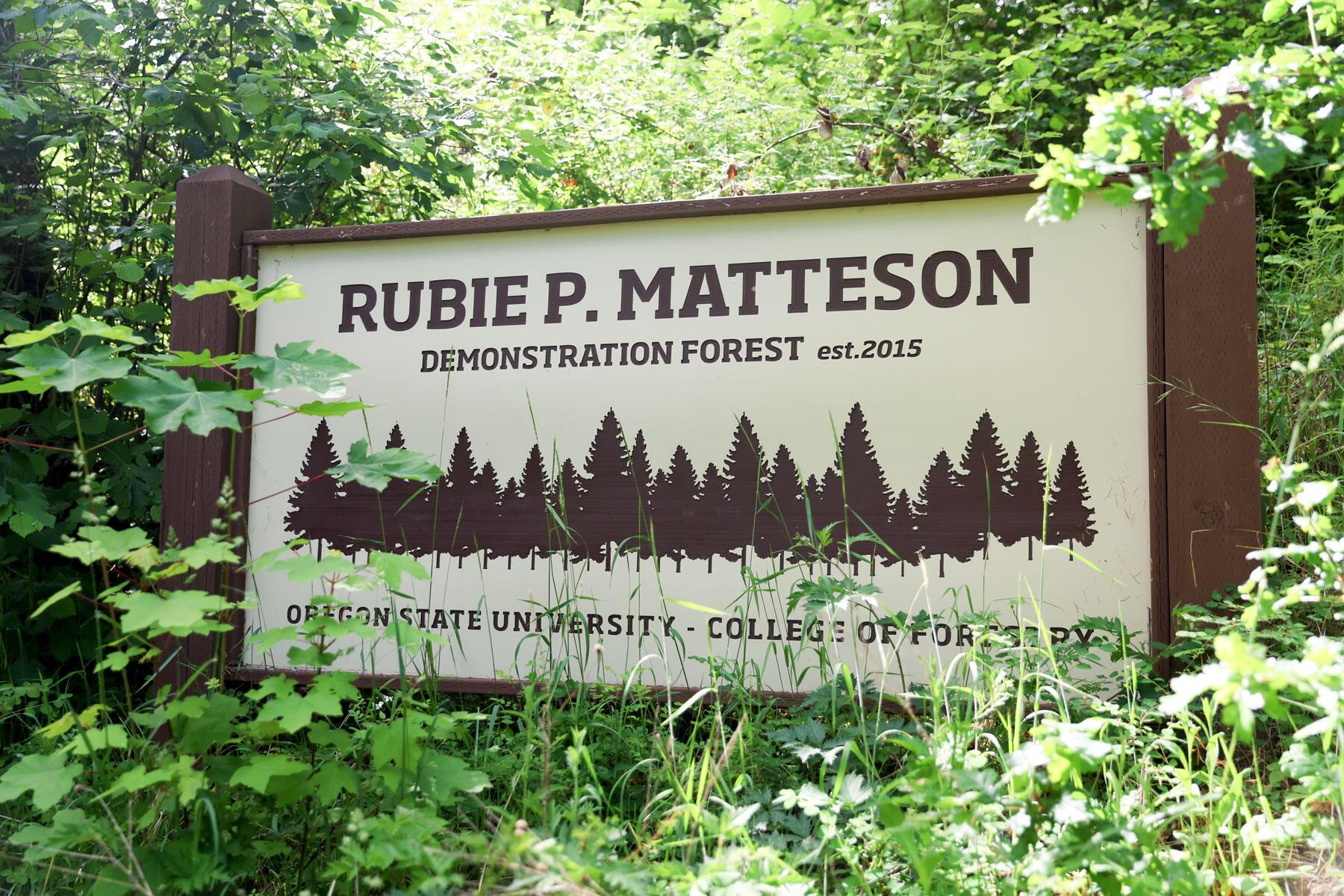
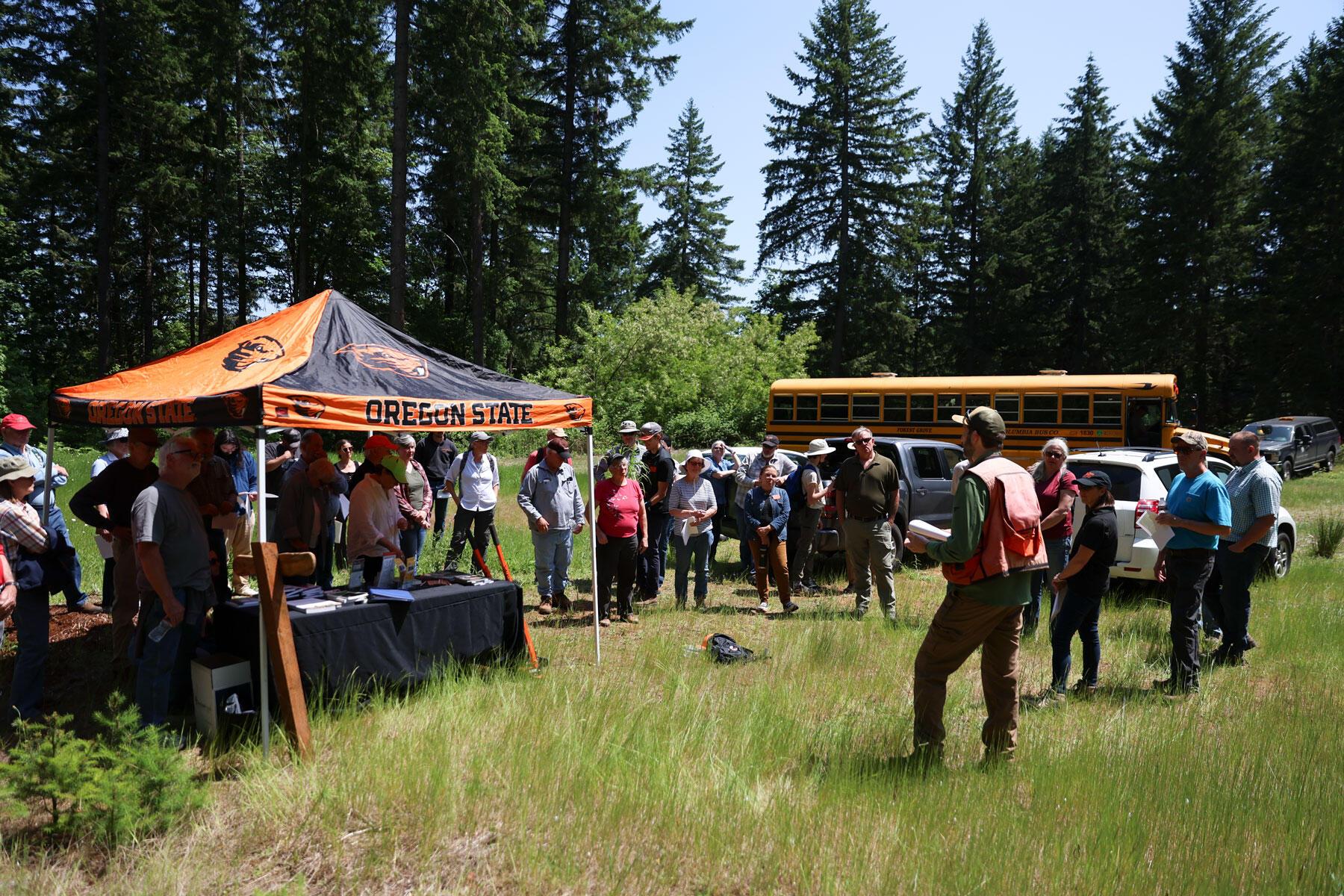
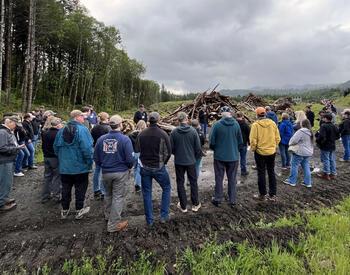
GASTON, Ore. — The long yellow school bus rumbled down a gravel road in rural Washington County, carrying about 50 people into the Rubie P. Matteson Demonstration Forest for Oregon State University Extension Service’s “Tree to Timber” tour.
The Matteson Demonstration Forest is one of 10 forests owned by OSU and managed by the College of Forestry as laboratories for learning, research and public engagement, offering ways to balance conservation, business, recreation and education.
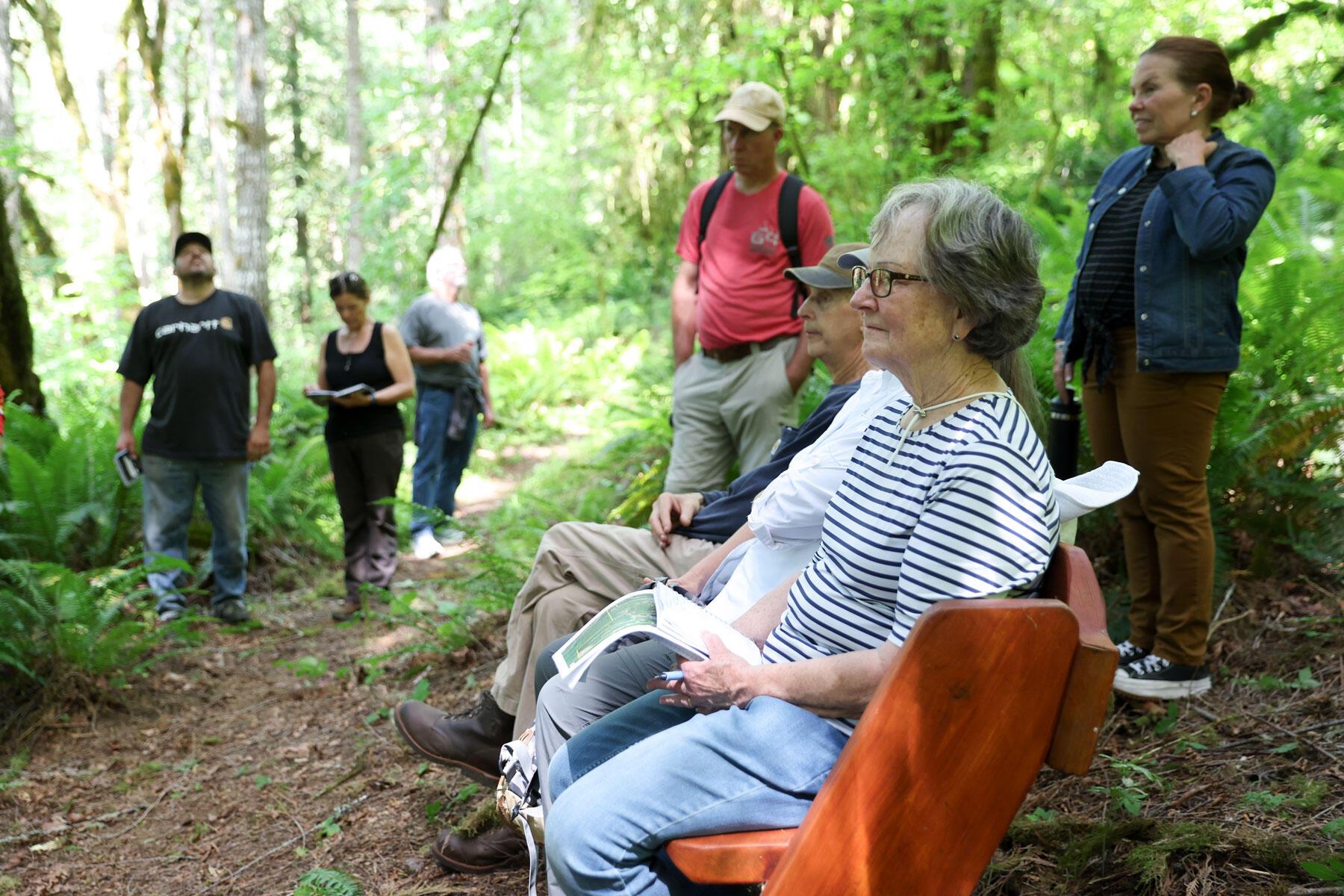
When it stopped in a clearing surrounded by Douglas-fir and cedar, participants stepped off and gathered near an OSU Extension tent. They were about to experience how the university uses its forests as outdoor classrooms — places where learning and community engagement take root among the trees.
The event held in early June was one of many that OSU Extension hosts each year. Through tours like this, Extension foresters bring university research directly to the people who manage and depend on Oregon’s forests.
Jake Barker, Extension forester for Washington, Columbia and Yamhill counties, welcomed the group and described the property’s history.
“We are on the traditional homelands of the Atfalati Tribe of Kalapuya Native Americans. The Matteson family were early settlers, and the family owned a larger property that went down into what is now Hagg Lake,” he said. “They were running it as a dairy farm until the Scoggins Dam was built in 1975, then they started tree farming.
“Most of the forest we see today is roughly 60 to 80 years old with other age classes as well — conifer dominant, a lot of Douglas-fir, a couple of older pockets of Western redcedar and Oregon white oak,” he said.
Since the Matteson Family donated the land to Oregon State in 2013, the College of Forestry has used it to demonstrate management techniques such as thinning, small harvests and experiments in timing cash flow from timber. The forest’s scale is like many privately owned parcels, making it relatable for participants.
“As one of Oregon State University’s research and demonstration forests, it falls under the goals of education, demonstration and outreach,” Barker said. “Also, a viable, sustainable economic model.”
The Matteson Demonstration Forest is one of 10 forests owned by OSU and managed by the College of Forestry as laboratories for learning, research and public engagement, offering ways to balance conservation, business, recreation and education.
In these forests, students and scientists test management approaches, study ecosystems and share discoveries that benefit communities statewide.
Extension foresters are central to this work. They use the forests as accessible and reliable field sites to host tours and workshops for woodland owners, forestry professionals and community members.
John Punches, Extension forester in northeastern Oregon, often uses the Oberteuffer Demonstration Forest in Union County for tours on prescribed fire, forest health and tree identification.
“It’s a cultivated demonstration area where you can see the practices implemented. It’s accessible. It allows me to do programming at a higher level,” Punches said.
Field lessons in forestry
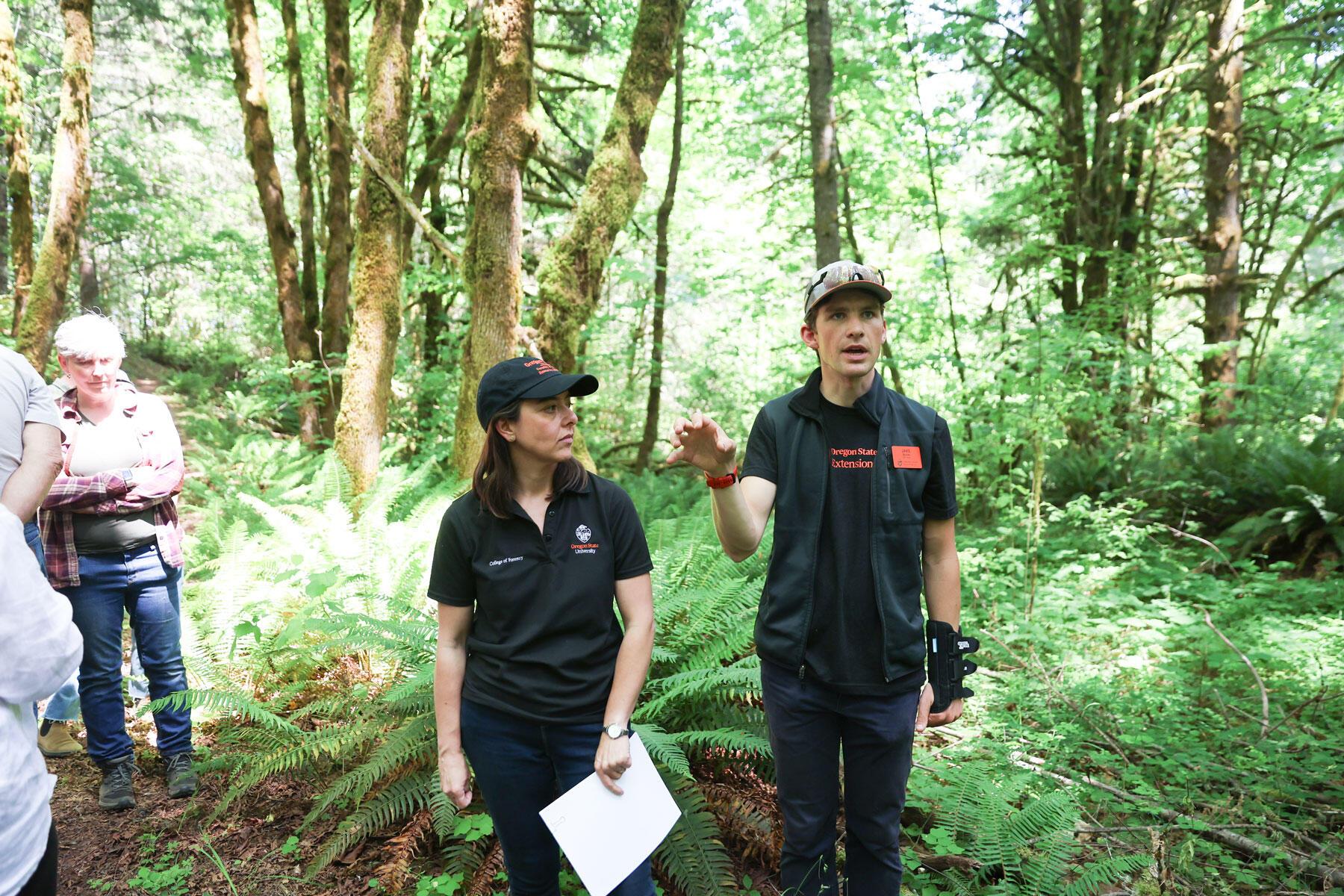
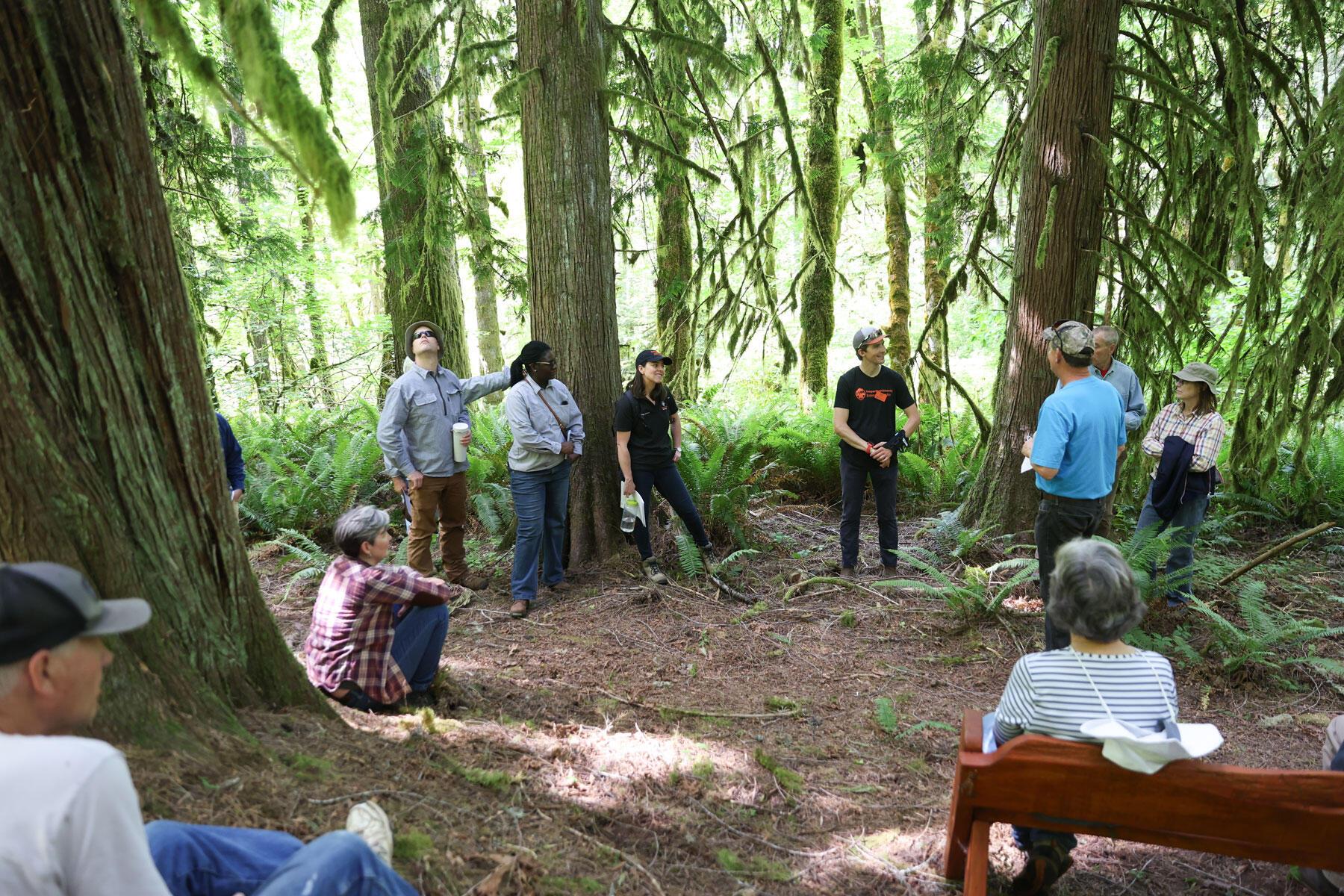
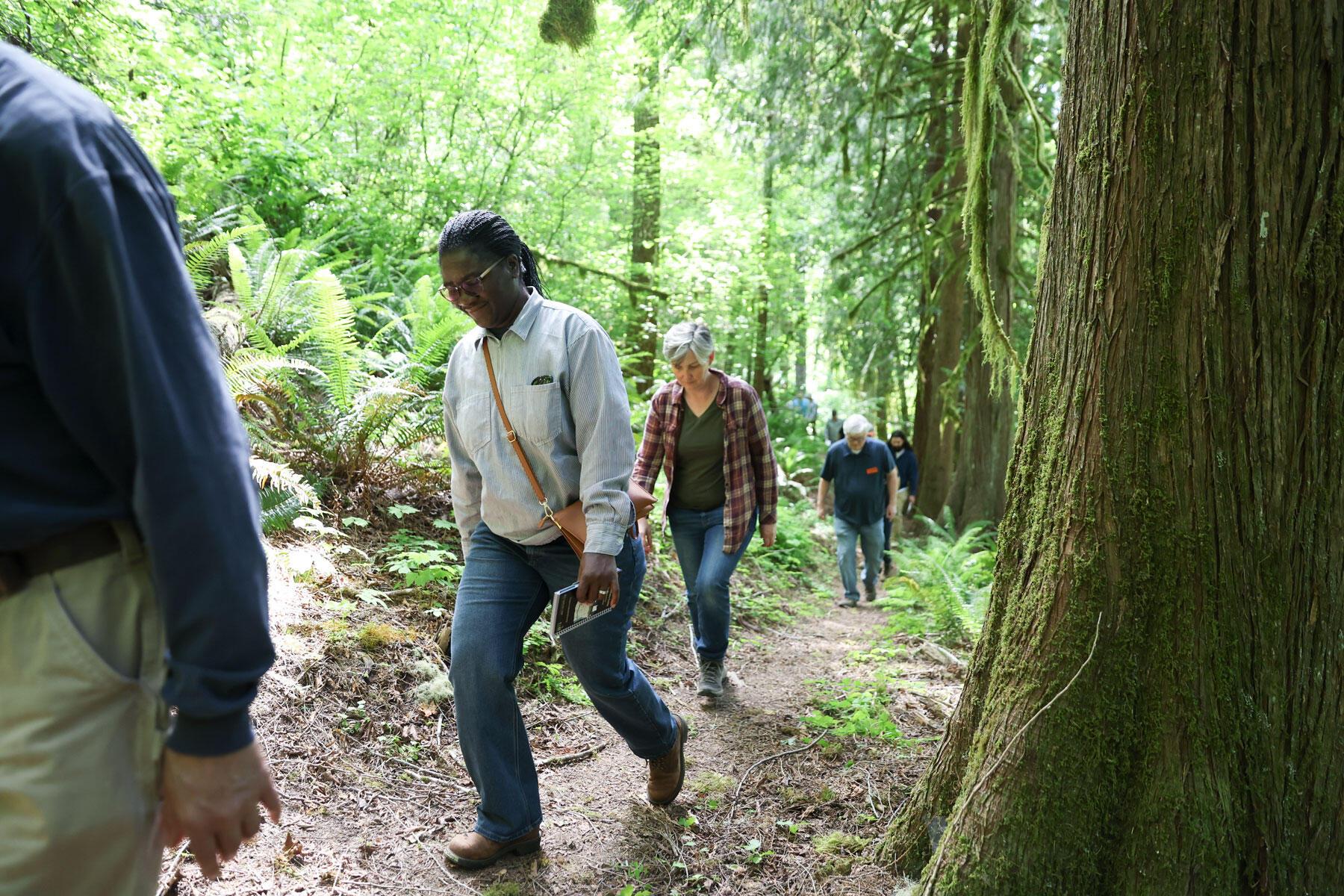
After introductions at the Tree to Timber tour, Barker led the group down a forest trail to a small clearing. There, Francisca Marrs, Extension timber harvesting specialist and associate professor, explained how to plan a timber harvest.
She outlined steps for woodland owners — from securing permits and ensuring truck access to choosing the right season for harvesting.
“Prices are higher in winter, and loggers are less busy, but weather adds other constraints,” she said.
She encouraged landowners to seek out advice and learn from neighbors.
“If it’s your first time doing a timber harvest, it’s better to go to a neighbor who has done it and see what it looks like afterward,” Marrs said. “Talk to somebody who already has experience.”
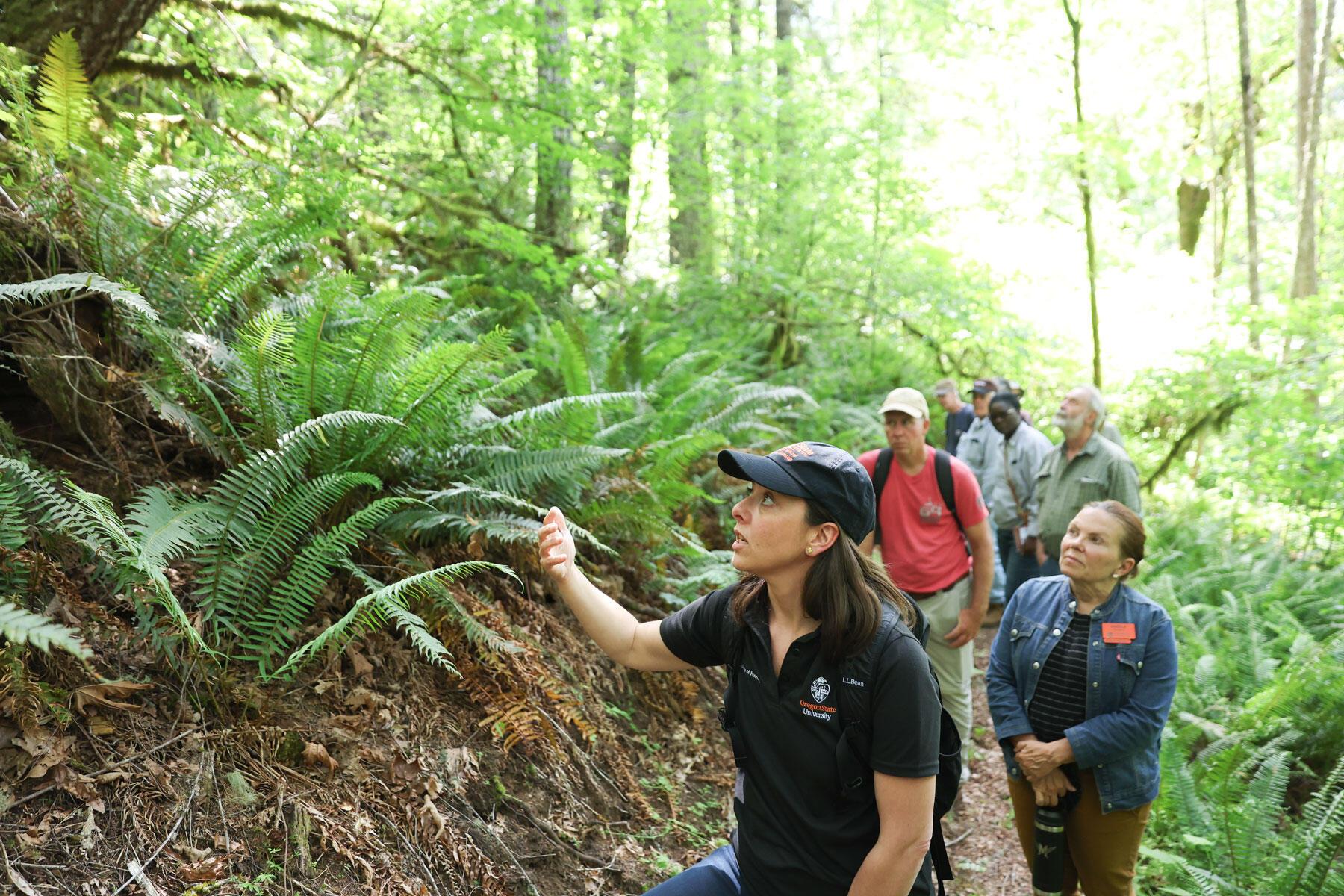
Later, the group visited a restoration site where Barker pointed out native oaks that had been shaded out by faster-growing conifers. He described how the team was selectively removing Douglas-fir to give the oaks more light and space.
“Historically, this area was oak woodland. If left alone, the oak will decline and die,” he said. “Our future forest condition relies on that oak component.”
The walking tour gave participants a close look at how Oregon State uses its forests to show sustainable forestry in practice, combining ecological goals with economic lessons.
Connecting research and community
When the tour wrapped up, Marrs reflected on the purpose behind it.
“All the things we do on campus can be very useful for forestry practitioners,” she said. “I want to be that person who translates what we learn to people who own forests and get to practice what we learn.”
For Barker, these field events are among the most effective ways to serve local landowners.
“One of the biggest interests in my communities is to host educational events or forest tours,” he said. “Having that familiarity is helpful to tell the story and to teach. The things we can investigate here are directly relevant to people in the area.”
For many participants, these programs have long-lasting impact.
Bonnie Shumaker, who attended the tour with nearly five decades of experience as a woodland owner, said Extension has guided her and her husband, Bob, from their early days on a small farm to their current work managing the Shumaker Family Tree Farm.
“We learn a lot,” she said. “The Extension foresters, they excite you about what you’re doing.”
The couple became Master Woodland Managers through Oregon State’s training program and now mentor others — part of the cycle of peer learning that Extension fosters statewide.
“When we first started going to these events 25 years ago, we were just blown away by what we learned,” Shumaker said. “Now we can share what we’ve learned.”
Facing change together
Forests in the Pacific Northwest are facing mounting pressures from warmer temperatures, shifting precipitation, and new pests and diseases.
Barker’s outreach goes beyond individual events. He works across counties to connect landowners with resources, training and expert guidance.
“Landowners are already witnessing changes to their beloved trees and forests,” he said. “My focus has been communicating emerging science, clarifying what we know and don’t know, and assuring the public that we are monitoring and responding.”
He collaborates with local Soil and Water Conservation Districts and the Oregon Small Woodlands Association (OSWA) to host workshops and demonstration projects. In his first six months, he engaged with all three OSWA chapters in his region and reached landowners managing more than 4,000 acres.
“My greatest impact is helping landowners know that Extension is a resource they can count on,” Barker said. “I am often the first resource landowners call when they have a question.”
This combination of science and service defines Extension’s approach — bringing research to people where they live and work.
Learning through fire and restoration
In northeastern Oregon, Punches applies the same philosophy at the Oberteuffer Demonstration Forest. The site serves as a year-round venue for field classes on forest measurement, restoration and prescribed burning.
“It gives me a field site that I can manage specific to educational outcomes,” Punches said.
Last fall, Punches and the OSU Extension Fire Program hosted the Northern Blues Restoration Partnership field tour there, focused on prescribed fire on private lands. About 70 landowners, tribal members, students and agency representatives attended.
They discussed opportunities and barriers to using controlled burning as a management tool and watched a small educational burn. The event strengthened partnerships among agencies, nonprofits and residents — a hallmark of Extension’s community-driven model.
The broader mission
Oregon State’s research and demonstration forests were donated to the College of Forestry to serve as living laboratories and outdoor classrooms. They are managed as working forests that balance education, conservation, recreation and timber production.
The college is also committed to protecting cultural heritage sites and collaborating with Tribal Nations to guide future forest management.
Revenue from harvests funds operations and supports hands-on learning for students and community programs. Faculty and researchers use the sites to study topics ranging from wildlife ecology and soils to forest engineering and recreation.
Through the OSU Extension Service, those findings move beyond the university and into the hands of Oregonians — through tours, workshops and real-world demonstrations that show how sustainable forestry can work on any scale.
The College of Forestry’s vision is to model forests that teach, connect and inspire stewardship — a vision made tangible every time an Extension forester leads a group down a trail to see learning in action.