CORVALLIS, Ore. – When your tomatoes droop or your azaleas look unhealthy, your first reaction might be: What’s wrong with my plant?
But don’t stop there. Asking a series of targeted, practical questions can help diagnose the issue and lead to a solution, said Neil Bell, horticulturist with the Oregon State University Extension Service.
“The principles of diagnosing a plant problem are very similar to going to a doctor or an auto mechanic,” Bell said. “They’re both looking for evidence to uncover the root of the issue.”
This diagnostic process is flexible enough to apply to ornamental plants, vegetables, fruit trees and even turfgrass. It helps determine whether the cause is a pest or disease — or a nonliving factor such as overwatering or nutrient deficiency. And sometimes, there may not be a problem at all.
“Once a client came to me about a rusty brown arborvitae hedge,” Bell said. “He was used to it being green. But it turned out to be normal winter coloration. Some conifers develop spectacular winter hues. In arborvitae, though, it can just look off-color.”
Questions to guide your diagnosis
Bell recommends starting with the following questions when investigating a potential plant problem:
- What is the identity of the affected plant? Understanding its normal growth and seasonal behavior can reveal whether the condition is typical.
- How many are affected? This helps determine the scale of the issue.
- What is the pattern of damage in the planting? A uniform pattern suggests a nonliving cause such as poor drainage, drought or frost. A random pattern might point to pests or diseases. But don't over-analyze patterns; they are just one clue.
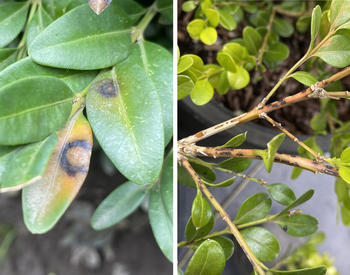
- Which plant parts are affected? Leaves, stems, fruit, roots or the whole plant?
- What’s the pattern of damage on those plant parts? Uniform damage often indicates environmental issues. Random or isolated damage may suggest pests or pathogens.
- When did symptoms appear? The time of year can provide a strong clue.
- Are the symptoms spreading, improving or staying the same? Pest and disease problems often get worse over time. Environmental stress might look bad at first, then stabilize or improve.
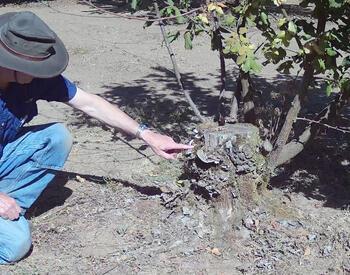
- Are there any signs of pests? Look for slug trails, rodent holes, fungal growth or leaf notches.
“Plant problem diagnosis helps us get to the bottom of the issue so we can address it successfully,” Bell said. “You don’t want to waste time and money treating a problem that isn’t there. Too often, people spray first and ask questions later—it should be the other way around.”
Where to get help
For more information, visit:
You can also bring samples and photos of the affected plant to your local OSU Extension office for review by Master Gardeners. Or, submit a photo and question through OSU Extension’s Ask Extension service.
Previously titled 10 questions to ask to diagnose a plant problem