
A good weed management plan is essential to produce high quality, marketable Christmas trees. Complete control of weeds, however, may not be cost effective and is seldom needed. It’s important to strike a balance between reducing weed competition with trees and protecting soil and water.
Management philosophy
An effective weed management program incorporates diverse strategies and practices to keep weed populations off balance. Using the same practice over and over will, predictably, select for weed species with certain traits. For example, using the same herbicide selects for weeds that are not affected by that herbicide.
Multiple strategies are essential to prevent weed shifts and herbicide resistance from developing. These strategies include proper identification of important weed species, prevention of new introductions and use of biological, mechanical and chemical controls. A weed management plan that integrates mechanical and cultural practices with judicious use of herbicides often gives the best long-term result.
Another important strategy is to begin weed management well before trees are planted. This is particularly important if perennial weeds, such as field bindweed, bracken fern or blackberry, are present at the site. Trees are sensitive to many broad-spectrum herbicides, so once they are planted, fewer options will be available to control weeds. You can effectively challenge perennial weeds before the Christmas trees are in the ground. Applying broad-spectrum herbicides and mechanical control several times over the course of a year can substantially reduce weed density.
Common weeds of Christmas tree plantations
Identification, biology and control
Weed control efforts begin by determining which weeds are present, which weeds will compete with Christmas trees for resources or reduce overall quality and, ultimately, which weeds must be removed to meet management objectives. This requires proper identification in the field and a general knowledge of the biology and characteristics of the important species present. Some species may not overly compete with the trees for water and nutrients. But, misidentification of a perennial weed may lead to dire consequences in later years.
Annual broadleaves
Horseweed (Conyza canadensis)
Sunflower family (Asteraceae)
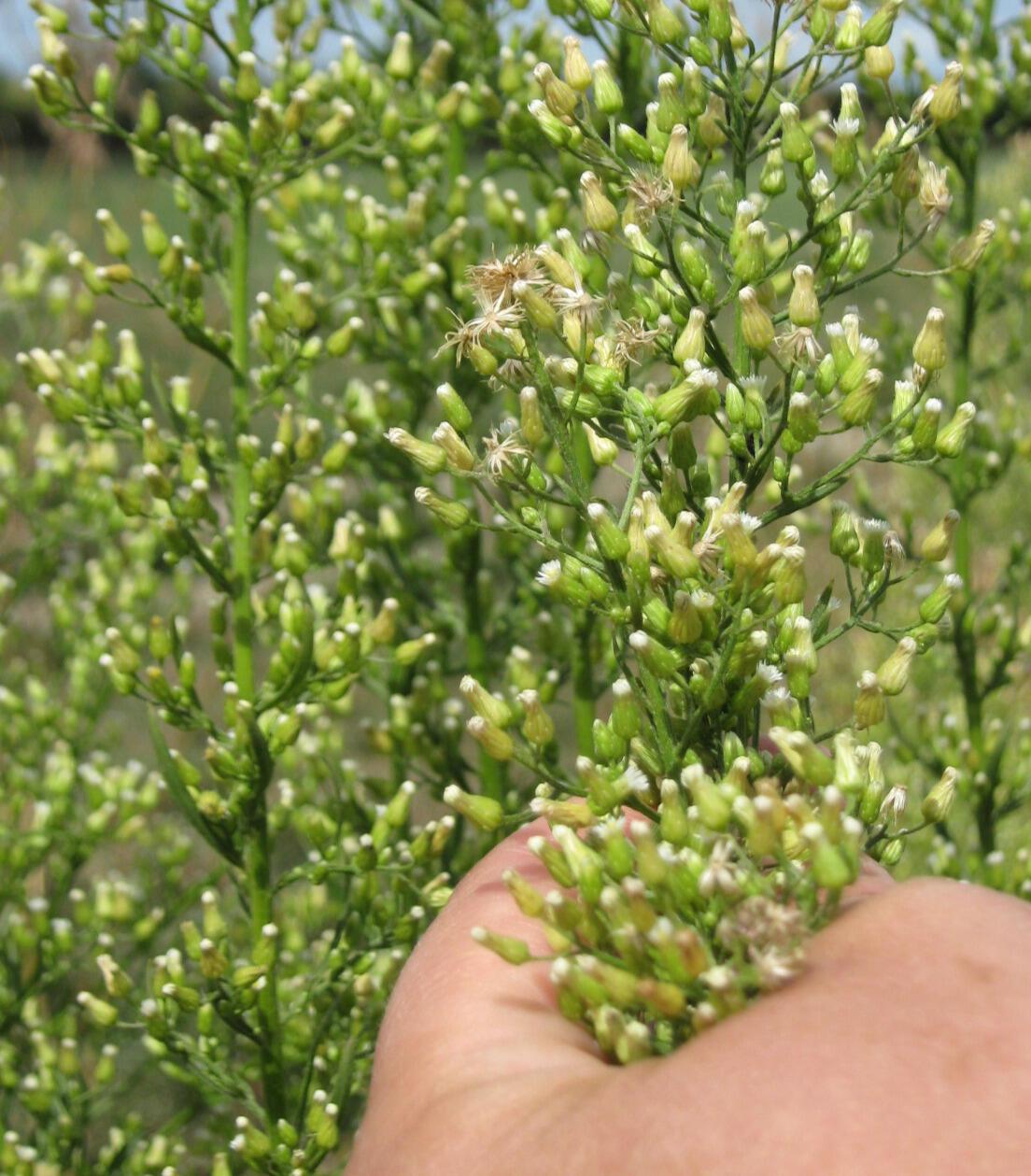
Grows tall and erect with a unique inflorescence and tiny yellow and white flowers (Figures 1 and 2). Although native to the region, it is becoming more prevalent in some areas of the Pacific Northwest. It is glyphosate resistant in some areas of the United States.

Prickly lettuce (Lactuca serriola)
Sunflower family (Asteraceae)
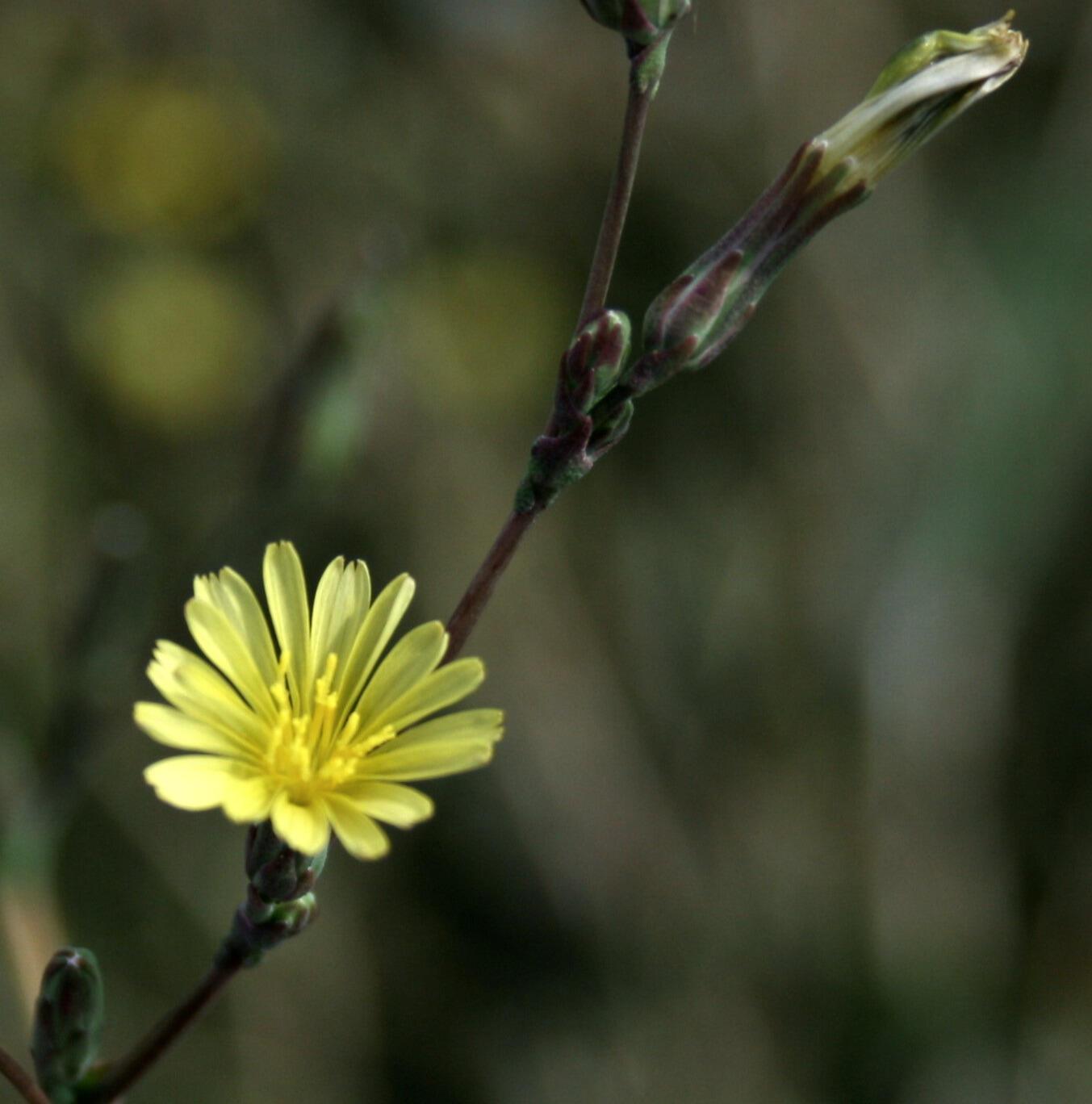
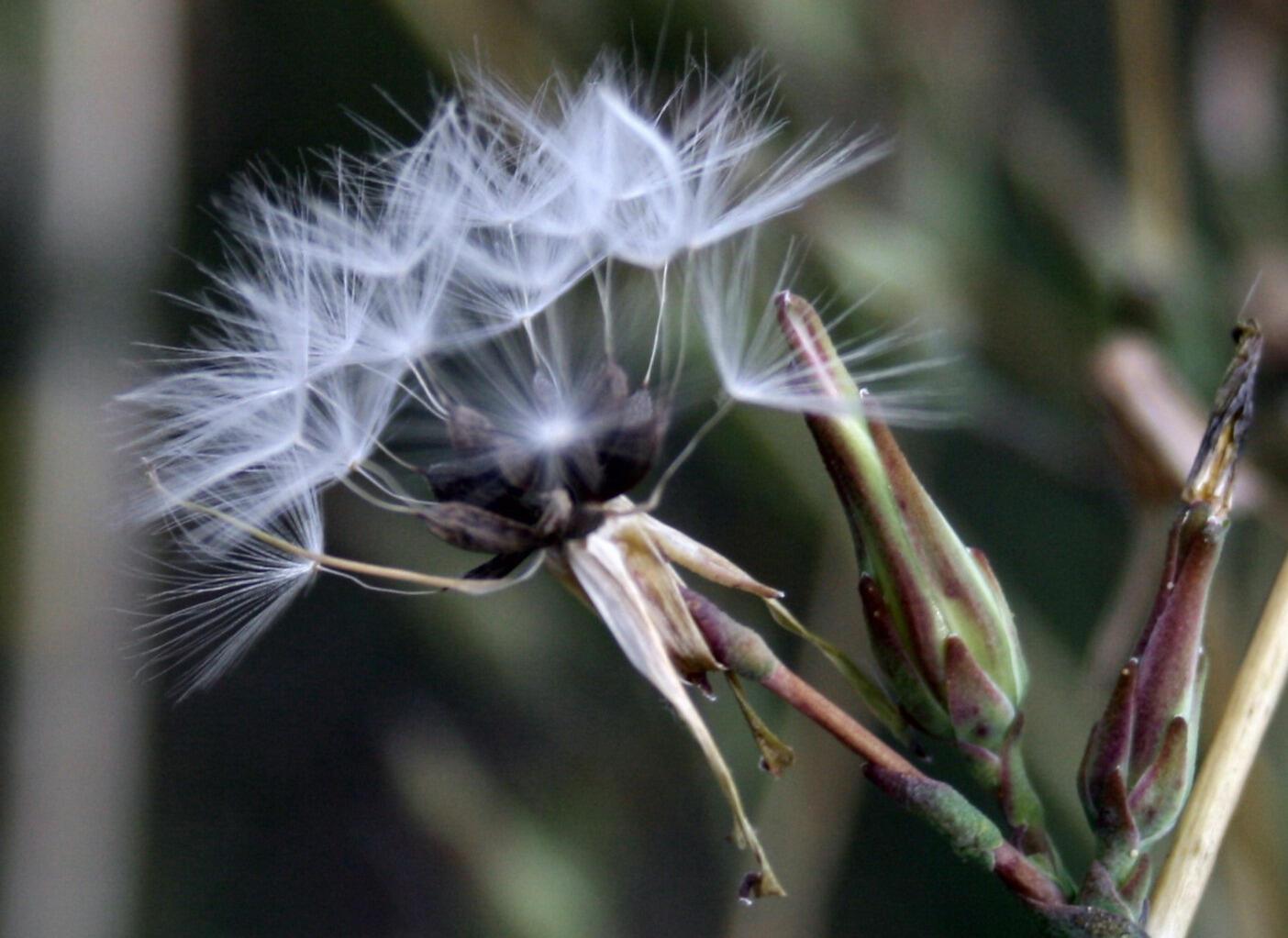
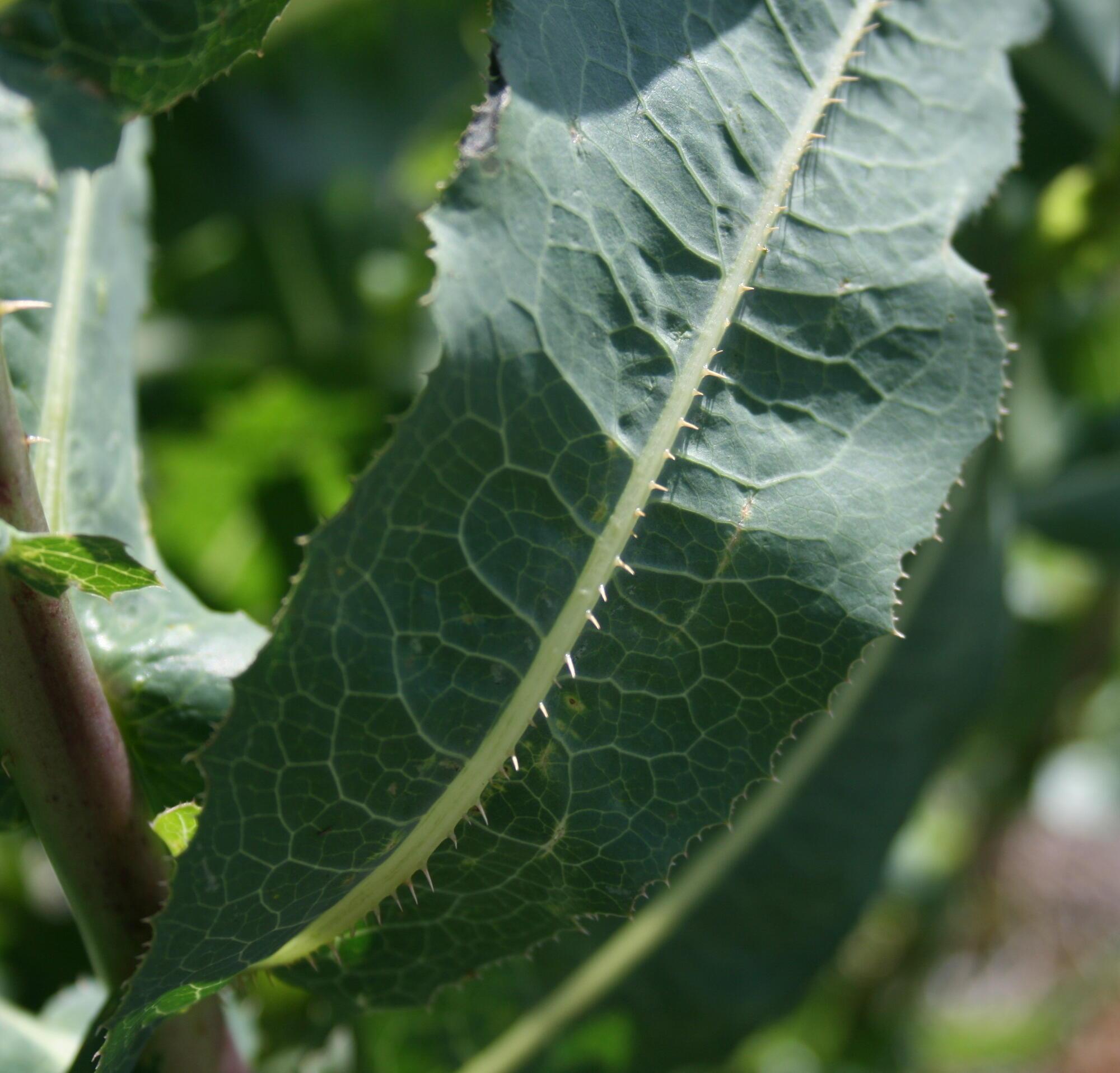
An introduced annual weed that has a milky sap in the stem, yellow flowers (Figure 3) and wind-dispersed seeds (Figure 4). Look for a row of prickles along the midvein on the back of each leaf (Figure 5). It is resistant to several sulfonylurea herbicides in some areas east of the Cascades. It is commonly found along roadsides west of the Cascades.
Bristly hawksbeard (Crepis setosa) and smooth hawksbeard (C. capillaris)
Sunflower family (Asteraceae)
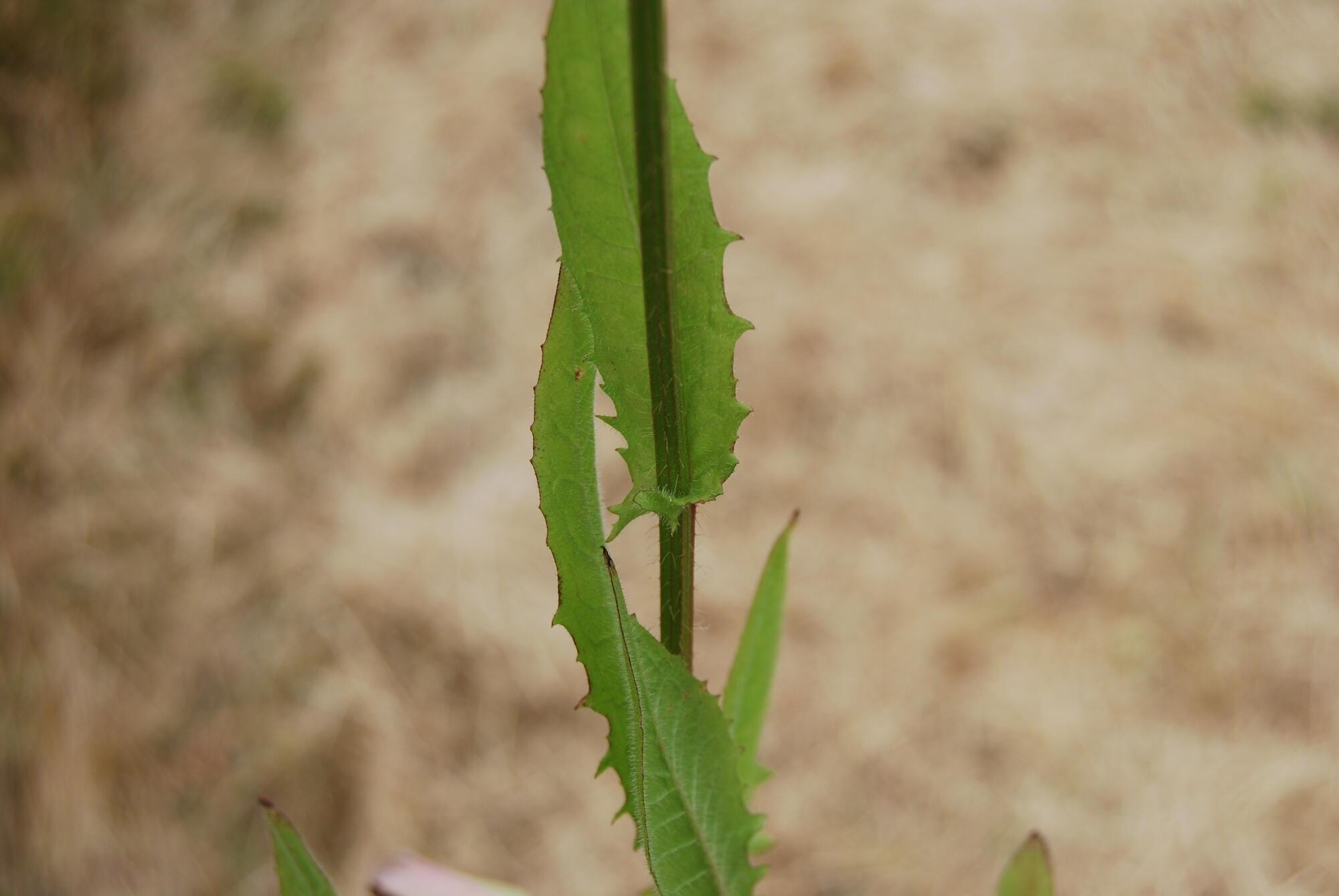
Introduced annual weeds that have clasping leaves with abrupt, widely separated teeth along their margins (Figure 6). Plants produce a narrow inflorescence of bright yellow flower heads (Figure 7), slightly smaller than dandelion heads.

Perennial broadleaves
Common catsear (Hypochaeris radicata)
Sunflower family (Asteraceae)
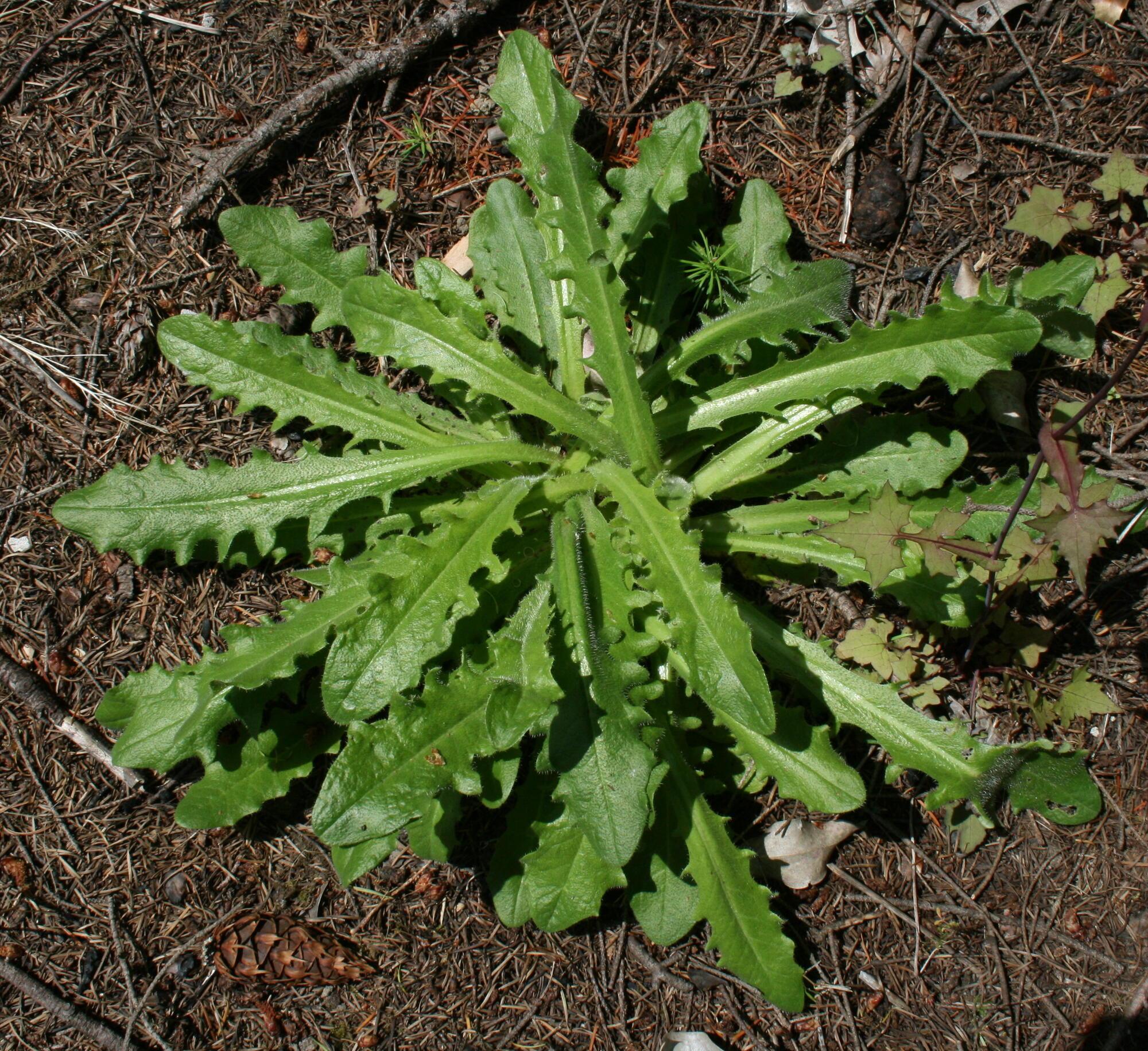
An introduced dandelion-like perennial plant forming a basal rosette of rough-hairy leaves (Figure 8). Flowers also are very similar to dandelion, although in common catsear they are borne in midsummer on a many-branched inflorescence from solid stems (Figure 9). It is extremely common and a prolific seed producer (Figure 10).


Willowherbs (Epilobium spp.)
Evening primrose family (Onagraceae)
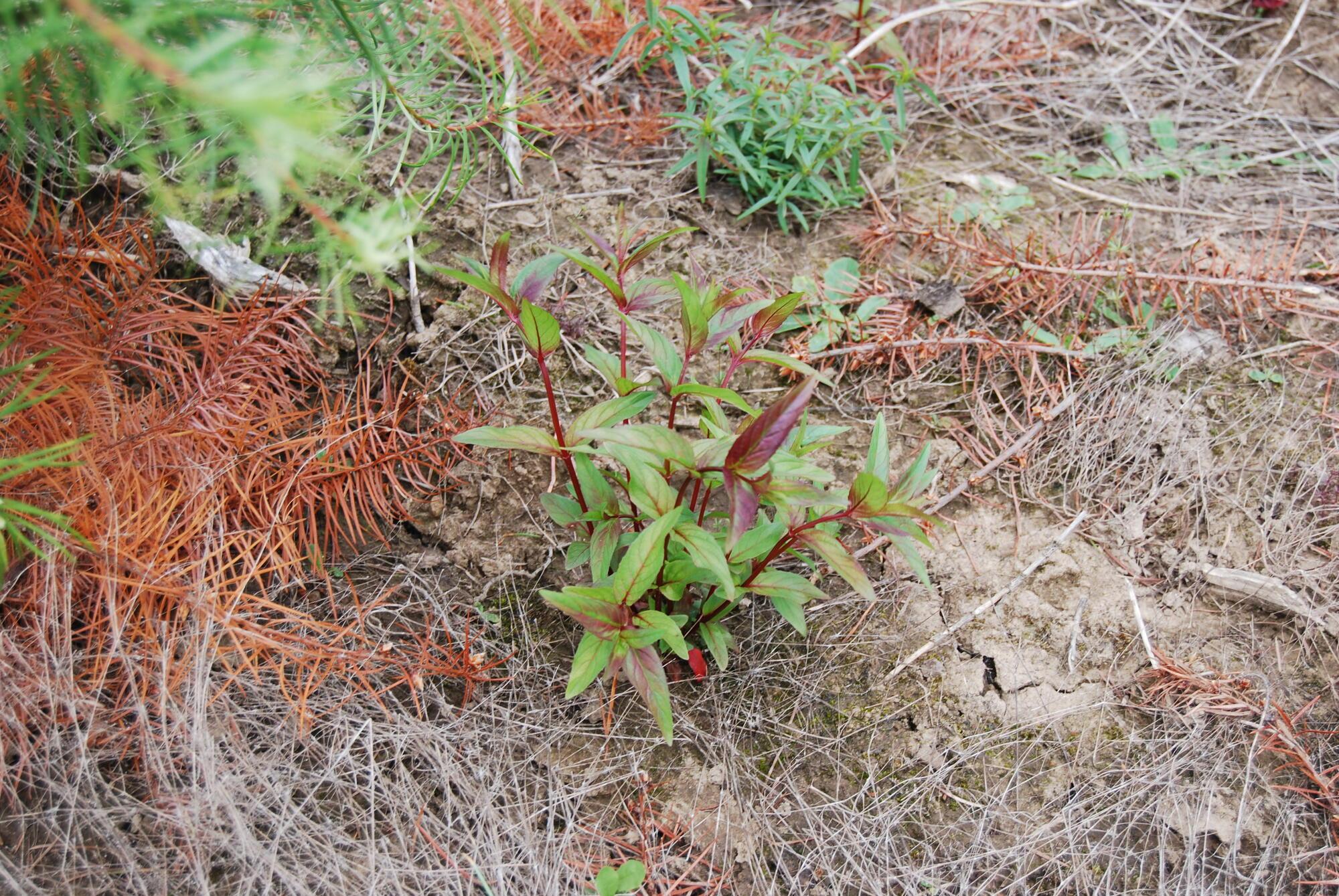
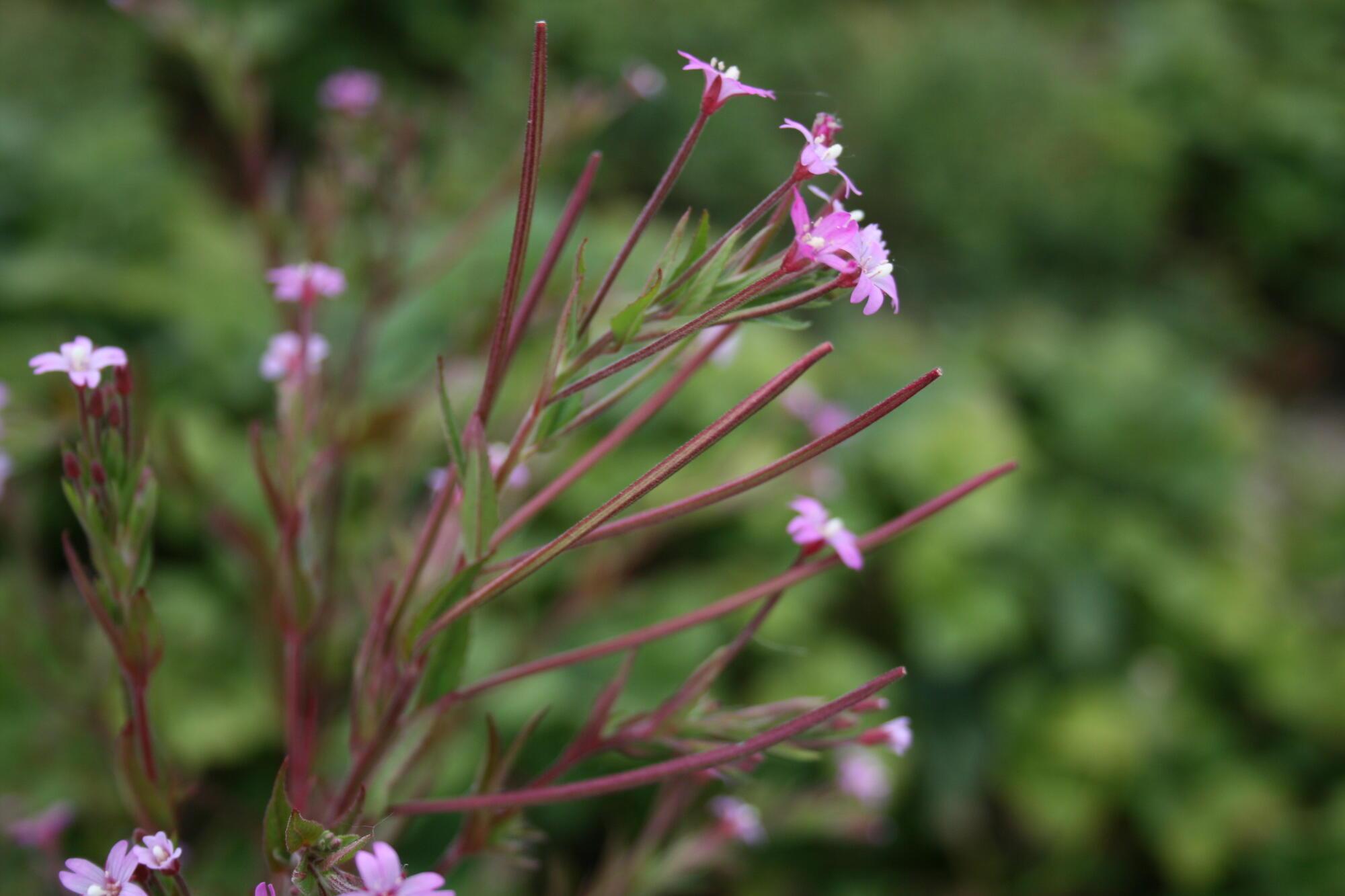
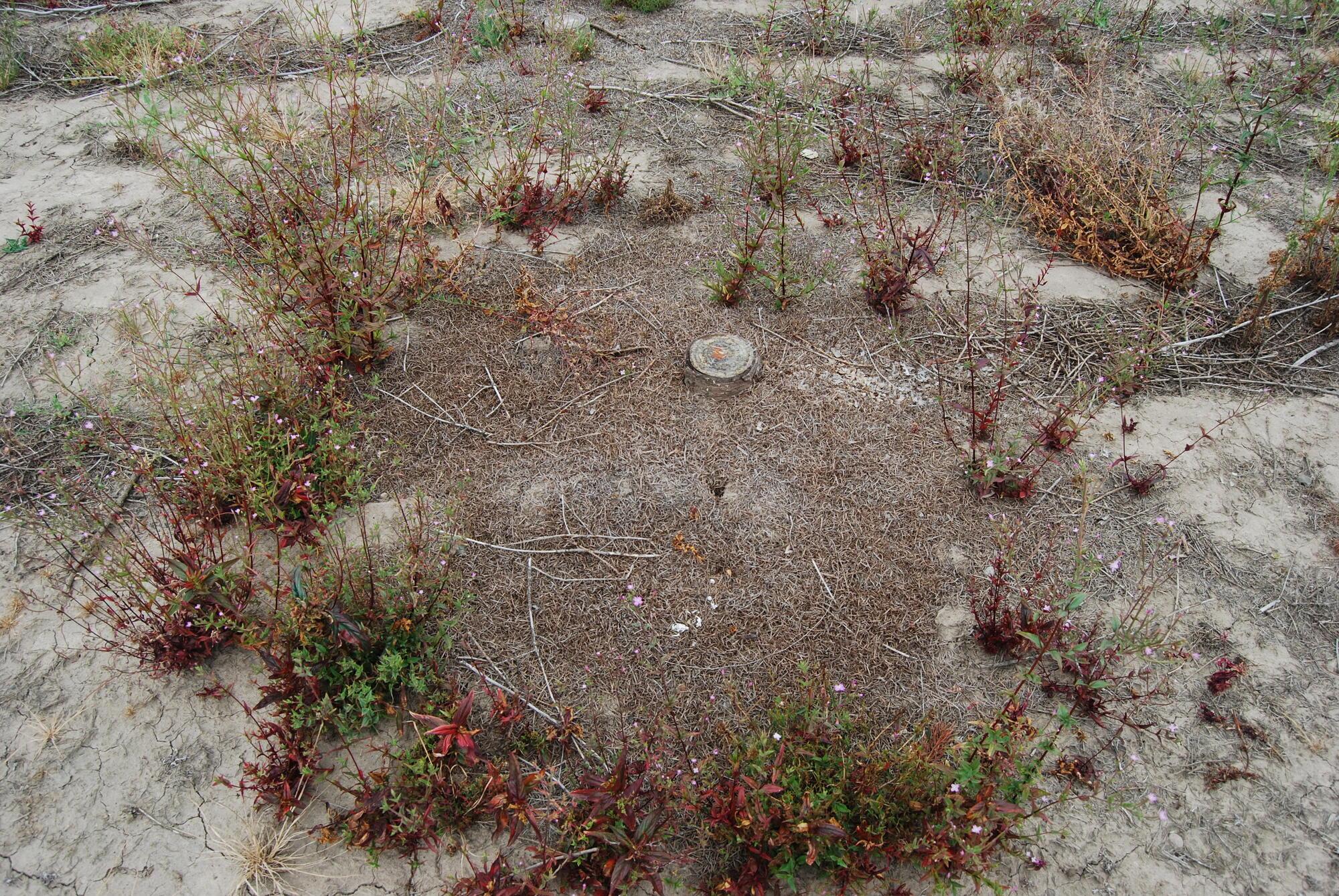
Several native species, the perennial E. ciliatum (northern or fringed willow-herb) being the most common. Basal leaves and stems are often deep red, particularly in winter and early spring (Figure 11). Flowers are small and pink (Figure 12), followed by tiny seeds bearing threadlike plumes. Christmas trees can provide a niche for this plant (Figure 13).
Bindweed, field (Convolvulus arvensis) and hedge bindweed (Calystegia sepium)
Morning-glory family (Convolvulaceae)
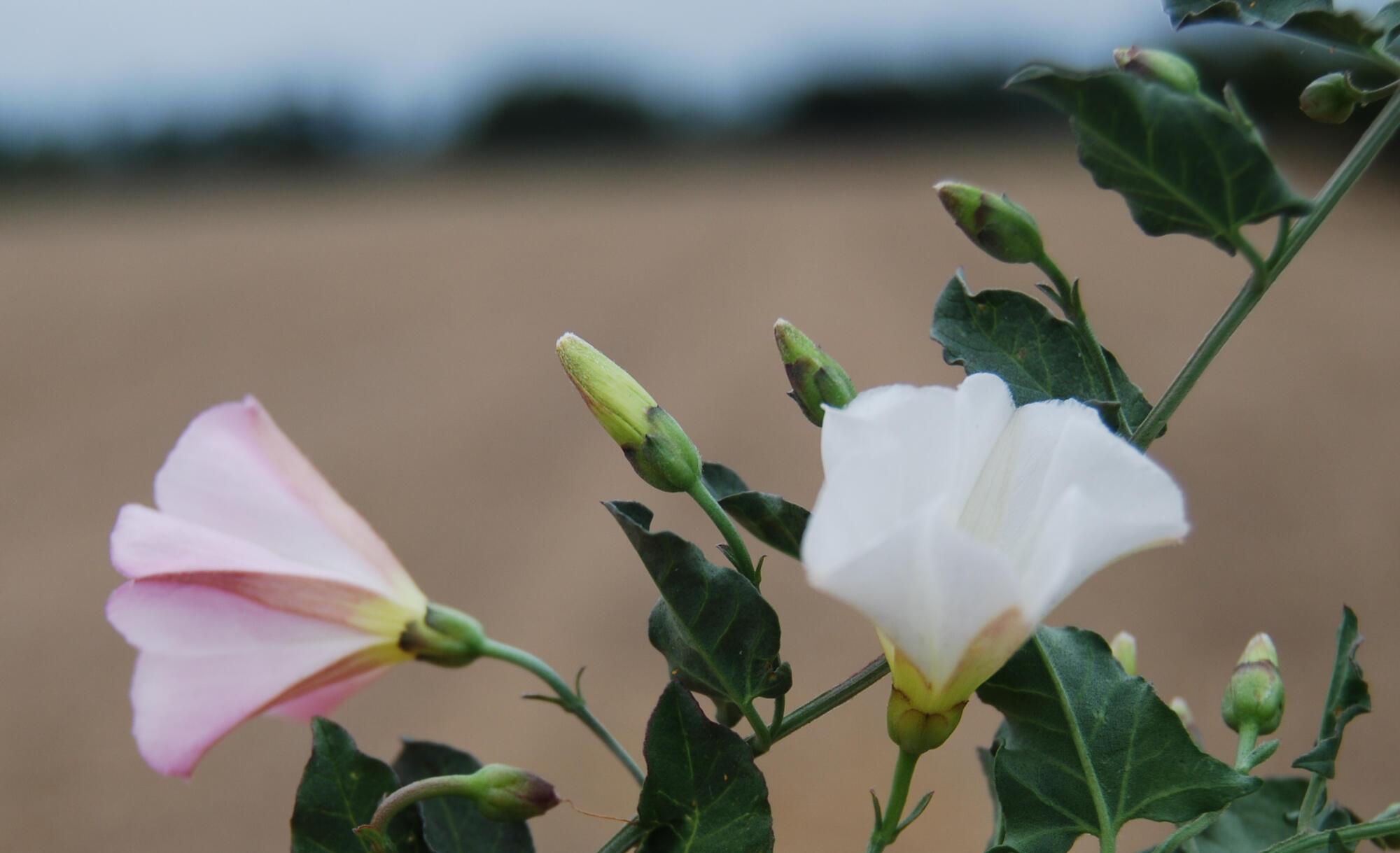
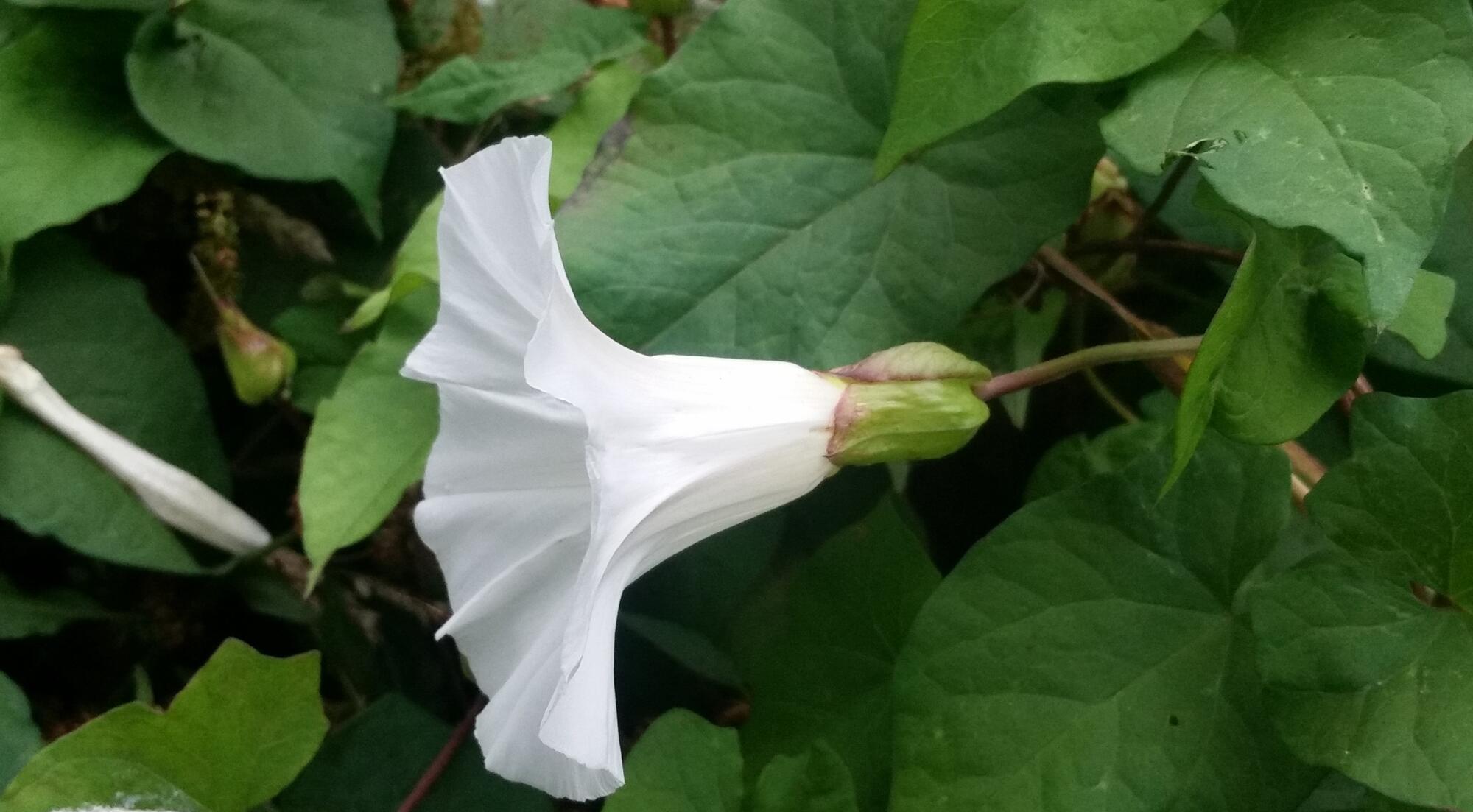
These introduced plants grow twining vines from deep, perennial roots. Leaves are arrowhead- to heart-shaped, from about one-inch (field bindweed) to three-inches (hedge bindweed) long. Flowers of both species are funnel-shaped. Field bindweed flowers are white to pinkish and about one-inch wide (Figure 14). Hedge bindweed flowers are larger and white (Figure 15). There are two bracts on the stem below the field bindweed flower (Figure 14), while hedge bindweed has large clasping bracts that cover the sepals (Figure 15). Both species produce seed that can survive up to 20 years.
Canada thistle (Cirsium arvense)
Sunflower family (Asteraceae)
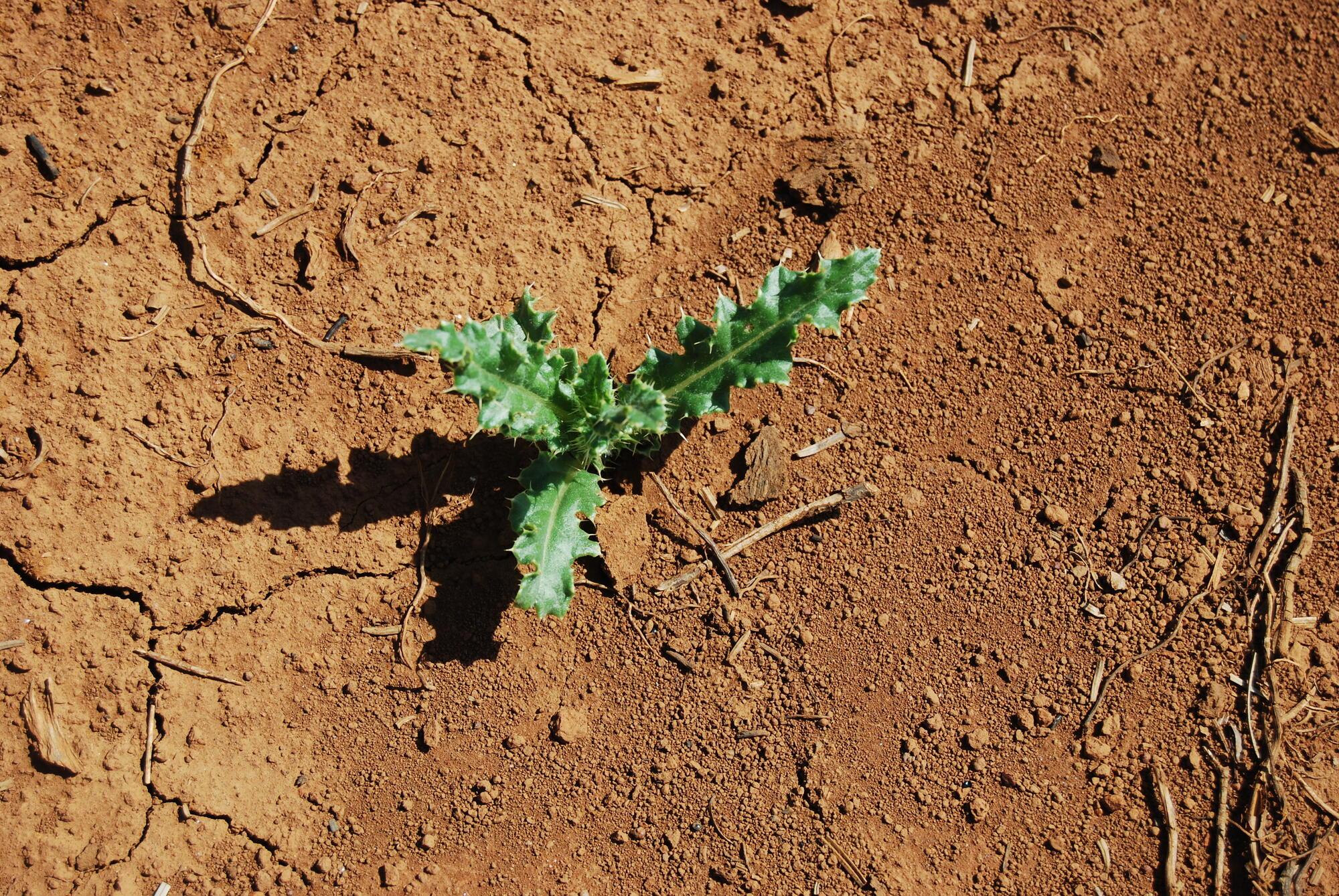
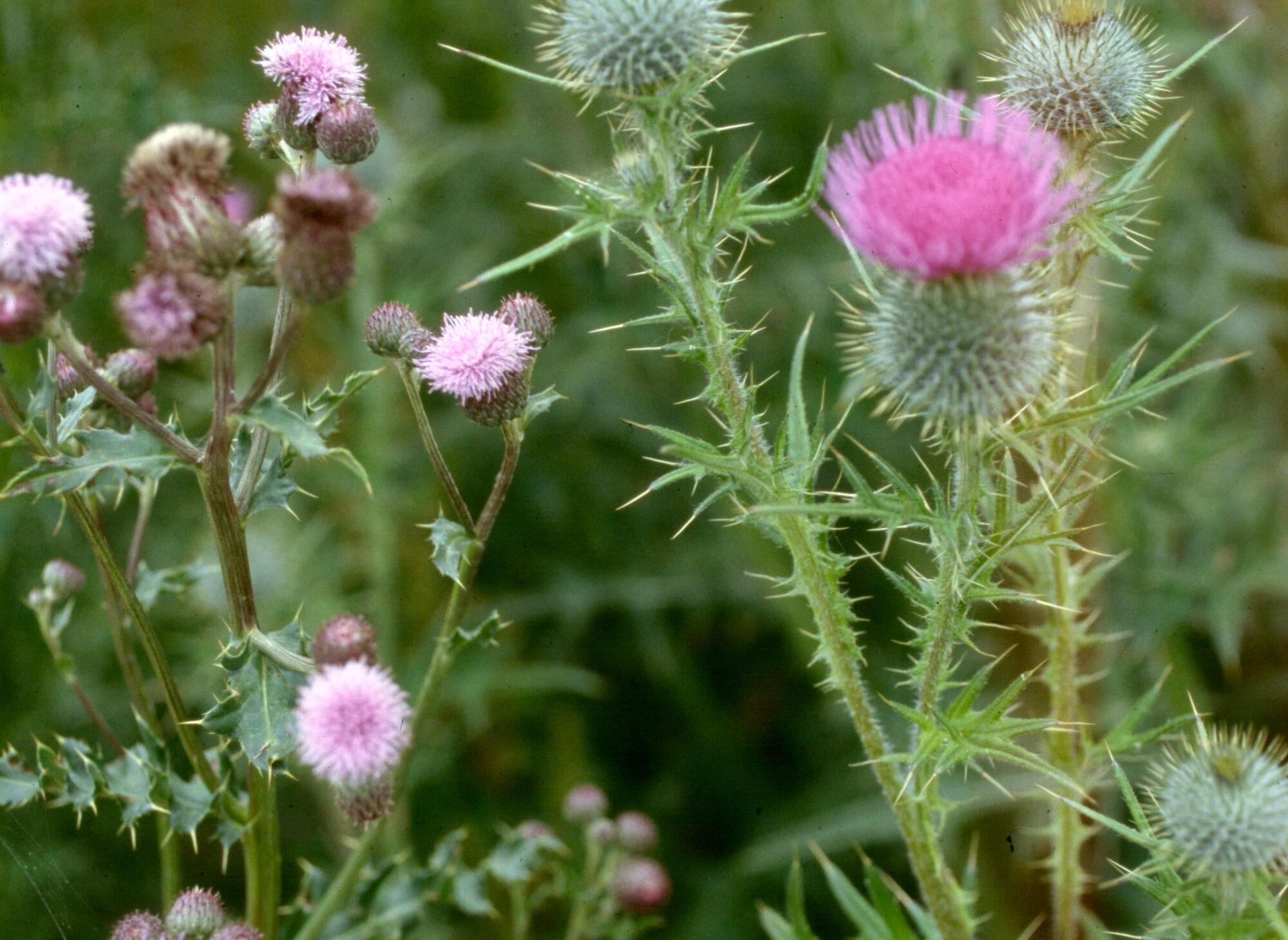
An introduced perennial weed arising from an extensive root system. Leaves are intensely spiny and shiny with only occasional hairs (Figures 16 and 17, left). Stems are slender and bear fragrant purple flower heads near the tip. Heads are about the size of a dime and not particularly spiny. Flowers are followed by down-tipped seeds. Bull thistle (C. vulgare, a biennial) also has purple flowers, but the flower head is much larger and leaves are not shiny (Figure 17, right). Canada thistle is a perennial, and emerging shoots are often clumped next to each other. Bull thistle arises from a seed, and plants are often isolated.
Blackberry (Rubus spp.) and Rose family (Rosaceae)
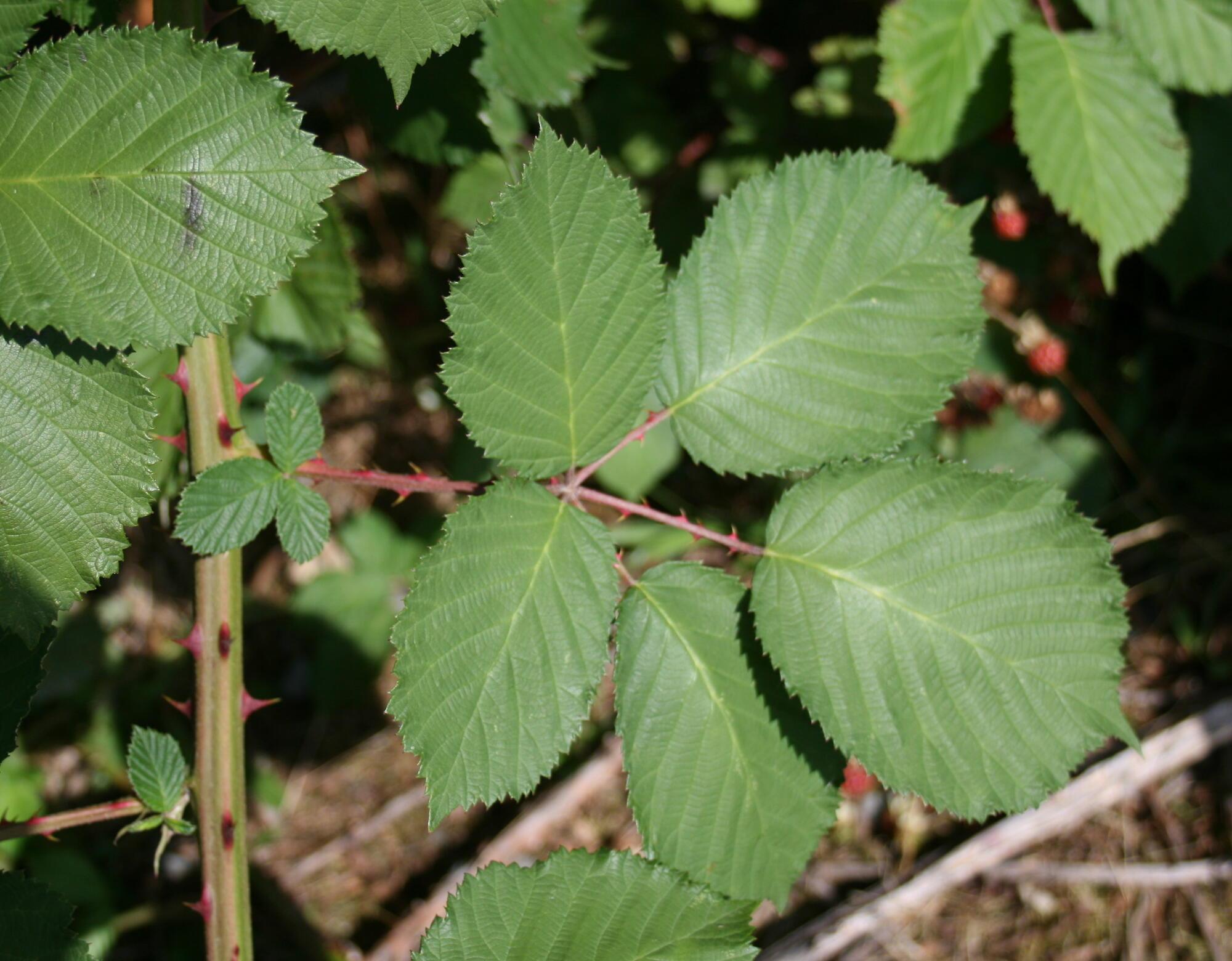
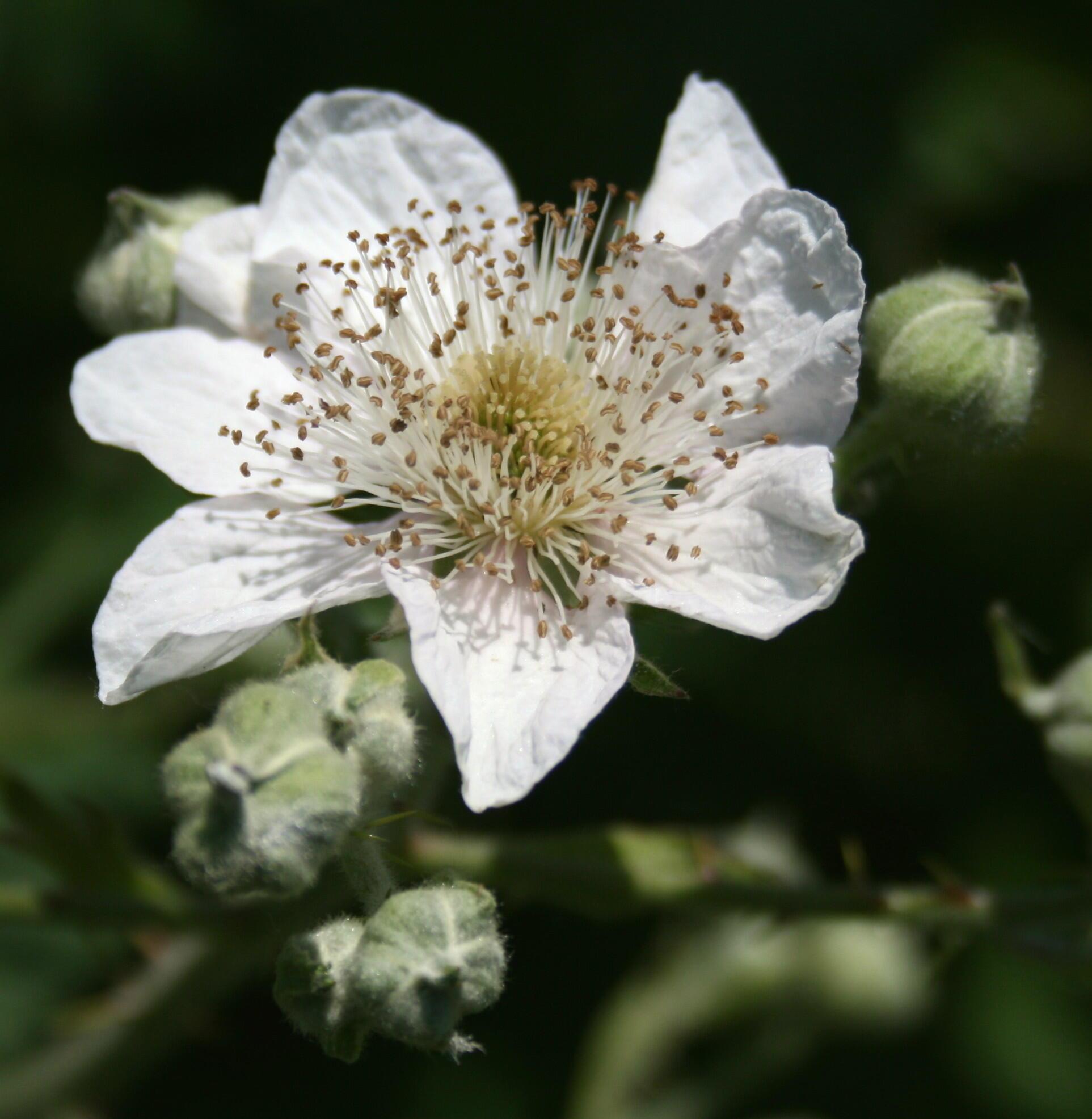
These plants include several introduced species of perennials with biennial stems. The native blackberry is a trailing vine. Introduced species are upright canes with leaves that have five leaflets (Figure 18). All are heavily spiny and easily identified by their large white flowers (Figure 19) and edible black fruits.
Biennials
Wild carrot or Queen Ann’s Lace (Daucus carota)
Carrot family (Apiaceae)
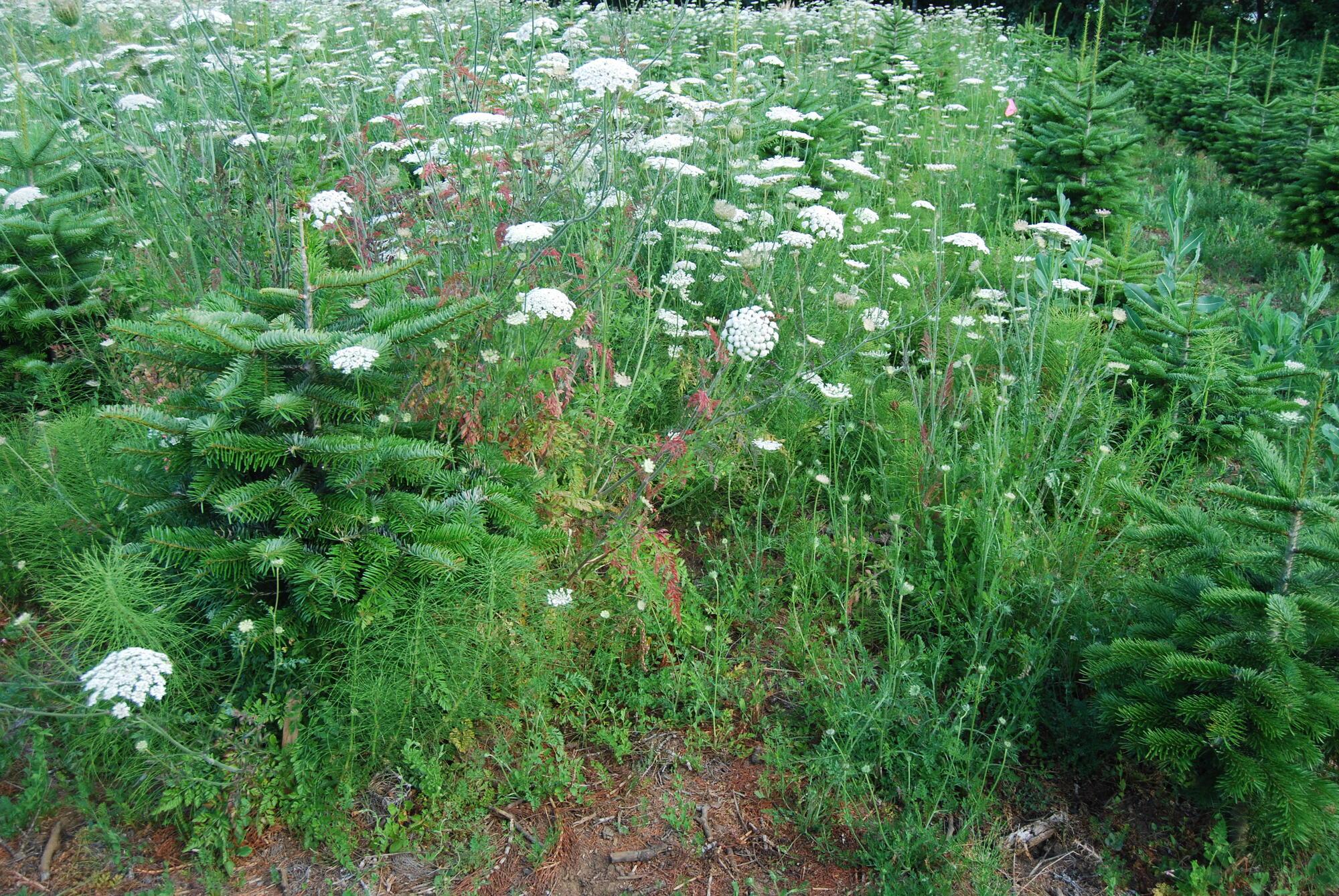
Introduced biennial plants with lacy foliage (Figure 20) and a distinct carrot odor. First-year plants form a rosette. Second-year plants bear umbels (Figure 21) about four-inches wide that bear dozens of tiny, five-petal white flowers and often a single dark red or purple flower in the center.

Annual grasses
Barnyardgrass (Echinochloa crus-galli)
Grass family (Poaceae)
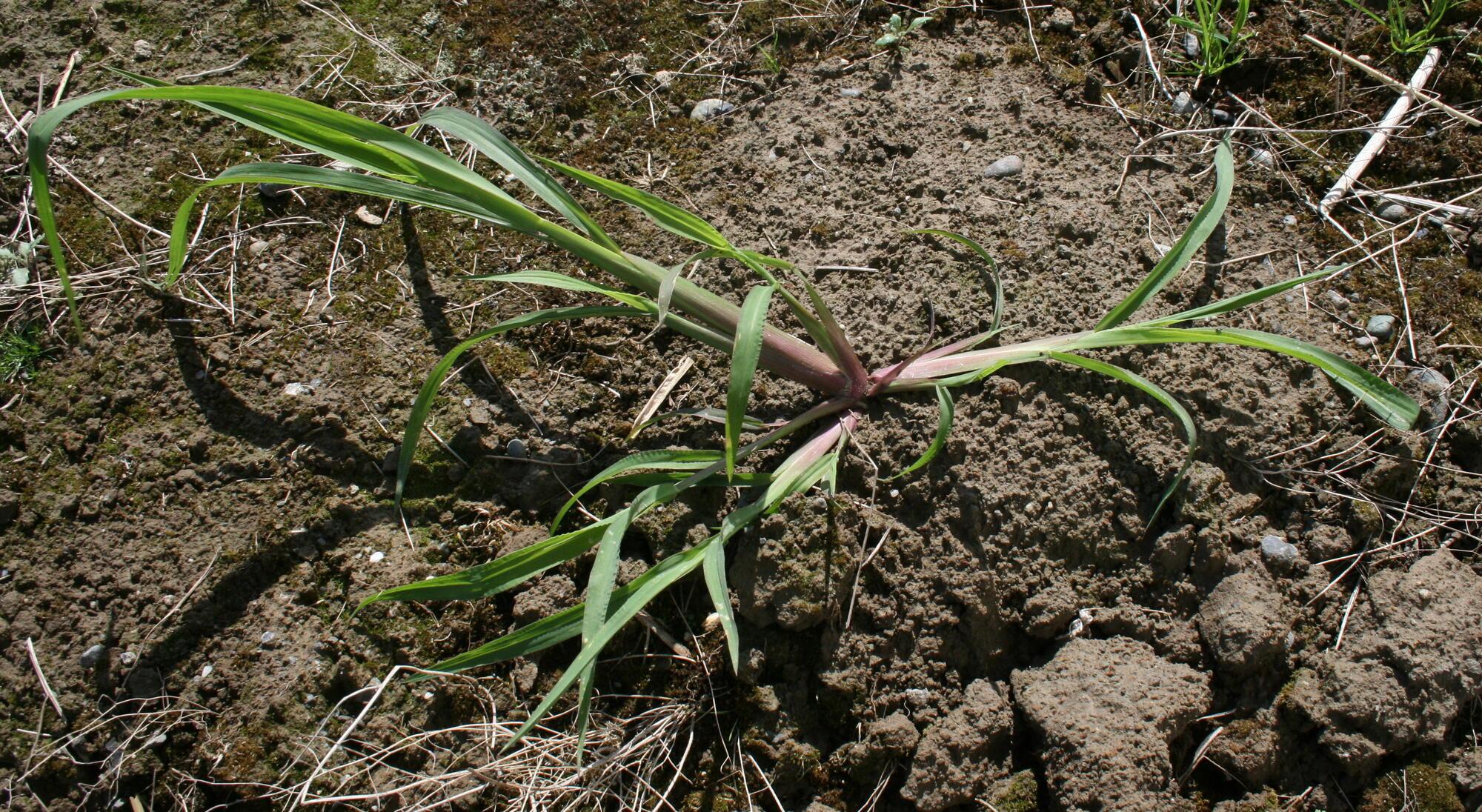
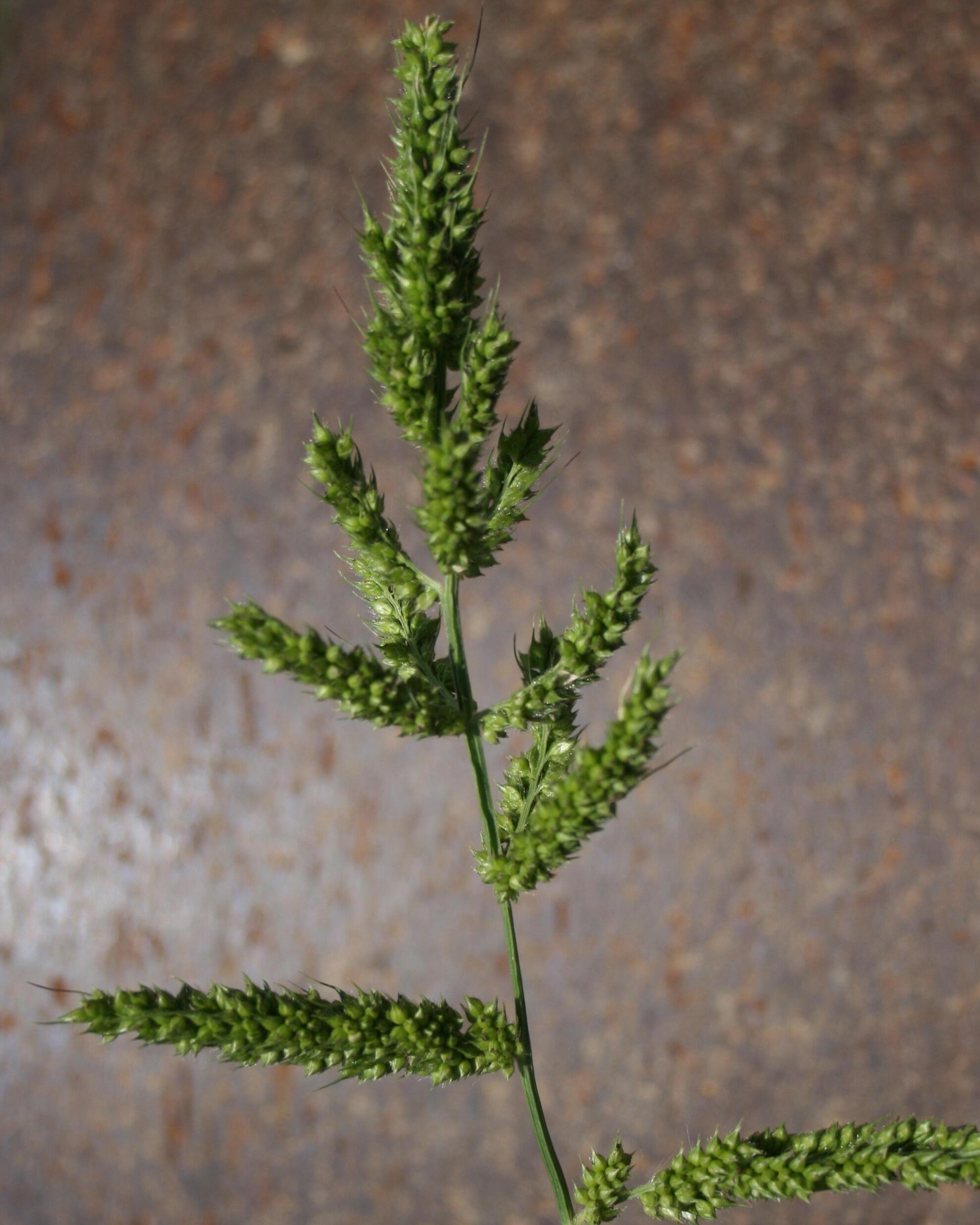
Seeds of this introduced weed usually germinate in late spring after soils warm up. Plants are often prostrate unless forced upward by competition with other plants. Stems are flattened and red near the base (Figure 22). Leaves are hairless, and seeds are borne on multiple racemes that are often brown or red at maturity (Figure 23).
Rattail fescue (Vulpia myuros)
Grass family (Poaceae)
Seeds of this introduced weed normally germinate after onset of rain in the fall. Leaves are tightly rolled and borne in tight bunches. Plants flower and seed in midsummer, when they have a feathery appearance (Figures 24 and 25).


Witchgrass (Panicum capillare)
Grass family (Poaceae)
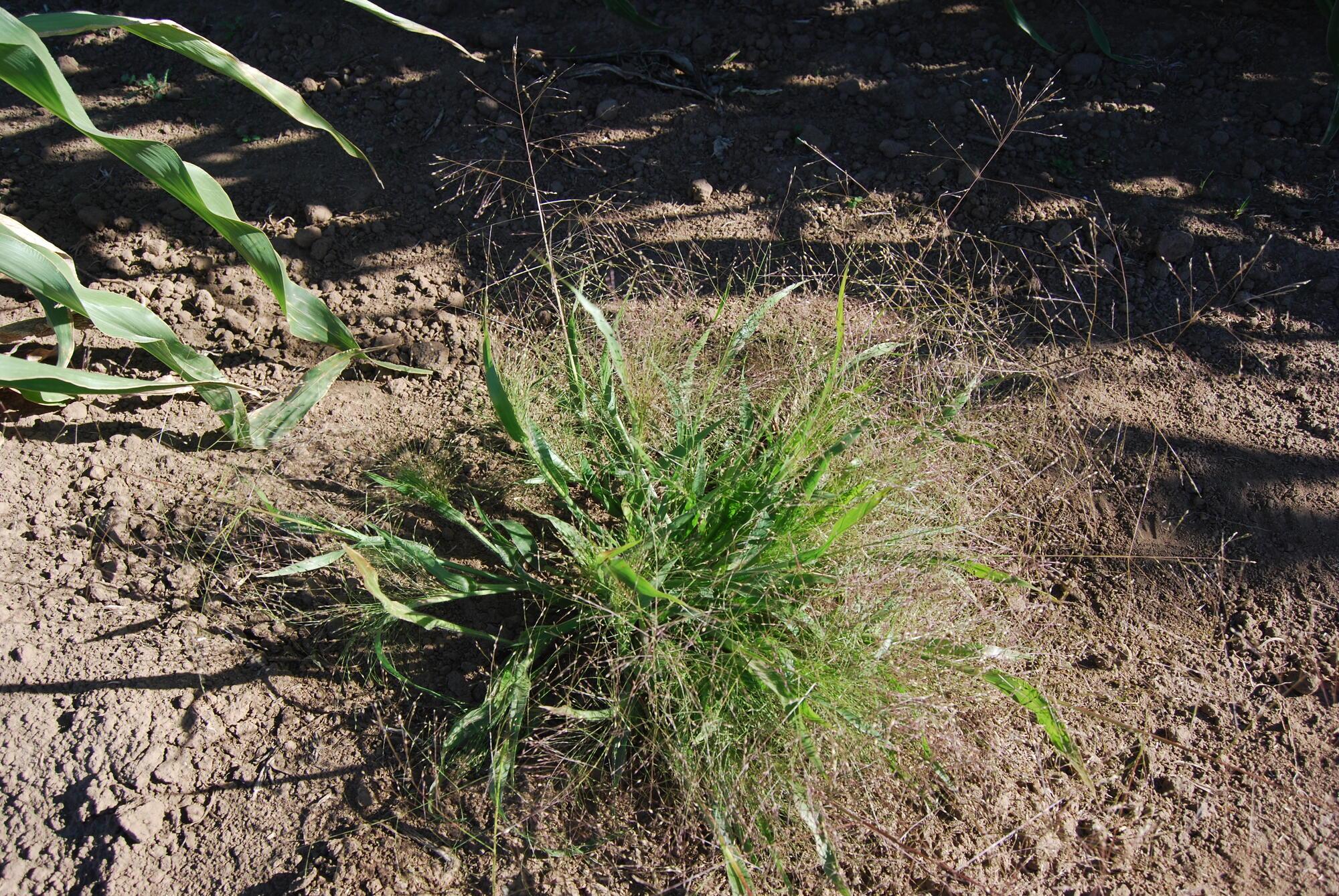
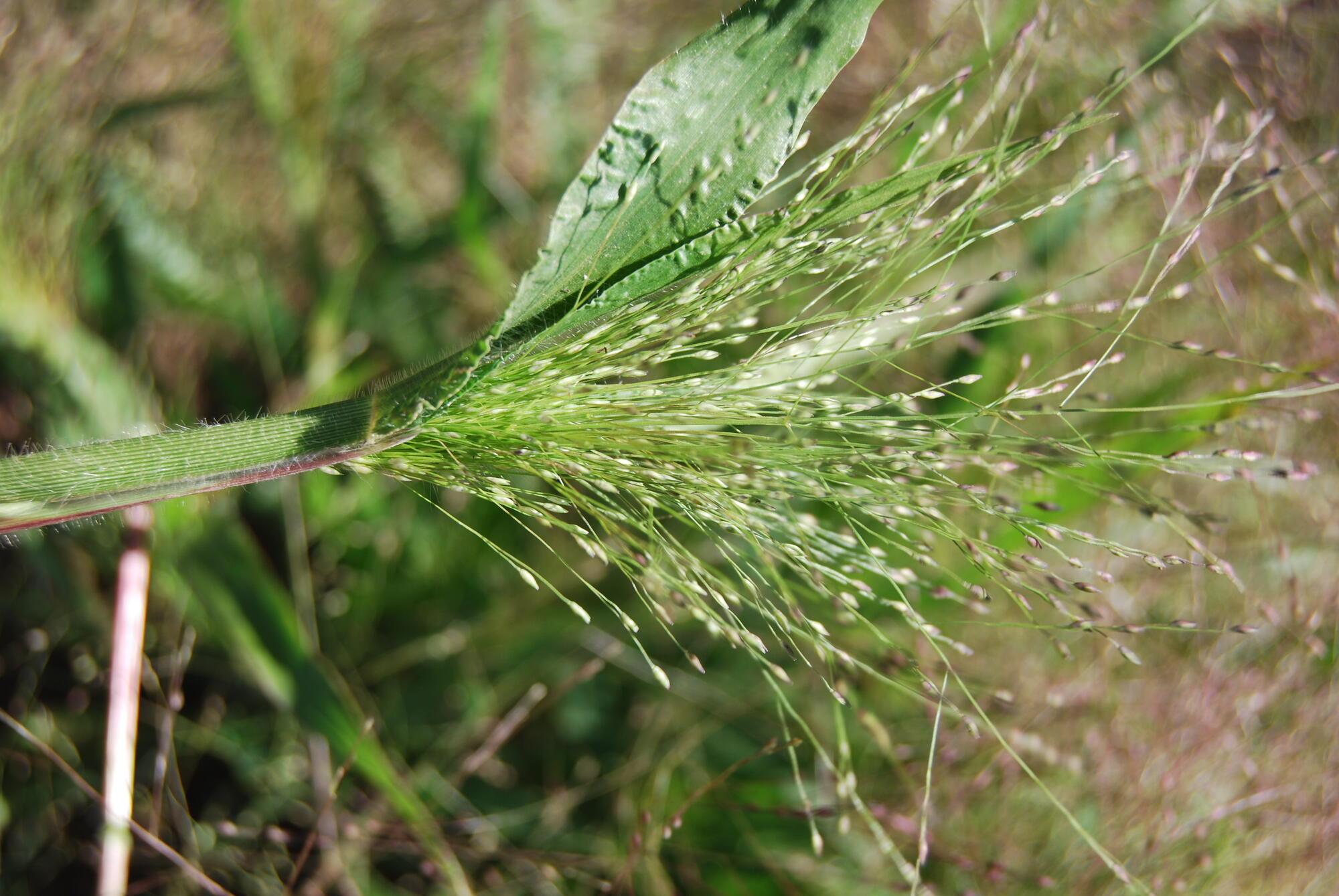
Seeds of this native weed often germinate in midspring. First leaves are arching and hairy and bear a superficial resemblance to corn, wild prosomillet (Panicum miliaceum) and barnyardgrass. Plants bear diffuse panicles of very tiny seeds borne at the ends of tiny branches (Figures 26 and 27).
Perennial grasses
Bentgrasses (Agrostis spp.)
Grass family (Poaceae)
Several species of this perennial grass are both native and introduced and are normally spread by stolons on the surface of the soil. Plants usually grow year-round in coastal areas but may be dormant in the interior Pacific Northwest. Plants are prostrate, although flower stalks are often upright. Seeds are very small and borne in diffuse panicles (Figure 28). Some areas of Oregon now have populations of this grass that are resistant to glyphosate.

Management strategies
Prevention
Regulation of weed seed production is the key to successful prevention. Many annual weeds spend most of their time underground as seeds, emerging only briefly to capture sunlight and make more seeds. Seed dormancy regulates the timing of weed emergence and may keep weed seeds alive in the soil for many years.
Weeds are often moved from site to site on equipment or clothing. We can thank birds, mice, wind and — all too frequently — ourselves for movement of seeds into our fields and cropland.
Preventing introduction of weed seeds requires:
- Planning to ensure clean equipment.
- Maintaining equipment yards free of weeds.
- Controlling weeds along farm roads.
Growers are also advised to eliminate new weed species before they have the chance to set seed or establish.
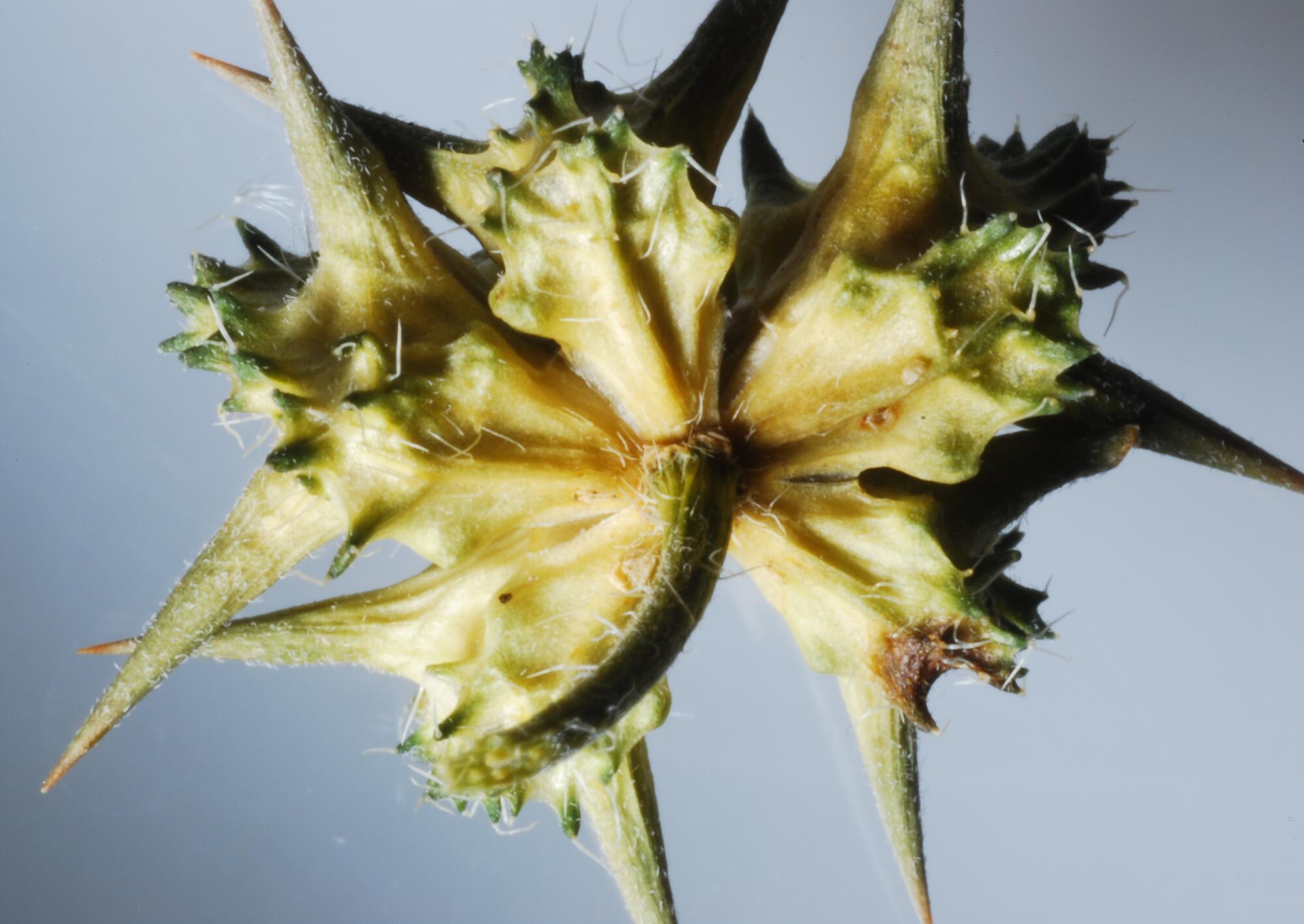
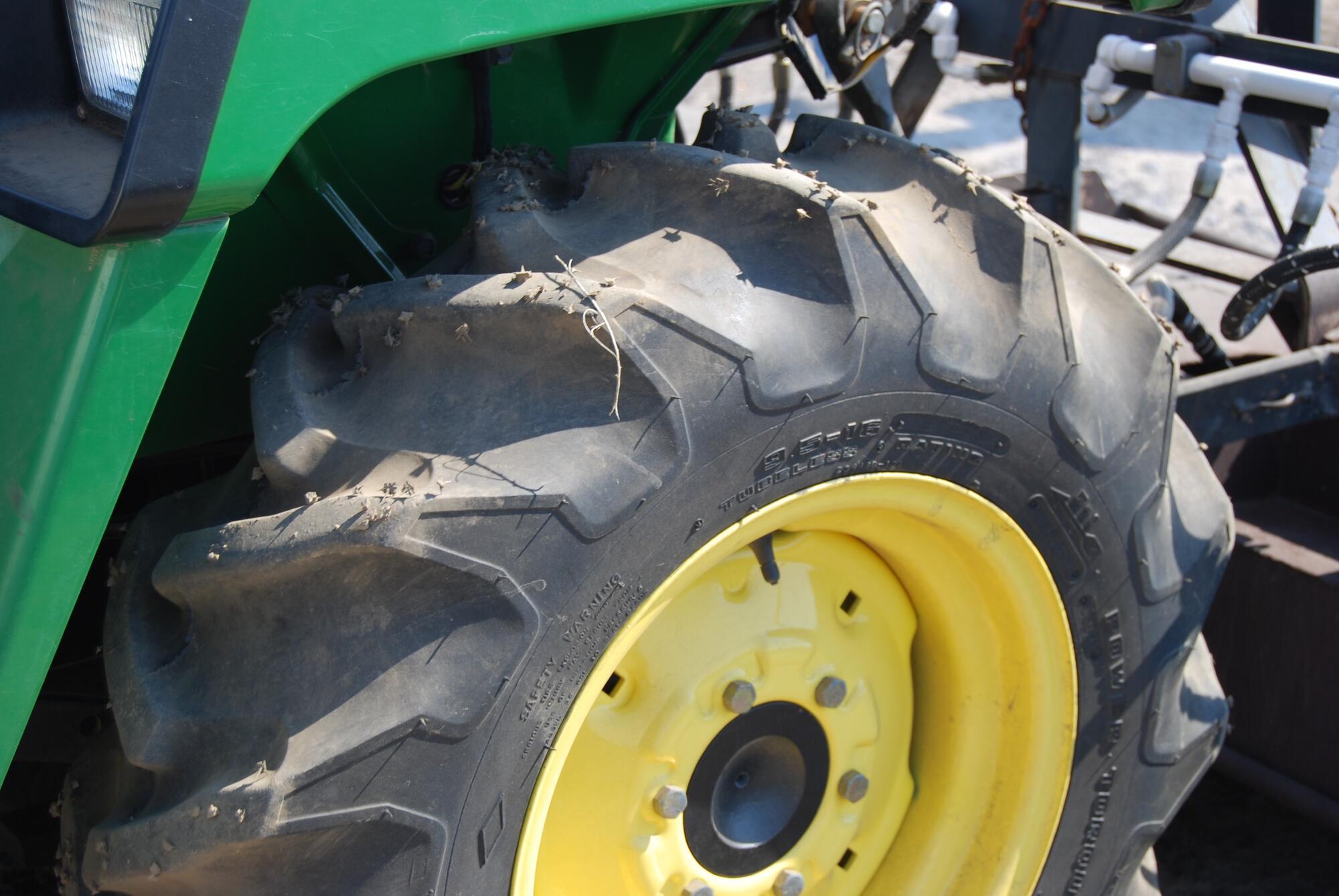
The recent increase in puncturevine (Tribulus terrestris) sightings in the Willamette Valley is a good case study in seed movement (Figure 29). The fruits of puncturevine stick to tires and shoes, allowing it to spread easily and sometimes great distances (Figures 30 and 31). Once this weed is established, it is very difficult to eradicate because of its very long seed dormancy.
Herbicides can be extremely effective tools, but it is important to remember that herbicides do not influence how long a weed seed survives in the soil or how long it remains dormant. Herbicides only act on germinating seedlings or after plants emerge from the soil.

Mechanical controls
Cultivation and mowing can be extremely helpful in preventing a shift to species that are tolerant of herbicides or other practices. Be sure to assess the benefits of cultivation or mowing within existing fields relative to potential root or tree damage. Shields around tires and implements help minimize aboveground damage to trees.
Small seedlings of many weeds are easily controlled with cultivation. However, all practices have a weakness, and overuse of cultivation will increase cultivation-resistant species, such as common purslane (Portulaca oleracea). Cultivation can also spread perennial weeds such as field bindweed or Canada thistle as small pieces of roots are carried though a field.
Cultivation equipment used in Christmas trees includes narrow rototillers, small disks, harrows and a wide assortment of sweeps or other tools designed to cut weeds off just under the soil surface. Most weed seeds emerge from the top three-quarters inch of soil and seldom emerge from below two inches (depending on seed size). It is important not to disturb the soil any deeper than necessary in order to avoid soil erosion in the fall.
Cultivation (rototilling or light disking) may be a weed control option for the first two or three years after planting; but, as trees fill the space between rows, cultivation becomes less effective. Moreover, too much cultivation can damage soil structure and in later years may damage tree roots.
Timely mowing can also significantly reduce competition with the crop. Mowing prior to weed seed development may reduce the number of seeds produced by a plant. Annual broadleaves are particularly susceptible to mowing; grasses and perennial species are tolerant.
Cover crops and vegetated strips
Cover crops are used in many cropping systems to suppress weed emergence and slow soil erosion. Suppression is achieved either through direct competition from a living crop or through mulch layers that remain on the soil surface after the cover crop is killed. A cover crop or permanent grass strip (perm) that is well designed and planted at the right time may suppress many winter annuals. The main drawback of cover crops is that they consume water; if they are not carefully regulated, they will reduce tree growth.
Cover crops
There are many ways to establish cover crops. Some growers have found it easier to establish the cover prior to tree planting. Before planting the trees, they spray out the cover in the tree rows (one- to two-feet wide) to minimize competition. To establish cover crops after trees are planted, use narrow seed drills or broadcast small-seeded cover crops at high rates. The seeded area should be weed-free prior to seeding. Hard fescue grasses are common cover crops in Christmas trees.
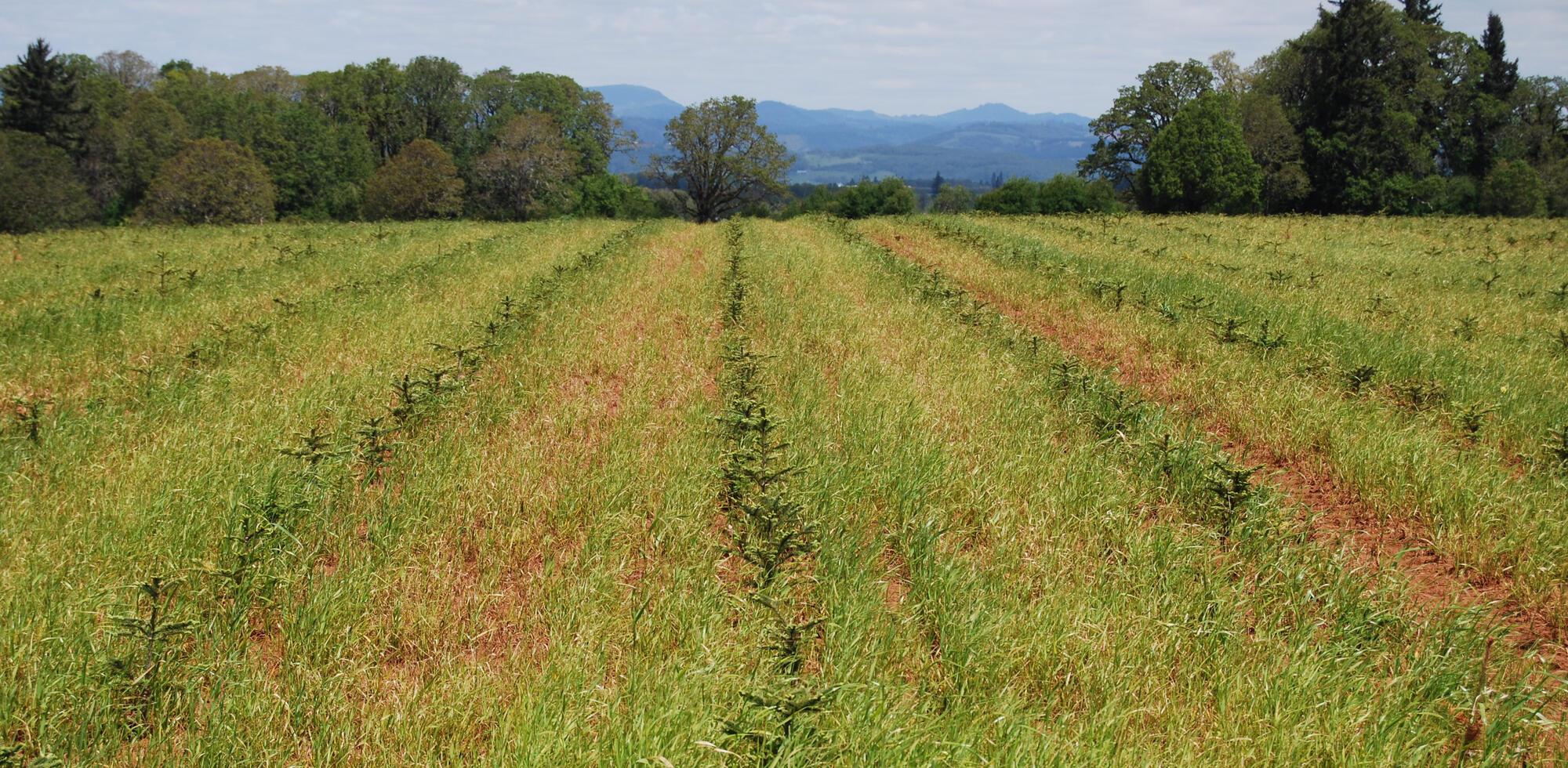
To control erosion and suppress weeds after site preparations and in the beginning years of a rotation, some growers plant annual cover crops in the fall that are easy to regulate in the spring. These covers must be killed with herbicides or cultivation and kept from reseeding before the soil dries in the spring, or they will significantly reduce available water later in the summer. Cereal annual cover crops such as spring type oats (Figure 32), barley or wheat are preferred because they may winter-kill, grow faster in the fall than winter types, can easily be removed with grass herbicides in the spring if needed (with little risk of injury to trees) and can be killed with mowing after the cereal flowers.

Some cover crops, such as spring barley and spring oats, will winter-kill west of the Cascades. However, if planted late in the fall (after November 1), they may survive the winter without too much damage. Cover crops such as sudangrass will always winter-kill, but usually need to be planted by the end of August to have enough heat to produce cover. There is seldom enough soil moisture at this time to germinate sudangrass, but depending on rainfall patterns for a particular year, sudangrass may be a viable option between rotations to help compacted sites.
Planting time of cover crops influences the kind of weed suppression achieved. Spring cereals emerge quickly (compared to winter cereals of rye, winter wheat or perennial grasses) and can out-compete small-seeded weeds, but only if they are planted before weed seeds germinate and emerge. Cereal cover crops should be drilled before the first rains of fall, so that they get a head start on weeds. Smallseeded perennial grasses emerge very slowly and provide little in the form of weed competition, but they will provide soil cover until harvest.
An important benefit of cover crops is that they reduce the pounding action of rainfall that loosens soil and allows it to erode. The method of seeding cover crops in the fall may have a large impact on whether the cover crop will stabilize soils. Tillage in the fall and conventional seeding are not recommended on slopes of more than 2% or 3%, because they may result in excessive erosion. Instead, use direct-seed orchard drills that reduce the amount of soil disturbance during planting.
Typical opener spacing on orchard drills are 7.5 to 8 inches. Removing half of the openers significantly reduces the amount of soil that is loosened during planting. It also reduces the amount of soil coverage provided by the cover crop early on, but an aggressive cover crop soon provides good soil coverage if the crop is planted early enough in the fall.
Vegetated strips
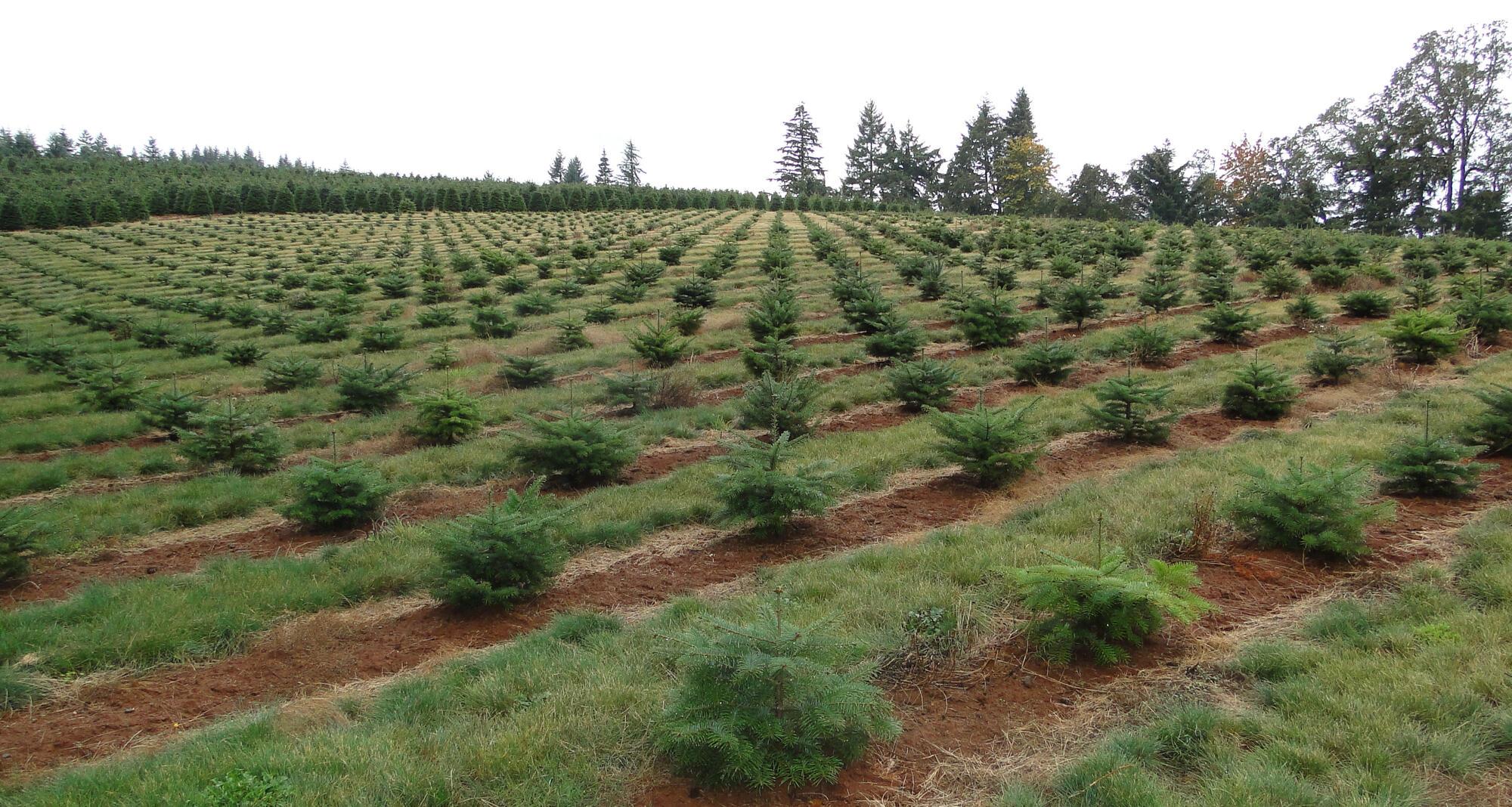
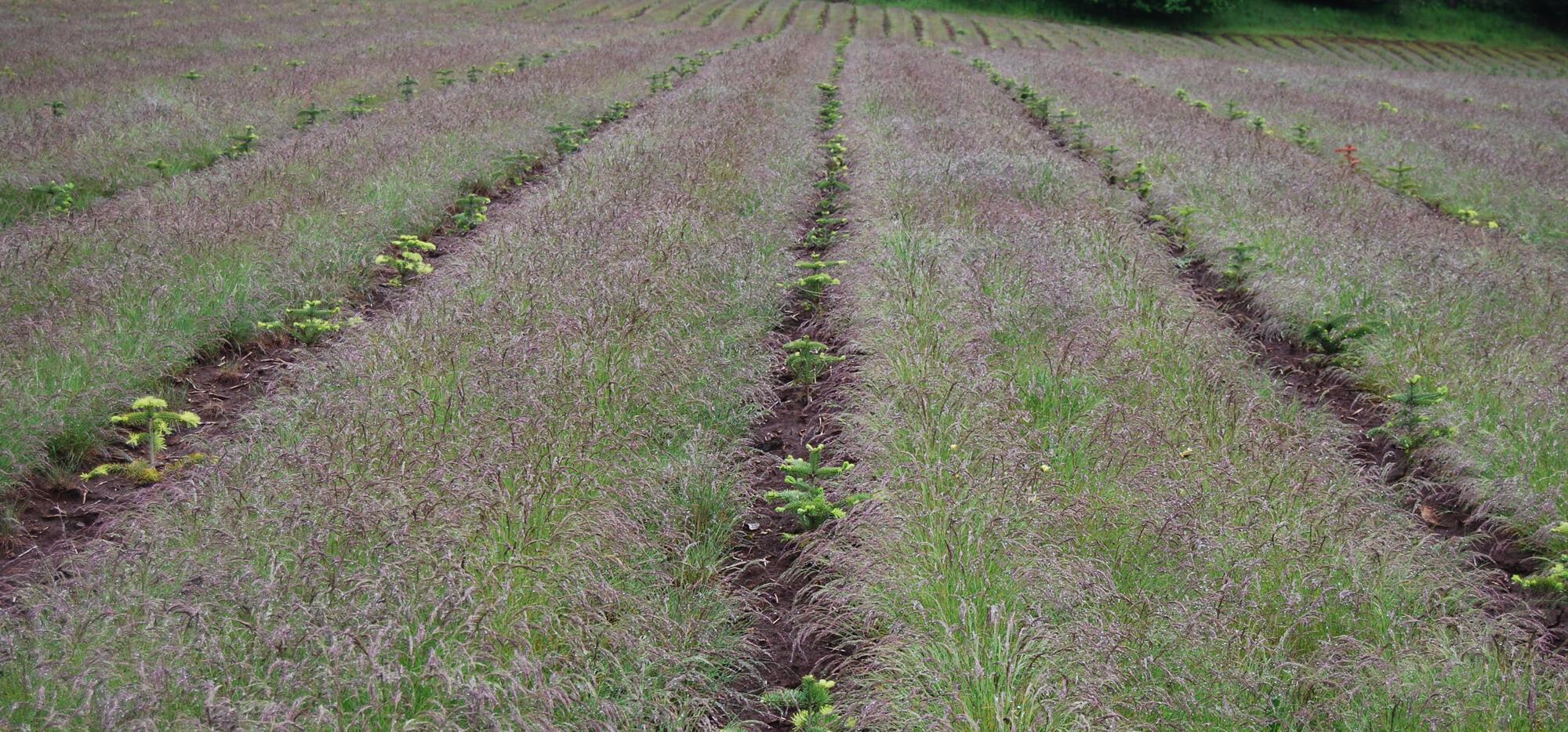
Permanent grass strips may take three or four years to establish but can be planted before or after trees are planted, between tree rows. Grass strips may significantly reduce the number of annual and perennial weeds (Figure 33). Permanent strips provide a stable soil surface in the winter for harvest. However, the area dedicated to perennial grasses must be carefully regulated to prevent overcompetition. Data from several years of experiments indicate that even small areas with cover crops will suppress tree growth. Physical or chemical mowing of cover crops can keep aboveground biomass in check and reduce the number of weeds in vegetative strips planted between rows.
Flame weeding
Flame weeding is occasionally used in Christmas trees but should be applied with caution. Flaming in late afternoon or when sunlight is bright and air temperatures high provides the most effective results.
However, avoid open flame weeding in the summer when senescing weeds and tree trimmings may provide enough fuel to ignite the entire field. Alternatives to open flame weeders are infrared heaters and steam weeders that use propane to generate heat. The heat is applied indirectly to the weeds.
Flame weeding will slow growth or kill some broadleaved weeds, but it only removes the tops of grasses and perennial weeds for a short time. For that reason, weed populations will shift to grasses rather quickly.
Applicators typically are overzealous when applying flame to weeds and burn the weeds to the ground. This wastes money and time. Only enough flame should be applied so that when a leaf is pressed between thumb and forefinger, the thumbprint is visible. This slight change in the leaf is hard to discern just by looking from a standing position, but it becomes evident within 24 hours. Simple experimentation will tell applicators the amount and intensity of heat that is needed to effectively kill weeds.
A major challenge to flame weeding in Christmas trees is that there are many weeds at different growth stages. Flame weeding is most effective when weeds are very small, usually at the two- to three-leaf stage. Moreover, because the time to kill winter annuals is in the spring when air temperatures are low and humidity and soil moisture are high, flame weeding in spring is more energy intensive. An advantage of flame weeding is that the soil is not disturbed, thus reducing future weed germination and emergence and stabilizing soil in the fall.
Biological controls
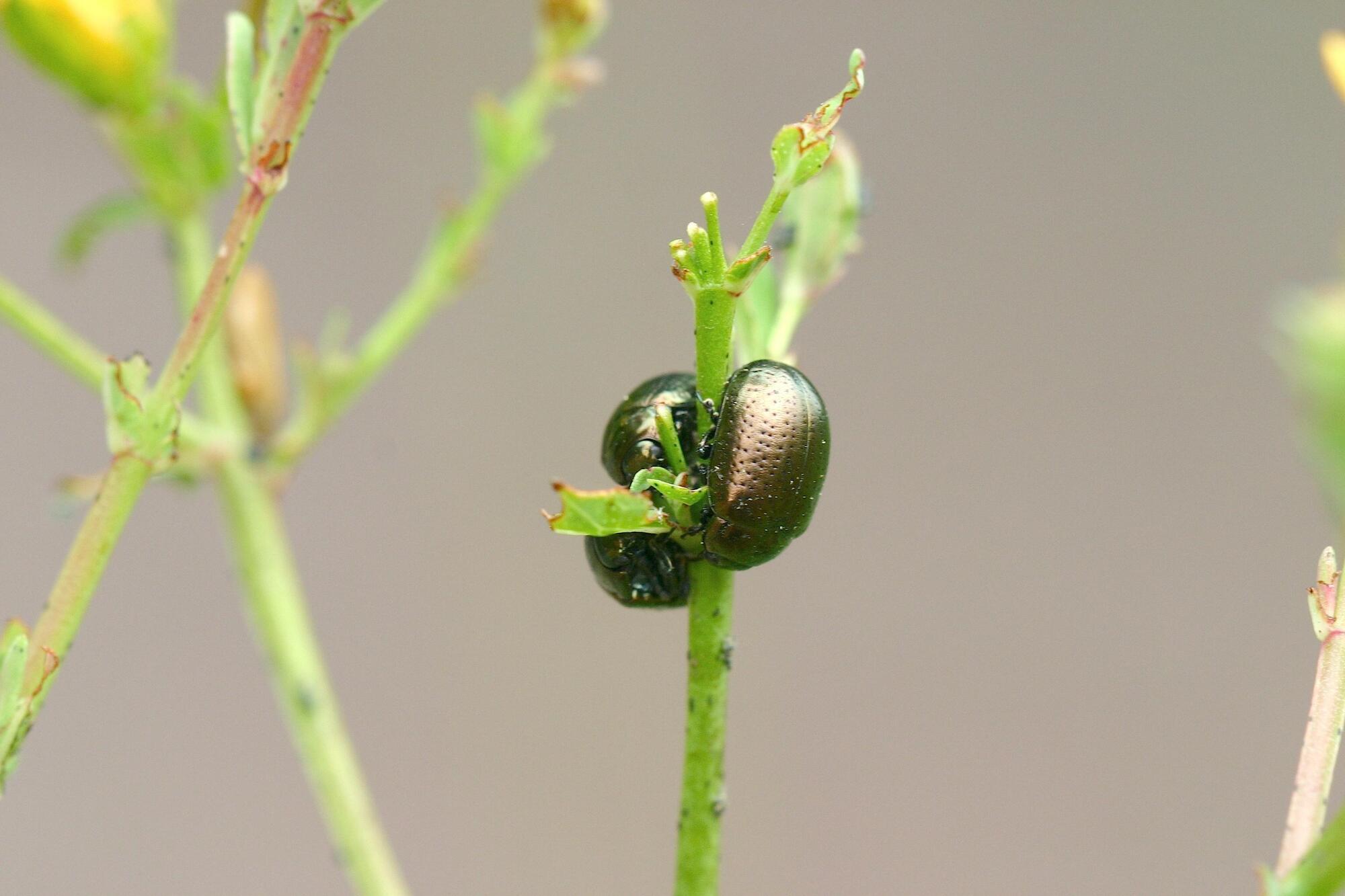
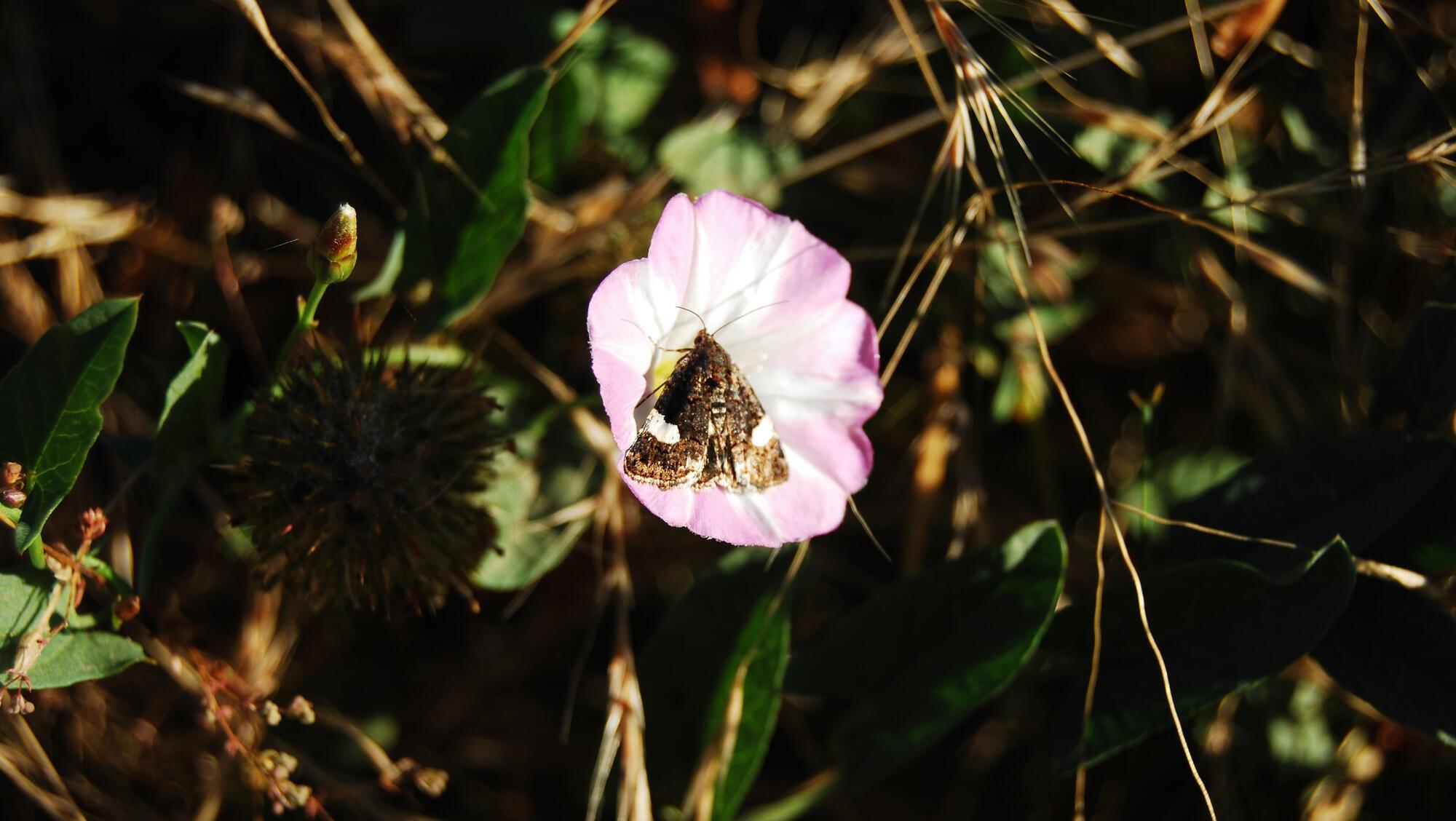
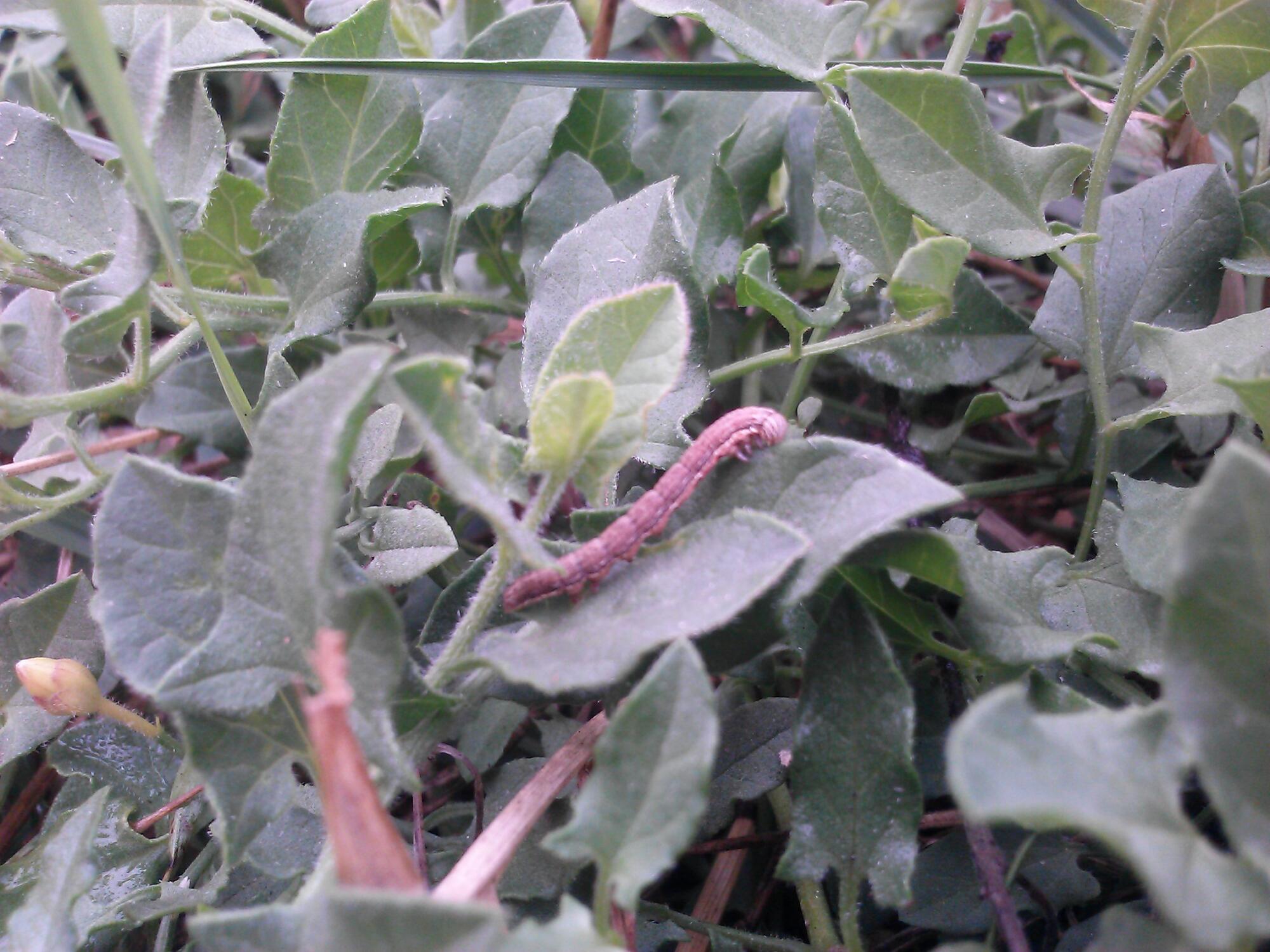
There are several biological controls that can be useful in Christmas trees, including a flea beetle and the cinnabar moth for tansy ragwort (Senecio jacobaea), the Klamath beetle for St. Johnswort (Hypericum perforatum), two species of puncturevine weevils and a noctuid moth and two species of mite that attack bindweed. Inundative or mass releases of these species are important each year.
Chemical controls
Herbicides can be soil active (killing germinating seedlings) or foliar active (killing plants when sprayed on foliage).
Preemergence (PRE) herbicides are soil active. They must be applied so that they are present in the soil when seeds begin to germinate or when seedlings are small. PRE herbicides must be activated, usually with rainfall or tillage, so that the herbicide is in the soil where the seeds are germinating—usually in the top inch or two of soil. PRE herbicides do not affect germination itself; they kill the radical or shoot of the seedling as it emerges from the seed. Examples include Princep and Simazine 4l (simazine) and Surflan AS (oryzalin).
In contrast, postemergence (POST) herbicides such as Roundup (glyphosate), Gramoxone (paraquat), Finale (glufosinate), 2,4-D and Fusilade (fluazifop) kill leaves and shoots, have little or no soil activity and usually do not affect weed emergence. Post-emergence herbicides are primarily absorbed through the treated leaf surface and kill by causing membranes to rupture, by arresting manufacture of essential compounds such as amino acids or fatty acids or by distorting growth through hormone mimicry.
Postemergence herbicides can be classified as either contact or translocated herbicides. Some POST herbicides, such as Roundup, 2,4-D and Stinger, translocate or move throughout the plant and can kill underground plant structures. Other herbicides only kill the tissues that they contact above ground.
A third class includes herbicides that have both PRE (soil) and POST (contact) activity. These include atrazine, Velpar (hexazinone), Mission (flazasulfuron) and SureGuard (flumioxazin). Note that SureGuard’s postemergent activity is weak but improves slightly if applied with crop oil concentrate. Herbicides in this class can be applied within a larger time frame and can be effective even as some of the target weeds are emerging.
Herbicide application timing and efficacy
Weed control usually is poor if PRE herbicides are applied after seed germination and shoots or roots emerging from the seed have grown out of the treated zone of soil. This can happen if herbicides are applied too late in the fall or too early in the spring, depending on the herbicide used.
|
Biological control agent for a given target weed |
Role |
Distribution |
Control |
|---|---|---|---|
|
St. Johnswort |
|||
|
Agrilus hyperici |
Root boring beetle | Low | Good |
|
Aplocera plagiata |
Defoliating moth | Wide | Fair |
|
Chrysolina hyperici |
Defoliating beetle | Wide | Excellent |
|
Chrysolina quadrigemina (Figure 34) |
Defoliating beetle | Wide | Excellent |
|
Tansy ragwort |
|||
|
Botanophila seneciella |
Seed head fly | Wide | Good |
|
Longitarsus jacobaeae |
Root/defoliating flea beetle | Wide | Good |
|
Tyria jacobaeae |
Defoliating moth | Wide | Good |
|
Puncturevine |
|||
|
Microlarinus lareynii |
Seed weevil | Low | Poor to good in some areas east of Cascades |
|
Microlarinus lypriformis |
Stem boring weevil | Low | Poor to good in some areas east of Cascades |
|
Field bindweed |
|||
|
Aceria malherbae |
Bud/leaf gall mite | Low | Fair |
|
Tyta luctosa (Figures 35–36) |
Bindweed moth/larvae | Low | Unknown, but distributed throughout western Oregon |
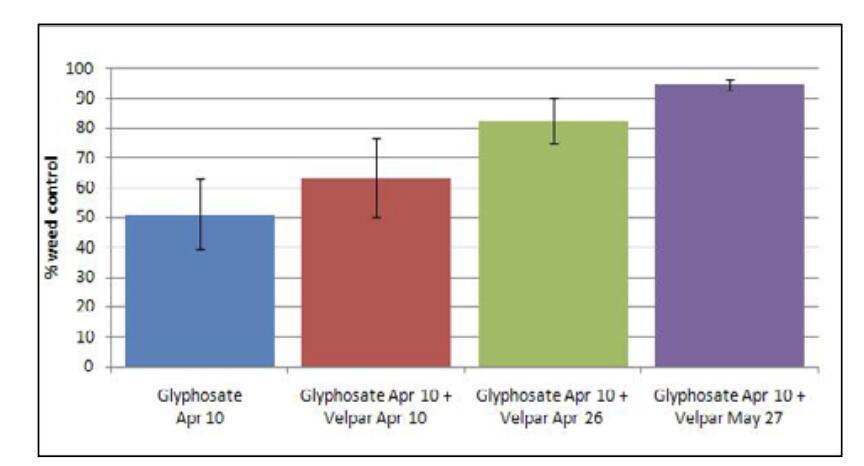
For example, poor control may result if Velpar is applied too early in the spring. In a 2010 trial conducted in the Willamette Valley, Velpar was applied at three dates in the spring. Velpar applied too early (April 26) was ineffective compared to the application on May 27 (see Figure 37). This was likely due to the excessive rainfall and cooler temperatures that spring that delayed germination of many weeds, and probably caused the soluble Velpar to leach below the germination zone.
Weed control with Westar (hexazinone + sulfometuron) remained consistent whether applied on April 26 or May 27, even though the active ingredient used in Velpar is also present in Westar. Sulfometuron, however, is not as prone to leaching, and it persisted long enough to provide good weed control.
The level of weed control resulting from applications of POST herbicides is also affected by stage of growth. Annual weeds typically are controlled best when herbicides are applied to small seedlings. This is particularly true when using contact herbicides such as Gramoxone.
Most perennial species are more easily killed if applications of foliar-active herbicides are delayed until weeds have shoots at least 12-inches long. This allows for greater herbicide uptake (a plant with more or larger leaves receives more herbicide contact) and better translocation of the herbicide from the leaves to the roots. Contact herbicides do not effectively control established perennial species unless applied repeatedly over a long period of time.
Adding surfactants may improve weed control with herbicides (such as SureGuard) that are soil active but also damage foliage. Using the wrong surfactant, however, may expose the Christmas tree to risk of injury. As always, follow labels when using herbicides.
Commonly used herbicides and their characteristics
Refer to Table 2 for mode of action of the following herbicide groups. For a printable poster summarizing weed control efficacy see the PNW weed control handbook.

Preemergence (PRE) activity
Dichlobenil (Casoron). Group 20. Used to control difficult perennials such as Canada thistle and horsetail (Equisetum). Apply in midwinter immediately before a cold rain to reduce volatility and enhance weed suppression.
Use only around well-established plants; typically, wait one year after transplanting. Do not use on light, sandy soils. Re-entry interval (REI) 12 hours. Groundwater hazard.
Indaziflam (Marengo). Group 29. Apply before weed emergence in the fall or spring. Apply as a directed spray to soil surface. Do not mix into soil. May injure new leaf tissue if applied over the top of trees. Controls grasses, sedges and broadleaves. Needs 1/8 to 1/4 inch of rain or irrigation water for activation. Does not control emerged weeds. Do not apply to newly transplanted crops until soil settles. Extremely persistent with broad-spectrum efficacy. REI 12 hours.
Oryzalin (Surflan A.S.). Group 3. Apply in pine and fir (but not Douglas-fir) Christmas tree plantations, to bare soil surface after transplanting and settling. Requires 1/2 inch of rainfall or shallow cultivation to activate before weeds emerge. REI 24 hours. Toxic to fish.
Pendimethalin (Pendulum 3.3 EC). Group 3. Apply at planting or before weed seeds germinate. Soil should be loose and free from all established weeds. Rainfall needed within a few days to activate herbicide before weeds emerge. REI 24 hours. Toxic to fish.
Pronamide (Kerb 50W). Group 3. Make a single application in fall, before freezing weather. Not recommended on trees less than one-year old. Use higher rates for quackgrass and finer textured soils. Requires soil moisture to activate. Primarily for grass control. Degraded by microorganisms in warmer weather. REI 24 hours. Restricted use.
Simazine. Group 5. Apply in fall or spring. Simazine must be applied before weeds emerge. Avoid applying over actively growing trees unless applied immediately before or during a rain. REI 48 hours. Groundwater hazard.
Preemergence and postemergence activity
Atrazine (many products), Group 5. To ensure activation, apply in March or April after soil settles from transplanting but before rains stop. Avoid applying over actively growing trees, unless applied immediately before or during a rain. Poor control of rattail fescue and groundsel. Do not exceed four lb ai/A per year. REI 12 hours. Groundwater hazard. Restricted use.
Metribuzin + flufenacet (Axiom DF). Groups 5 and 15. For use on Douglas-fir and true firs only. Apply pre- or very early postemergence to weeds when trees are completely dormant. Trees must be established at least one growing season. REI 12 hours. Groundwater hazard.
Flazasulfuron (Mission), Group 2. Must be activated with rainfall for preemergence control. Controls wild carrot and rattail fescue. Do not apply the first year after planting. REI 12 hours.
Flumioxazin (SureGuard). Group 14. Preemergence and/or postemergence herbicide for control of selected grass and broadleaf weeds. Postemergence weed control is limited to very small weeds. All over-the-top applications of SureGuard are applied prior to spring budbreak or delayed until conifers have hardened off. Do not apply to conifers within two years of seedling emergence. REI 12 hours. Toxic to aquatic invertebrates.
Hexazinone (Velpar DF). Group 5. Registered for new plantings, but variable tree injury has been observed. Applications in early April may be more effective than March applications due to greater leaching from spring rains. Higher rates are effective on trailing blackberries. REI 48 hours. Groundwater hazard.
Hexazinone + sulfometuron (Westar DG). Groups 5 and 2. Apply either before or soon after weeds emerge, when weeds are small and actively growing. Apply broadcast only to dormant trees. If trees have broken dormancy, directed applications are required to avoid contact with new growth. Recommended for Douglas-fir, Fraser fir, grand fir, noble fir, Nordman fir and Turkish fir. Surfactants are not recommended and may cause excessive injury. REI 48 hours. Groundwater hazard and long soil residual.
Oxyfluorfen (Goal 2XL). Group 14. Apply immediately after transplanting but before budbreak, over tree tops or as directed spray. Controls small, emerged broadleaf weeds with brief soil residual. Established grasses are tolerant. REI six days. Toxic to aquatic invertebrates.
Postemergence activity
2,4-D. Group 4. Apply over-the-top as a broadcast treatment when trees are dormant using a low rate, or direct spot sprays toward actively growing weeds before budbreak or after budset during cool weather. Do not apply over the top of pines or true firs (Abies spp.). REI 48 hours. May be toxic to fish. Use low volatile formulations where possible.
Asulam (Asulox). Group 18. For bracken fern control. Apply after Christmas tree terminal buds mature and bracken fronds are fully expanded. REI 12 hours. Groundwater hazard.
Clethodim (Envoy) Group 1. For Douglas-fir and true firs (Abbies spp.). Apply postemergence to actively growing annual or perennial grasses as listed on label. REI 24 hours.
Clopyralid (Stinger). Group 4. Apply broadcast or in bands during active weed growth up to five-leaf stage. Controls annual weeds of the sunflower family, Canada thistle, clover, and knapweeds. To avoid needle curling, do not apply during first year after transplanting. REI 12 hours. Groundwater hazard.
Flazasulfuron (Mission), Group 2. Apply to broadleaved weeds and grasses less than four inches tall and prior to tillering of grasses. Directed applications preferred to minimize risk of crop injury. Controls wild carrot and rattail fescue. Do not apply the first year after planting.
Fluazifop (Fusilade DX). Group 1. Apply to actively growing grasses in early spring, following ample rain, as a directed spray with 0.25% nonionic surfactant. Results often are erratic on grasses stressed from lack of vigor, drought, high temperature or low fertility. More mature grasses and quackgrass can be controlled but may require two applications. Annual bluegrass and all fine fescues resist treatment. REI 12 hours.
Glufosinate (Finale). Group 10. Apply to actively growing weeds. Do not let spray or drift contact living tissue or green, thin or uncalloused bark, as injury may occur. Do not broadcast over the top of Christmas trees. REI 12 hours. Groundwater hazard.
Glyphosate (numerous product names). Group 9. Select application equipment to prevent crop injury by directing spray toward base of Christmas trees or with selective applicators. Consult label about rate and time of application, especially for perennial weeds. Avoid spray or mist contacting foliage or green bark of desirable plants. Apply with a wiper at 33% solution. REI four hours.
Sethoxydim (Segment). Group 1. Identify susceptible grasses. Control often is erratic on grasses stunted or stressed from drought, high temperatures or low fertility. Resistant grasses include annual bluegrass and all fine fescues. Quackgrass can be suppressed. REI 12 hours.
Triclopyr (Garlon 3A, Vastlan). Group 4. Apply in late summer or early fall after terminal growth of trees has hardened off, but before target weeds drop leaves. For control of woody plants and perennial and broadleaf weeds. Select application equipment to prevent tree injury by directing spray toward base of Christmas trees or with selective applicators. REI 48 hours. Groundwater hazard.
Herbicide families and resistance management
Continued use of a single herbicide selects weed species that are tolerant to that herbicide. This is called a species shift. Species shift can often be corrected simply by switching to a different herbicide or other control strategy (such as tillage or mowing).
Continued use of a single herbicide over time may also result in a weed population that is resistant to that herbicide. This occurs when a species that is usually controlled by a particular herbicide no longer responds to that herbicide, and usually results from genetic differences among individual weeds within the population. Seedlings from resistant plants usually are resistant to herbicides employing the same mode of action (in the same group; see Table 2). Herbicide resistance is not reversed if the herbicide is no longer applied—once selected for, the resistant trait remains in the weed population on your farm.
The best strategy to prevent selecting for resistant weeds is to:
- Integrate herbicides with other weed control practices.
- Use herbicides that have different modes of action in rotation or in combination/sequence with each other.
Table 2 lists herbicides commonly used in Christmas trees and their herbicide activity group. Some of these herbicides select for resistant species very quickly (Group 2); others are very slow to select for resistant species.
|
Herbicide group numbera |
Mode of action |
Common herbicides labeled in Christmas trees |
Number of species with documented resistance worldwided |
|---|---|---|---|
|
1 |
ACCase inhibitor | Envoy, Segment, Fusilade | 48 |
|
2 |
ALS inhibitor | Westarb, Mission | 158 |
|
3 |
Cell division inhibitor | Surflan, Pendulum | 12 |
|
4 |
Auxin inhibitor | Stinger, Garlon, 2,4-D | 34 |
|
5 |
Photosystem II inhibitor | Atrazine, Simazine, Velpar, Axiomc, Westarb | 73 |
|
9 |
ESPS inhibitor | Roundup | 37 |
|
10 |
Glutamine synthesis inhibitors | Finale | 3 |
|
14 |
PPO inhibitor | Goal, SureGuard | 11 |
|
15 |
Inhibits very long chain fatty acid synthesis | Axiomc | 5 |
|
18 |
Inhibits DHP synthase step | Asulox | 0 |
|
20 |
Inhibits cell wall synthesis | Casoron | 1 |
|
22 |
Photosystem I inhibitor | Paraquat | 32 |
|
29 |
Marengo | Indaziflam | 0 |
a WSSA herbicide group name designation.
b Westar is two products: sulfometuron plus hexazinone. Sulfometuron is in Group 2 and hexazinone in Group 5.
c Axiom is two products: metribuzin plus flufenacet. Metribuzin is in group 5 and flufenacet is in Group 15.
d From the International Survey of Resistant Weeds, referenced May 2017.
Herbicide application and stewardship
Apply the correct amount of herbicide at the right time and under the right conditions to optimize weed control. Herbicides can be lost through drift during application, through runoff in water or on soil carried in runoff water. This reduces efficacy, increasing the cost of weed control and may impact nontarget plants or animals.
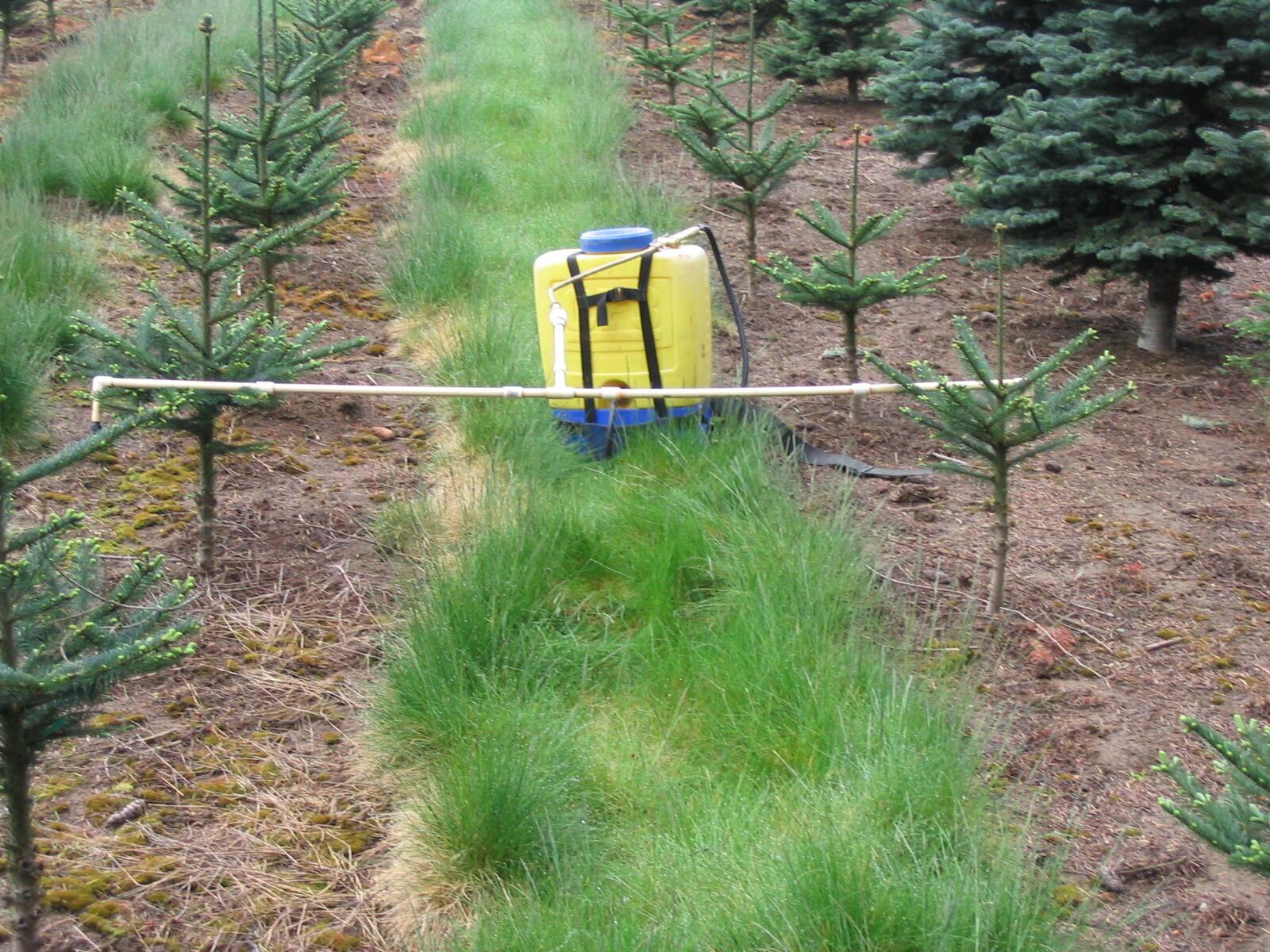
Sprayer calibration is essential to proper use of herbicides. Correct nozzle size and pressure reduce the production of small droplets that are more likely to drift. For details, see the OSU Extension Service video, “Calibrating and Using Backpack Sprayers” (see “Other resources”). The video demonstrates how to use a backpack sprayer safely and effectively and shows basic sprayer components, calibration methods, pesticide mixing and helpful operating tips. Use shielded sprayers to protect small tree seedlings from herbicides (Figures 38 and 39).

Nonpoint losses of herbicides
A number of pesticides, including herbicides, are routinely identified in the main rivers of the Pacific Northwest. Concerns include drinking water contamination and damage to aquatic ecosystem health, even at very low pesticide concentrations. Increasingly, buffers are required along many waterways and around field edges to provide some level of containment for soil and water movement. Herbicides applied in the fall are particularly susceptible to nonpoint or off-site loss through surface water runoff or as they percolate into groundwater during winter rains. Growers should be aware of the toxicity of the products they use and the chances that a pesticide may move off-site. Pesticide labels include information on nontarget effects of pesticides.
The propensity of an herbicide to reach surface or groundwater is dependent on several factors. If the herbicide is tightly adsorbed to soil (sticks to soil), it will stay in place unless the soil moves. If the herbicide is not tightly adsorbed (easily removed from soil particles), it is at risk of running off the surface with water or percolating into groundwater.
Slope of the site, soil type, crop residues on the soil surface and uncropped buffers around fields, as well as herbicide solubility and application, all play a role in how much pesticide may reach streams and rivers.
Strategies to reduce soil and pesticide loss
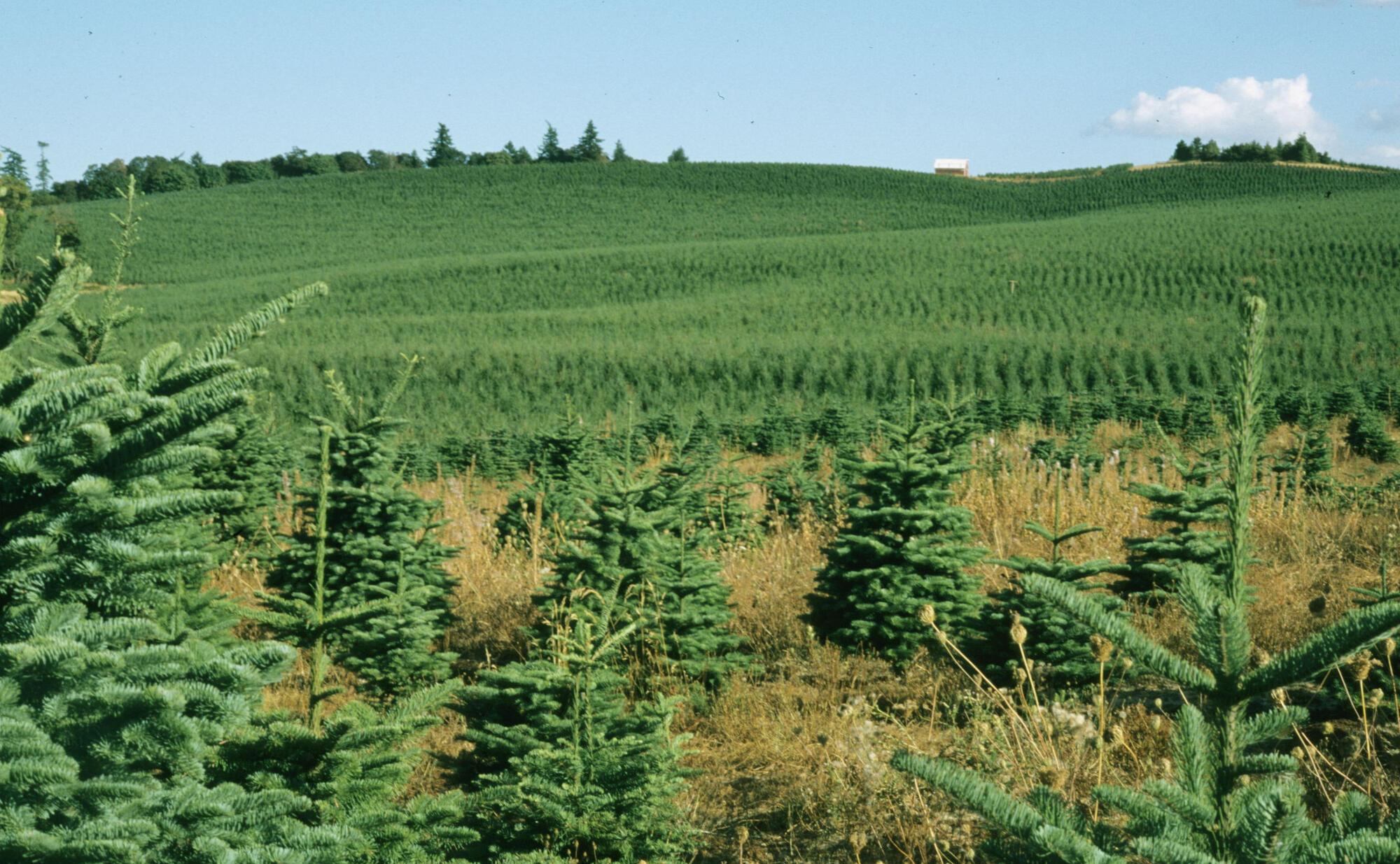
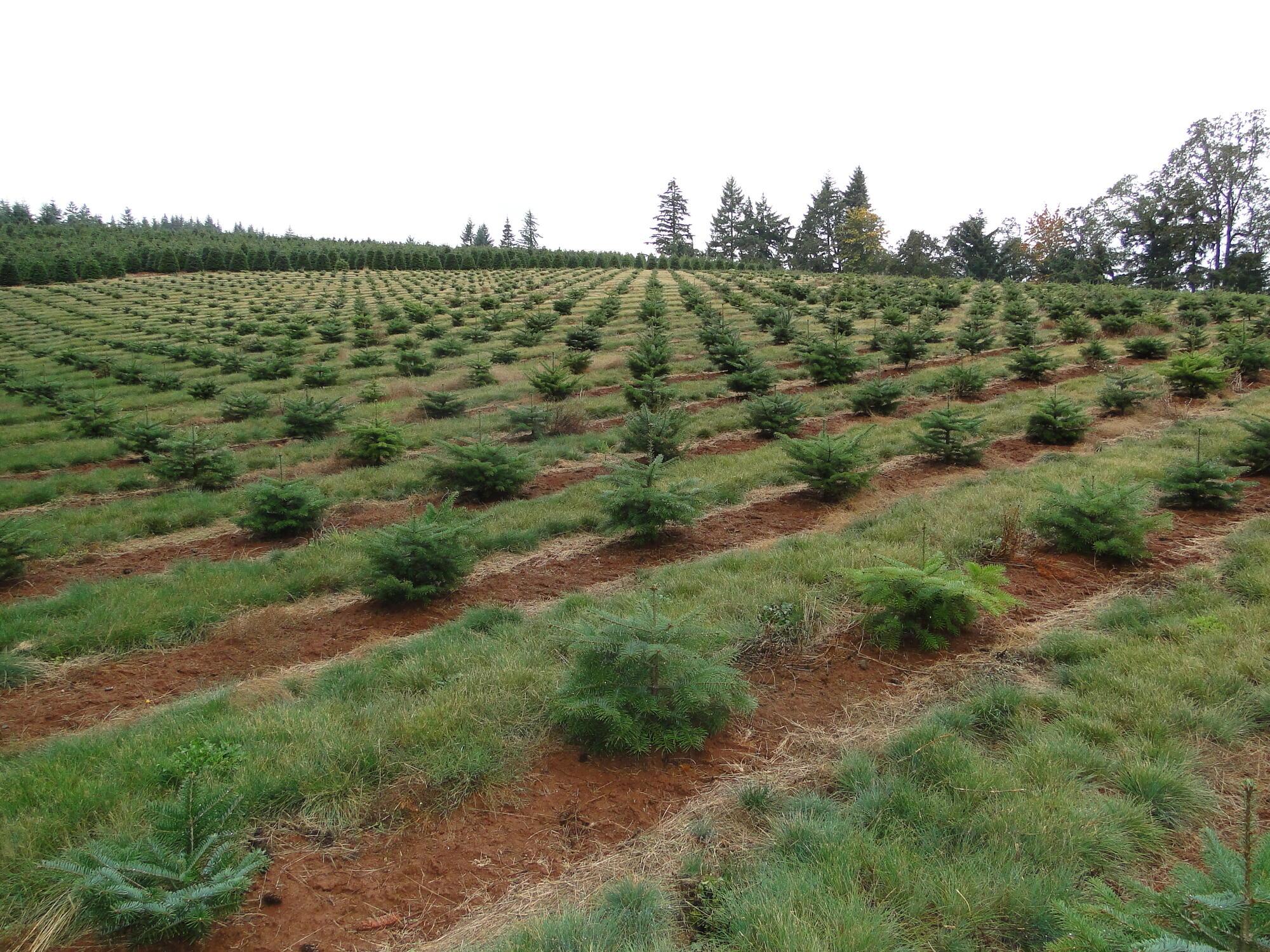
Use sustainable weed management practices to prevent soil loss and reduce contamination of water with herbicides or nutrients (Figures 40–45). Christmas tree growers use a number of innovative strategies to reduce nonpoint pesticide loss, including:
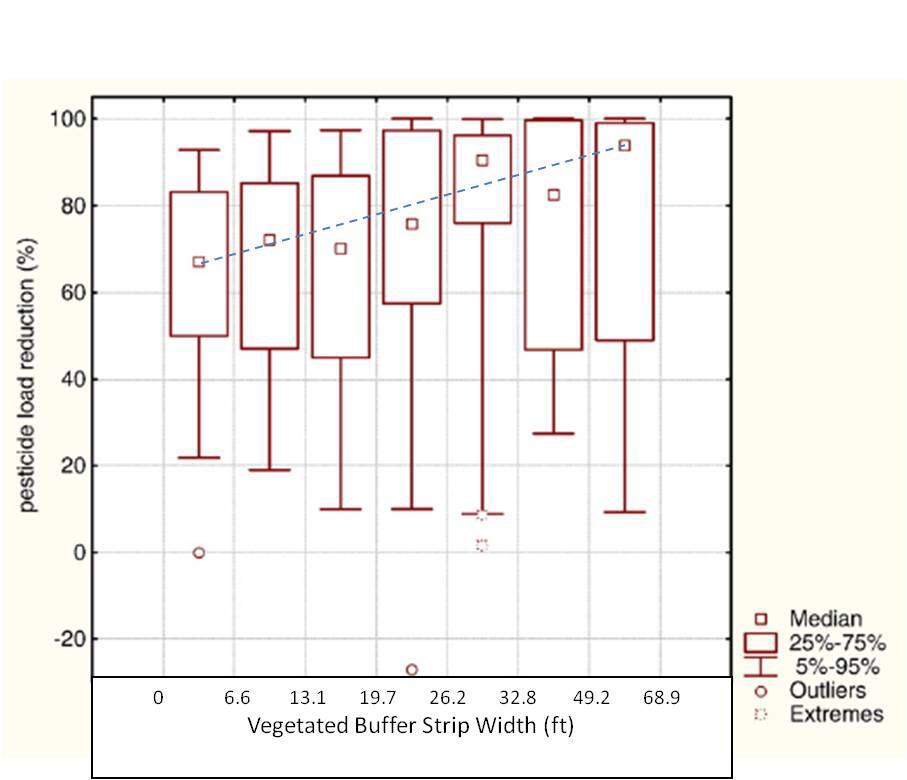
- Vegetated filter strips (VFS) work well if the herbicide is tightly bound to soil, but works best if they are well maintained and designed to prevent channelized flow. Increasing the width of filter strips will decrease the loss of moderately soluble herbicides such as atrazine (Figure 46).
- Annual cover crops
- Perennial living mulches
- Catch basins
- Temporary filter strips and straw ropes or barriers to slow water movement
- Managing weedy vegetation by allowing some weeds in strategic places to survive
Most herbicide labels carry cautions about the potential of herbicides to enter groundwater or streams and rivers and affect fish or other aquatic life. Buffers and setbacks may be recommended for some herbicides but are not required. Buffer strips are required for atrazine and simazine and should be vegetated if on highly erodible soil. The label for SureGuard recommends installation of filter strips along rivers, streams and creeks, and on the downhill side of fields where runoff may occur.
|
Herbicides |
Contamination potential |
Buffer requirements or advisories |
|
|---|---|---|---|
|
Preemergence (PRE) with activity |
|||
|
Group 20 |
Dichlobenil (Casoron) | Groundwater hazard | None |
|
Group 29 |
Indaziflam (Marengo) | Surface and groundwater advisories. Toxic to fish and aquatic organisms. | A well maintained and level vegetated buffer strip of 25 feet or more will help reduce runoff. |
|
Group 3 |
Pendimethalin (Pendulum 3.3 EC) | Toxic to fish | None |
|
Group 3 |
Pronamide (Kerb 50W) | Restricted use | None |
|
Group 5 |
Simazine | Groundwater hazard | Do not apply within 66 feet of field where surface water runoff enters perennial or intermittent streams and rivers, or within 200 feet of natural or impounded lakes. If applied to highly erodible land, the buffer must be seed planted to crop or seeded with grass. |
|
Preemergence (PRE) and postemergence (POST) activity |
|||
|
Group 5 |
Atrazine (many products) | Groundwater hazard | Do not apply within 66 feet of field where surface water runoff enters perennial or intermittent streams and rivers, or within 200 feet of natural or impounded lakes. If applied to highly erodible land, the buffer must be seed planted to crop or seeded with grass. |
|
Group 15 |
Flufenacet + metribuzin (Axiom DF) | Groundwater hazard | None |
|
Group 14 |
Flumioxazin (SureGuard) | Toxic to aquatic invertebrates | Label recommends use of filter strips along rivers, streams, and creeks, and on the downhill side of fields where runoff may occur. |
|
Group 5 |
Hexazinone (Velpar DF) | Groundwater hazard | None |
|
Groups 5 and 2 |
Hexazinone + sulfometuron (Westar DG) | Groundwater hazard and long soil residual | None |
|
Group 14 |
Oxyfluorfen (Goal 2XL) | Toxic to aquatic invertebrates | A 25-foot buffer strip is required between treated areas and aquatic habitats such as lakes, reservoirs, rivers, sloughs, ponds, creeks, marshes, streams, and wetlands. |
|
Postemergence (POST) activity |
|||
|
Group 4 |
2,4-D | May be toxic to fish. Do not apply to water or where surface water is present. | None |
|
Group 18 |
Asulam (Asulox) | Groundwater hazard | None |
|
Group 1 |
Clethodim (Envoy) | -- | None |
|
Group 4 |
Clopyralid (Stinger) | Groundwater hazard | None |
|
Group 2 |
Flazasulfuron (Mission) | Ground and surface water hazard | A 25-foot buffer must be maintained between the point of direct application and the closest downwind edge of sensitive terrestrial habitats (forested areas, riparian areas), freshwater habitats (lakes, rivers, sloughs), and estuarine/marine habitats. |
|
Group 1 |
Fluazifop (Fusilade DX) | Toxic to fish and aquatic invertebrates. Groundwater and surface water advisory | A level, welI-maintained vegetative buffer strip between areas to which this product is applied and surface water features such as ponds, streams, and springs will reduce the potential loading of fluazifop-p-butyl from runoff water and sediment. |
|
Group 10 |
Glufosinate (Finale) | Groundwater hazard | None |
|
Group 9 |
Glyphosate (numerous product names) | -- | None |
|
Group 1 |
Sethoxydim (Segment ) | -- | None |
|
Group 4 |
Triclopyr (Garlon 3A), Group 4 | Groundwater hazard | None |


Wildlife and Christmas trees
Implications of weed control for wildlife are highly variable and often site specific. The range of grower responses to individual species runs the gamut from encouraging, to coexisting, to tolerating, to exclusion. Choice of weed control for a farm depends on a host of factors, including:
- The species of wildlife of concern or interest
- The amount and type of habitat change as a result of weed control
- Perspective of the grower relative to wildlife; or, conversely, tolerance of the wild species to the grower
- Interactions between the Christmas tree operation and surrounding landscape
- Damage to trees from deer or elk or both. Damage includes:
- Antler rubbing along the stem, especially with true fir species. Damage can range from a few injured branches and buds to damaged cambium tissue, which causes most or all of the upper part of the tree to die.
- Foliage feeding on Douglas-fir and Nordman fir. This is more common in winter and spring.
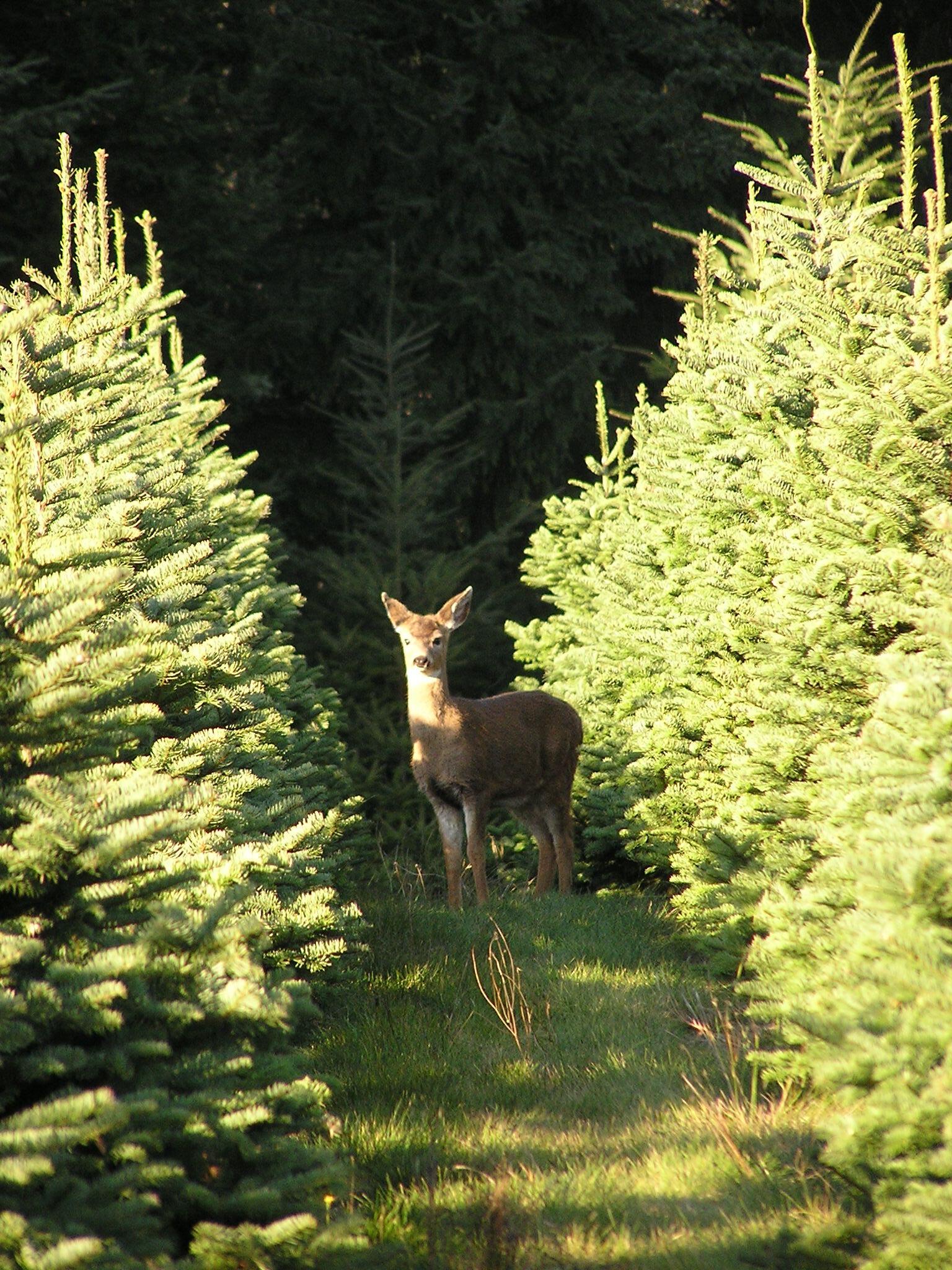
If your weed control strategy encourages the growth of palatable vegetation (such as clover or herbs), these plants may actually attract elk or deer to the field. In most cases, tree foliage is not a preferred food source, but if there is little else to eat, then foliage may be “on the menu.” Control typically involves fencing, enclosures or repellents.
Perching raptors and other birds may damage newly elongating leaders, especially on taller trees that provide the best vantage points. Weed control levels may influence food sources or habitat for prey. For example, weedy fields provide mice and voles cover from owls and hawks. Similarly, ground-nesting birds are attracted to the weedy cover. A wide number of early and late-flowering plants and weeds provide food sources for beneficial insects. Bunching grasses provide habitat for predaceous ground beetles that consume weed seeds and insects.
In most situations, growers accept a certain amount of damage from wildlife in the area. Some farms also have ponds, streams or field edges that encourage some species to move into the field.

© 2017 Published and distributed in furtherance of the Acts of Congress of May 8 and June 30, 1914, by the Oregon State University Extension Service, Washington State University Extension, University of Idaho Extension and the U.S. Department of Agriculture cooperating. The three participating Extension services offer educational programs, activities and materials without discrimination on the basis of race, color, national origin, religion, sex, gender identity (including gender expression), sexual orientation, disability, age, marital status, familial/ parental status, income derived from a public assistance program, political beliefs, genetic information, veteran’s status, reprisal or retaliation for prior civil rights activity. (Not all prohibited bases apply to all programs.)
