
Why thin?
Thinning is one of the most powerful forest management tools available to landowners for achieving a wide range of goals and objectives. Thinning influences:
- Trees’ growth rates and potential economic value.
- Which species of trees and other plants will be in the stand.
- Trees’ resistance to insects and disease.
- Quality of wildlife habitat.
- Forage production.
- The stand’s aesthetic appearance.
Another, very important effect is that thinning increases a forest’s ability to survive wildfire.
Thinning is:
- Removing trees that, if left in the stand, could increase fire risk and could lessen stand vigor (for example, through overcrowding).
- Retaining and managing trees that will best meet your long-term goals and objectives.
Aggressive fire suppression over the last 100 years means many forests are much more dense than they were before European settlement. As a result, in Oregon today more than 70% of forests are at dangerously high risk of severe wildfire. It’s not a question of whether a fire will occur but when and how severe it will be.
Ladder fuels
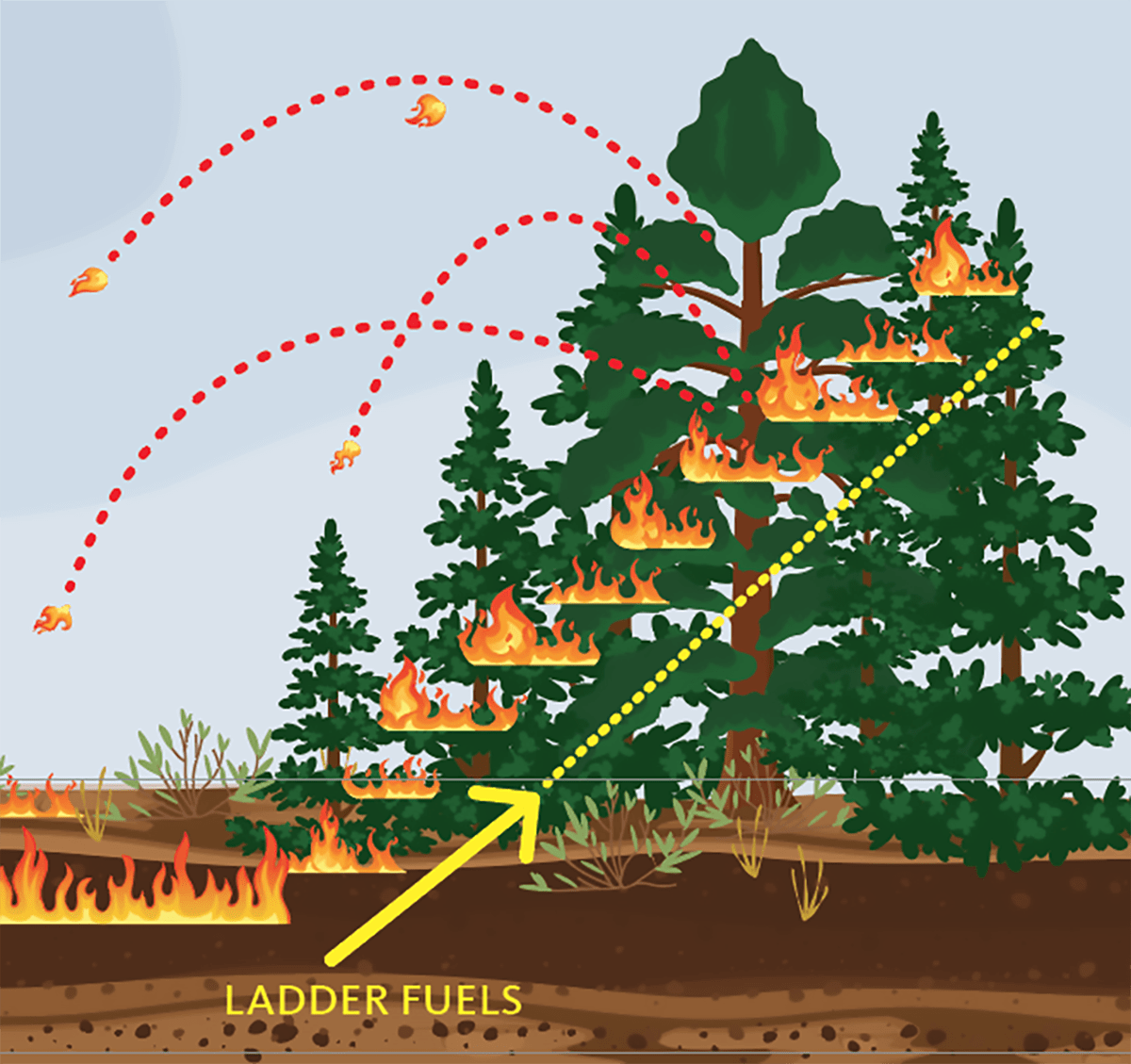
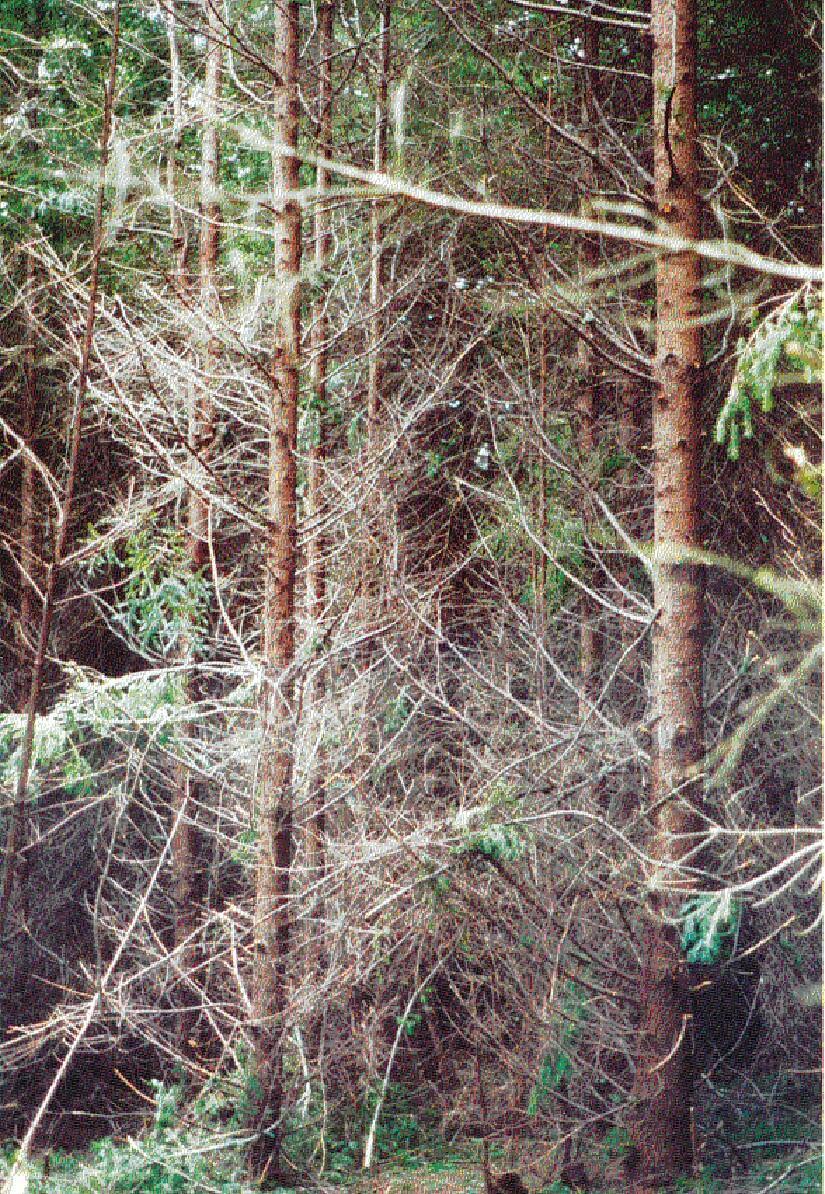
In many unthinned forests, branches on smaller trees extend to the ground and can ignite easily. Then, the small trees act as “ladder” fuels, carrying fire up into the crowns of big trees (Figure 1). This way, a low-intensity fire on the ground can develop quickly into an uncontrollable wildfire.
Low thinning
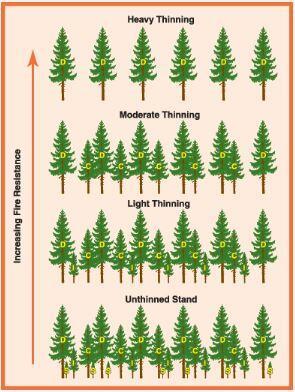
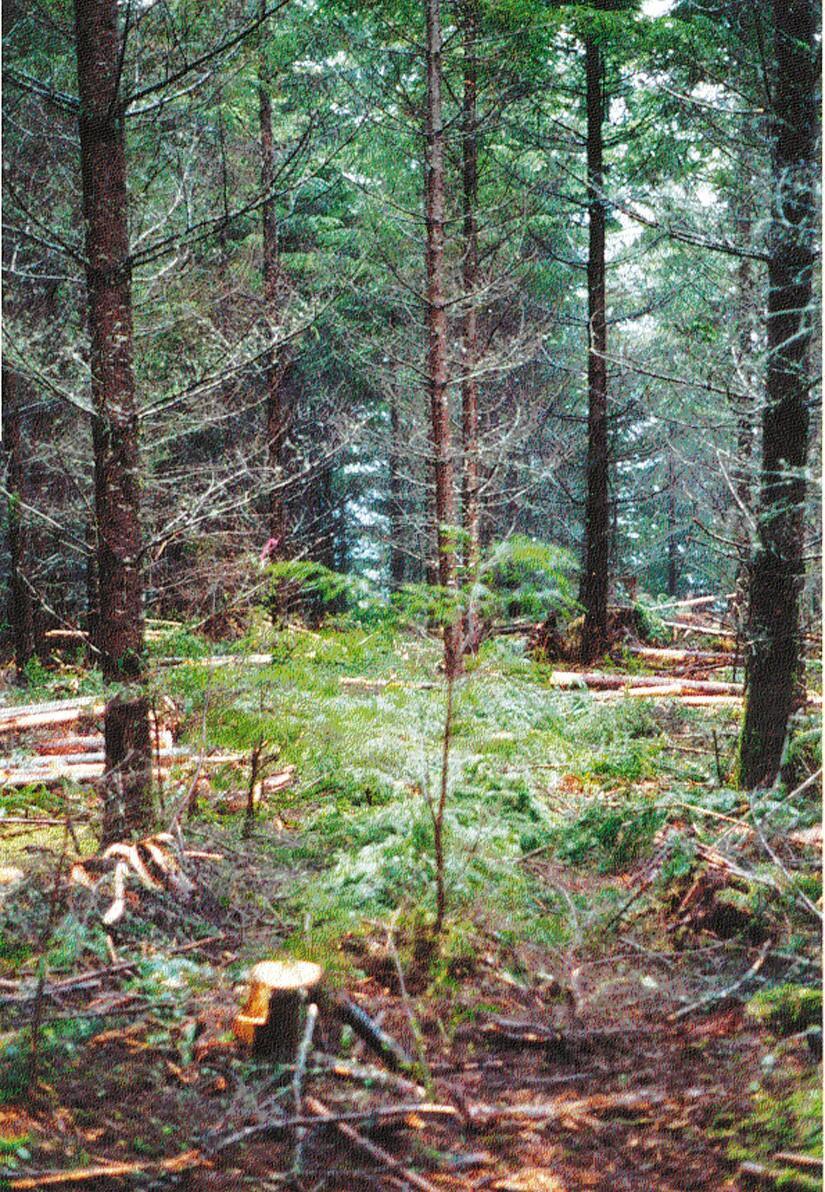
Also called “thinning from below,” low thinning leaves mostly the larger, dominant trees — which are usually the healthiest and most vigorous (Figure 2). Smaller, less vigorous trees and those with poor form are removed. Low thinning, combined with treating fuels on the ground, can greatly reduce fire hazard.
How does thinning affect fire behavior?
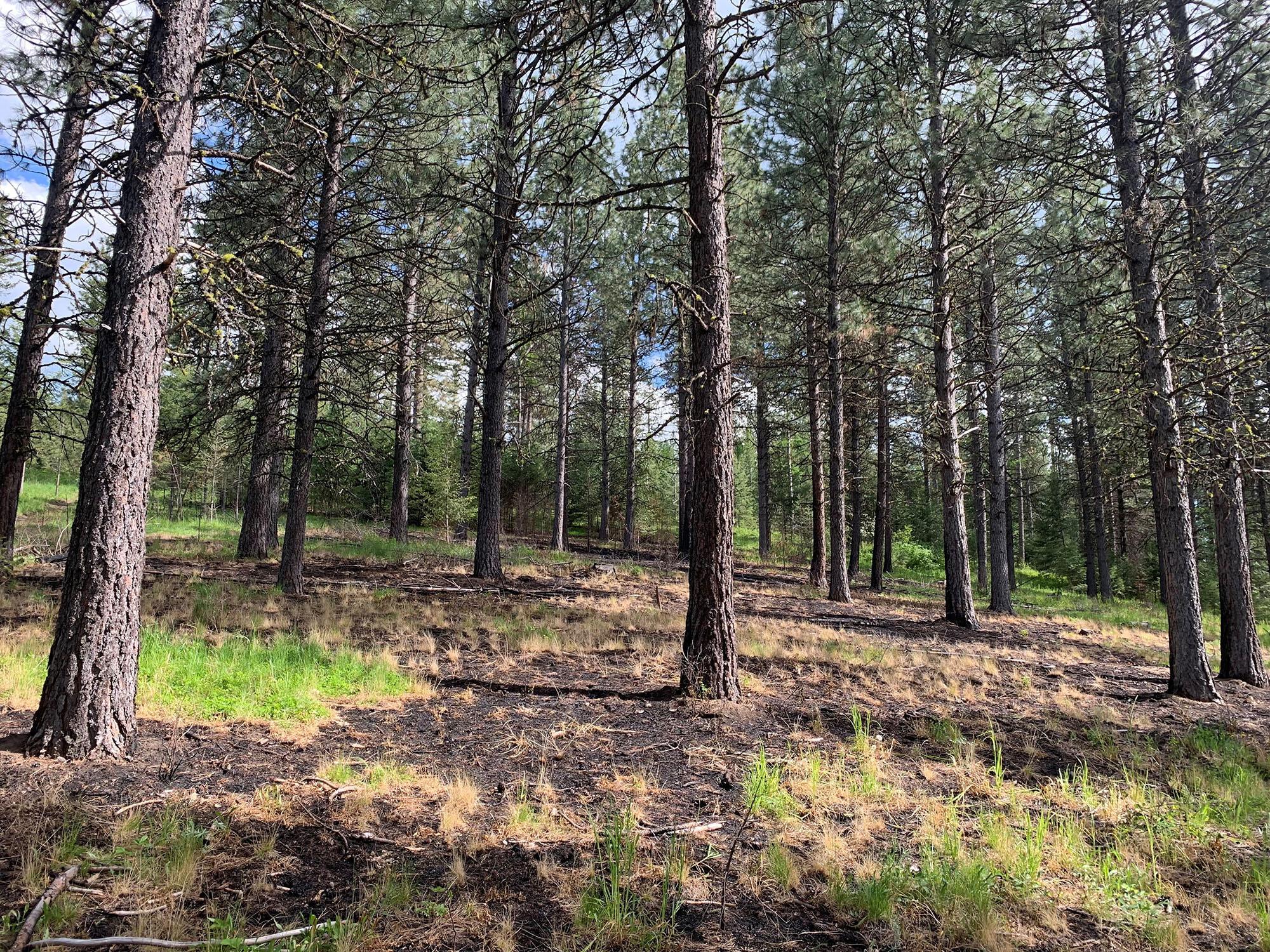
Low thinning (Figures 3 and 4) increases a forest’s ability to survive wildfire in three ways.
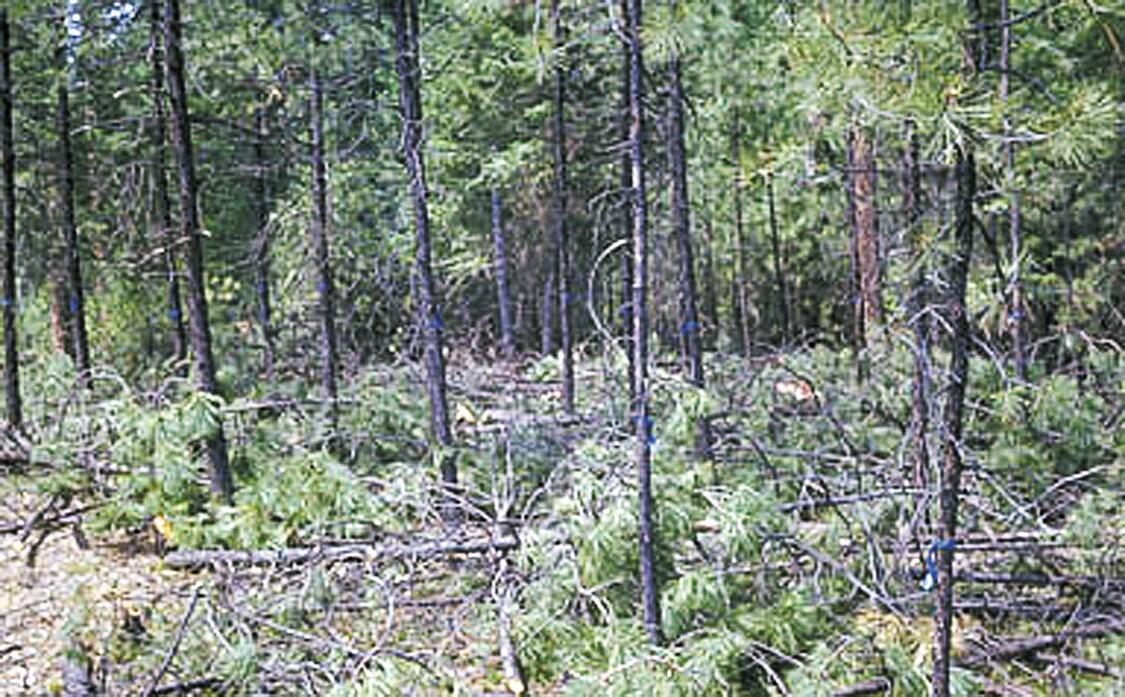
First, it leaves larger trees, whose thick bark and high branches protect them from fires that begin on the forest floor.
Second, it removes small trees and other ladder fuels in the understory, increasing the distance between the ground and living branches. This makes it harder for a surface fire to move up into the tree canopy and become a crown fire.
Third, it increases the distance between tree crowns in the overstory, to make tree-to-tree crown fires less likely.
Thinning can increase the amount of fuels on the ground (small branches and the like, called slash), which can substantially increase fire risk unless treated (Figure 5). In fact, after a thinning, Oregon’s forest protection laws may require you to reduce the slash. See Reducing hazardous fuels on woodland property: disposing of woody material (EC 1574-E) for more information on dealing with this issue.
How is thinning done?
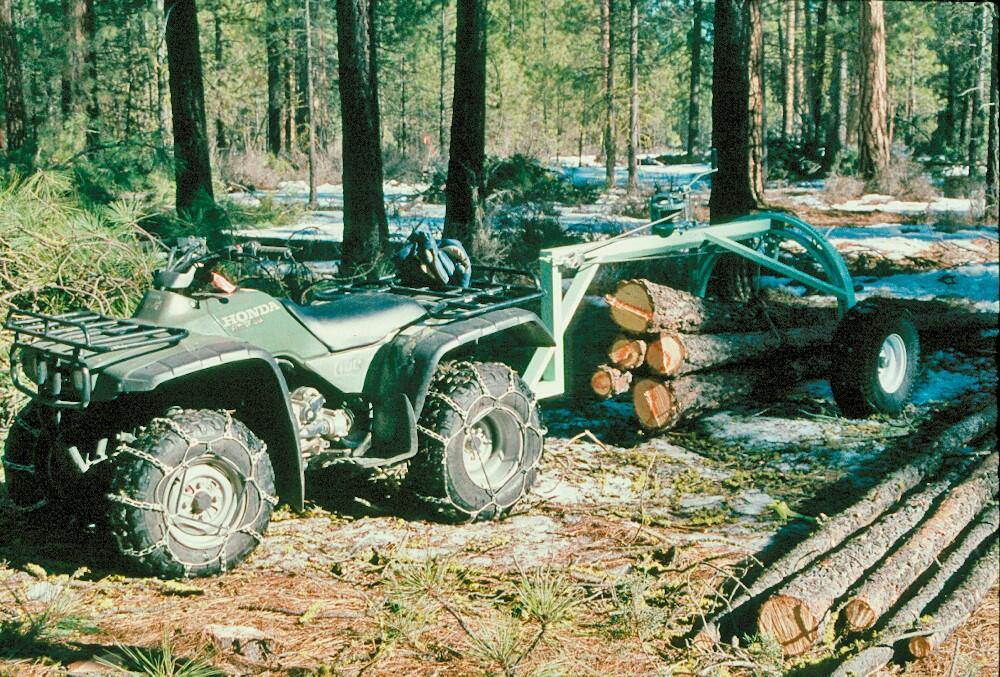
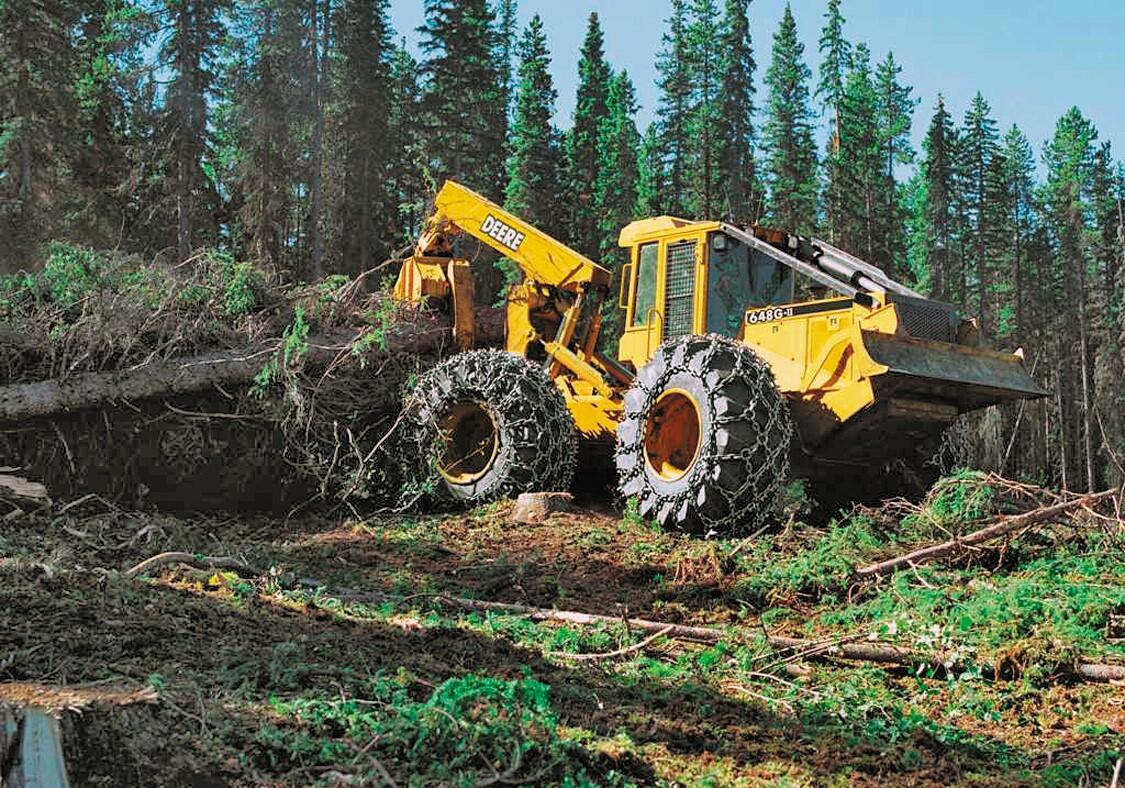
A wide variety of equipment is used in thinning. Crews equipped with chainsaws are highly versatile and can handle thick or sparse stands and flat or steep ground in all kinds of weather. Caterpillar tractors, skidders, farm tractors and even horses and all-terrain vehicles are used to skid timber and small trees that have been felled with a chainsaw.
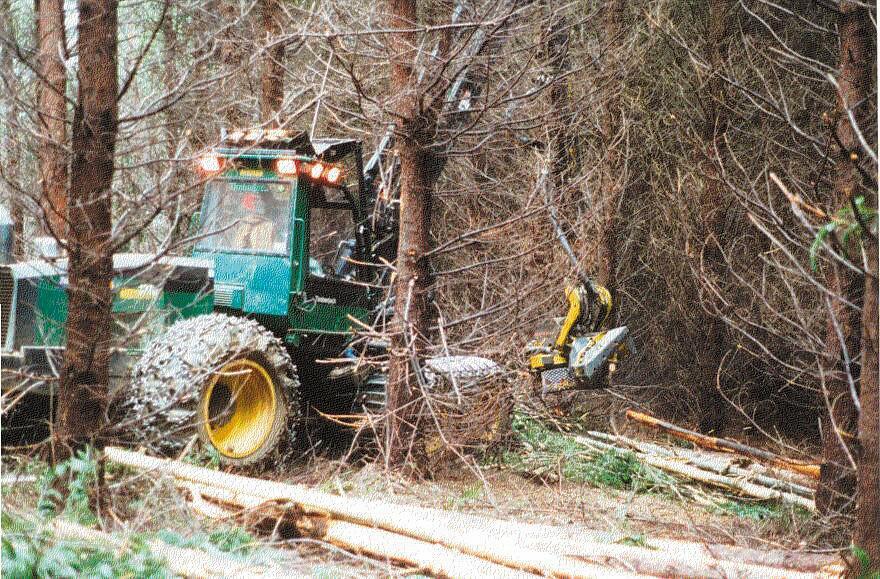
Mechanical harvesting machines that fell trees, remove limbs and cut the stems into specified merchantable lengths sometimes are used instead of a worker with a chainsaw (Figure 6). In some mechanical operations, whole trees are skidded to central work areas, called landings, and limbed and bucked (cut into specific lengths). This helps remove much of the slash from the forest and creates a clean appearance. In other cases, trees are limbed and bucked in the woods. That leaves more nutrients on the site but also more slash and thus increases fire hazard.
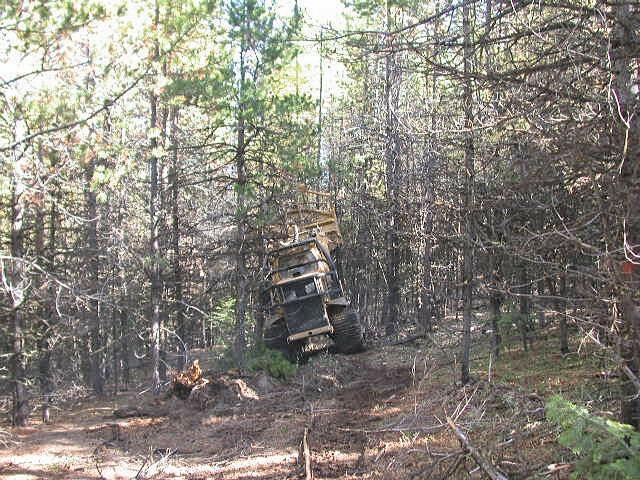
New types of small-scale, “light touch” harvesting equipment have been developed that work well on small tracts and with small-diameter trees (Figures 7 and 8). Stand conditions, topography and landowner objectives help determine which equipment combination will work best.
Some thinning operations can break even or generate a profit if sawlogs are harvested (Figure 9). In most thinnings to reduce fire hazard, however, costs generally exceed revenues.
Costs vary considerably depending on the difficulty, acreage and amount of material to be removed. Some costs can be offset through cost-share programs and by using some of the thinned material. See Reducing hazardous fuels on woodland property: disposing of woody material (EC 1574-E) for more information.
Conclusion
There are many good reasons to thin stands of trees, and landowners have tremendous flexibility in how they thin to meet their specific goals and objectives. But remember, when wildfire is a high risk to your property, it’s likely not a question of whether to thin, only how best to thin. For more information about thinning, including specific guidelines appropriate to your area, contact your OSU Extension forester and Oregon Department of Forestry stewardship forester.
|
Consideration |
Details |
|---|---|
|
Suitable stand types |
Conifer forests |
|
Equipment options |
Precommercial-size timber: Chainsaw, all-terrain vehicle, all-surface vehicle, Slashbuster, and related equipment. Commercial-size timber: All-surface vehicle, horse, tractor, skidder, mechanical harvester, cable yarder. |
|
Cost range |
Precommercial thinning with slash disposal: $100–$800 per acre. Harvesting costs for commercial-size trees: $100–$250 per thousand board feet, and much higher with additional slash-treatment work. |
|
Other treatment required? |
Pile and burn slash; prune. |
|
Site disturbance |
Minimal to extensive, depending on operator skill, season and equipment used. |
|
Use near home? |
Yes, but caution needed. |
|
Use in riparian zones? |
Within limits specified in the Oregon Forest Practices Act. |
|
Topography limit |
Varies with equipment choices. Some machines can work on very steep sites. |
|
Production potential (timber volume removed or acres treated per day) |
Variable; depends on tree stem size, stand density, site topography and equipment choices. |
|
Insects and diseases |
Thinning activities can stimulate problems with some destructive insects and diseases. Check with local Oregon Department of Forestry stewardship forester or OSU Extension forester on potential risks in your area. |
|
Stand maintenance |
Thin again if stand becomes overcrowded. Precommercial thinning may be required if, after thinning, dense regeneration becomes established. |
Related publications

