Many fifth grade students in Marion County have limited access to consistent, hands-on outdoor science learning that connects classroom concepts to local ecosystems. Schools often face constraints related to time, transportation, funding and access to outdoor education sites and specialized instructors.
By combining statewide Outdoor School funding, district coordination and local 4-H program support, OSU Extension and partners helped sustain high-quality outdoor education for fifth graders from participating schools, including those serving low-income communities.
As a result, students may miss experiential learning that builds environmental literacy, sparks curiosity in science and supports stewardship of natural resources in their own communities.
In recent years, statewide outdoor school funding has tightened, increasing the need for sites that reduce transportation and facility costs while maintaining high-quality instruction. These constraints created pressure to identify more accessible outdoor school experiences for all students.
Last fall, fifth graders from several Marion County schools took part in an outdoor school experience delivered through a partnership that included Oregon State University Extension Service 4-H, Salem Environmental Education and P.A.W.S. (Plants, Animals, Water and Soil), along with other community partners.
4-H faculty member Kelly Noack and 4-H educator Alix Brant co-led the four-day program in Marion County, delivering place-based science instruction through a broad partnership network.
The experience was funded through the OSU Extension Outdoor School Program, which distributes state funding to schools and districts across Oregon.
Collaborators included Salem Environmental Education, The Oregon Garden, the Oregon Forest Resources Institute, the cities of Keizer and Salem, the Marion Soil and Water Conservation District and the Audubon Society. Together, they formed the Salem-Keizer Outdoor School Coalition to deliver P.A.W.S. program
Volunteer educators — including entomologists, Master Gardener volunteers in Marion County and retired teachers — contributed to instruction and student engagement.
New site expands access
The Salem-Keizer Outdoor School Coalition typically serves about 440 students across fall and spring sessions. Each session brings fifth graders from selected low-income schools to multiple learning sites to participate in hands-on outdoor education.
In 2025, OSU Extension staff and volunteers helped the coalition pivot to a new site and new lessons by leading a four-day program at Ankeny National Wildlife Refuge in partnership with local and federal partners, including the U.S. Fish and Wildlife Service.
The Ankeny site allowed the coalition and participating schools to operate on a smaller budget, improve access and strengthen partnerships. Lessons included entomology and bug exploration, beneficial bats and fungi and food webs.
Participating schools included Eagle Charter School and Englewood, Mary Eyre and Morningside elementary schools in Salem, Forest Ridge and Kennedy elementary schools in Keizer, and Edge Online.
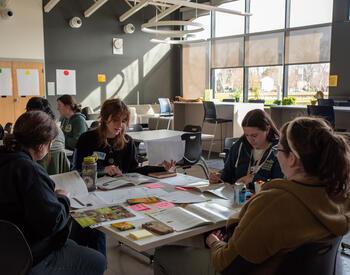
As part of the P.A.W.S. partnership, 4-H in Marion County led the four-day outdoor school program in both the fall and the spring at Ankeny National Wildlife Refuge using curriculum organized around plants, animals, water and soil themes. Students investigated insect anatomy, explored bats’ ecology and anatomy, and examined decomposers’ roles in food webs through hands-on observation and inquiry.
The new site also expanded accessibility. Ankeny National Wildlife Refuge offers improved ADA access, bus and parent vehicle parking, ADA restrooms and individual restrooms for youths and staff. The site also offers bilingual services and interpretation, aligning the program with inclusion goals and reducing barriers for multilingual families.
Public value
Outdoor school builds science literacy and stewardship by helping students learn through direct experience in local ecosystems.
OSU Extension supports this work in distinct ways. The statewide Outdoor School Program serves as the funding agent, distributing state resources to schools and districts across Oregon. At the local level, the 4-H program helps deliver research-based lessons, trained educators and hands-on learning as part of community partnerships.
By combining statewide Outdoor School funding, district coordination and local 4-H program support, OSU Extension and partners helped sustain high-quality outdoor education for fifth graders from participating schools, including those serving low-income communities.
Strengthening partnerships with local and federal agencies and improving access at the learning site supports long-term program viability and helps ensure more students can participate in meaningful outdoor learning experiences.