Many Oregonians have limited access to practical, science-based forest education. That can reduce public understanding of forest ecology and management and weaken confidence in stewardship and natural resource decision-making.
By combining direct instruction, accessible site design, free programming, digital tools and strategic partnership, OSU Extension reached thousands of students and community members.
In Clackamas County, many youths also have limited direct experience in forests. Without those opportunities, young people may feel less comfortable outdoors, know less about ecological systems and have fewer pathways into natural resource learning and careers.
Physical access barriers create additional challenges. Youths with mobility or accessibility needs are often excluded from outdoor education when sites are not designed for full participation.
These gaps created a need for efficient, inclusive and place-based education that could reach more youths, families and adult learners without overextending public resources.
In response, Peter Matzka, forestry outreach coordinator in the Oregon State University Extension Service Forestry and Natural Resources Program, expanded community forestry education at Hopkins Demonstration Forest through direct teaching, digital interpretation and partnership development.
Hopkins Demonstration Forest, a 140-acre working forest about 20 miles south of Portland, is privately owned by the nonprofit Forests Forever Inc. and serves as an outdoor classroom for K-12 school groups, homeschool groups, private educational programs and community learners.
Matzka’s programs offered practical, place-based learning for school groups, homeschool groups, 4-H youths, families and adult community members. Workshops and field experiences focused on forest ecology, seasonal change, wildlife habitat and sustainable use of forest resources.
Matzka also led development of science-based content for the Hopkins trail app, a free self-guided interpretive tool that gives visitors year-round access to forestry education outside scheduled programs.
To improve equitable access, Matzka used ADA-accessible improvements around the pond and Molalla Log House at Hopkins to pilot youth programs for participants with mobility and accessibility needs. Those adaptations allowed meaningful forest-based learning in spaces designed for fuller participation.
He also launched a pilot 4-H program on bigleaf maple sugaring, using a locally relevant forest product to teach youths about tree biology, forest ecology, food systems and stewardship.
Students learn in forests
An average of 5,000 students take part in educational programs at Hopkins each year. Programs are offered free of charge, expanding access for schools and groups that might otherwise face cost barriers to outdoor learning.
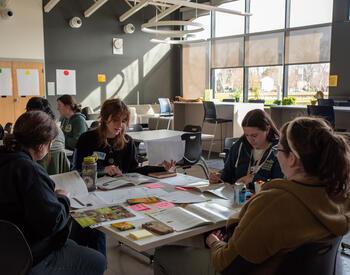
Under the guidance of OSU Extension educators and trained volunteers, students are encouraged to ask questions, investigate what they observe and apply ideas in real settings. This hands-on approach helps build curiosity, critical thinking and problem-solving skills.
Elementary-age students take part in sensory activities such as scavenger hunts and leaf rubbings to observe plants, animals and ecosystems.
Middle-school students explore topics such as food webs, energy flow and water through field studies, data collection and hands-on experiments.
High school students examine forest management, biodiversity and ecological balance through fieldwork, research projects and service-learning activities such as trail maintenance or habitat restoration.
Many students visiting Hopkins are entering a forest for the first time. Teachers and adult leaders often report that the outdoor setting helps some students thrive in ways they do not in a traditional classroom.
Repeat visits from school groups also show sustained demand and educational value. Teachers use Hopkins experiences as reference points that help connect classroom lessons to real-world examples.
Partnership expands capacity
As demand grew, Matzka worked with Forests Forever Inc. to strengthen a partnership model that expanded programming while allowing Extension to stay focused on its core instructional and leadership role.
Under this approach, OSU Extension continued leading youth education, curriculum development and educational oversight, while Forests Forever invested in added staffing and complementary program delivery.
That partnership increased the number and range of educational offerings at Hopkins, including youth programs, community education, homeschool programming and self-guided learning opportunities.
Results broaden access
Participants reported stronger understanding of local forest ecosystems and more confidence discussing forest conditions, stewardship practices and management-related changes.
Youth participants showed greater comfort in forest environments and stronger ability to observe and interpret ecological relationships through direct experience. Many also built confidence exploring outdoors and connecting classroom concepts to natural systems.
The Hopkins trail app expanded the reach of Extension education by providing free learning opportunities for visitors exploring the forest on their own schedule.
ADA-accessible site improvements and adapted programming opened forest learning to more youths who may otherwise have been excluded from outdoor education.
The partnership with Forests Forever increased overall program capacity and broadened access for youths, families, homeschool groups and adult learners, reinforcing Hopkins Demonstration Forest as a regional hub for public forestry education.
Public value
This work made efficient use of public and partner resources to expand access to practical forest education in Clackamas County.
By combining direct instruction, accessible site design, free programming, digital tools and strategic partnership, OSU Extension reached thousands of students and community members.
The result is stronger public understanding of Oregon’s forests, better support for stewardship and more equitable access to outdoor and natural resource education.