Across the United States, the number of women in agriculture continues to grow. According to the 2022 Census of Agriculture, 1.2 million women now make up 36.3% of all U.S. farm producers. In Oregon, that number is even higher: 44% of the state’s 68,564 producers are women, giving Oregon one of the highest rates of female producers in the nation.
These networks provide a supportive space for women and nonbinary farmers to share knowledge, learn hands-on skills and build relationships with others navigating similar paths.
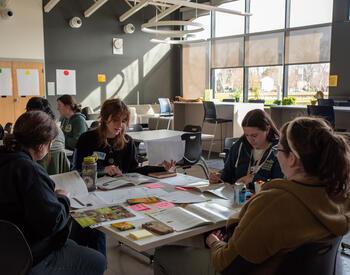
Despite these gains, many women still face challenges working in a male-dominated industry. To address this need, Oregon State University Extension Service and local farmers launched Oregon’s first Women Farmer Network in 2007. These networks provide a supportive space for women and nonbinary farmers to share knowledge, learn hands-on skills and build relationships with others navigating similar paths.
The League of Women Farmers in Southern Oregon was the first to form, offering business networking, education and social connection. The group continues to host seed swaps, pruning workshops and welding classes — always with a potluck.
In the mid- to southern Willamette Valley, the Willamette Women’s Farm Network (WWFN) was established in 2008. It now includes more than 225 members managing farms from 1 to 100 acres. Members connect through a listserv, farm tours, meetings, classes and a private directory. A 2021 evaluation of the network revealed that WWFN offers unique value that members can’t find elsewhere. Participants described the network as a vital support system — increasing their confidence, optimism and business success.
Key findings include:
- 80% reported increased knowledge of farming resources
- 83% gained more opportunities to connect with other farmers
- 66% reached out to fellow members for help or advice
- 65% reported increased trust in OSU Extension
Members ranked the email listserv as their most used and valued tool, followed by in-person events and the Facebook group. They appreciated the ability to ask questions, share setbacks and learn from others’ experiences.
Survey participants also reported concrete benefits: eight secured farming jobs, 10 launched new businesses and eight started agricultural careers because of the network’s influence.
“It’s good to know it’s OK to fail and it’s OK not to be within five years of having this wonderful, perfect farm,” one member said. “It’s valuable to have others in farming who are really doing it.”
In the northern Willamette Valley and Portland metro area, Waggies — Women and Nonbinary Folks in Agriculture — serves as a space for networking, learning and seasonal farm tours hosted by members.
Together, these Women Farmer Networks create spaces where knowledge is shared, confidence grows and women and nonbinary farmers thrive.