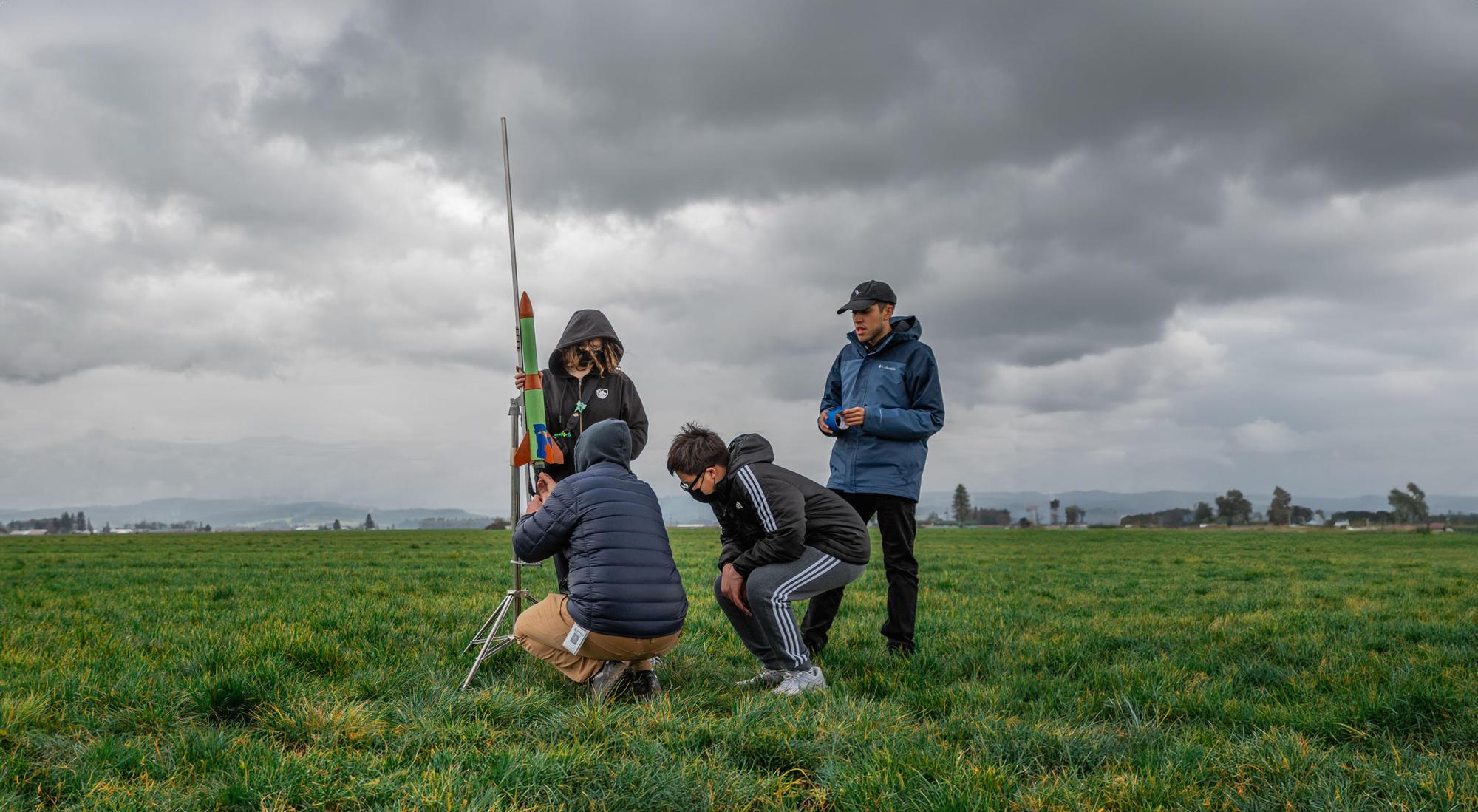
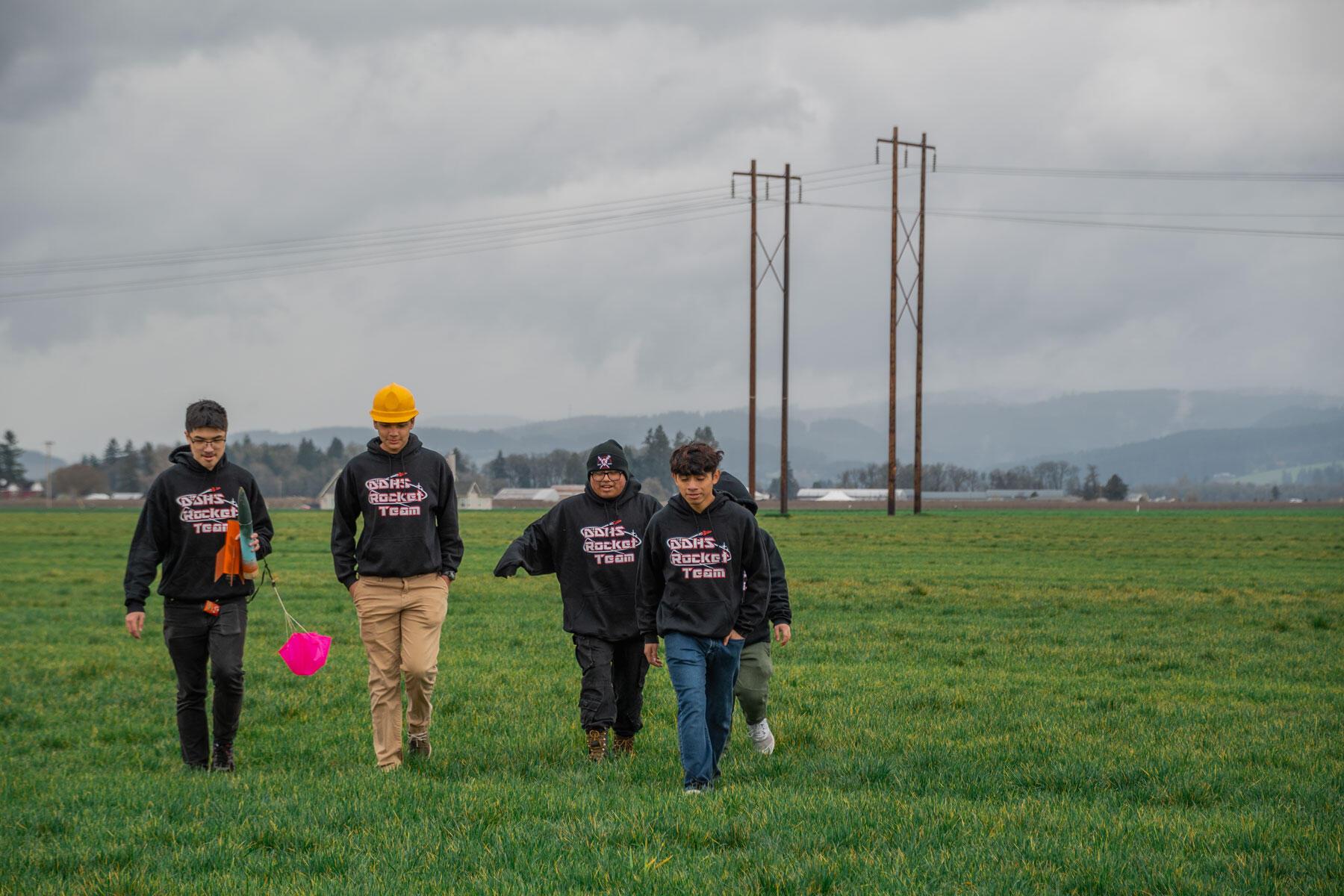
HILLSBORO, Ore. — On a windy Saturday in March, 12 students from Portland’s David Douglas High School Rocket Club tramped into the center of a crabgrass field, hauling the supplies needed to set up a miniature Cape Canaveral.
They were among several Portland-area teams competing in the American Rocketry Challenge, a national contest involving 5,000 aspiring engineers. The top 100 teams with the most precise flights advance to the national finals in Washington, D.C.
This marks the 10th year that Oregon State University Extension Service’s Portland metro area 4-H Program has played a key role in the David Douglas Rocket Club — one of the few 4-H-affiliated rocket clubs in Oregon.
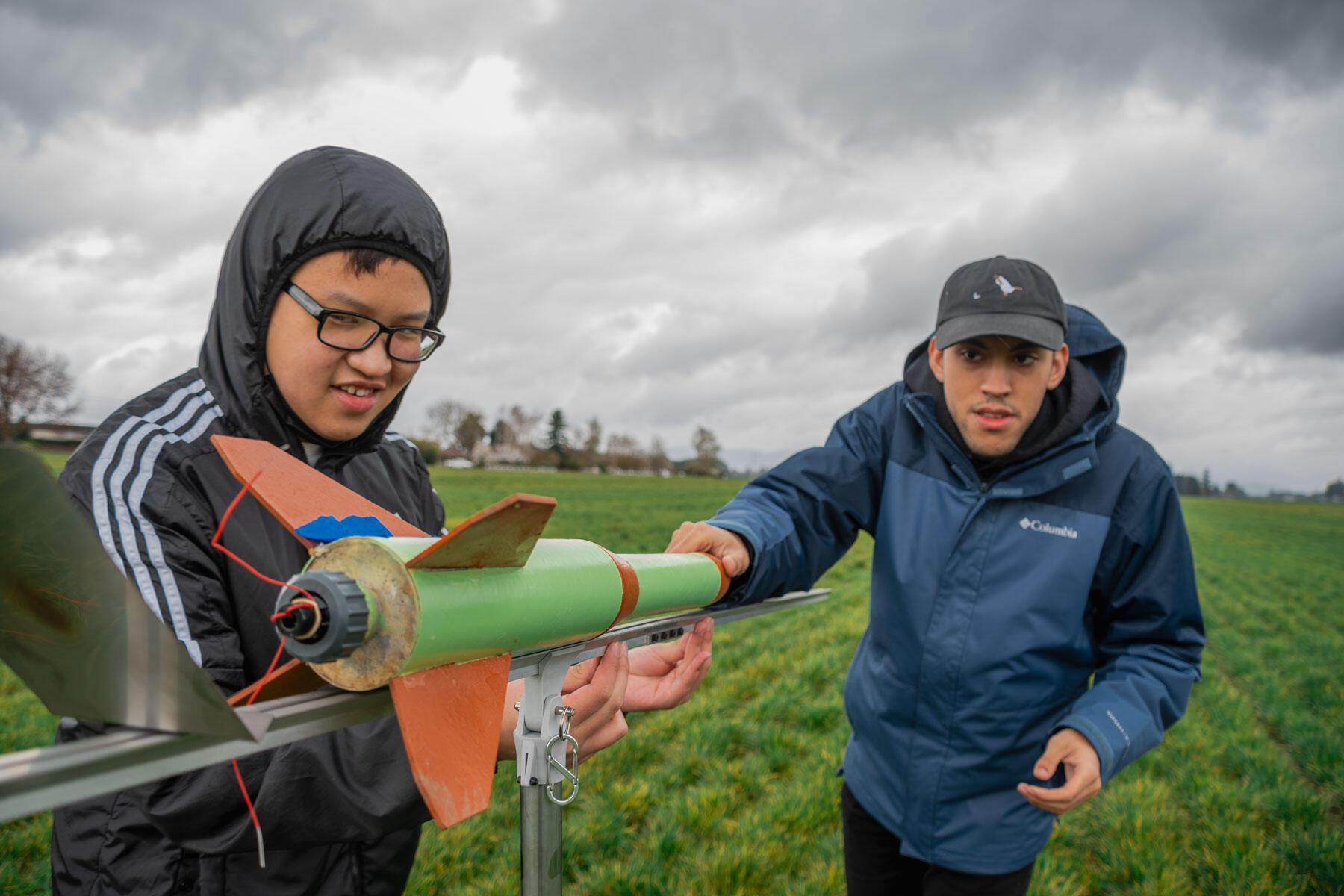
After each team loaded its rocket and connected the ignition key, the electronic beep sounded.
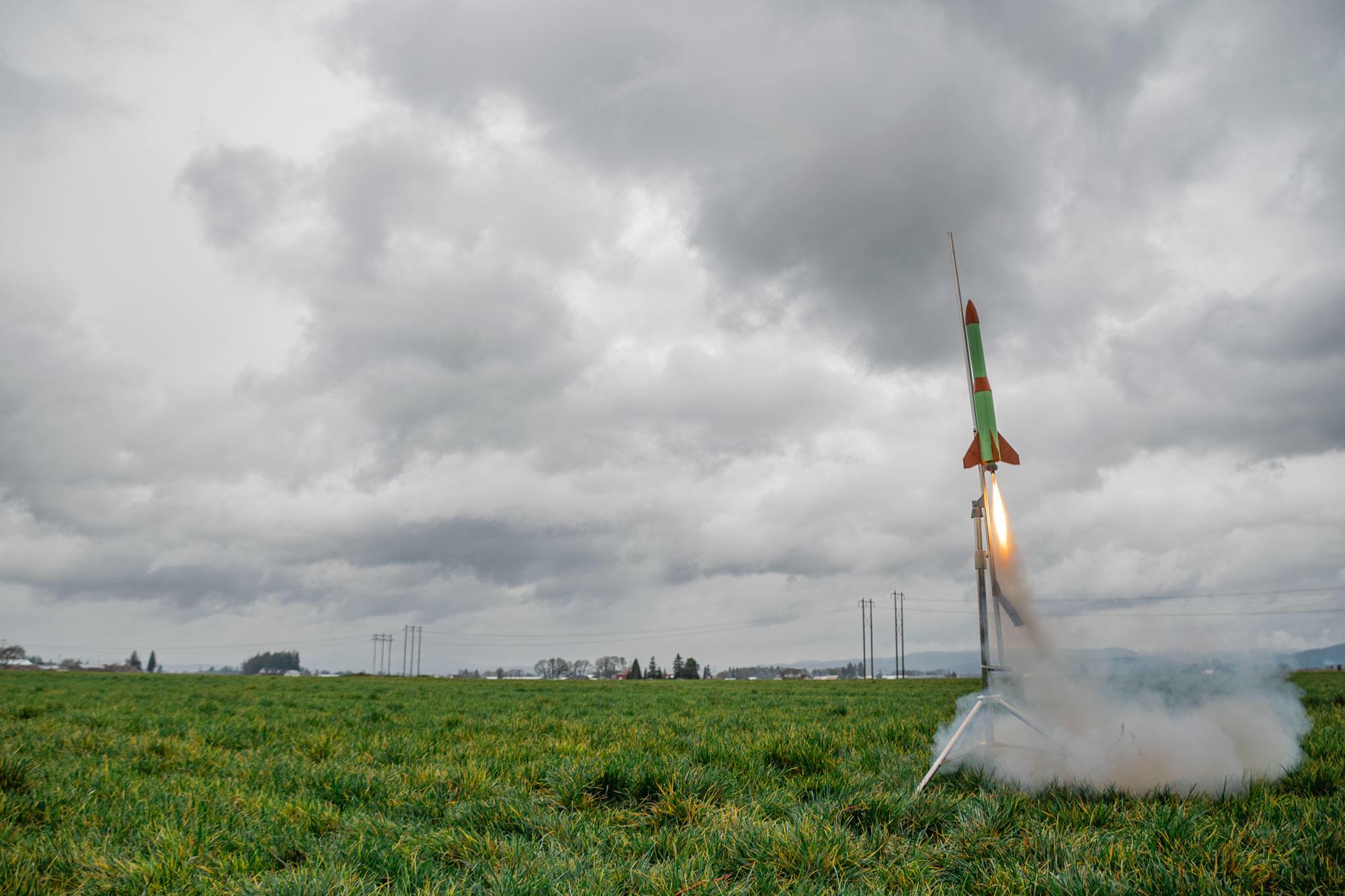
Five. Four. Three. Two. One.
The rocket lifted in a clean arc into the sky as teammates timed the ascent and descent, following its path until brightly colored parachutes drifted back to the ground.
“What they're learning here is hands-on science,” said OSU Extension 4-H advisor Tanya Kindrachuk, who moved among teams offering encouragement.
The David Douglas club has reached the national finals before, most recently in 2018. Several students wore black sweatshirts printed with the club motto: “Actually, it IS rocket science.”
Designing for precision
The club convenes every October, said Sebastian Petreus, a career and technical education teacher at David Douglas High School. During weekly Tuesday sessions, students split into teams of three or more — freshmen through seniors — and design rockets using both handmade and commercial parts.
Specifications for the challenge change annually. Before the 2023–24 school year, the National Association of Rocketry released new targets for altitude and total flight time.
“The goal this year is 825 feet, and they have an altimeter inside to measure that,” said George Rachor, the official NAR observer for Portland-area teams. “Then it has to go up and down in about 44 seconds.”
Another requirement: Each rocket must carry a raw chicken egg, wrapped in padding. After landing, the egg must remain intact.
Using simulations to guide engineering choices
To design a rocket capable of meeting those criteria, students used OpenRocket Simulator, a free, open-source modeling program.
“The skills can transfer into other design platforms,” Petreus said. “They have to design their model and run simulations. We’re not always as accurate as we want to be, but the simulations do come close.”
Kindrachuk leads 4-H clubs and STEM programs at David Douglas and Alliance High School at Meek. She also writes grants to cover fees, equipment and the costly single-use motors — ensuring students never pay to participate.
She organizes field trips to help students explore science and engineering careers. But during design and construction, neither she nor Petreus can assist; rules require that youths complete all work themselves.
Field tests began in January, with students driving from southeast Portland to Hillsboro to see how their models handled real-world Western Oregon weather.
“The launches are where the students get the most excited and energized,” Kindrachuk said. “They return energized to make changes.”
Science, teamwork and a sense of belonging
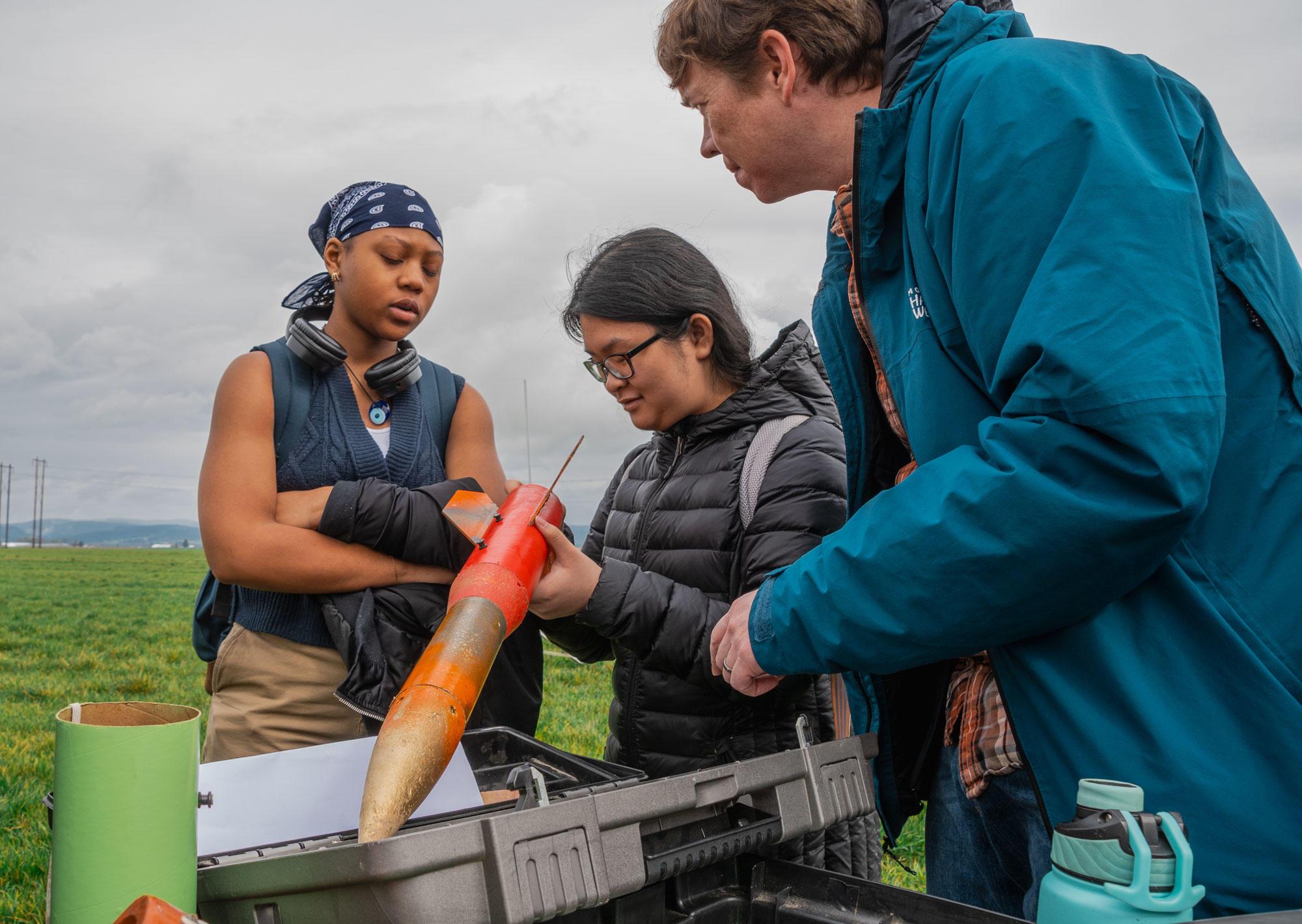
Before a qualifying run, freshmen Nevaeh Alleyne and Yashir Interian Uc waited for glue to dry on a loose rocket fin. OpenRocket helped them refine their design, and on site they adjusted variables such as launcher angle, ballast weight and motor strength.
This was the team’s third trip to Hillsboro.
“We've had a great experience so far,” Alleyne said. “We’ve gotten to meet new people. We get to go on these field trips. It’s really a fun club.”
Their teammate and unofficial captain, senior Nikki Truong, has participated for three of her four high school years.
“It's a great experience to collaborate with people,” Truong said.
Petreus added, “A lot of times, the students start in freshman year, and Rocket Club becomes their thing in high school.”
For some, it shapes their future. Alleyne and Interian Uc are considering engineering careers. Truong is headed to the Massachusetts Institute of Technology this fall to study mathematics and applied engineering.
Helping students fly
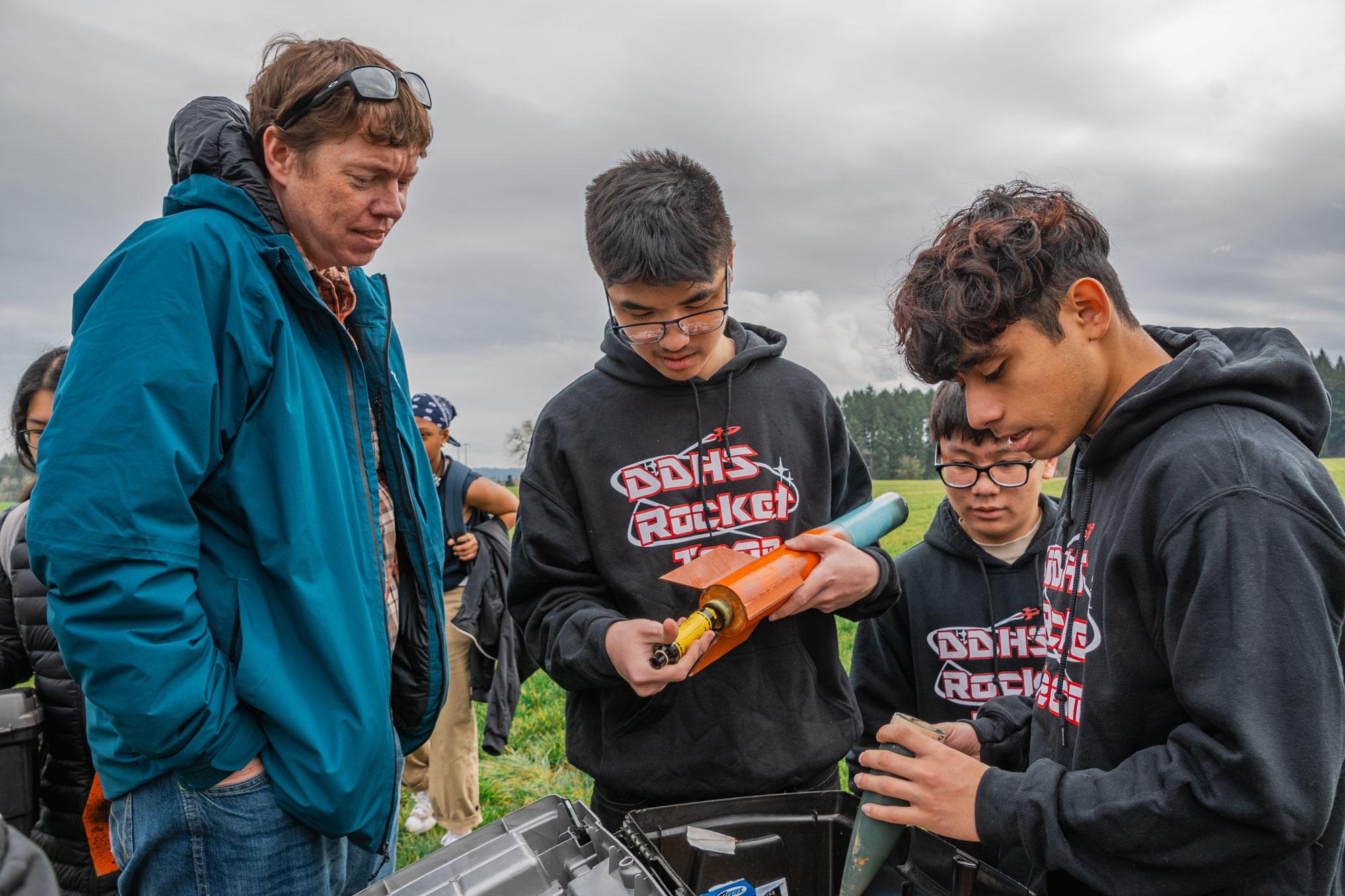
Before each flight, teams weighed their rockets and presented the fragile “payload” to Rachor. After landing, they removed the altimeter to record the peak altitude and showed the egg again to confirm it survived.
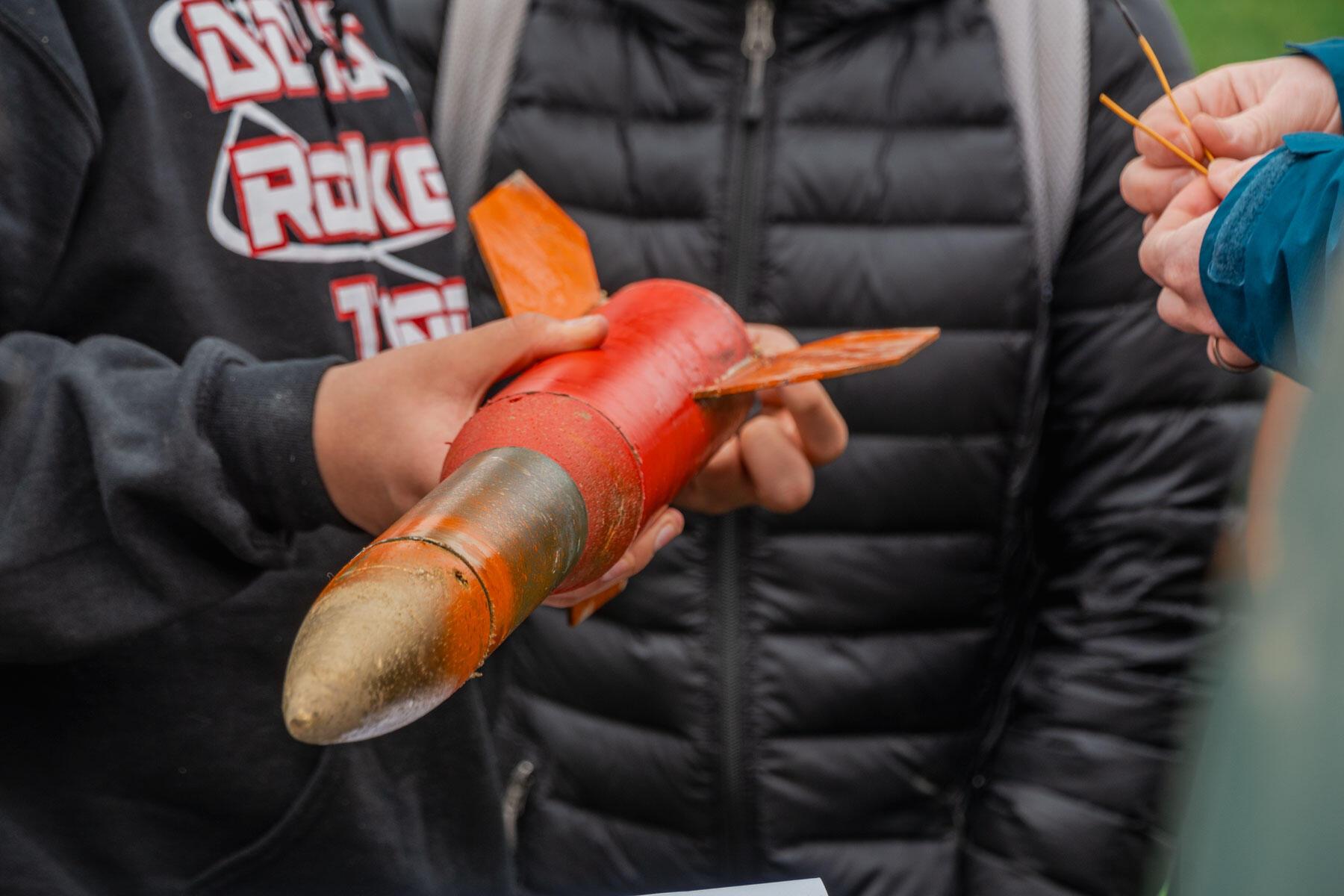
Cardboard-and-balsa rockets face tough conditions, especially in Oregon’s rainy spring skies. After each flight, teams clustered around their models, debating improvements, applying glue and reinforcing parts.
Whether the David Douglas 4-H teams qualify for nationals or not, they did achieve one impressive result: not a single egg broke.
Previously titled Extension 4-H partners with Portland high school to offer scientific experimentation through Rocket Club