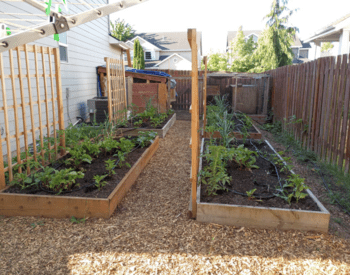
CORVALLIS, Ore. — Fertilizers play an important role in growing vegetables and small fruits, but the wide range of choices can make it hard to know which is best for your garden.
Organic fertilizers, such as manures, compost or bone meal, are derived directly from plant or animal sources, said Chip Bubl, retired horticulturist with the Oregon State University Extension Service. Other organic fertilizers include finely ground rock minerals like limestone and rock phosphate.
Conventional (or synthetic) fertilizers, such as ammonium sulfate or ammonium phosphate, are manufactured products. However, they are made using naturally occurring mineral deposits or nitrogen from the atmosphere.
Nutrient differences
Conventional fertilizers usually contain just a few nutrients — primarily nitrogen (N), phosphorus (P), potassium (K), sulfur and sometimes micronutrients. These nutrients are in forms more readily available to plants. For example, nitrate is quickly absorbed by roots.
“If you need only nitrogen and want it to be immediately available, a conventional fertilizer such as ammonium sulfate may be appropriate,” Bubl said.
Because nutrients from conventional fertilizers can wash away quickly, you may need to apply them more than once per growing season — unless you use a slow-release formulation.
Organic fertilizers tend to have lower nutrient concentrations but a wider range of nutrients. These nutrients often need to be converted into forms that plants can use through the activity of soil microbes. This process takes time — especially in cold soil when microbial activity is low. This is particularly important when it comes to nitrogen availability early in the season.
Benefits and cautions with organic fertilizers
Organic fertilizers offer several advantages:
- They don’t form a crust on the soil surface like some synthetic fertilizers.
- They improve water movement and gradually build soil structure.
- They support beneficial soil microbes and improve workability.
However, organic fertilizers may cost more and deliver fewer nutrients pound for pound.
Also, because conventional fertilizers are highly soluble, it’s easier to over-apply them and burn plants — especially when used in liquid form.
Fresh manure can also damage plants. It may contain excess salts, viable weed seeds or even human pathogens.
Organic standards require:
- A 120-day waiting period between applying raw manure and harvesting crops that touch the soil (e.g., lettuce, onions, beets).
- A 90-day wait for crops where the edible part does not contact the soil (e.g., corn, pole beans).
How much nitrogen do you need?
One of the most common questions gardeners ask is how much nitrogen to apply. A general rule is to use 3 pounds of actual nitrogen per 1,000 square feet of vegetable garden per year.
The first number in a fertilizer’s N-P-K ratio tells you the nitrogen content. For example, a fertilizer labeled 12-11-2 contains:
- 12% nitrogen
- 11% phosphorus
- 2% potassium
To get 3 pounds of nitrogen using this fertilizer:
3 ÷ 0.12 = 25 pounds of fertilizer per 1,000 square feet
Examples of fertilizers and their nitrogen content
- Blood meal (12.5-1.5-0.6): slow release over two to six weeks
- Feather meal (about 12% N): breaks down faster than blood meal
- Urea (42–46% N): a high-nitrogen conventional source
- 16-16-16 fertilizer: 3 ÷ 0.16 = 19 pounds per 1,000 square feet
If you add organic matter that hasn’t fully composted (such as strawy manure or fresh cover crops), microbes will use soil nitrogen to break it down — leaving less for your plants. This can result in poor color and stunted growth.
Fertilizer sources for other nutrients
Phosphorus-rich organic amendments:
- Rock phosphate (20%–33% P)
- Bone meal (15%–27% P)
- Colloidal phosphate (17%–25% P)
Potassium-rich organic materials:
- Kelp meal (4%–13% K)
- Wood ash (3%–7% K)
- Granite meal (3%–6% K)
- Greensand (5% K)
To reduce soil acidity:
Use calcium-rich amendments such as:
- Agricultural lime
- Dolomite lime
- Gypsum
- Clamshells
- Oyster shells
- Wood ashes
Where to find fertilizers and more information
Most garden centers and feed stores sell both organic and conventional fertilizers and soil amendments.
For more detailed guidance, see the OSU Extension publication Fertilizing Your Garden: Vegetables, Fruits and Ornamentals.
Previously titled Here's the scoop on chemical and organic fertilizers