CORVALLIS, Ore. — When you walk through your yard on a wet day, do your shoes stick in the mud? Could you make pottery out of your garden soil? If so, chances are you have clay soil — one of the biggest challenges for home gardeners.
Clay soils in Western Oregon date back 10,000–14,000 years, said Linda Brewer, senior faculty research assistant in Oregon State University’s College of Agricultural Sciences. At the end of the last ice age, massive floods filled what is now the Willamette Valley.
Very fine clay particles took much longer to settle out of floodwaters than larger sand and silt. As a result, clay accumulated in parts of the valley, while sand and silt settled further north. The largest clay particle is more than 1,000 times smaller than the smallest sand particle.
Why clay is both difficult and valuable
Clay soils are challenging to manage. When dry, they harden; when wet, they become sticky and heavy. But their small particle size also makes them valuable.
- Clay holds onto plant nutrients far better than sand.
- Clay stores significant amounts of water in its fine pores.
That stickiness and plasticity come at a cost: water is held so tightly that plants may struggle to access it as soil dries.
Best practices for managing clay
Organic amendments such as bark, manure, leaf mold and compost are the gardener’s best tools, Brewer said.
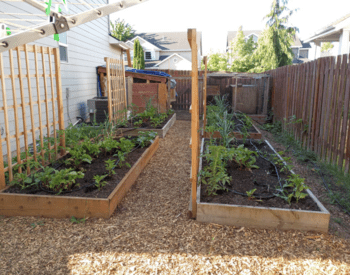
Applied to the soil surface, these materials slow evaporation and reduce soil hardening. Instead of digging them in, she recommends spreading two to three inches on top of garden beds.
“No amount of sand added to clay soil will change its texture,” Brewer said. “The large sand particles provide a surface for clay to cling to, which can create even more difficult conditions.”
She compares rototilling sand into clay to a potter’s wheel: the action aligns clay particles and strengthens them.
Feeding the soil food web
Organic matter also provides food for earthworms, fungi, insects and bacteria. As they decompose material, they release natural “glues” that clump soil particles together, improving tilth and drainage.
Because microorganisms use the same nutrients as plants, fresh organic matter may temporarily tie up nitrogen. Solutions include:
- Applying low-nitrogen materials like wood chips in fall.
- Adding small amounts in spring as decomposition speeds up.
- Supplementing with an organic fertilizer.
Manure, which is high in nitrogen, should only be applied when actively growing roots can absorb it. In high-rainfall areas, fall applications wash away before spring.
Other amendments for clay soils
- Gypsum (calcium sulfate): Calcium ions help clay particles aggregate and improve structure.
- Ammonium lauryl sulfate: A surfactant that helps water infiltrate dry clay, making aeration easier.
Still, Brewer cautioned that claims of “spray-on aerators” are exaggerated.
Building soil takes time
Healthy soil does not develop overnight. Consistent additions of organic matter are essential to change clay’s workability.
“Repeated additions of organic matter do change clay soils, but these additions must be at least annual in order to maintain the changes,” Brewer said. “And the soil will remain clay — forever.”