CORVALLIS, Ore. — Oregon State University Extension Service has long served as a bridge between the university and communities across Oregon. That bridge was originally built to support agriculture and natural resources — and that mission continues today.
As Extension has evolved to meet the needs of a broader public, new questions have emerged: Can Extension help community members pursue higher education or trade careers? How can it support infrastructure needs such as broadband access? What resources are required to ensure every Oregonian has a fair opportunity to succeed?
Those questions guide the work of Jeff Sherman-Duncan, associate vice provost for partnerships.
“How do you take all colleges and departments at Oregon State and bring them into communities to solve real problems, alongside community members?” Sherman-Duncan said. “How can we create a pipeline that reflects the full breadth of Oregon State University in our communities?”
A new model for Extension
An article published in the Journal of Higher Education Outreach and Engagement argues that Oregon State is leading the way in redefining what Extension can be. The authors present a “proof of concept” showing that the community partnership approach used by newer Extension programs — Open Campus, launched in 2009, and Juntos, launched in 2012 — could be expanded across Extension.
These programs were designed in collaboration with community members, said Emily Henry, director of OSU Open Campus.
“Communities already trust Extension and saw the value of moving beyond traditional silos like agriculture and natural resources,” Henry said. “They began imagining broader ways Extension could be part of their communities.”
Goals and shared successes
Open Campus and Juntos share three core goals:
- Increase access to higher education and career opportunities.
- Support community members in completing degrees at any level.
- Build community engagement and development.
Together, the programs work to “close the gap,” said Gina Galaviz-Yap, Juntos director.
“The gap is capacity,” Galaviz-Yap said. “Schools and teachers are overloaded. By partnering with communities, we help build that capacity.”
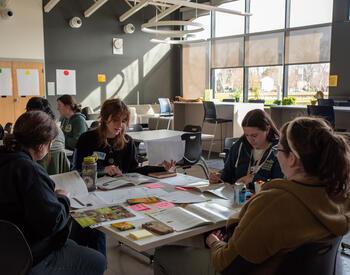
Extension coordinators across the state provide mentorship, host college information sessions, organize career fairs and tailor programming to local needs, Henry said.
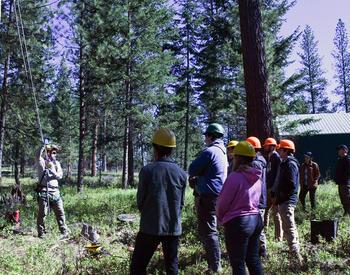
“Career days look different everywhere,” Sherman-Duncan said. “In Central Oregon, it’s health care. In Eastern Oregon, it might be aviation. On the coast, it’s natural resources. Coordinators help students see realistic pathways forward.”
Juntos — which means “together” in Spanish — is open to all but specializes in college and career readiness support for Oregon’s Latinx families. Programming includes mentorship, clubs, camps and family nights. More than 90% of students who join Juntos in middle school complete high school and enroll in college, with many attending Oregon State.
Addressing infrastructure gaps
In some communities, closing the gap requires addressing basic infrastructure. High-speed internet access remains limited in parts of rural Oregon.
In Grant County, only 61% of residents have access to high-speed internet, compared with 94% statewide. In response, Didgette McCracken, OSU Extension’s Open Campus coordinator for Grant County, co-founded the Grant County CyberMill with two community partners.
The first CyberMill sites opened in Seneca and Prairie City, with a third planned in John Day. The shared internet hubs provide residents with access needed for education, work and essential services — and community response has been overwhelmingly positive.
Looking ahead
Sherman-Duncan, Henry and Galaviz-Yap see continued growth ahead for Open Campus and Juntos.
“There is tremendous opportunity to replicate this work statewide,” Henry said. “The goal is to have someone in every county who can help students with postsecondary planning and help communities build programs like CyberMill.”
The programs will also collaborate with a new Extension initiative focused on work with Native and Tribal communities.
For Sherman-Duncan, the most powerful evidence of impact comes directly from students.
“One student told me, ‘If I didn’t have my Juntos and Open Campus coordinators, I wouldn’t be in college,’” he said. “Extension was a trusted source when they didn’t know where else to turn.”
Other land-grant universities are taking notice. Oregon State has been asked to share its approach nationally, including hosting the Juntos National Convening.
“Every university system is different,” Galaviz-Yap said. “But there’s a huge opportunity for Extension nationwide to learn from this work and adapt it to serve their communities.”
Previously titled With focus on community, Open Campus and Juntos create opportunities