NEWPORT, Ore. — As Oregonians head onto the water for fishing and recreation, Oregon Sea Grant Extension is reminding boaters that proper sewage disposal is essential for healthy waterways.
“Going to the bathroom should not hold you back from having a fun day."
“Going to the bathroom should not hold you back from having a fun day,” said Connie Sullivan, Clean Boating coordinator for Oregon Sea Grant Extension.
To help boaters dispose of sewage safely, holding-tank pumpouts, portable toilet dump stations and floating restrooms are available across Oregon’s major boating and fishing areas through the national Clean Vessel Act grant program.
“There are lots of alternatives in Oregon for sewage disposal,” Sullivan said. “We have 133 pieces of equipment around the state and only three of them are pay as you go. In Oregon we are really proud that most of it is free.”
Local facilities maintain the equipment in partnership with the Oregon State Marine Board, the U.S. Fish and Wildlife Service Sport Fish Restoration Program and boating facilities statewide. Sullivan conducts annual site visits to ensure equipment is working properly.
“I visit every piece of equipment once a year and there is a significant portion that I visit twice,” she said.
These services are funded by taxes and fees on motorboat fuel, boat registration and certain types of fishing gear. “We can point to something the boater paid for and say, ‘That tax you paid, it went right here,’” Sullivan said.
Fecal contamination can increase nutrient loads, close shellfish beds and shut down swimming beaches. Oysters are especially vulnerable to bacterial pollution.
“We know we are having a huge impact, just knowing how much sewage we keep out of waterways,” Sullivan said. “Additionally, several floating restrooms are in drinking water reservoirs, so we are keeping sewage out of drinking water.”
Supporting facility managers
Sullivan works closely with host facilities to prepare for the boating season and to support managers with training and peer networking. Oregon Sea Grant has developed videos for managers and facilitates workshops so staff can learn from one another.
“I believe in peer-to-peer learning and growing community from that,” Sullivan said.
Helping boaters know 'where to go'
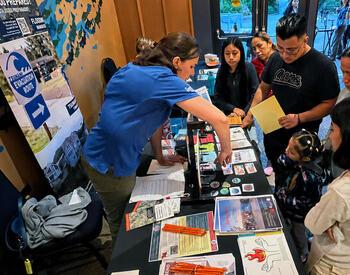
Sullivan also provides outreach at boat shows and seminars to help boaters feel confident using pumpout equipment.
“Boaters can be intimidated by pumping out specifically,” she said. “Most boaters I know have an absolute horror story of that creating a blowback.”
For boaters new to pumping out:
- Watch a how-to video, such as this video produced by Washington Sea Grant.
- Practice with a clean tank by filling it with water.
- Call ahead to ask if staff can provide on-site assistance.
“There are instructions on the equipment for how to use it and they are done in pictures to try and make it accessible as possible,” Sullivan said.
Portable toilet dump stations also provide instructions, and floating restrooms work like land-based restrooms once boaters dock safely.
“Anybody can do this stuff,” she said.
Tools and resources for clean boating
Sullivan encourages boaters to sign the Clean Boater Pledge and to use the Pumpout Nav app, which shows pumpout locations, facility types and contact information across the West Coast.
She recommends planning ahead for each outing by checking hours, identifying facilities and reviewing how to operate the equipment.
“I hope people walk away with the empowerment to know what to do, knowing what they do does have an impact and a little bit does go a long way,” Sullivan said.
Previously titled Oregon Sea Grant Extension reminds boaters to ‘know before you go’