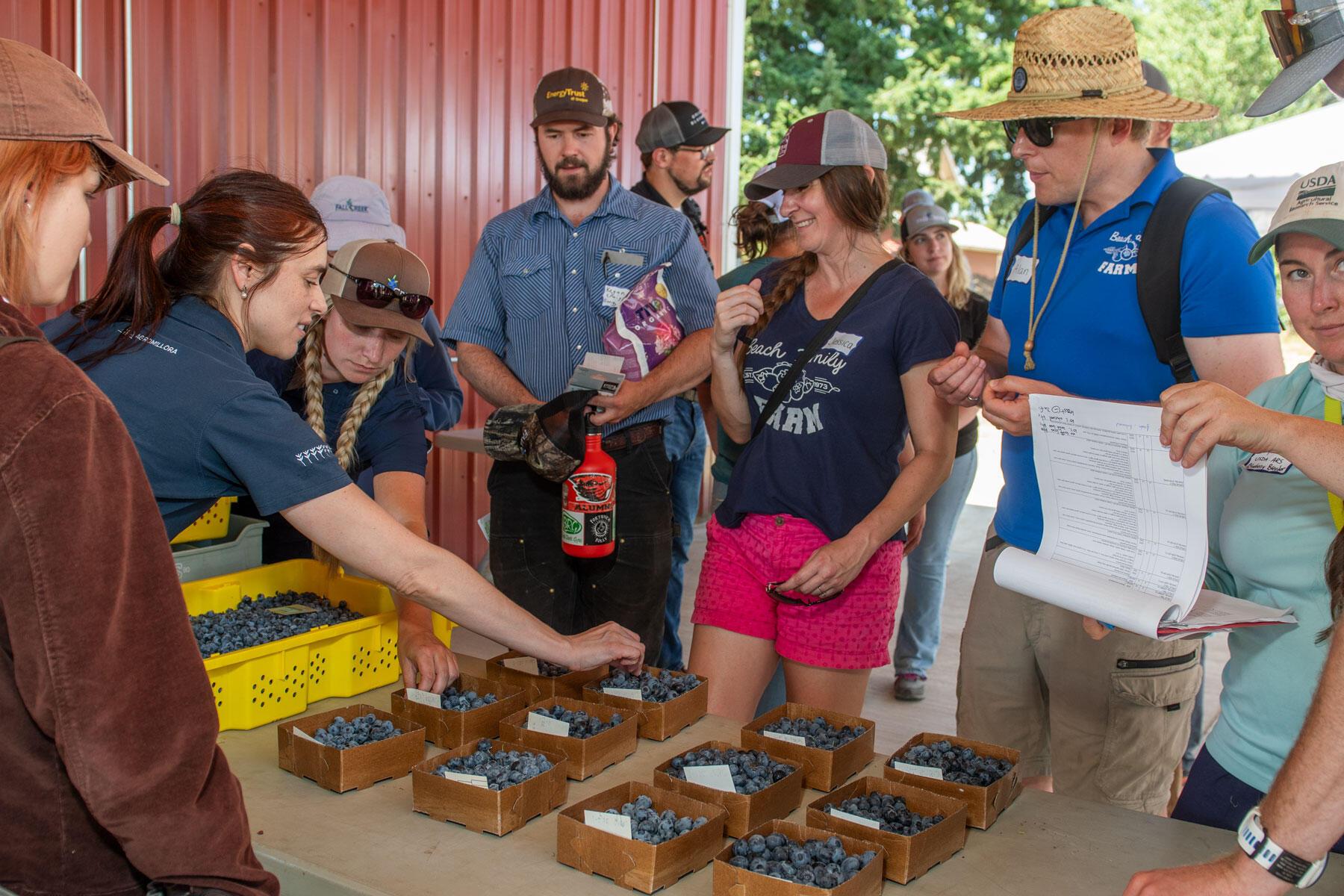
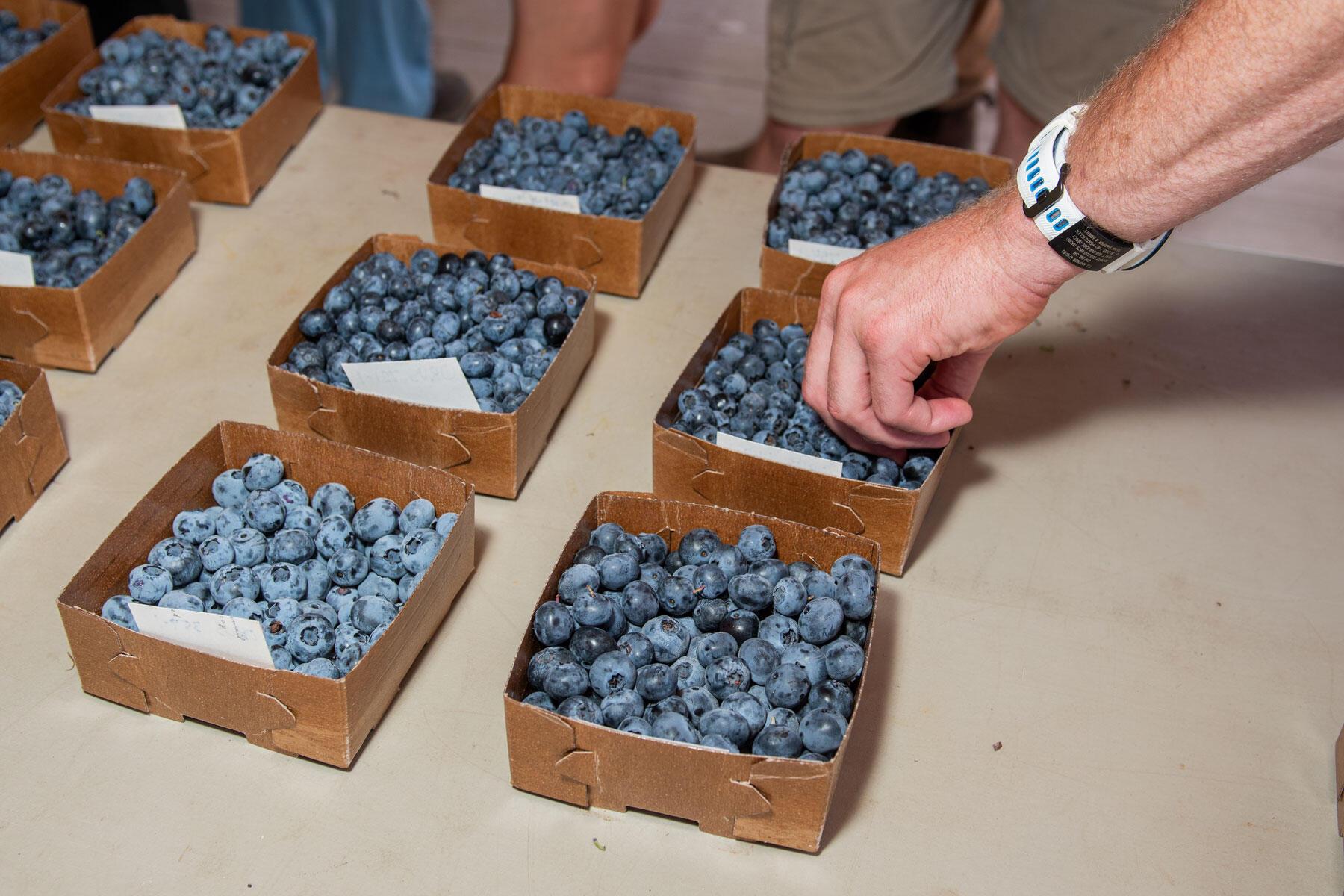
AURORA, Ore. — The tasting table was a popular post-lunch destination at Blueberry Field Day, an annual event hosted by Oregon State University at its North Willamette Research and Extension Center.
The feedback on flavor, as well as size and firmness, is important to the OSU Berry Breeding Program, a joint effort with the U.S. Department of Agriculture Agricultural Research Service. It’s part of the process for determining selections that will eventually be released as new cultivars and made available to nurseries and growers.
Every summer, OSU, through its Extension Service and Agricultural Experiment Station, hosts field days for berries that are critical to agriculture in the Willamette Valley.
There are about 320 dedicated blueberry growers in Oregon, according to the Oregon Department of Agriculture. With annual production approaching 160 million pounds, Oregon is the second‑largest blueberry‑producing state in the nation, behind Washington.
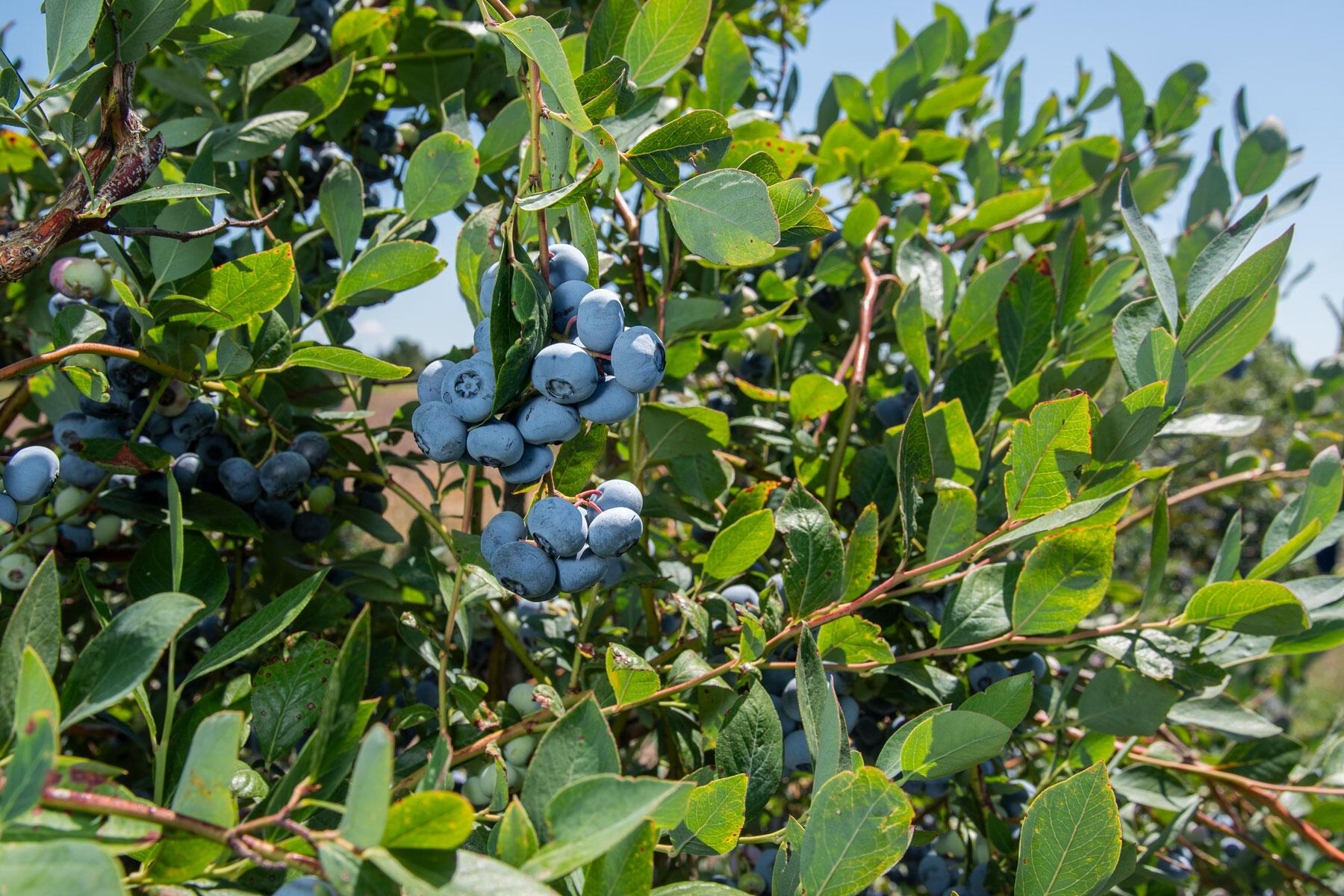
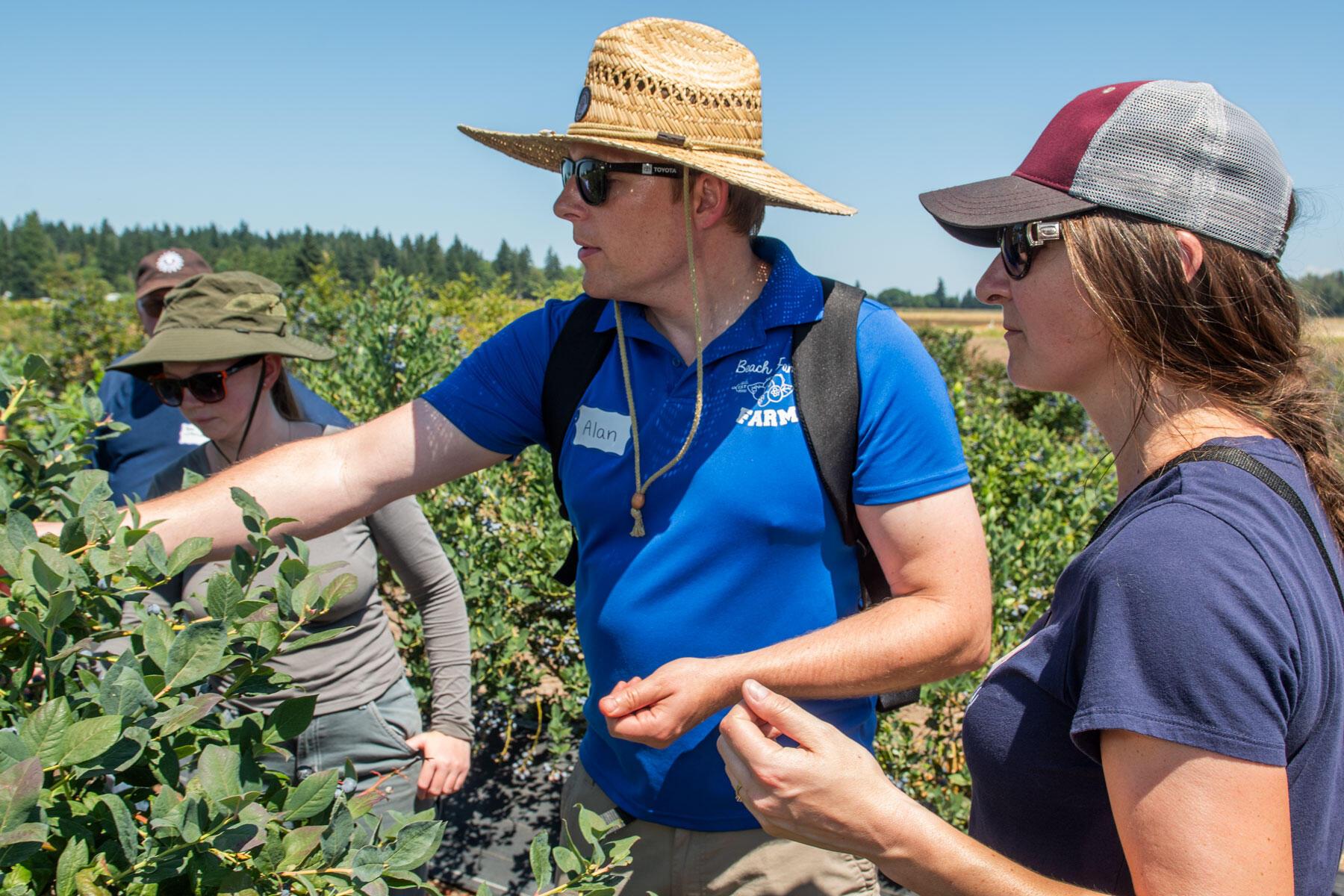
Alan and Jessica Stokke, who operate the Beach Family Farm in Sherwood, joined the group that was ranking the berries that were picked from the ‘Mini Blues’ field at the research farm.
“I’m afraid they’re going to all blend together if I don’t start a top three,” said Jessica Stokke, who with her husband is interested in potential new cultivars. The Beach Family Farm features an acre of blueberry bushes that’s open to the public for picking each July.
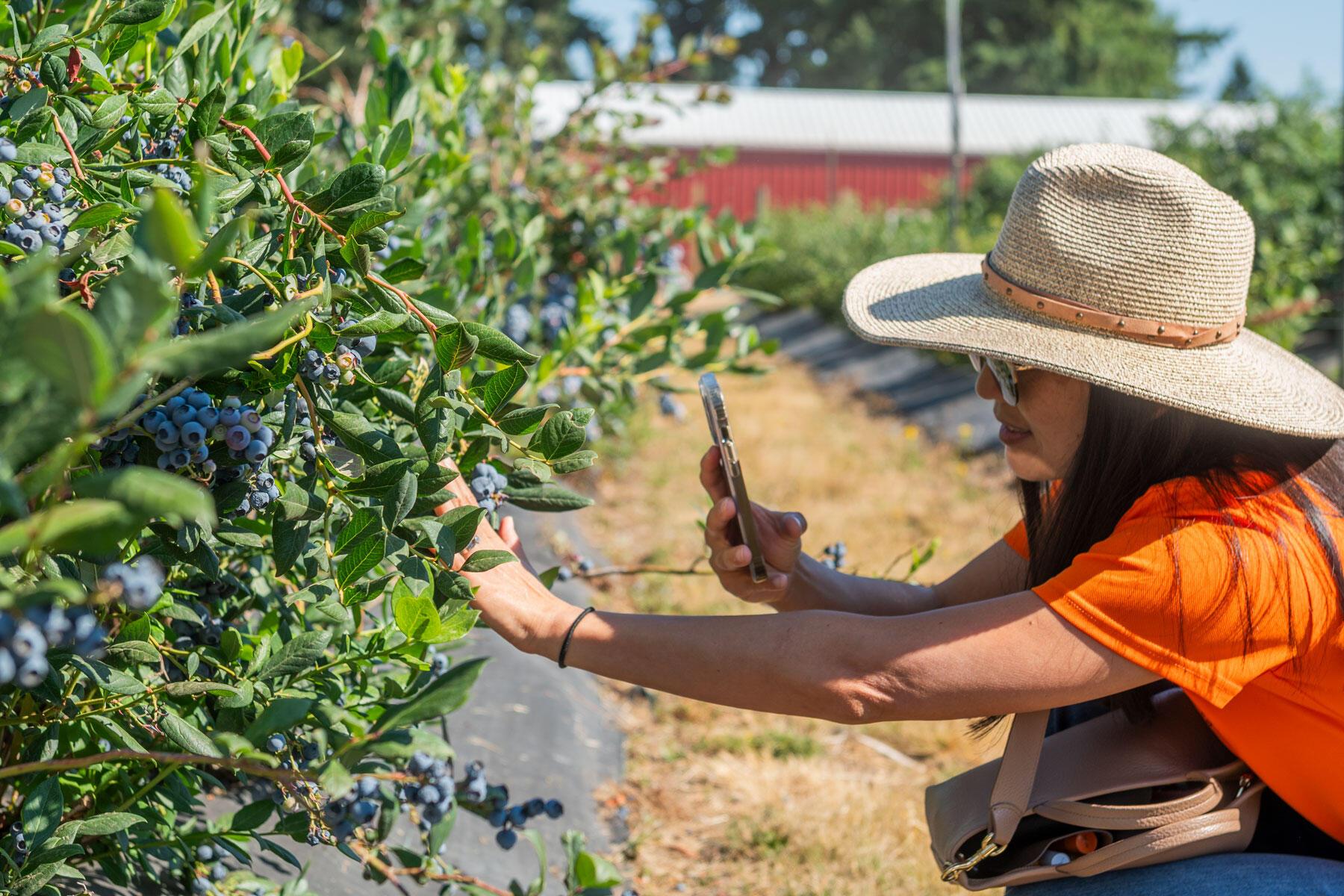
The Stokkes attended Blueberry Field Day to learn about the latest research on growing and harvesting blueberries, in addition to the breeding process. After the tasting they went out with a small group to tour the ‘Mini Blues’ field.
“We want to taste the new varieties to see if we should replace something that’s not doing well with a newer cultivar,” she said.
Although it was their first field day, it wasn’t their first interaction with OSU.
“There is lots of history with OSU with the Beach Family Farm,” Alan Stokke said, listing OSU Extension blueberry publications and “the research that [the late] Bernadine Strik released that is still used by just about everybody.” Strik was a longtime horticulture professor at OSU who specialized in berries, especially organic blueberry production.
The Stokkes also participated in an OSU blueberry research study.
“One summer, some of the Ph.D. students came and planted some test plants and some control plants. We have some OSU-planted plants in a couple of our rows,” he said.
In 2024, they endured a plant health issue that resulted in removing every berry from their bushes.
“It was heartbreaking,” Alan Stokke said. “The plants were suffering.”
They consulted with Wei Yang, a professor who leads the blueberry education program at the North Willamette Research and Extension Center, known as NWREC.
“With Dr. Yang’s help, we started a couple different regimens to help correct the issue,” Alan Stokke said. “This year, things look a lot better. We’re on the right track.”
Latest production developments
Every summer, OSU, through its Extension Service and Agricultural Experiment Station, hosts field days for berries that are critical to agriculture in the Willamette Valley. Strawberry Open Field Tour and Caneberry Field Day (raspberries and blackberries) are held each June and Blueberry Field Day is in July.
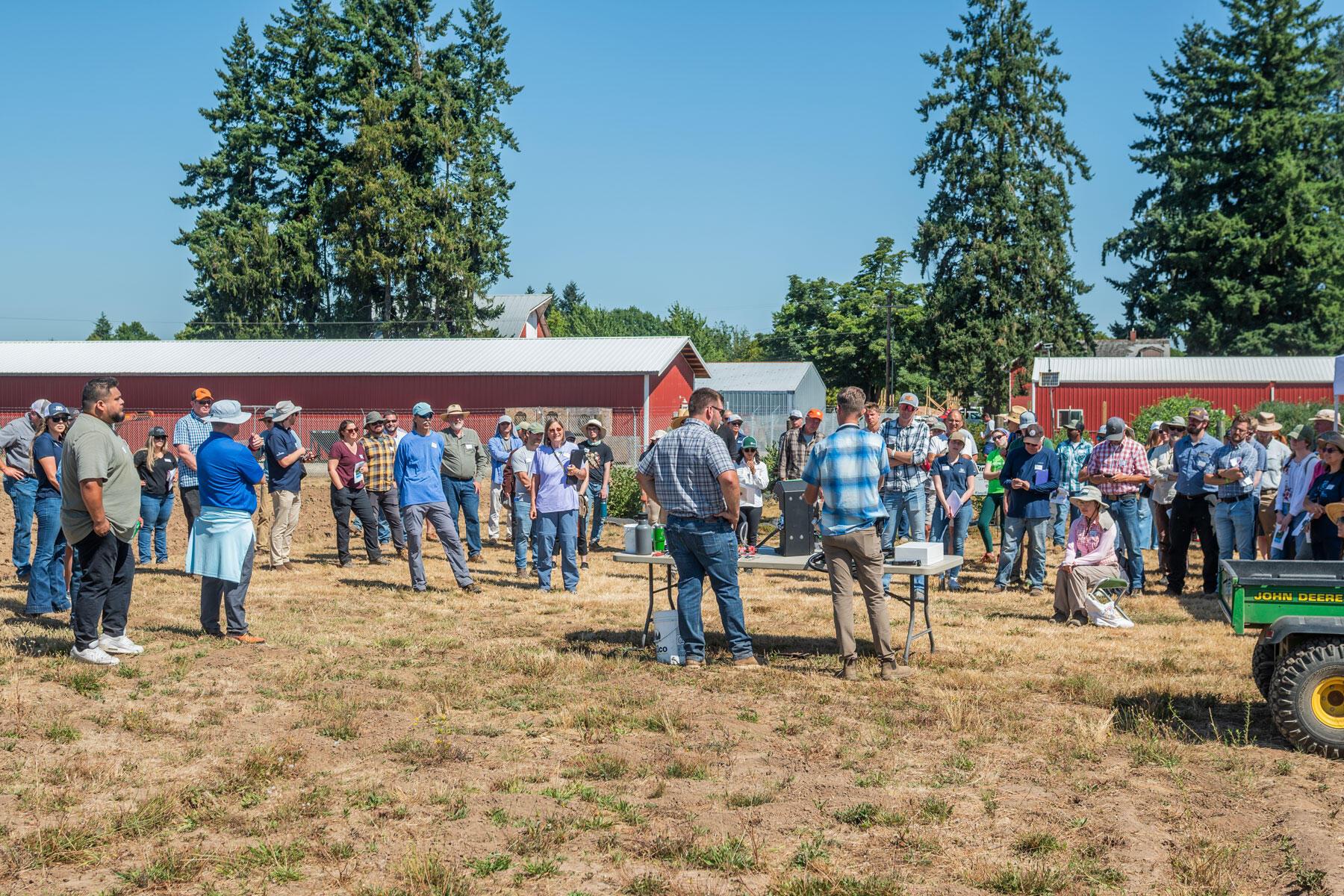
Attendees include growers, researchers and industry leaders who explore the latest developments in berry production. Blueberry Field Day typically draws the largest crowd, with more than 100 people hearing from a variety of speakers.
The program included welcome remarks from Scott Lukas, who holds the Endowed Professorship for Northwest Berry Production and Management in the OSU College of Agricultural Sciences, and Steve Young, the new NWREC director.
Ramesh Sagili, OSU professor of apiculture, Extension honey bee specialist and director of the OSU Honey Bee Lab, spoke on pollination and honey bee health in blueberries. Marcelo Moretti, an Extension weed specialist, provided research updates on weed control.
Understanding harvester-related contamination
Jovana Kovacevic, an associate professor and Extension food safety specialist at the OSU Food Innovation Center in Portland, shared findings from a recent research project on bacterial transfer during blueberry harvest.
Mechanical harvesters are a vital part of modern blueberry farming, helping growers pick fruit quickly and efficiently. But these large, complex machines also come with a food safety risk, Kovacevic explained. Their many belts, bars and catcher plates can be difficult to clean thoroughly and may become a source of bacterial contamination.
Using a non-pathogenic strain of E. coli to simulate environmental contamination, a cooperative effort between the Food Innovation Center and NWREC berry physiology research team investigated whether bacteria from contaminated blueberries could spread to the harvester, and then to the next batch of berries.
The researchers sprayed E. coli on blueberry clusters and harvested them with a mechanical harvester. They then used the same, uncleaned machine to harvest berries from a non-inoculated, “clean” plot.
As expected, bacteria were found not only on the harvester’s surfaces, particularly the bottom conveyor belts and catcher plates, but also on the second set of clean berries.
The team then cleaned and sanitized the harvester following industry-recommended protocols and harvested a third batch of clean berries. This time, bacterial levels dropped significantly on both the machine and the fruit, though some low-level contamination remained.
“The bottom conveyor belt and catcher plates were most problematic,” Kovacevic said. “If you are working with machine harvesters, the clear message from this one-season experiment is to pay close attention to cleaning and sanitizing those surfaces.”
This research highlights the importance of regular and thorough sanitation between harvests, and it offers practical insights into where contamination is most likely to occur.
Next, the team will evaluate sanitation strategies in the lab using both E. coli and Listeria monocytogenes strains to determine the most effective cleaning methods for harvester components.