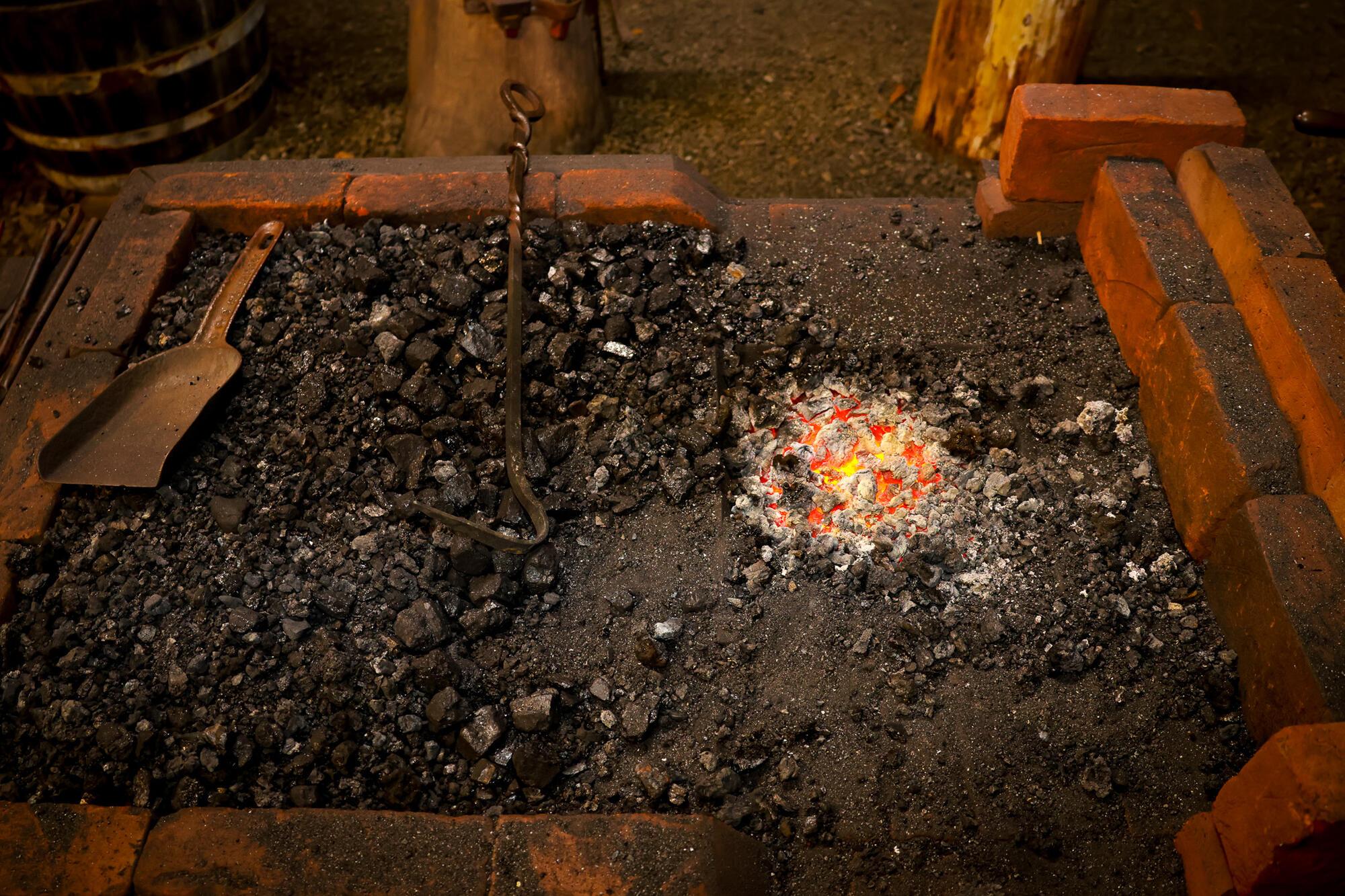
SALEM, Ore. — On a foggy winter evening along Oregon Route 22 on the western outskirts of Salem, the fire from The Pioneer Forge at the Brunk Farmstead cut through the cold.
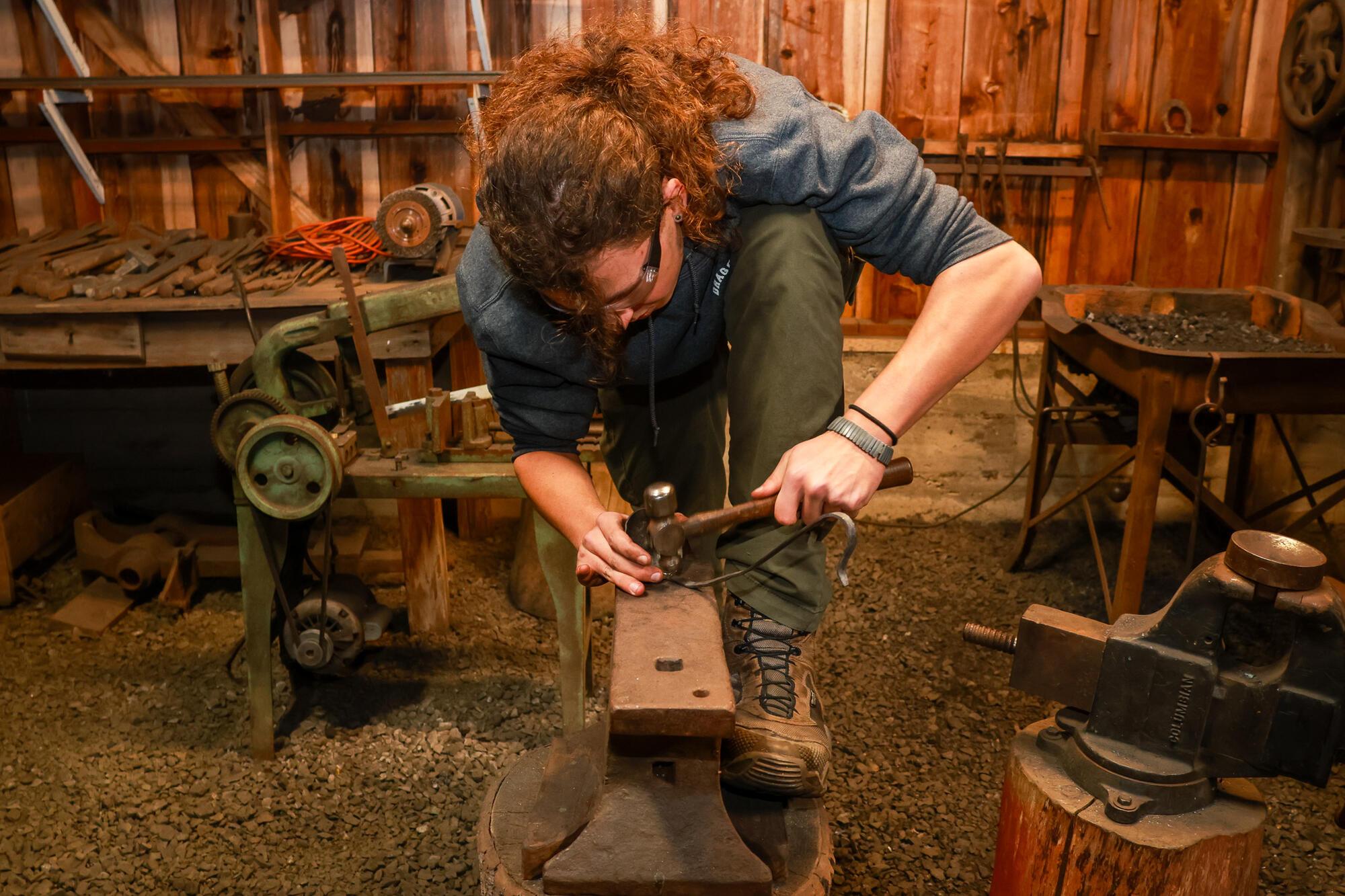
Inside the open-air blacksmithing shed, three teenagers took turns hammering heated steel. Their breath mixed with the fog, but they barely noticed the chill. For two consecutive nights, they worked side by side to shape metal into their own craft — hand-forged ladles.
The workshop was part of a monthly blacksmithing program organized through Oregon State University Extension 4-H program in Polk County. So far, Polk County is the only county in Oregon offering regular, affordable blacksmithing workshops specifically for 4-H youths.
"Today, there is a new interest in blacksmithing, and I want to have a part in it."
Blacksmithing aligns closely with 4-H’s emphasis on experiential learning, said Rachel Brandon, 4-H program coordinator in Polk County. Brandon launched the blacksmithing initiative in 2022 after connecting with local blacksmiths.
“It’s an industrial art,” Brandon said. “There’s hand-eye coordination; it’s in the same family as welding, which could be an employable skill, and opens them up to the world of different types of industrial careers out there.”
“It also gives them an appreciation for history,” she added. “Blacksmithing isn’t something that’s required these days, but it’s a historical art, so I like to think of it as an art that connects history and industrial skills all into one.”
Youths discovering new interests
For Dashiell McNett of Dallas High School, the blacksmithing workshops turned his curiosity into a sustained interest.
Before joining the 4-H blacksmithing workshops, McNett, 16, had tried fused glass, blown glass and knife forging. He had taken classes at the Vonhelmick Knife Company, but the cost made it difficult to attend regularly.
Now, he has a propane forge and an anvil at home.
“It’s a very practical art for me to learn,” McNett said. “If I wanted a really nice S-hook for hanging up a basket of flowers, I could just make that instead of having to buy one.”
McNett has participated in 4-H since he was a Cloverbud, exploring projects ranging from building fishing rods to horticulture, sewing, geology and forestry. He hopes to study food science at OSU.
His mother, Marita Barth, a chemistry instructor at OSU, said blacksmithing reinforces her son’s scientific thinking.
“There’s a lot of science in this,” Barth said. “Because of the metallurgy and planning out the engineering … there’s the sense of independence and empowerment that you can make things and do things.”
Barth said 4-H has also helped her son develop leadership skills. As a senior member, McNett teaches younger 4-H’ers in his fishing club and will be a member of the Oregon delegation at the national 4-H Ignite conference in Washington, D.C. to connect with 4-H teens from all over the country.
“Blacksmithing let me get a hobby other than just sitting around the house and watching TV or playing games,” McNett said. “It lets me think a lot more analytically and spatially about things like where I have to hit to make it bend a certain way.”
“It’s just so fun,” he added. “It’s just exhilarating being near the forge, just hammering the steel.”
Making blacksmithing accessible
The workshops rotate among three local forges in Polk County — The Pioneer Forge, Crandall Forge in Rickreall and Vonhelmick Knife Company in Fall City.
“Now we are spreading out to different locations, the style of teaching and what they teach, so it has brought more variety and diversity to our 4-H’ers,” Brandon said.
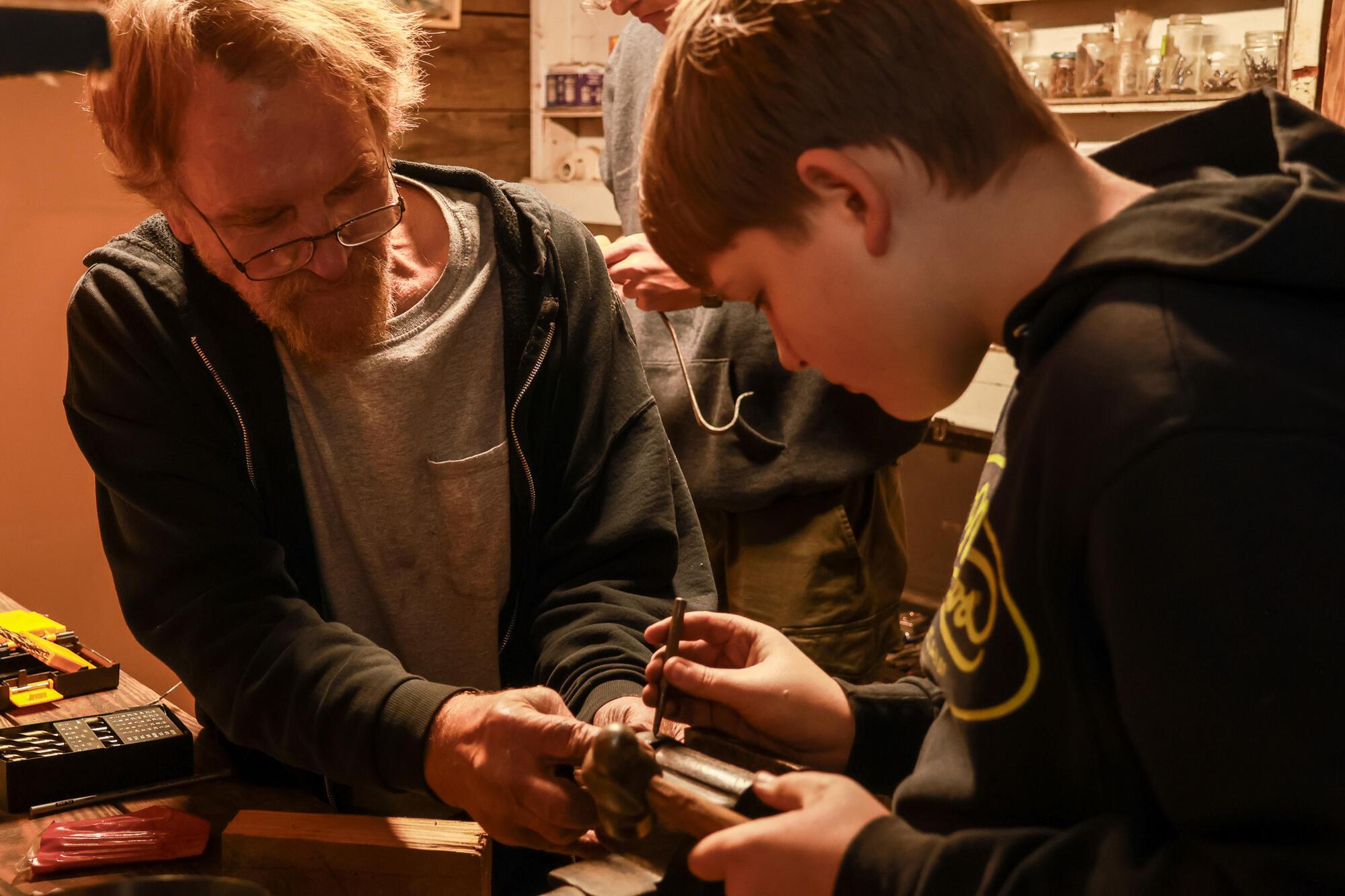
Polk County does not have a formal 4-H blacksmithing club because it requires specialized tools, space and two long-term volunteers. Instead, Brandon coordinates monthly workshops capped at four to six students to ensure safety and individualized instruction.
Single blacksmithing classes, on average, can cost more than $100, Brandon said. Through grant funding, Polk County 4-H offers workshops for $10-20 per class for 4-H members and $15-30 for non-members.
Brandon believes offering creative and technical experiences like blacksmithing can attract families who might not otherwise consider 4-H.
Workshops begin with safety instruction on using hammers, tongs and hot metal, and instructors closely monitor students throughout each session. Brandon attends every class and said it’s easy to tell who has handled tools before.
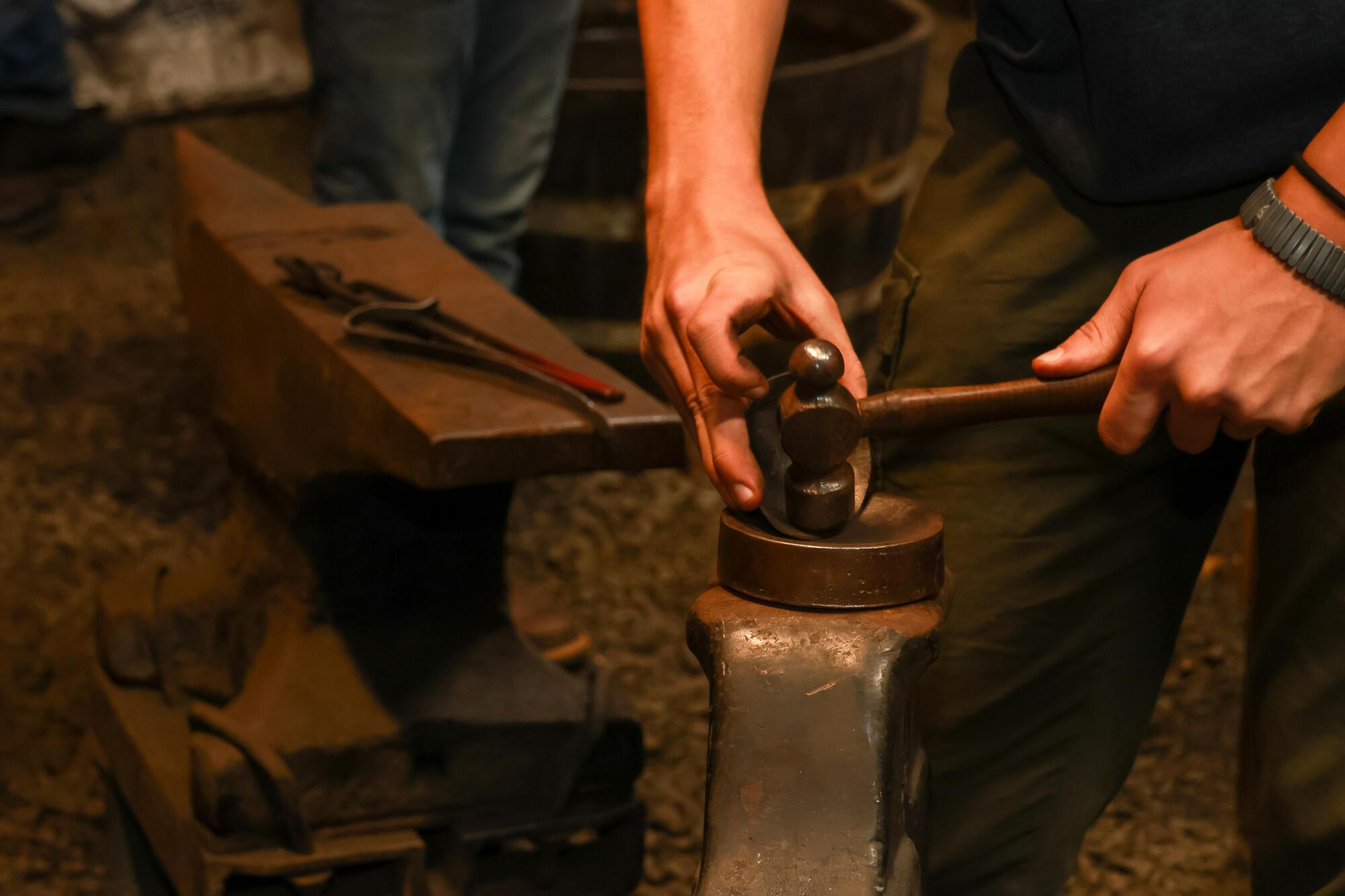
Some projects, like ladle-making, are intentionally spread across multiple sessions. During the two-night workshop at the Brunk Farmstead, students learned techniques such as raising and sinking to form the bowl, then forged and welded a handle on the second night.
“It takes them full two hours to form a piece of metal into a bowl of the ladle,” Brandon said. “There’ll be a lot of imperfections, and you sweat. Then you go home, and you eat from your spoon, you’re like, ‘Wow, it’s amazing that I have the spoon that’s not mass produced.’”
Keeping a tradition alive
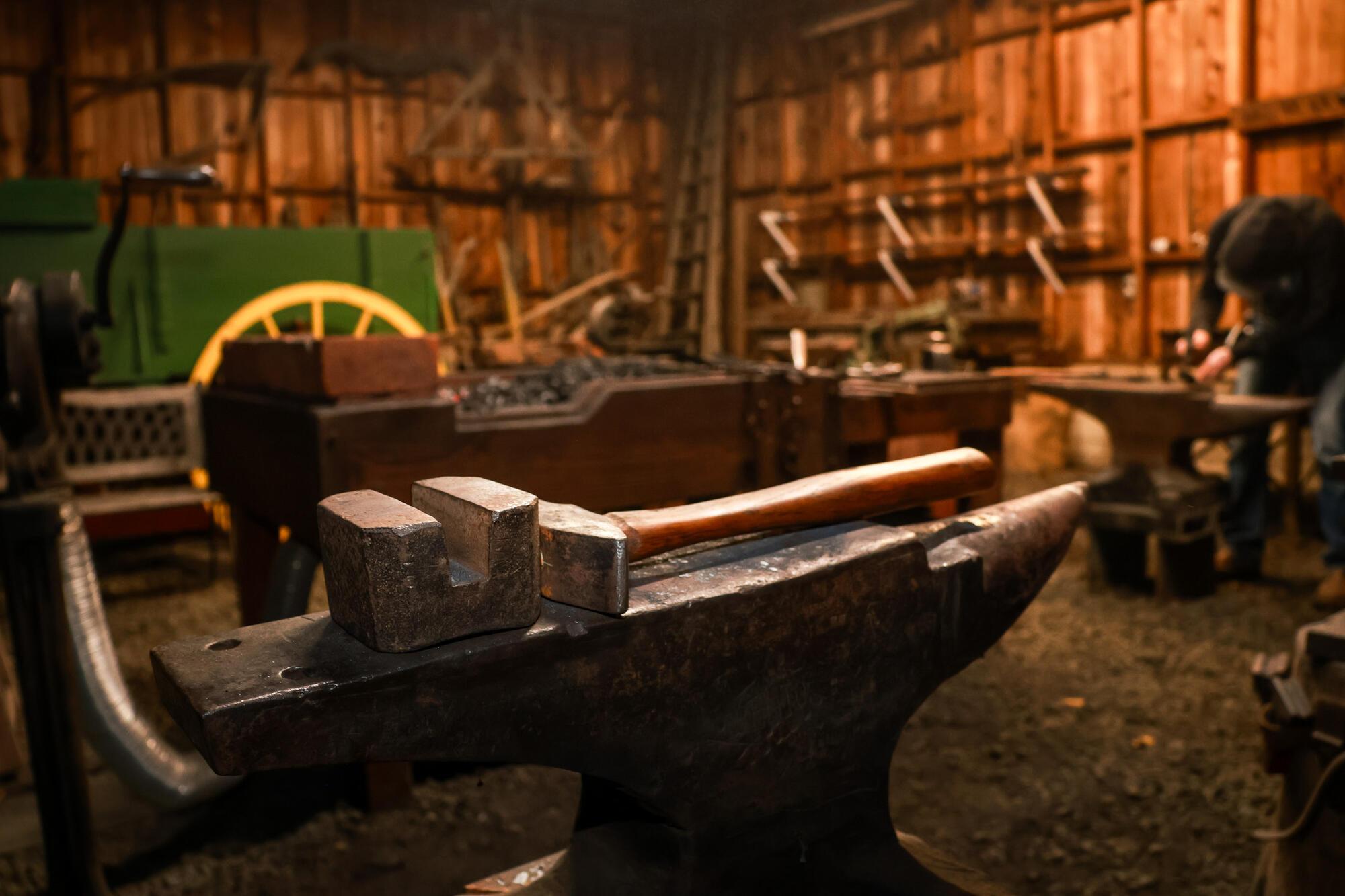
At The Pioneer Forge at the Brunk Farmstead, blacksmith David Gibbons teaches 4-H youths traditional blacksmithing using coal-powered forges and antique tools.
Gibbons began teaching himself and his son blacksmithing around 1995. When he retired, he moved his shop to the Brunk Farmstead, where he was a volunteer.
Each spring, he shows field-trip students how old-fashioned blacksmiths worked with an anvil and a forge. He also started giving introductory blacksmithing classes.
"I don’t want this whole thing to die, or be forgotten,” Gibbons said. “Blacksmithing was a dying art until museums started including displays that had reproduction blacksmith shops in them.”
A traditional forge burns coal and requires a manual blower to provide the airflow to keep the fire hot. Gibbons said most modern blacksmiths use propane forges instead, as they are cleaner, easier to use and far more efficient. Coal is dirty, expensive and getting harder to get.
Gibbons has been collecting old equipment since he started blacksmithing. Most of the tools at The Pioneer Forge are antiques.
“The shop is a museum in itself,” he said. “Today, there is a new interest in blacksmithing, and I want to have a part in it.”
Families learning together
Scott Muncrief attended the workshop with his two sons, Luke, 14, and Jacob, 12. As a welder, Muncrief is familiar with fire and metals. He helped spin the forge blower to keep the fire going the whole session.
“Anything that kids can do to create, and make things hands-on is really good,” Muncrief said. “It makes you think how special a ladle is. A long time ago, if you forgot your ladle, it was worth it to go back and pick it up because it took two days to make one.”
It was Luke and Jacob’s third time attending a blacksmithing workshop.
“I haven’t used all these tools before,” Luke said. “I’ve used new tools every time, so it’s going to be cooler every time.”
Jacob said he hopes to keep improving his hammering skills and eventually learn how to forge twists.
For Brandon, the sense of curiosity that propels the kids to come back makes her see the value of this program.
“Even if the kids are not interested in metalworking, it’s good for them to try it at least once,” she said. “Because then they have a greater appreciation for what went into forming our country before we had propane tanks and even appreciation of modern-day manufacturing.”
To learning more about the 4-H blacksmithing workshops, contact Polk County 4-H at [email protected] and 503-623-8395.