CORVALLIS, Ore. — There are years where nature and the elements are kind to Oregon farmers and ranchers so that they can produce a bumper crop or record livestock sales.
2020 and 2021 were not those years.
Oregon had historic heat domes, drought, wildfires and an early ice storm that impacted agricultural producers across the state.
“It was awful. People were suffering across Oregon,” said Lauren Gwin, director of the Oregon State University Center for Resilient Agriculture and Food Systems.
In December 2021, the Oregon Legislature provided $98 million in drought relief and disaster assistance to Oregon farmers, ranchers and irrigation districts. Of this, the Legislature allocated $1.5 million to the Oregon Community Food Systems Network (OCFSN) to create a disaster-relief grant program for new, small and specialty farmers who would otherwise not be able to access the new relief funds or traditional crop insurance due to eligibility requirements. The funds were distributed to more than 100 farmers in three rounds during 2022.
OCFSN was able to create this brand new program and launch it quickly because of its statewide reach and collaborative structure. Through her role as an OSU Extension Service community food system specialist, Gwin helped found OCFSN in 2015. As a member of the network’s leadership team, Gwin has been an integral part of building and maintaining the institutional infrastructure essential for the network’s activities and topical working groups, including the grant program.
Due to the disaster-relief grant program’s success, the 2023 Oregon Legislature awarded OCFSN an additional $2.65 million to distribute for disaster resilience projects to prepare growers for future heat, drought and other climate disasters. The Legislature also funded OCFSN to create a $1.5 million Food Hub Worker Safety and Infrastructure Grant Program, based on a statewide assessment co-led by Gwin.
To date, the network has awarded more than $3 million to 222 farms across the state to take action that will improve the resilience of the land they cultivate and their farm businesses.
The impact has been tangible, based on written testimonials from producers who received funding.
“Funding for infrastructure projects to help us be more resilient in the changing climate will allow us to feed our communities reliably and reduce our crop and livestock loss,” wrote recipient Letty Dogheart of Flying Dogheart Farm.
Collaborate, not compete
The Oregon Community Food Systems Network operates under the belief that movements work better as a coalition rather than in competition, said Rhianna Simes, the chair of OCFSN’s leadership team and farmer of Verdant Phoenix Farm.
The nonprofit takes a whole-system approach to its work. It includes collaboration with farmers, nutritionists, food banks, gardening programs and community health programs, among other food systems nonprofits, Simes said.
“All of these food and farming organizations and groups really deliver better economic, social, health and environmental outcomes across Oregon,” Simes said.
The OSU Center for Resilient Agriculture and Food Systems, which houses nine programs focused on different aspects of food and agricultural systems, acts as a backbone organization for OCFSN alongside the Oregon Food Bank, providing additional logistical and strategic support to the organization.
“Our center made a long-term commitment to OCFSN. The partnership and resources we’ve provided have been critical to the network’s stability and success,” Gwin said.
After helping set up the original network, Gwin and her counterpart at Oregon Food Bank stepped in when the original part-time coordinator left, handling central operations until OCFSN could bring on a new person.
Gwin now sits on the leadership team and the board of directors, supervises two of the three network staff members, is very involved with two of the network’s working groups, and continues to secure external funding for OCFSN projects.
“I’ve had my hands in so many parts of this network for almost a decade. That’s changed over time as staff and programs get up and running,” Gwin said.
She led the design and implementation team for OCFSN’s first disaster resilience grant program, “and now I’m just there if they need me. I’m proud of these folks and how they all make it happen together.”
“In a lot of different states, I know that there's a lot of competition between Extension and nonprofits, competing for grants and stakeholder relationships,” Gwin said. “In Oregon, Extension has great partnerships with nonprofits, sharing resources and leadership. They lead in some areas of the work, and we lead in others where we have capacity they don't have.”
The collaboration has led to steady, solid outcomes in supporting farming, local food sector development and healthy food access in Oregon. The network, which started with 34 member organizations and no employees, has grown to 59, with three full-time staff members running it.
The organizations have secured millions of dollars in grants, which fund programs such as increasing Supplemental Nutrition Assistance Program incentives for local grocery stores and farmers markets, providing training and resources to new farmers and ranchers, and strengthening Oregon’s network of local food hubs.
“OCFSN creates this umbrella and this kind of reservoir of support to both access larger funding, to provide educational opportunities, but really to foster collaboration,” Simes said.
Beyond the network’s formal programming, it acts as a hub to share resources. The OCFSN website and newsletter frequently post jobs, grants and events.
Investing in resilient farms
Extreme weather hurts the entire food system, making it a major priority of OCFSN.
Producers who submitted written testimonials described their daily challenges.
“Climate change, drought conditions, wildfires, economic challenges and other farm-related issues have significantly limited the ability for farmers in Oregon to successfully provide healthy, high-quality food to our food-insecure communities over the past few growing seasons,” wrote Spring Alaska Schreiner of Sakari Farms.
“The survival of our farm — and that of countless others grappling with climate disasters — is at stake. Farming has never been easy, but climate change is making it exponentially harder every year,” wrote Zoe Bradbury DeSurra of Groundswell Farm LLC.
The 2021 one-time funding was an emergency measure meant to lessen immediate devastation from extreme drought. But OCFSN knew that there needed to be a long-term solution, not a Band-Aid, Simes explained. Farmers need resources so when the next disaster arrives, they are prepared, Simes said.
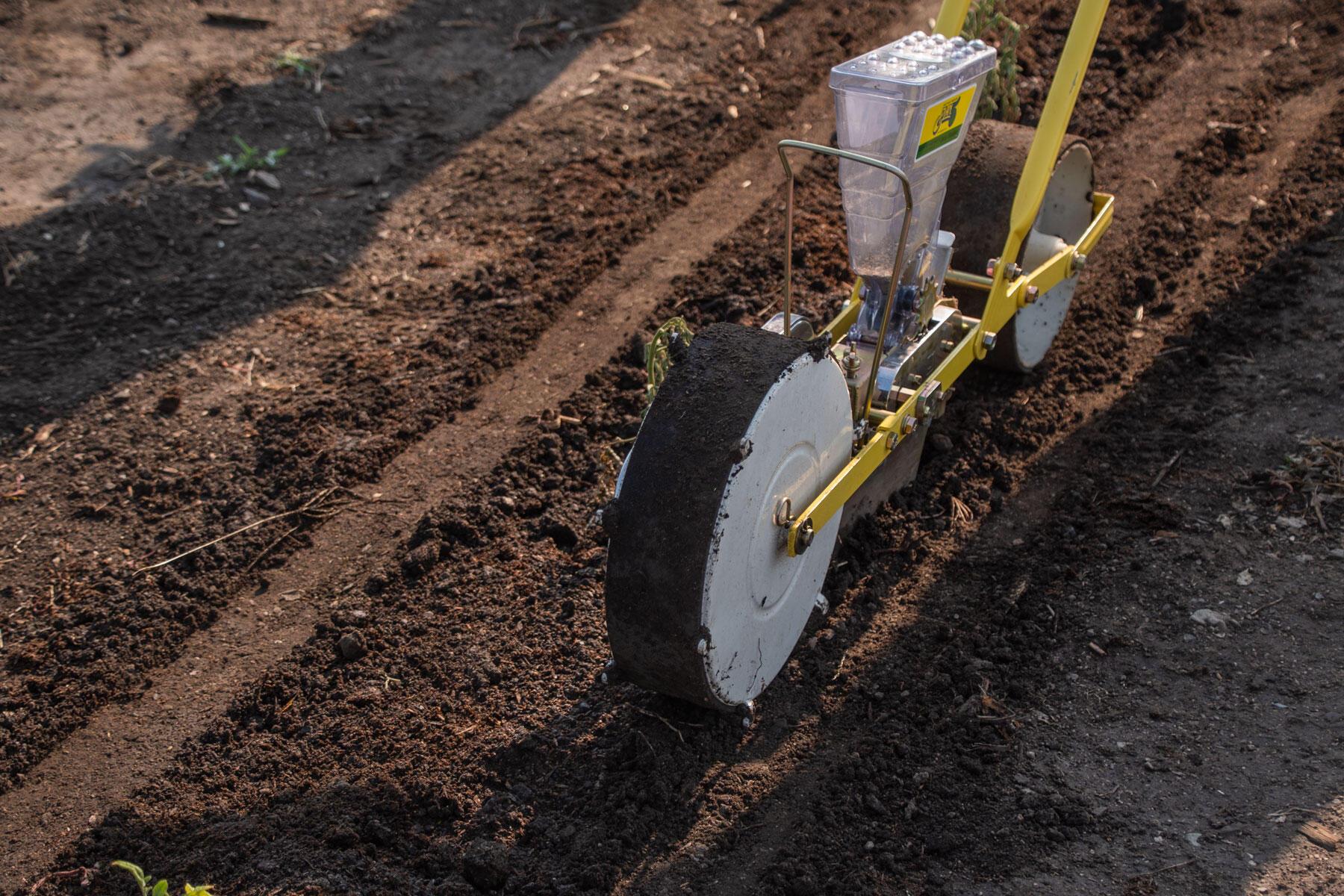
That’s where the $2.65 million to fund the Farmer & Rancher Disaster Resilience Grant Program came from. So far, projects have been very diverse and include improving water efficiency, investing in animal evacuation trailers and transitioning to drought-resilient crops, among others.
“We really appreciate that the Oregon Legislature trusted us to provide grants to farmers and ranchers across Oregon,” Simes said.
“This essential and nationally unique funding is to support Oregon’s small and historically underserved producers to be more resilient to climate impacts such as heat, smoke and drought,” said Andrew Collins-Anderson, OCFSN’s Farming for the Future coordinator.
In 2024, OCFSN has awarded funds to farmers and ranchers in every region of the state. Of those awardees:
- 78% are in their first 10 years of farming or ranching
- 34% are in counties with a recent drought declaration
- 36% are Black, Indigenous or people of color producers
- 11% are military veteran producers
The appreciation from growers was significant.
“This funding is an honorable resource to farmers statewide,” wrote Schreiner of Sakari Farms. “We tip our hats to the Oregon Legislature for allocating these urgently needed funds to support local and regional food systems,” wrote DeSurra. Both received grants in the first round of funding.
Simes believes that knowing opportunities for funding exist improves resilience.
“It gets farmers really thinking proactively about resilience,” she said, sharing that farmers express further motivation after the initial investment. “They say ‘Wow, now I can adapt and keep going.’”