
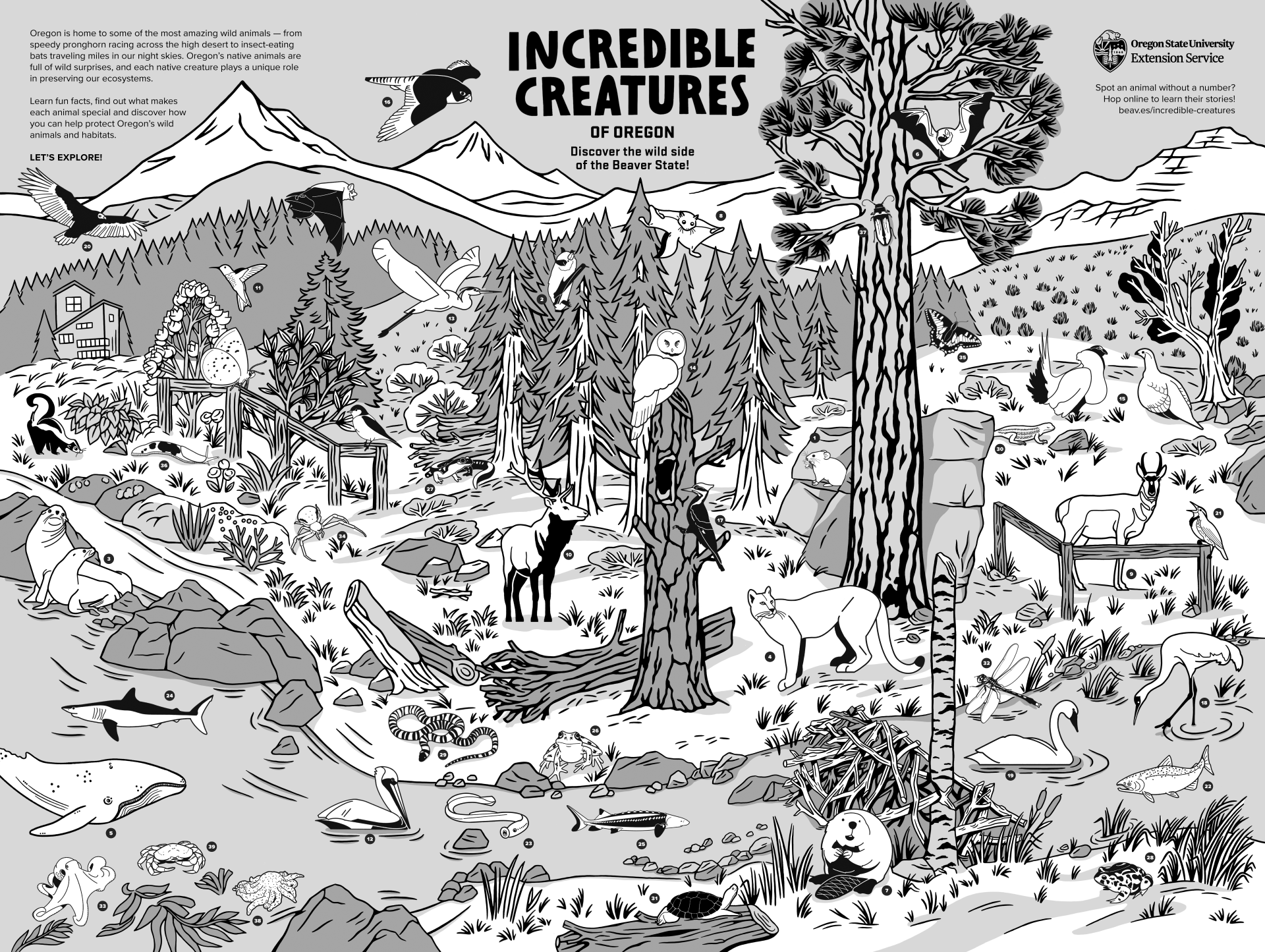
Welcome to the wild side!
Discover the incredible creatures of Oregon
Get to know Oregon’s amazing animal neighbors — from soaring vultures to secretive
salamanders, mighty elk to tiny butterflies.
This is your guide to over 40 native species — including some that need our help to survive — and to some of the invasive animals that are a concern. Learn fun facts, find out what makes each animal special and discover how you can help protect Oregon’s wild animals and habitats.
Ready to explore?
Learning about our local wildlife isn’t just cool — it’s heroic! You can be a nature nerd, ecosystem expert and animal protector all rolled into one. Ready to meet some of the coolest creatures around and help keep our state wild and wonderful?





Species spotlight: meet Oregon's bats
Small, mighty and totally awesome!
Bat fossils date back about 50 million years! And did you know bats are the only mammals that can truly fly? That’s right. These furry little flyers are one-of-a-kind! The bones in a bat’s wings are the same as those of the human arm and hand. They’re just elongated and connected by a membrane of skin that forms their wings.
Bats might be small, but they’re superheroes in disguise.
Bats aren’t blind — in most cases they see as well as humans — but they are active at night and use sound to “see” in the dark (a talent called echolocation). You’ll find bats almost everywhere in the world (except Antarctica) quietly helping behind the scenes. Of the 15 bat species that call Oregon home, eight of them are considered extra special because their populations are small or shrinking. That means they need our help to stick around!
Why bats matter
- Their poop (called guano) is an amazing fertilizer!
- They eat thousands of bugs, which helps farmers, protects crops and forests and even keeps us healthier.
- Bat research has led to advancements in human hearing, sonar, medicine and more.
California myotis bat, Myotis californicus
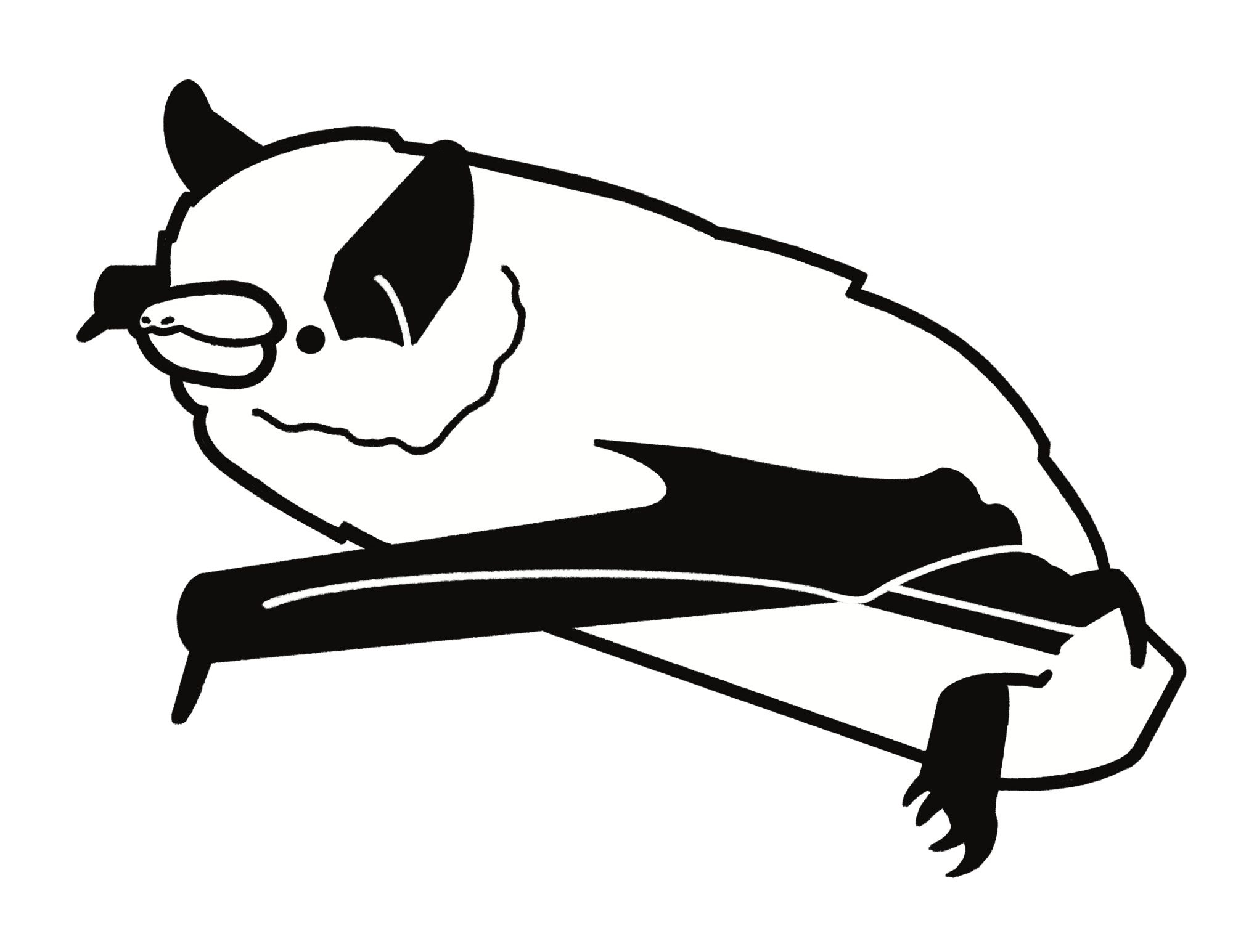
One of North America’s smallest bats, they have a wingspan under 9 inches. Outside of mating season or when raising babies, they usually roost alone under loose tree bark or in rock crevices. They feed on moths and flies. Like most bats, they glide just above the water’s surface with their mouths open to drink midflight!
Learn more about the California myotis bat!
Getting to know Oregon’s bats (OSU Extension Service)
Fungus puts Oregon bat populations at risk (The Bulletin, Bend)
Hoary bat, Lasiurus cinereus
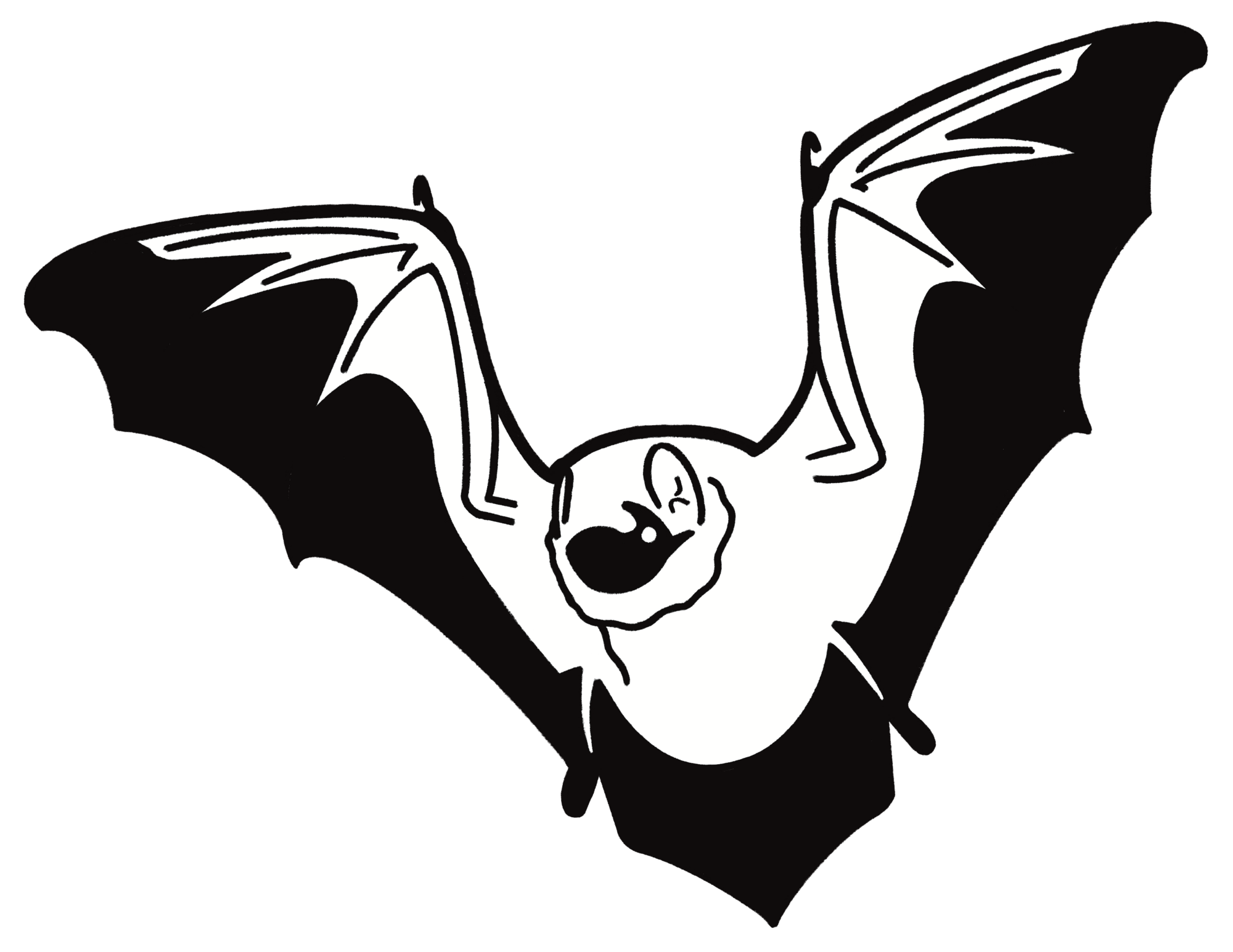
The largest tree bat in North America with wings spanning up to 16 inches. They like to roost alone rather than in colonies. They can travel up to 24 miles in one night to hunt. Their favorite snacks are moths and mosquitoes, but they also eat beetles and crickets. As winter approachs, they migrate — some heading south and others moving from cold inland areas to warmer coastal locations. They return to bear their young in the spring and are one of only a few bat species to have twins. The white tips on their fur make them look like they are covered in frost.
Learn more about the hoary bat!
Getting to know Oregon’s bats (OSU Extension Service)
Fungus puts Oregon bat populations at risk (The Bulletin, Bend, Oregon)
Big brown bat, Eptesicus fuscus

These bats have strong jaws and tough teeth that let them munch on hard-shelled insects like beetles and stink bugs, sometimes eating their body weight in insects each night! They roost during the day in trees, caves, cliffs, under bridges and in barns. Female bats form colonies for warmth and protection, especially when raising their babies (called pups). They have a wingspan of 13–14 inches and are more likely to be active in cold weather than other bats.
Learn more about the big brown bat!
Getting to know Oregon’s bats (OSU Extension Service)
Fungus puts Oregon bat populations at risk (The Bulletin, Bend)
But what about the scary stuff?
No worries. No vampire bats live in the U.S., and it's rare for bats to spread rabies. Most bats want to eat bugs and be left alone.

Bats need our help!
They’re losing their homes, facing predators and battling diseases. But you can be a bat hero! By doing just a few simple things, you can help Oregon’s bats thrive!
Here's how to help:
- Appreciate the role they play in our well-being.
- Leave old trees and snags (standing dead trees) — they make great bat homes.
- Plant a bat-friendly garden (skip the pesticides!).
- Put up a bat box built for roosting and place it in a welcoming spot.
- Keep cats indoors! Even well-fed cats can’t resist the attraction of small, fast-moving targets!
- Avoid entering bat roosts like caves to prevent spreading white-nose syndrome in bats.
Thank you to our experts!
We tapped into the expertise of Oregon State University wildlife experts to ensure information about Oregon’s incredible creatures are accurate. Unless noted, they do research and teach for Oregon State University, Department of Fisheries, Wildlife and Conservation Sciences (FWCS) in the College of Agricultural Sciences.
Wildlife experts
Lindsay Carroll, marine education coordinator, Oregon Sea Grant, Hatfield Marine Science Center
Sam Chan, PhD, assistant professor, Oregon Sea Grant, Extension aquatic invasive species and watershed/aquatic ecosystem health specialist
Taylor Chapple, PhD, associate professor, FWCS, Coastal Oregon Marine Experiment Station (COMES), Hatfield Marine Science Center
Natalie Donato, undergraduate student (as of Fall 2025), Marine Biology and Ecology, Department of Integrative Biology, College of Science
Bruce Dugger, PhD, professor and associate department head, FWCS
Clint Epps, PhD, professor, FWCS
Tiffany Sacra Garcia, PhD, Phyllis and Bob Mace Watchable Wildlife Chair, FWCS
Amanda Gladics, associate professor of practice, Oregon Sea Grant, Extension fisheries specialist
Christian Hagen, PhD, associate professor (senior researcher), FWCS
Selina S. Heppell, PhD, professor and department head, FWCS
Guillermo Giannico, PhD, professor and Extension fisheries specialist
Patricia (Pat) Kennedy, PhD, professor emerita, FWCS, Eastern Oregon Agricultural Research Center
Rachel Orben, PhD, associate professor (senior researcher), FWCS, Hatfield Marine Science Center
David Paoletti, Senior Instructor II, FWCS
Doug Robinson, PhD, professor, FWCS, director of Oregon 2020 Birds project, director of Field and Lab Ornithology Collaboratory (the FLOCK)
Dana Sanchez, PhD, professor, Extension wildlife specialist, FWCS
Heather Stoven, Extension community and small farms horticulturalist for Yamhill County
Leigh Torres, PhD, associate professor, FWCS, director of the Geospatial Ecology of Marine Megafauna Laboratory at OSU’s Marine Mammal Institute, Oregon Sea Grant Extension marine mammal specialist
Marie Tosa, PhD, species and landscape ecologist, Washington Department of Fisheries and Wildlife
Josh Twining, PhD, assistant professor, FWCS
Artwork by:
Colby Brooks, freelance designer — landscape illustration and graphic design
Kellen Grist, student graphic designer, class of ’28 — animal illustrations
Holly Mae Thompson, student graphic designer, class of ’25 — animal illustrations