EUGENE, Ore. — Bright yellow strings taped across the doorway read “Do Not Enter” and “Crime Scene.” Inside, footprints mark the carpet, and a table sits in the middle of a mess, with Cheetos scattered like evidence.
It’s not a real investigation. It’s a classroom.
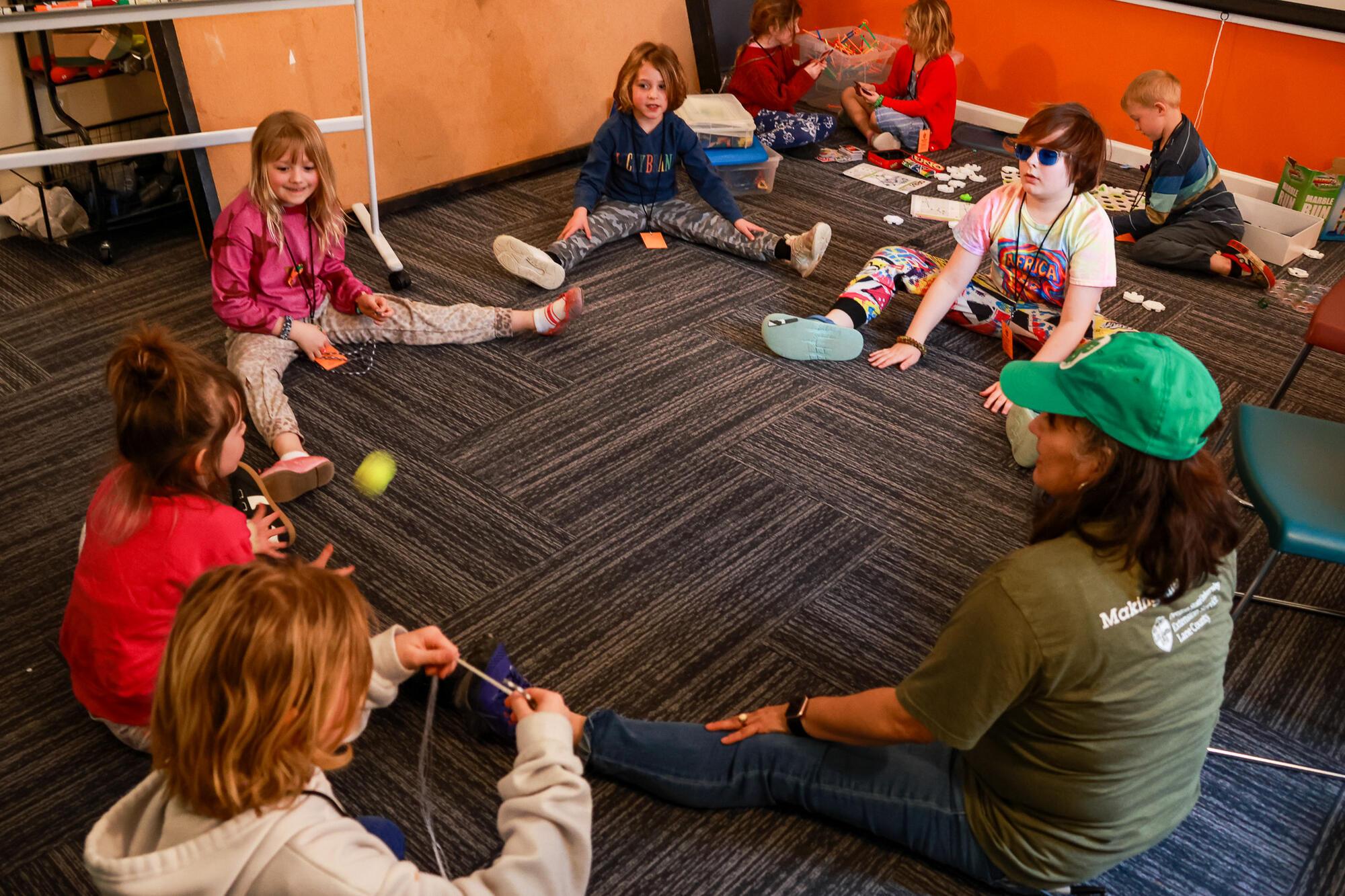
At the Oregon State University Extension Service 4-H Spring Break Camp in Lane County, youths took on the roles of detectives, scientists and artists, all in the same week.
"We’re teaching them to be those leaders through civic engagement, through head, heart, hands and health."
The camp, led by 4-H program coordinator Melinda Garcia, is designed around hands-on learning, where 16 kids explored science and art through interactive activities. This year, the workshops ranged from extracting DNA from bananas to creating masking-tape art and solving mock crimes.
“We want to give parents opportunities to bring their kids to a safe environment where they can learn, socialize and have fun,” Garcia said. “Ninety percent or more of the kids that attend this camp are not 4-H club members. You don't have to be in a 4-H club to attend, and that's the beauty of it.”
Combination of art and science
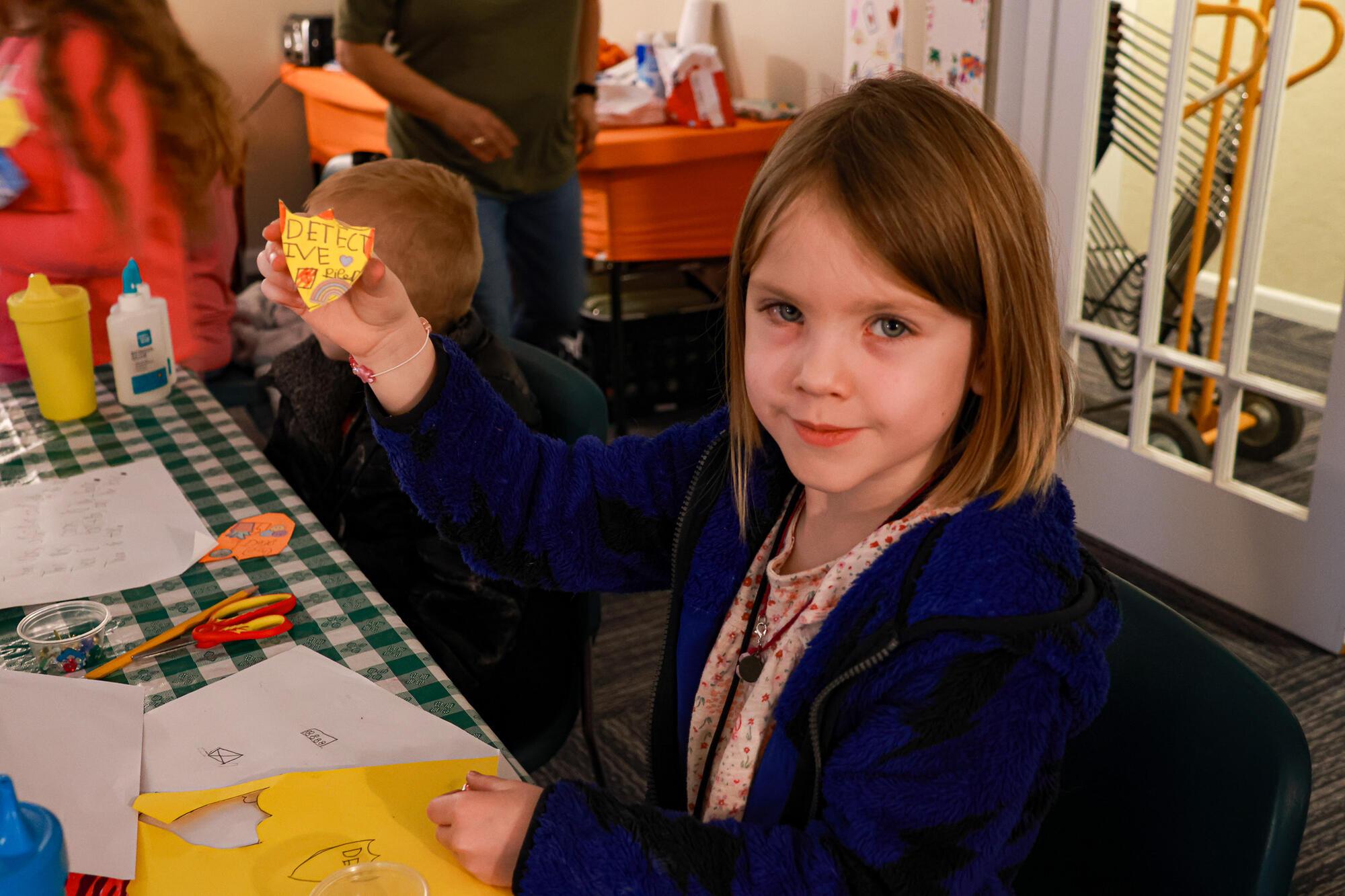
Ten-year-old Lillian Blystone spent her mornings drawing animals with a new friend she met at camp. Lillian proudly shared her tape art creations — dogs, cats and goats — with other campers.
“A lot of kids wanted me to make art for them,” she said.
Her friend, Raylee Trextle, 7, was most excited about the science component of the camp, especially extracting DNA from a banana.
There were also campers like Aiden Wilson, 10. After trying a strawberry DNA experiment last year, he helped younger campers with the banana version this time around.
“Because I like doing experiments and seeing stuff that is colorful,” he said.
That combination of creativity and science is the core of STEAM education in the 4-H curriculum, which integrates science, technology, engineering, arts and mathematics to encourage youths’ critical thinking and problem-solving.
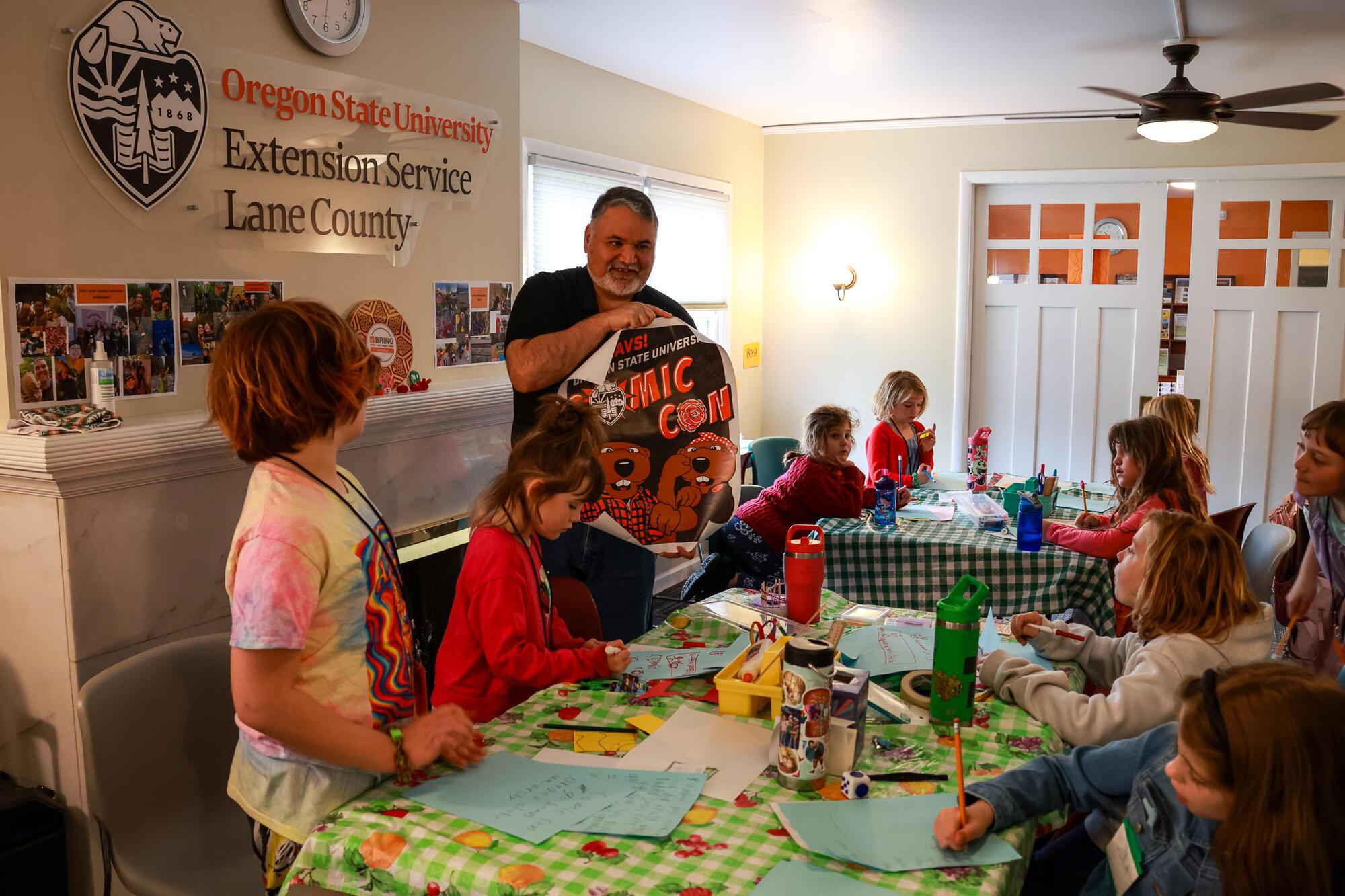
“I’m a big proponent of STEAM, especially the arts,” said Victor Villegas, a broadband and digital technologies adoption coordinator with OSU Extension who volunteered at the camp. “Because it allows us to translate STEM subjects in a way that’s more accessible to kids.”
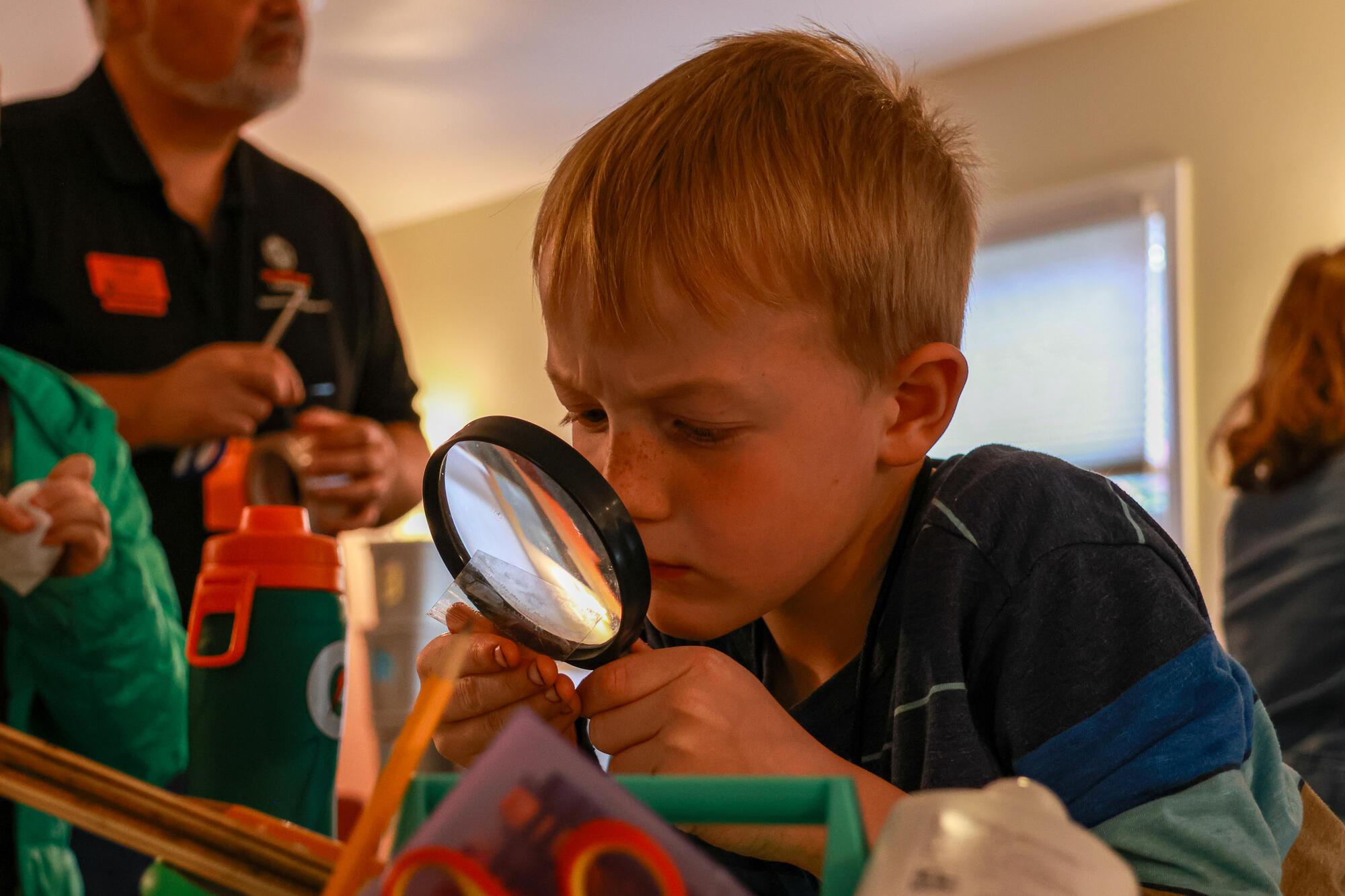
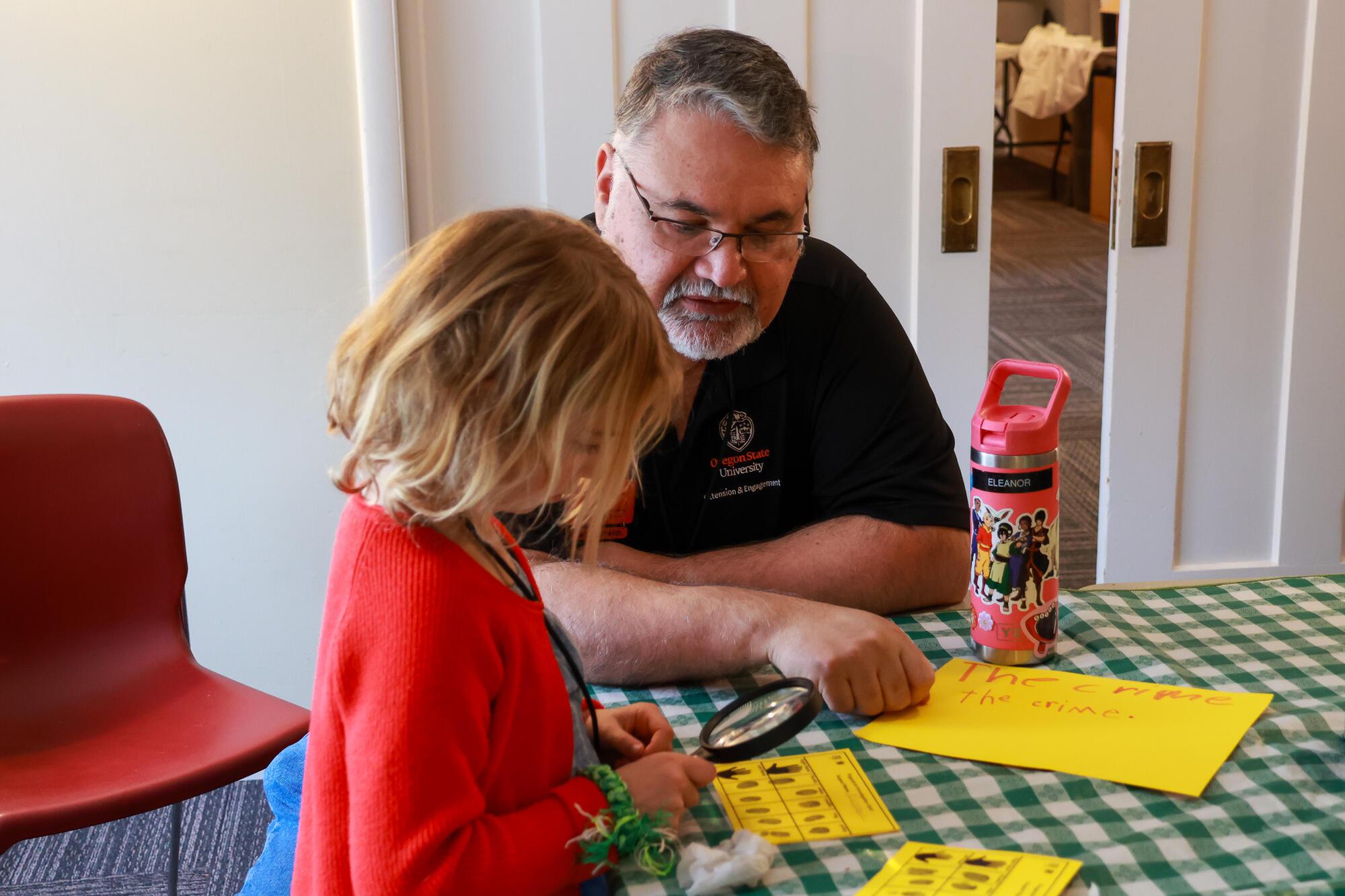
At the fingerprinting class, the kids looked at their fingers through magnifying glasses, used tape to collect fingerprints, and then drew them. Through observation and drawing, they learn to identify arches, loops and whorls in different types of fingerprints.
As part of his role, Villegas works with K-12 schools on outreach and engagement around artificial intelligence, technology and workforce development. He volunteers with 4-H when he can, wanting to give back after benefiting from a strong STEAM education himself.
Through camps like this, he hopes youths learn to collaborate and express their ideas creatively through hands-on activities. He said these skills are what employers look for.
Meeting different needs
The camp also focuses on meeting kids where they are.
This year, Garcia introduced features to better support neurodivergent youth, including a “safe space” table with fidget tools where kids can take a break and reset. Campers also created their own “social stories” using drawings and stickers to practice how to respond to different situations, such as feeling restless or overwhelmed.
The camp has grown steadily since Garcia joined Extension in 2020. Now, in addition to Eugene, sessions are expanding to other parts of Lane County. In 2021, Lane County voters approved a local option property tax levy to help fund Extension programming in Lane County. The levy enabled Extension to open satellite offices in Oakridge and Florence.
That broader reach reflects a larger goal of reshaping how people think about 4-H.
“We're trying to break that mindset that 4-H is more than just teaching about animals,” Garcia said. “It can be robotics, nutrition, arts and crafts, cultural learning and cooking … It’s a little bit of everything.”
Garcia is willing to travel across the county to small towns to provide programming, even if that means drawing fewer participants than in Eugene.
“I’m a big believer that it's not about the number, it's the impact you're having,” she said.
Back in the “crime scene” classroom, young detectives were observing footprints and fingerprints, conducting interviews with Extension office employees who role-played as suspects, and comparing evidence, all immersed in learning science and verbal expression.
“That's what 4-H does. We’re teaching them to be those leaders through civic engagement, through head, heart, hands and health,” Garcia said. “And when you can do that through a workshop or a camp, then we're doing our job, and the goal is to plant that seed.”
Visit the OSU Extension Lane County 4-H website to learn more about youth programming available in the county.