

Learn the importance of soil organic matter levels to plant performance and get suggestions for amendments suitable to your soil. Whether sand, silt or clay — any soil can be improved by the addition of organic matter. The result will benefit soil and plant health.
Contents
- What gardening problems are caused by poor soil quality?
- What makes a productive soil?
- What is soil?
- Benefits of adding organic matter to soil
- Checking soil organic matter in your garden
- Soil structure and compaction
- Fresh vs. composted materials
- Common organic amendments
- Leaves from deciduous trees
- Interpreting laboratory analyses for fresh organic material or compost
- Organic amendment quality
- Estimating amendment volume needed for a project
- Incorporating organic matter into soil
- Using organic matter for landscape installation and maintenance
- Questions and answers
- For more information
What gardening problems are caused by poor soil quality?
Many problems with home vegetable gardens, fruit trees, shrubs and flower gardens are caused not by pests, diseases or a lack of nutrients, but by poor soil physical conditions. Symptoms of poor soil quality include:
- Soil that is dried and cracked in summer.
- Digging holes in the soil is difficult, whether it is wet or dry.
- Rhododendrons, hydrangeas and other shrubs wilt in hot weather, even when watered.
- Leaves on shrubs turn yellow and have brown, dead sections on them, particularly on the south side of the plant.
- Tomatoes and peppers develop blossom-end rot, even if fertilized with calcium.
- Water pools on the soil surface and drains slowly, or it runs off the surface.
What makes a productive soil?
A productive soil provides physical support, water, air and nutrients to plant and soil-dwelling organisms (see "What is soil?"). Like humans, root and soil organisms breathe and require sufficient air and water to live. As a result, a good soil is not "solid"; rather, between 40% and 60% of the soil volume is pores. The pores may be filled with water or air, making both available to plants (see "Soil structure and compaction").
The largest pores control aeration and movement of water through the soil and are largely the result of earthworm burrowing or root growth. The smaller pores store water. The individual particles of a productive soil are aggregated into larger units, and the pore arrangement remains stable over time.
What is soil?
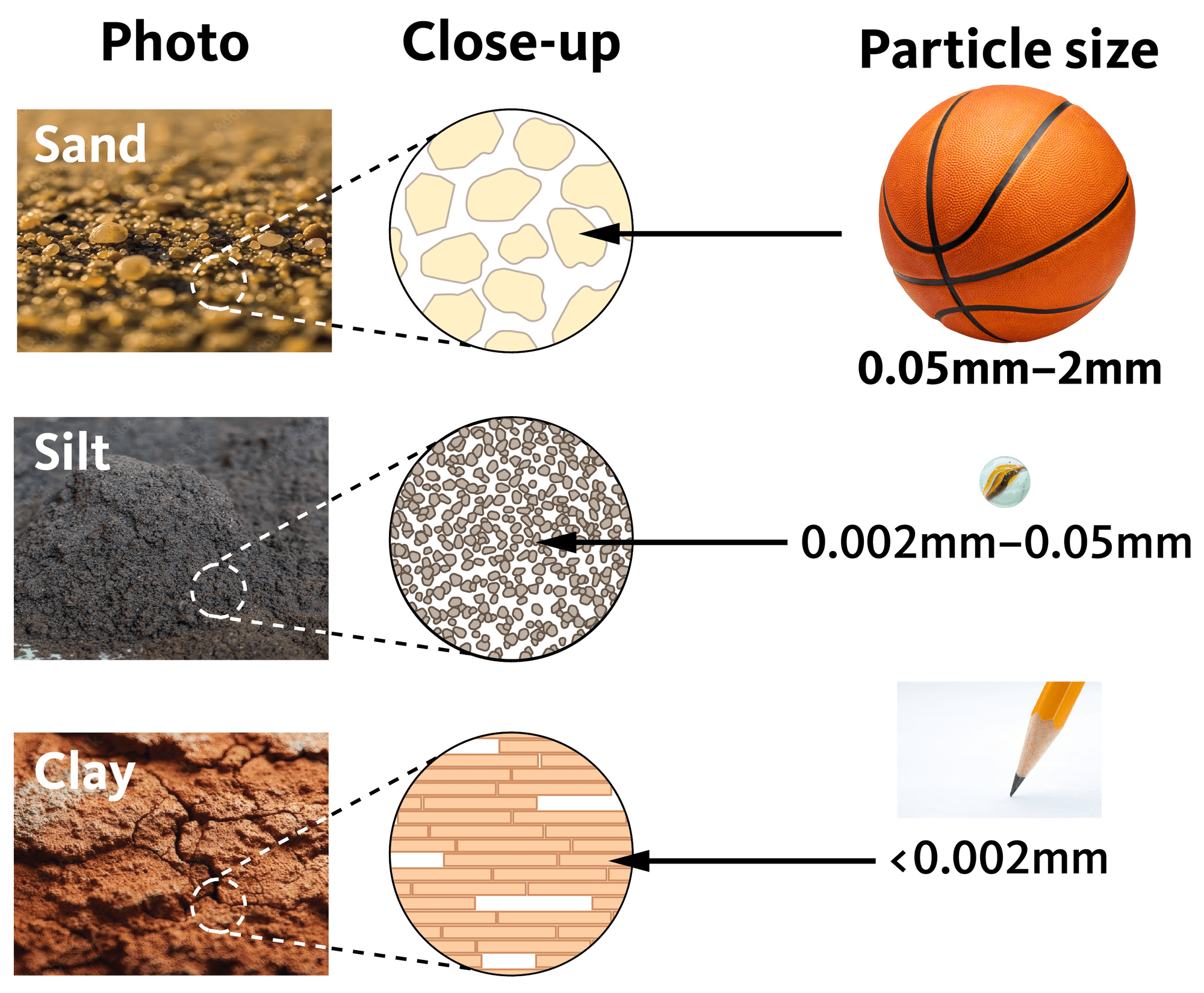
Soil includes mineral and organic components, water and air. All of these are essential to plant growth. Soil formation is the result of physical, chemical and biological processes. The process of soil formation begins when wind, rain and fluctuating temperatures break rock into ever smaller fragments. The rock fragments that compose most soils are sand, silt and clay.
Soils high in sand are fast-draining and require frequent watering. Soils high in clay can store a great deal of water, but much of this water cannot be extracted by plant roots. Their high water storage capacity adds weight to clay soils. They are less permeable to air and water.
The soil is also host to a large number of living organisms. Without soil organisms, very little soil formation would take place. Some of these organisms, such as bacteria, fungi and certain insects and mites, are microscopic. Others. such as ants and earthworms, can be seen by the naked eye.
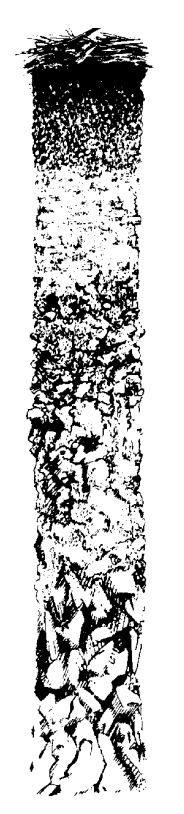
Soil formation results in layers of soil, much like the layers of a cake. The topsoil is where most of the organic matter accumulates and where most biological activity occurs. Soils rich in organic matter have a dark color. The subsoil layers tend to be lighter in color and more finely textured than topsoil. Subsoil tends to be low in organic matter and is usually less suitable for plant growth.
Benefits of adding organic matter to soil
One of the most important reasons for adding organic matter is to improve the ability of the soil to accept and store water (see "Soil structure and compaction"). Amending your soil may mean that you can reduce the amount of water a newly planted garden requires. This effect can be enhanced by placing an organic mulch on the soil surface, which will reduce evaporation compared to bare soil.
Adding organic matter also increases the activity and number of soil organisms. Many of these organisms contribute to the decomposition of added organic matter or cycle the plant nutrients organic matter contains. Over time, a well-amended soil will supply more of the nutrients your plants require, which will reduce fertilizer requirements.
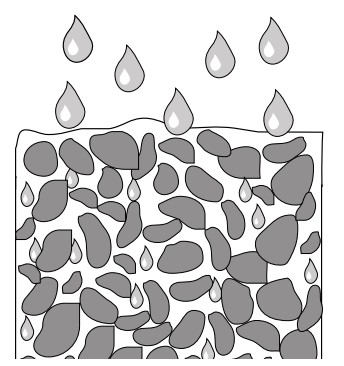
Although you might not expect it, adding organic matter to soil also helps to protect water quality. Soils amended with organic matter are a better sponge for water. More water goes into the soil, and less water runs off the surface. Because surface runoff is reduced, pesticides and fertilizers are retained in the soil instead of washing into nearby waterways.
Checking soil organic matter in your garden
Here are some simple ways to assess organic matter content of your soil.
- Use your eyes. Soils with adequate organic matter content are dark in color, both because they have more humus, which is dark, and because they hold more water.
- Look for puddling and standing water. Soils rich in organic matter content have more stable pores, which allow water to percolate below the surface.
- Use your fingers. Look for aggregated soils. If you rub the soil between your fingers, the soil will seem to contain "crumbs" made up of mineral and organic particles. The crumbs are examples of aggregation and are the result of sticky substances released by soil bacteria after feeding on organic matter. Aggregation creates soil structure and soil pores.
- Use your nose. Soils with adequate organic matter content have the rich smell of earth. Soils that have poor air circulation, a result of reduced organic matter content, may smell foul.
Soil structure and compaction
Soil structure is another name for the clods of soil that you see when you dig into a soil. The most desirable structure for a topsoil is a granular structure (small "pebbles" or "crumbs" of soil). Soils with a stable granular structure are easy to dig, accept water readily, and make a good seedbed. This soil condition is often referred to as "good tilth."
Good soil structure is analogous to a sponge. Like a sponge, pore spaces in a good soil are stable. In contrast, soil with poor structure is like a bowl of popcorn, where the pore spaces are easily crushed.
A productive soil is a dynamic community made up of many species of fungi, bacteria, insects and mites. This community depends on organic matter as a food and fuel source. Together with earthworms and plants, these organisms provide the "glue" that holds soil together and gives it structure.
Soil structure is delicate and easily damaged. Compaction by machinery or foot traffic is a common problem. Compacted soils hinder root penetration and the movement of air and water into and throughout the soil. Compacted soils are a poor environment for plants as well as insects, earthworms and other soil organisms. Tilling the soil, particularly when it is wet, damages soil structure and increases the rate of soil organic matter loss through decomposition.
Fresh versus composted materials
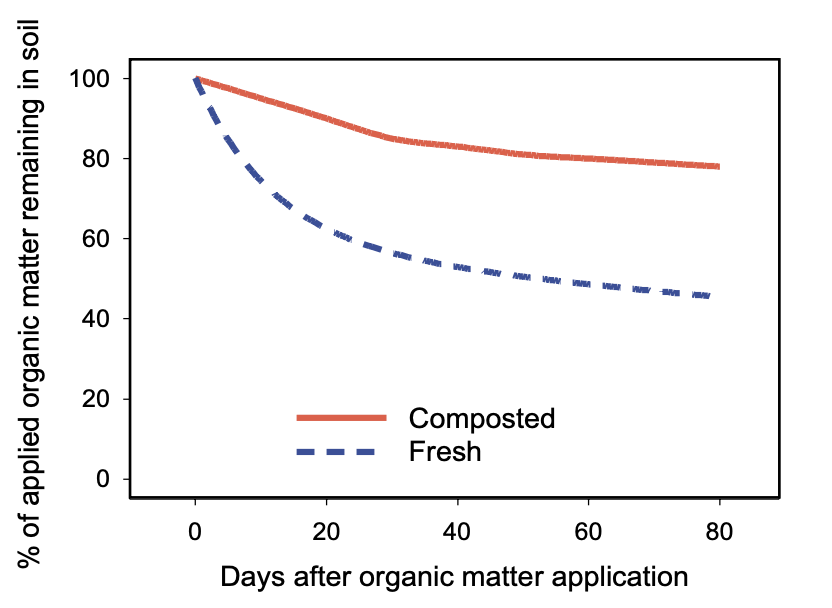
Both fresh and composted organic materials are useful soil amendments. Fresh organic material is rapidly decomposed by microorganisms in a compost pile or in the soil. The microorganisms use the organic material as a food source and release carbon dioxide to the atmosphere. As decomposition proceeds, the remaining organic compounds are more resistant to decomposition. They have less food value to microorganisms.
Decomposition is usually very rapid for the first 30 days after application of fresh leaves, fruits, or other vegetative material to soil (Figure 4). When fresh organic materials decoompose in the soil, the sticky exudates produced by soil organisms help glue soil particles together, improving soil structure. The volume of material will reduce rapidly as it decomposes.
Soil microorganisms require nitrogen for their growth, so the process of degrading fresh organic matter in the soil sometimes causes a temporary nitrogen deficiency for plants. If you use fresh plant material, allow it to decompose in the soil for several weeks before planting into it. Also keep in mind that very woody materials, such as sawdust or sawdust-bedded manures, may cause nitrogen deficiency in soils for a long time, even after composting.
When organic materials are composted before use, the rapid decomposition phase takes place in the compost pile instead of in the soil. Organic matter supplied by compost lasts longer in soil than fresh organic matter because microbes have already consumed much of the higher-food-value material. However, composted organic matter is a poorer food source for soil organisms compared to fresh organic matter, so less of the sticky exudates that build soil structure are produced. On the other hand, well-composted materials have fewer weed seeds and are less likely to carry plant disease organisms. Composted manures are preferred over fresh manures to avoid contamination of food crops with pathogens such as E. coli.
If you are establishing a raised-bed garden, compost is preferred because it will lose volume less rapidly and because it has less potential to compete with plants for nitrogen.
Common organic amendments
Because organic amendments are bulky, heavy, and expensive to transport, look for suitable amendments close to home. You can make your own compost (see "For more information") or use fresh organic materials from your yard. Local private or municipal composting operations offer a variety of compost products. Also consider the types of farming, ranching, or other agricultural operations in your area, and what types of residuals they might produce that would be available at little or no cost. You might be able to arrange for bulk deliveries of these materials with a landscape supply or trucking company. If you need only half a load, consider splitting a load with a neighbor.
Locally available amendments may include:
- Yard trimmings compost
- Leaves from deciduous trees
- Crop residues
- Manures and manure composts
- Separated dairy manure solids
The following sections describe the characteristics of these common amendments and give some suggestions for getting the best value from each amendment.
Yard trimmings compost
Yard trimmings compost is the most widely available material suitable for high-rate incorporation into soil. Grass clippings, leaves, brush, tree and shrub prunings, or other plant materials are composted in large piles, then screened to remove sticks larger than 3/4 of an inch. Piles typically reach temperatures above 130°F, killing most weed seeds. Woody materials dominate most yard trimmings composts. They usually have a carbon:nitrogen (C:N) ratio of less than 20:1, a pH of 6 to 7, and relatively low levels of ammonium-N and soluble salts (3 to 6 mmhos/cm). (See "Interpreting laboratory analyses for fresh organic material or compost.")
Yard trimmings compost usually increases nitrogen fertilizer requirements for the first two months after application. Later on, it has little or no effect on nitrogen requirements.
Composted yard trimmings decompose slowly in soil. About half of the organic matter added usually remains in the soil after two growing seasons. Apply yard trimmings compost at a rate of 1 to 2 inches.
You can make yard trimmings compost in a backyard compost pile ( see "For more information"). To make compost from woody trimmings, you usually need to grind, cut or chop these materials prior to composting.
Be selective in the materials you include in a home compost pile. It is quite common for weed seeds, vegetable seeds, and plant disease organisms to survive the home composting process.
It usually takes about 12 months to make high-quality yard trimmings compost in a backyard pile with minimal maintenance. Yard trimmings compost from a backyard pile is generally not screened. (See "Trees and shrubs").
Leaves from deciduous trees
Leaves are perhaps the best and most readily available organic matter source for vegetable gardens or other areas that get some annual tillage.
Leaf mulch, or leaf mold (partially decomposed leaves), has a near-neutral pH (6 to 7.5). The C:N ratio is about 50:1 in fresh leaves, decreasing to below 20:1 when fully composted. Most kinds of leaves are a good source of potassium (K); a 2-inch application will supply about 0.3 to 3 lb potash (K20) per 1,000 square feet.
Because leaves decompose rapidly, they are not as useful as one-time applications in increasing organic matter as yard trimmings compost.
Mulching an annual vegetable or flower garden with 1 to 2 inches of leaves in the fall adds organic matter, protects soil from raindrop impact, and smothers winter annual weeds. In the spring, the remaining leaf debris may be dug or rototilled into the soil. If you plant a fall cover crop, reduce leaf application or omit it altogether so that you don't smother the cover crop.
To compost leaves, pile them in the fall, then turn the pile several times in March and April. Leaf mulch from a home compost pile is excellent for summer mulching around rhododendrons, blueberries, and other shrubs that are sensitive to summer drought, or in vegetable and flower gardens. Apply 1 to 2 inches after soil has warmed in June.
Partially composted leaves also improve soil in annual planting beds.
Crop residues
Fresh or composted crop residues may be available from nearby farms, tree-trimming companies, or your own kitchen. Uncomposted crop residues may contain weed seeds, while properly composted residues are comparatively weed-free.
Woody materials such as hazelnut shells or ground tree pruning can be used as a mulch around trees or shrubs. Residues from annual crops (fruit, leaves, straw) decompose more rapidly in soil than do woody materials. Fruit and vegetable residues are high in water and readily degradable organic matter. They can be incorporated into a backyard compost pile or buried into the soil. As a general rule, the juicier and leafier the crop residue, the less it contributes to long-term soil organic matter.
Peppermint hay is leaves and stems that have been heated to remove peppermint oil. Freshly cooked peppermint hay, offered for sale in August, has roughly the same levels of nitrogen and potassium as manure and fresh grass clippings. It also is high in soluble salts. Much of the plant nutrient content in fall-applied mint hay will be lost to surface or ground waters because plants are not actively taking up nitrogen at that time.
Composted peppermint hay, which is offered for sale in the spring, is more suitable for landscape use than freshly cooked hay. It has greater long-term value as a soil amendment. After composting, the fibrous stems remaining in peppermint hay make a good mulch or soil amendment.
Peppermint can be composted with other low-nutrient materials (such as straw or woody materials) to make an excellent soil amendment.
Manures and manure composts
Many manures and manure composts are high in soluble nitrogen, ammonia, or salt content, or have a high pH — above 8. Thus, their suitability for use in landscapes in limited.
Composting transforms soluble nitrogen in manure to slow-release forms, decreases ammonia to levels that do not injure plants, and sometimes reduces pH to 7–7.5.
However, composting concentrates salts. Chicken manure and feedlot (steer) manure composts are typically high in chemical salts. Mushroom compost, a mixture of manure plus cottonseed or soybean meal and other inorganic amendments, it also high in salts.
In general, it is best to use manures and manure composts in small amounts to replace nitrogen-phosphorus-potassium fertilizers. Ask for a compost analysis and check for soluble salts and ammonium-nitrogen when buying composted manure products. See "Interpreting laboratory analyses for fresh organic material or compost" for more information.
Separated dairy manure solids
Separated dairy solids are one manure product that can be applied at high rates to most planting beds. Separated solids are available from dairies west of the Cascades in fresh and composted forms. Separated dairy manure solids (composted or uncomposted) are much lower in salt, ammonia, and soluble nitrogen than raw dairy manure. They have a pH of 7 to 8 and soluble salt levels similar to yard trimmings compost (3 to 6 mmhos/cm). The C:N ratio of fresh solids is approximately 30:1, which reduces to 15:1 after composting.
Fresh separated solids usually are less expensive, but lower in quality than composted separated solids. Fresh solids may contain weed seeds. Fresh dairy solids increase nitrogen fertilizer requirements for 4 to 8 weeks following application, then act as a slow-release source of plant-available N. About half of the organic content of fresh separated dairy solids is lost via decomposition during the first months following soil incorporation.
Composted separated solids are a better value for long-term soil organic matter enhancement because they decompose more slowly in soil. Composted solids are essentially weed-free. Composted solids provide slow release nitrogen for plant growth within several weeks of application.
Interpreting laboratory analyses for fresh organic material or compost
Laboratory analyses describe and quantify product quality. To ensure the quality of any compost you purchase, ask whether a commercial supplier regularly tests their product. They should provide you with recent test results upon request.
Moisture content (percent 'as-is' amendment weight)
This is an indication of the water and organic matter content of compost. A material that has 40% moisture has 60% dry matter. Best: 40% to 60% moisture content. Less organic matter is present at high moisture content (greater than 60%), and the material can be dense, heavy and difficult to spread. Low-moisture materials (less than 40%) are sometimes dusty and may not be completely composted. Insufficient moisture slows decomposition.
Percent organic matter (percent dry weight)
This indicates the percentage of a dried amendment that is organic matter. Best: 40% to 60%. Low values (less than 30%) usually indicate that organic matter has been mixed with sand or soil. High values (greater than 60%) indicate fresh, uncomposted material.
pH
pH is an indicator of the acidity or alkalinity of a material. Lower values indicate greater acidity. Best: 6 to 7. Values below 5 or greater than 8 may injure plants. Acid-loving plants such as blueberries and rhododendrons prefer a pH near 5.
C:N (ratio of carbon to nitrogen)
Stable soil organic matter has a C:N ratio of 12:1 to 15:1. Ratios less than 10:1 are typical of uncomposted manure, which will decompose rapidly in soil and release plant-available nitrogen. Ratios greater than 25:1 are typical of uncomposted woody plant materials or crop residues such as wheat straw. Incorporation of high C:N materials (greater than 25:1) usually reduces the supply of plant-available nitrogen in the soil for several months.
Ammonium-nitrogen (NH4-N; dry weight basis)
Ammonium-nitrogen is available for immediate use by plants. Best: less than 500 ppm.
Ammonium-N concentrations above 1,000 ppm (0.1%) typically are present in manures that are incompletely composted. Materials with high ammonium concentrations are not ideal for high-rate incorporation into soil because they supply nitrogen in a highly soluble form. High ammonium materials can cause plant injury unless they are thoroughly mixed with soil. Ammonium-N usually is converted to nitrate-N within a few weeks of application. Allow a month between the application of high-ammonium materials and planting to avoid root damage.
You can usually avoid problems with ammonia toxicity to roots by allowing a month between an application of high-ammonium material and planting.
Electrical conductivity (EC)
Electrical conductivity is a measure of the soluble salt content of the material. Best: 0 to 4 mmhos/cm of the material. Poor: above 8 mmhos/cm. High electrical conductivity indicates high chemical salt content, which may injure plants. Avoid using materials with high EC in planting holes.
Nitrate-nitrogen (NO3-N; dry weight basis)
Nitrate-nitrogen is immediately available to plants. Best: 200 to 500 ppm. Materials with high nitrate concentrations supply too much water-soluble N (plant-available N) when applied at typical rates (1 to 2 inches of compost). Material with low nitrate concentrations (less than 50 ppm) and high C:N ratio (above 25:1) likely are incompletely composted and will likely tie up nitrogen for several months. Alternate sources of plant-available nitrogen will be required.
Plant-available, water-soluble or inorganic nitrogen
This is the sum of ammonium-N plus nitrate-N (dry weight basis). One inch of a compost with 1,000 ppm N (ammonium + nitrate-N) supplies about 1 lb of water-soluble nitrogen per 1,000 square feet.
Excess water-soluble N can leach through soil and contaminate groundwater, or run off and contaminate surface water. Apply 1 inch or less of materials having ammonium + nitrate-N concentrations above 1,000 ppm.
Organic amendment quality
When applying high rates (1 to 2 inches) of an organic amendment, look for organic amendments that will promote stable soil conditions and balanced plant nutrient levels. Organic amendments like these:
- Are well-mixed and easy to spread: Quality organic amendments have a consistent texture and moisture content, are free of large sticks, and can be handled easily with a shovel or fork.
- Do not injure plants when applied at high rates or change usual fertilization practices — Quality organic amendments have a pleasing, earthy smell. They do not smell like ammonia (excessive nitrogen will burn seedlings and tender root growth) or rotten eggs (anaerobic decomposition results in organic acids, which may be toxic to some plants). Excessively woody materials will rob plants of soil nitrogen as they decompose.
- Decompose slowly: Quality organic amendments decompose slowly when applied to soil because considerable decomposition has already occurred during storage or composting. Rapidly decomposing materials may tie up soil nitrogen temporarily, may increase organic acid in the soil as oxygen levels are reduced, and will undergo a reduction in volume as decomposition proceeds.
Amendment quality characteristics also include particle size, nutrient and organic matter content, pH, and carbon-to-nitrogen ratio. Quality amendments have low concentrations of contaminants, including salts, weed seed, pesticides or other foreign substances.
Many commercial compost suppliers regularly test their product and provide product-quality information. "Interpreting compost analyses" discusses criteria for assessing the quality of organic materials.
Estimating amendment volume needed for a project
You can easily estimate how much amendment you need to cover a known area to a desired depth. Choose the depth of application (in inches), and measure the area to be amended (in square feet). Table 1 estimates the volume of amendment (in cubic yards) you will need.
For smaller gardens, a yard of material is too much, so a 5-gallon bucket makes a handy measuring device. For example, suppose your garden is 10 feet by 10 feet (100 square feet), and you want to incorporate a 1-inch layer of compost.
|
Depth of amendment desired (inches) |
Cubic yards of organic material to add |
|||
|---|---|---|---|---|
|
For 200-square-foot garden |
For 500-square-foot garden |
For 1,000 square-foot garden |
For 2,000 square-foot garden |
|
|
1 |
0.6 | 1.5 | 3.1 | 6.2 |
|
2 |
1.2 | 3.1 | 6.2 | 12.3 |
|
3 |
1.9 | 4.6 | 9.3 | 18.5 |
|
4 |
2.5 | 6.2 | 12.3 | 24.7 |
Note: To estimate square footage of a garden, multiply the length by the width (in feet).
Incorporating organic matter into soil
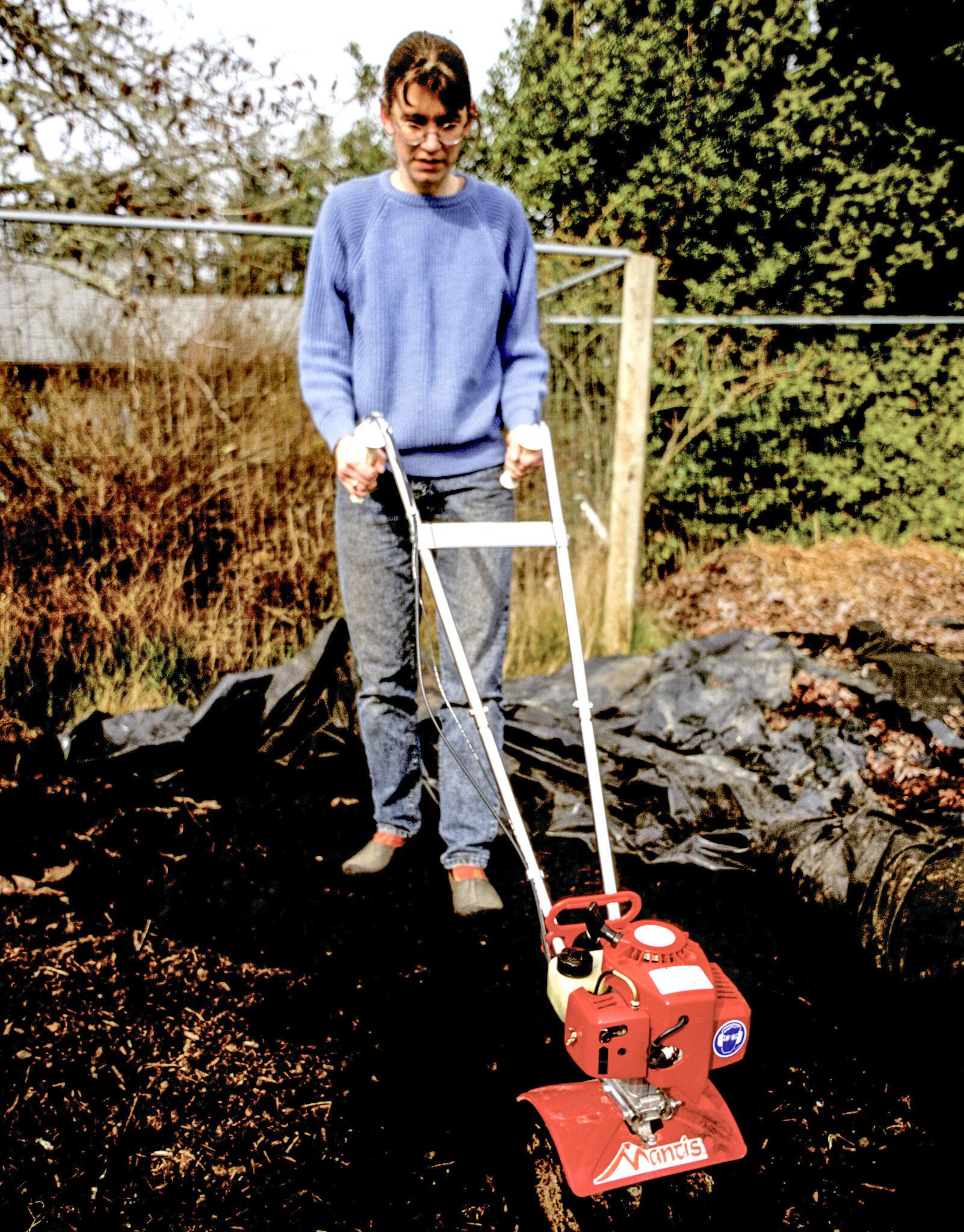
There are several ways to mix organic matter into garden soil. The most common methods involve digging or rototilling (Figure 5).
Rototillers are effective, but hand-operated machines usually are capable of working only the top 4 to 6 inches of soil. Tractor-mounted rototillers may enable you to mix up to 8 inches deep. For incorporating amendments over a relatively large area, rototillers are probably the best option.
Excessive rototilling damages soil structure, particularly if done when the soil is wet. Repeated bouts of rototilling can compact soil just below the tillage depth, reduce the volume of pore spaces in soil for air and water, and kill earthworms.
Digging amendments into the soil is hard work, but will enable you to incorporate organic amendments as deeply as you choose to dig. It also avoids the soil structure damage associated with rototillers. An ordinary spade works well in soil that is not too wet. A digging fork is the best choice to minimize the impact of digging on soil structure, and in high clay-content soils.
Cover crops provide a relatively easy way to add organic matter to soil. The mat of roots formed by the cover crop often is more valuable in building soil structure than the plants growing above ground. Choose cover crops specific to winter or summer growing. (See "For more information" for details on cover crops suited to your garden.) Dig in the cover crop at least two weeks before planting your garden, or remove the above-ground portion and compost it.
Another option is to apply a layer of organic amendment on the soil surface and simply plant into it. This method avoids work, soil disturbance and provides a mulch to conserve soil moisture and suppress weeds. This method is slower to improve the organic matter content of soil.
Using organic matter for landscape installation and maintenance
Lawn establishment
Get a new lawn off to a good start by amending the soil with compost before establishing turf. This provides a better environment for root growth. Healthy, vigorous lawns with deep root systems require less water during summer and crowd out weeds.
Once established, a vigorous lawn produces its own organic matter. Grass roots are one of nature’s best soil structure builders. Living roots provide a rich food source for organisms. Dead grass roots are continuously sloughed from the plant and add to soil organic matter. One of the keys to getting this natural organic matter factory working in your lawn is to provide good soil quality for turf establishment.
Use only composted organic materials for soil amendment prior to grass establishment. Use compost that has been screened (particles less than 0.5 inch). Sticks and other coarse organic materials make it difficult to establish a firm seedbed prior to seeding or sodding. Screened yard trimmings compost is widely available and usually is suitable. Do not use fresh organic materials, because they are too difficult to mix evenly with soil and can cause low spots in the lawn as they decompose.
Incorporate 1/2 to 1 inch of compost into the top 6 inches of soil with a rototiller. Incorporating more compost can result in an uneven or bumpy lawn because intense earthworm feeding will decrease the compost volume. Soil-dwelling worms deposit their castings at the surface, which may also cause bumps. Use less compost if the material is high in plant-available nitrogen. Use less compost if you do not till the soil to a 6-inch depth.
Lawns require adequate pH and nutrient levels for rapid establishment and robust growth. Test your soil and compost, and request an agronomic interpretation of the results. This will ensure the right amount of phosphorus, potassium and lime for the new lawn. Phosphorus and lime, particularly, change soil chemistry most rapidly when in direct contact with the soil, so incorporation with the compost is recommended.
Nitrogen fertilizer can be added before or after you mix compost with the soil. Compost analyses may be helpful in adjusting nitrogen application rates.
Vegetable and flower gardens
Vegetable gardens tend to contain many annual or biennial plants. Because the soil in vegetable gardens is at least somewhat disturbed annually, these soils should be routinely amended.
Some vegetable crops, such as rhubarb, are perennials, and many herbs are small shrubs. The deeper roots of perennial vegetables such as rhubarb, the small shrubs of herbs and the deeper roots of carrots will benefit from soils amended to a depth of 10–12 inches.
Ornamental gardens that contain herbaceous perennial or woody plants must be amended before planting. Digging ornamental perennials for division provides another opportunity to amend the soil in ornamental beds.
Trees and shrubs
Shrubs and trees are more permanent, so soil must be well prepared at the time of planting. It’s best to amend soil to a depth of 12 inches in these gardens. Routine, periodic mulching in these situations will increase the effectiveness of the soil amendment, and over time some of the mulch will become incorporated into the soil as organic matter.
Tree and shrub root systems are not a mirror image of the top of the plant. Instead, they resemble pancakes. Most roots are found in the top 2 feet of soil, and can spread to two to three times the diameter of the canopy, or more. Thus, it generally is better to amend the largest possible area around these plants.
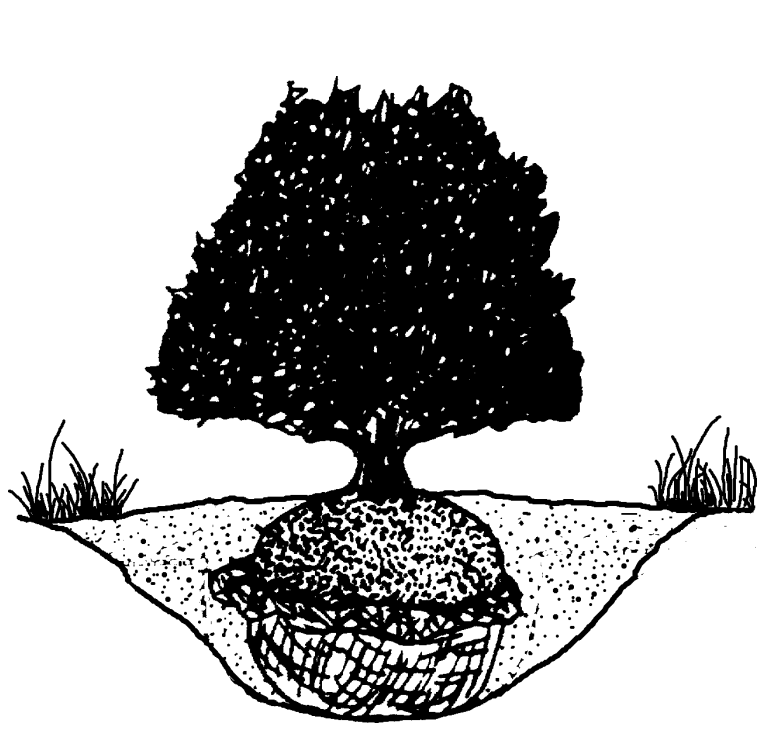
Amending only a planting hole is not the best use of organic amendments in tree and shrub plantings. If only the planting hole is heavily amended with organic matter, the planting hole functions like a large pot. Roots grow rapidly through the permeable, amended soil, but have difficulty penetrating the hard surrounding soil. This limits growth and increases the risk of tree blow-downs.
Water readily enters the amended planting hole but drains slowly into the unamended soil surrounding the hole, and may cause waterlogging and root damage.
When planting trees and shrubs, dig the planting hole no deeper than the root ball of the plant, but several times wider than the diameter of the root ball (Figure 6). At a minimum, loosen the top 12 inches of soil around the planting hole to increase permeability and aeration. If the soil quality is particularly poor, you might consider adding a maximum of 25% organic amendment (by volume) to the loosened soil. Always use a soil amendment that is low in soluble salts, such as yard trimmings compost or composted leaves. Avoid materials with a high soluble salt content, such as animal manures or mushroom compost.
With their smaller root systems, small shrubs can be planted in raised beds or berms amended with organic matter. Raised beds provide better drainage than flat plantings, and it often is easier to mix organic matter with loose soil in a newly formed raised bed. If you add soil or a compost-soil mix to a raised bed, loosen the existing soil with a fork before adding the new soil to form the raised bed.
Construct raised beds several inches above the existing grade to provide sufficient rooting volume. The width of the raised bed should reflect the size of the plant at maturity. The larger the plant, the wider the root system is likely to be. Thus, the bed probably should be at least twice the diameter of the shrub’s expected width at maturity.
Mulch the soil surface with 2 to 4 inches of coarse compost, wood chips, bark, or similar materials under existing shrubs and trees. Mulch can suppress weeds, conserve soil moisture and moderate soil temperatures, all of which improve plant growth. If you amended a shrub bed prior to planting, mulching the bed afterward will maximize the benefit of the soil amendment. Mulching to conserve soil moisture is particularly useful for raised beds, since water tends to evaporate more readily from beds than from flat soil.
Over time, earthworms and other soil organisms incorporate some of the mulch into the soil, providing a natural soil amendment process similar to the process on a forest floor.
Questions and answers
Topsoil was removed or buried during the construction of my home. Is adding more topsoil better than amending with organic matter?
After topsoil is removed or buried, you are left with subsoil. Subsoil typically is low in organic matter and slow to admit water, air and plant roots. This problem is often addressed by spreading topsoil over the compacted subsoil layer. Before you use this approach, consider several potential problems:
- The quality of the added topsoil may not be significantly better than the existing soil. Unlike compost, there are no standards for topsoil quality, so before accepting delivery of topsoil, inspect it and try to assess organic matter content. Other quality issues such as the presence of weeds or weed seed are best evaluated in the supplier's yard.
- Even if the topsoil quality is good, the layer of soil will be thin and may not allow for extensive root growth, as roots will tend not to grow into the subsoil below. This can result in reduced growth, increased sensitivity to drought and blow down of trees.
- The subsoil layer beneath an added layer of topsoil may impede drainage, causing problems with growth and root diseases.
In most cases, the best alternative is to amend the existing soil with organic matter, then bring in topsoil for areas of the landscape where added soil will have the most benefit (e.g., a raised-bed garden).
Will gypsum improve soil structure?
Gypsum is calcium sulfate. It is sometimes recommended for improving soil structure for soils west of the Cascades. Soil response to gypsum is variable. There is no consensus among soil scientists that gypsum will improve the structure of soils high in clay content.
Is there anything organic matter won’t do for soil quality?
A single addition of organic matter to soil will not have long-term effects on soil quality. Over time, the organic matter content of the soil will decline because of decomposition, soil microorganism feeding and nutrient cycling. To maintain the organic matter content of the soil, routinely incorporate more organic matter or mulch, or establish perennial grass sod.
Addition of organic matter will not eliminate the need for watering flower beds and vegetable gardens during dry summer weather. You probably will find that gardens amended with organic matter require less frequent irrigation, but, in most areas, summer water still is required for best growth and appearance of most plants.
Although in many cases incorporation of organic matter into soils improves drainage, there are some drainage problems that organic matter cannot improve. In low-lying areas where water tends to pond on the surface, the soil will become saturated if there is no lowerlying area to which the water can drain. In saturated soils, additional organic matter may undergo anaerobic decomposition, so plant-toxic organic acid may result.
Will adding organic matter to soil eliminate or reduce soilborne plant disease?
Amending soils with organic matter generally improves plant health by encouraging root system development, improving drainage, and allowing gas exchange within the soil. Organic matter addition also usually increases the quantity and diversity of soil microorganisms and increases the level of competition among them.
On the other hand, fresh organic matter may contribute to plant disease by providing a food source for disease-causing soil microorganisms. Gardeners may inadvertently introduce plant diseases with fresh organic materials.
Temperatures achieved in home composting will not destroy pathogens. Composting infected or infested plant materials ensures that you will have more of the disease, insect or weed pest. Never compost infected or infested plant materials if you do not want more of the disease, insect or weed pest.
Improving the soil structure improves drainage and reduces the likelihood of some soilborne diseases.
- Fresh materials that are in the early stages of composting will suppress damping off disease and phytophthora root rot.
- Beyond that specific interaction, the research shows that organic matter will not eliminate or reduce soilborne plant disease.
- Disease pathogens have developed strategies to resist the advances of microbes active in healthy soil.
Will adding sand promote drainage in clay soil?
Occasionally, a homeowner tries to change the basic nature of a clay soil by adding sand. Clays are well-ordered mineral structures that form extremely fine, flat particles. These particles are layered something like a messy deck of cards. The spaces between clay particles are extremely small, which is why water and air move between them so slowly.
The diameter of the finest sand is more than 1,000 times larger than the diameter of the largest clay particle. Sand worked into clay soils provides a surface onto which clay particles can adhere. The result is a concrete-like mixture that can be more difficult to manage than the original clay soil. No amount of added sand will change a clay loam into a sandy loam. Like diamonds, clay soils are forever.
Are herbicide residues a problem in composted materials?
Compost may be contaminated with herbicides used in turf or agricultural weed management. Animal manure is another source, as some herbicides can pass through the gut unmetabolized. These residues survive the composting process and result in injury to subsequent plantings.
The easiest and cheapest way to tell whether compost is contaminated with herbicides is to conduct a bioassay. This is a simple test that allows you to look for the effects of herbicides in compost. To conduct an herbicide bioassay, mix equal parts of potting soil and the suspect compost. Fill four pots with the potting soil–compost mix, and four pots with potting soil alone. Plant each pot with the plant you would like to grow. Place pots in adequate light, and water regularly. Compare the results from the two sets of pots.
Will adding organic matter correct problems with soil acidity?
Some plants, including many vegetable crops, are sensitive to soil acidity (low pH). Soils west of the Cascades are naturally acidic. Plants sensitive to soil acidity may exhibit poor growth even when the soil has excellent physical condition (good tilth).
Adding organic materials to soil generally increases soil pH slightly (reduces acidity). However, it is not as effective as lime at raising the pH of acidic soils. The best way to determine appropriate lime application rates is to have a soil test performed by a reputable soil testing laboratory and requesting an agronomic interpretation of the results. If you are considering tillage to incorporate organic matter, it makes sense to add lime (if needed) at the same time, because lime is most effective when in direct contact with soil.
For more information
- Backyard composting, WAEB 1784
- Clopyralid in compost: Questions and answers for gardeners and farmers in Western Washington Cogger, C. 2005.
- Fertilizing lawns, EC 1278
- Get actionable results from a soil, plant or environmental testing lab, EM 8677
- A guide to collecting soil samples for farms and gardens, EC 628
- How to use compost in gardens and landscapes, EM 9308
- Practical lawn establishment and renovation, EC 1550
- Soil management for small farms, EB 1895
- Soil test interpretation guide, EC 1478
- Soil testing lab selection and recommended analytical methods for Oregon, EM 9423.
- Using cover crops in Oregon, EM 8704
- Willamette Valley soil quality card, EM 8711
- Willamette Valley soil quality card guide, EM 8710
Acknowledgments
The authors thank the following individuals for reviewing a draft of this publication.
- Craig Cogger, Crop and Soil Sciences, Washington State University, Puyallup, Puyallup, WA
- Jack Hoeck, Rexius Forest Byproducts, Eugene, OR
- Jed Colquhoun, Crop and Soil Science, Oregon State University, Corvallis, OR
- John Foseid, Metro, Portland, OR
- Joyce Jimerson, Washington State University Cooperative Extension, Bellingham, WA
- Judy Good, JB Good Inc., Corvallis, OR
- Lauren Ettlin, Oregon Department of Environmental Quality, Portland, OR
- Marti Roberts-Pillon, Oregon Department of Environmental Quality, Portland, OR
- Rita Hummel, Horticulture, Washington State University-Puyallup, Puyallup, WA
- Steve Schueurell, Botany and Plant Pathology, Oregon State University, Corvallis, OR
- Alex Stone, Horticulture, Oregon State University
- Teresa Matteson, Benton Soil and Water Conservation District
About the authors

