
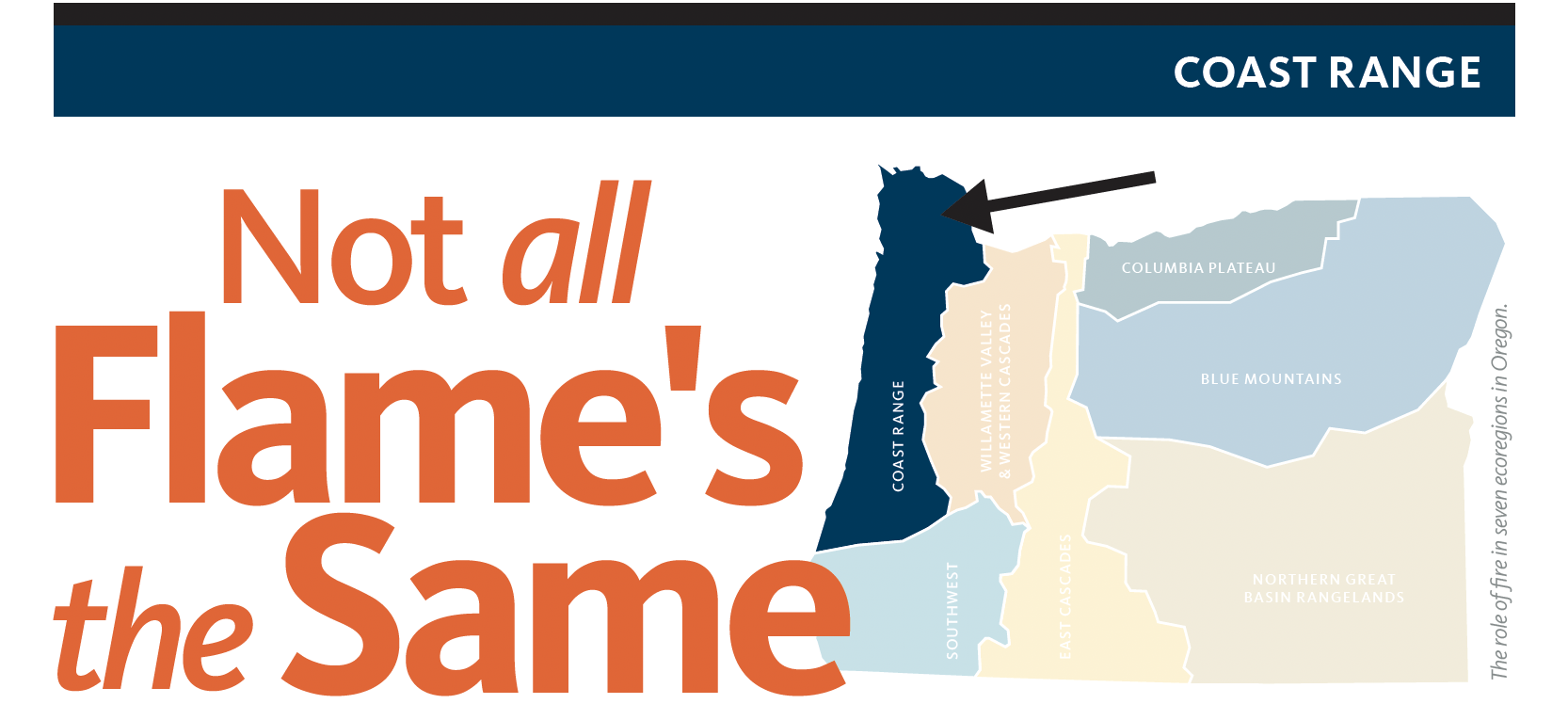
Explore how fire and people’s relationship with it have shaped diverse ecosystems across Oregon.
How fire historically shaped the Coast Range
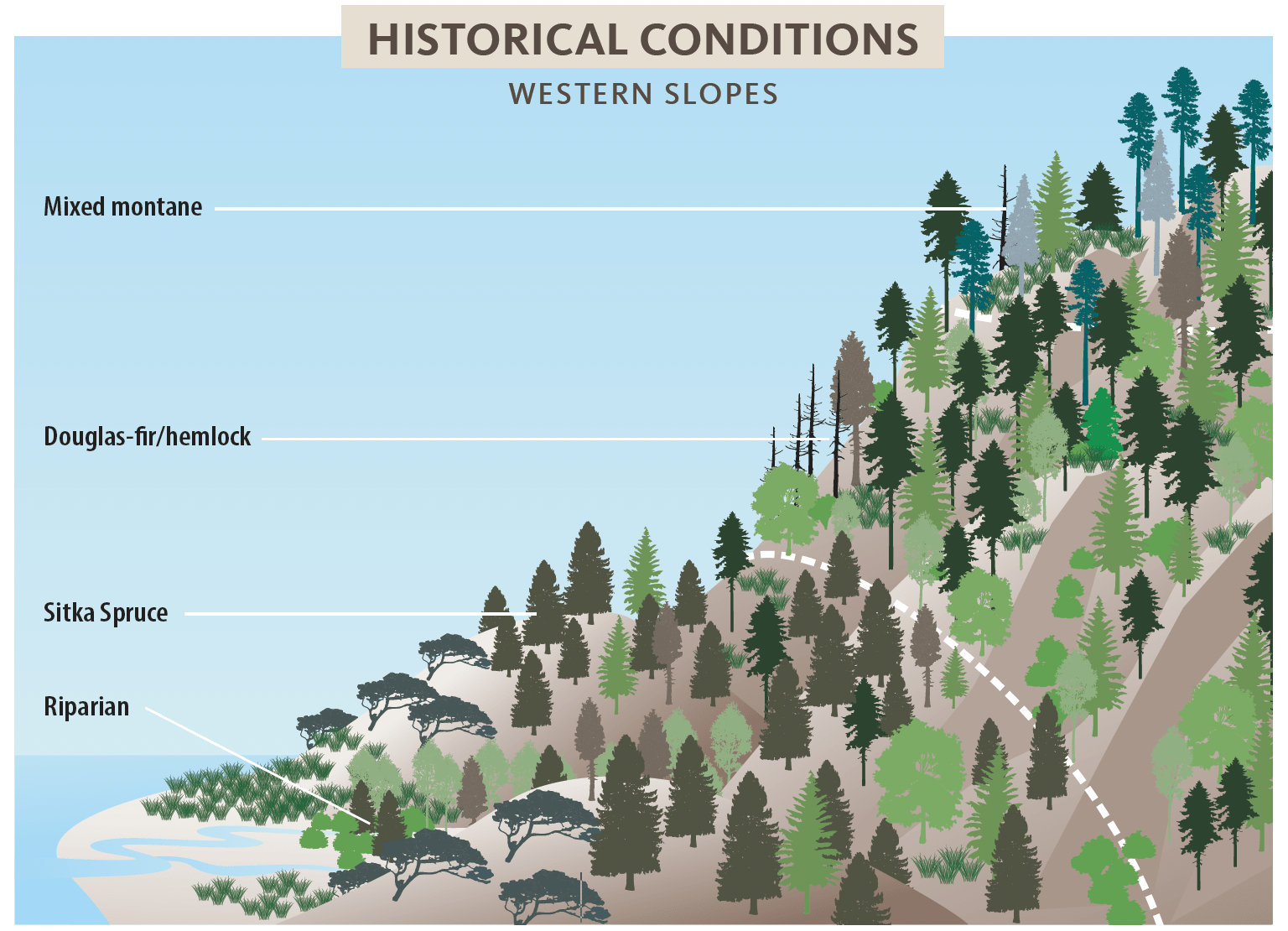
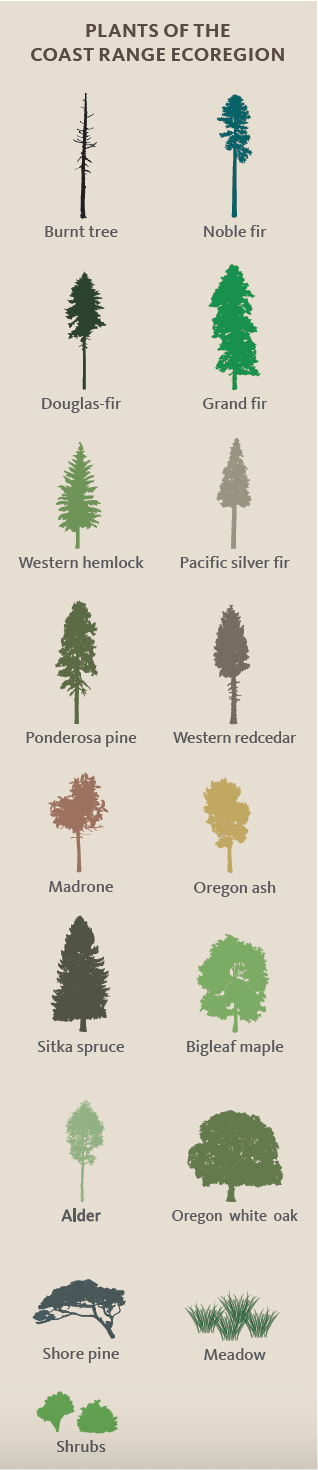
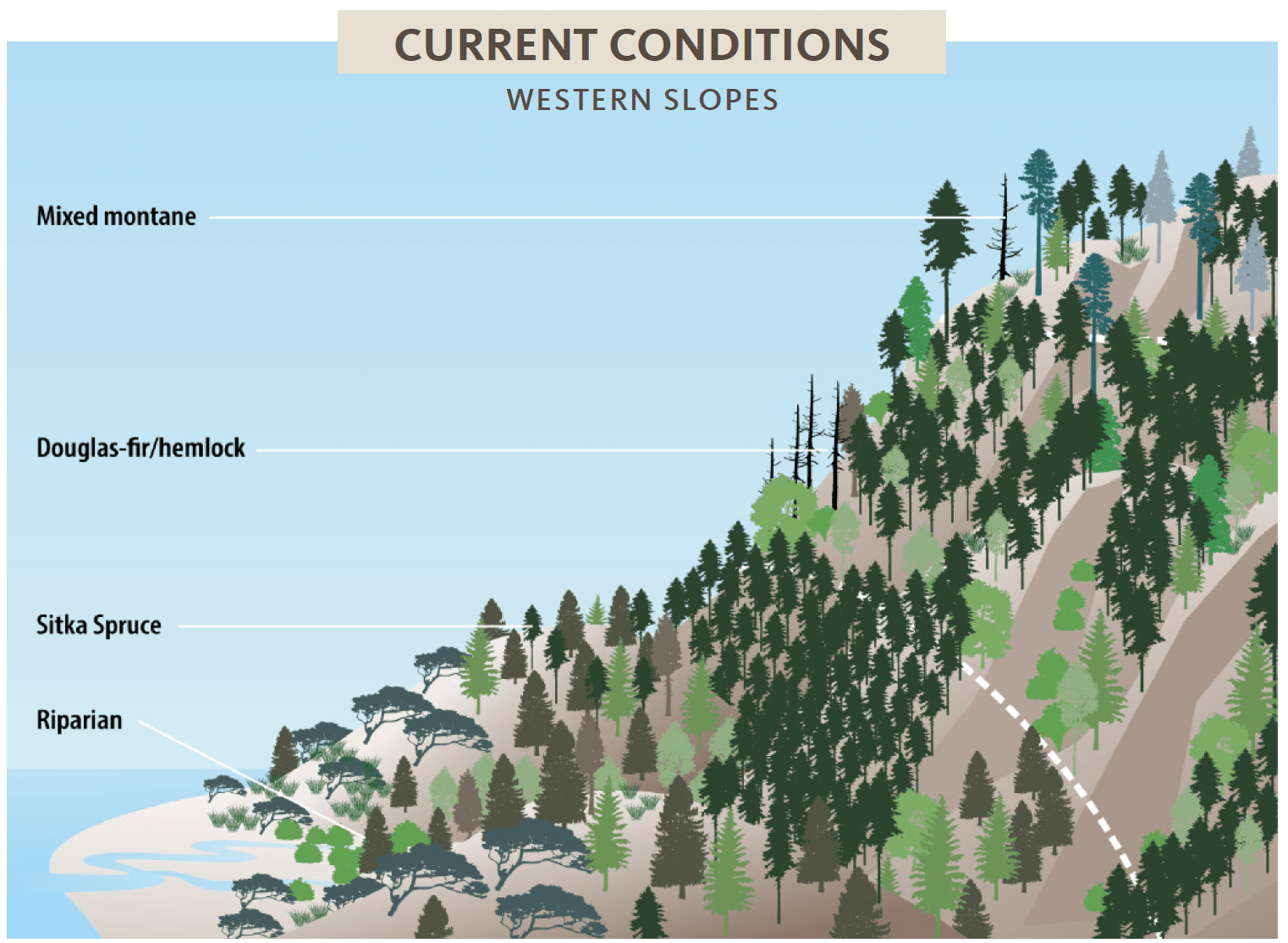
Fire regimes in the Coast Range were shaped by a combination of factors, including climate, topography and vegetation. Indigenous burning practices maintained coastal meadows and grasslands. Insects, disease and windthrows were other important disturbance agents in these forest types. While the moist climate largely limited fire occurrence, times of multi-year or seasonal droughts in late summer increased the likelihood. When drought conditions, east wind events, and ignitions combined, high-intensity, stand-replacing wildfires occurred. Sitka spruce-hemlock forests of the coastal fog belt experienced these intense, stand-replacing fires every 300-1,000 years, and wet Douglasfir- hemlock forests every 300-800 years. These events often resulted in high tree mortality or damage because Sitka spruce, western hemlock and western redcedar have thin bark and shallow roots, making them more vulnerable.
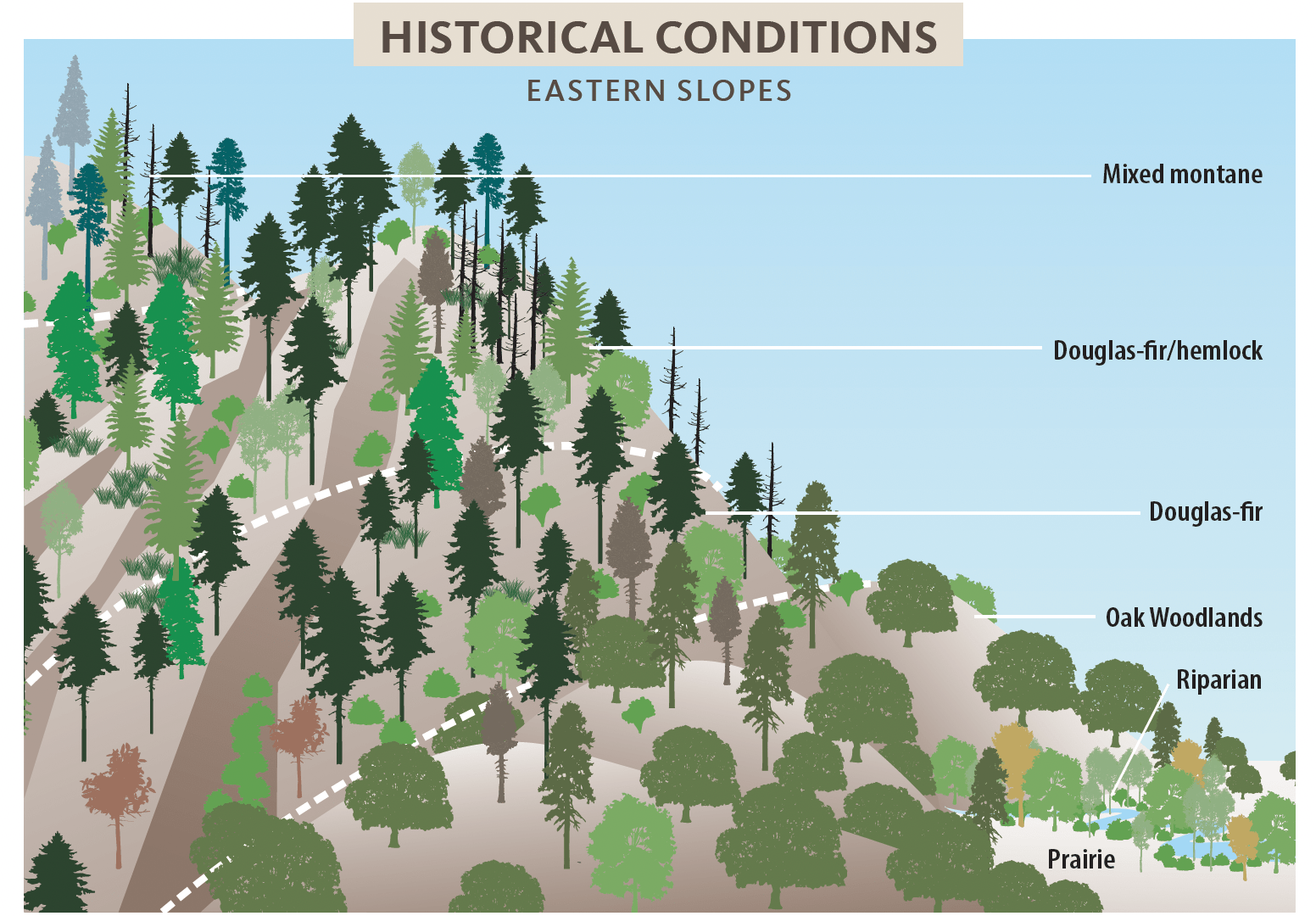
On the other hand, fire has been more frequent in drier Douglas-fir-hemlock forests. Mixed-severity fires occurred every 50-150 years, and stand-replacement fires every 250-500 years. The Willamette Valley margin Douglas-fir forests experienced fire with even greater frequency. Indigenous burning was a significant factor in the fire frequency of foothill oak woodlands, but places further away from Indigenous settlements and valley bottoms likely had less fires.
Understanding of Coast Range fire history is rapidly evolving. For example, scientists are finding new evidence of historic low- to moderate-intensity fire in moist coastal systems. Tree rings show evidence of more frequent fire in many locations. More research is underway to help explain how widespread these conditions may have been.
Changes to Coast Range fire patterns
Over the last 200 years, fire patterns in Oregon's Coast Range have shifted due to several factors. These include larger coastal human populations, changes in land use, the introduction of invasive species and climate change, all of which have influenced the likelihood and impact of fires. At first, the dispossession of Indigenous land did not necessarily end fire use. During the initial settlement period (1840-1890), there was still a significant amount of fire activity in the region due to droughts, east wind events, and ignitions caused by land clearing and settlement. But the reduction in Indigenous fire practices, combined with fire suppression efforts following Euro-American settlement, did lead to the decline of coastal meadows. Other vegetation types, such as oak woodlands, developed increased fuel loads due to fire suppression and the elimination of Indigenous fire use.
Over time, numerous factors disrupted the historic roles of fire as an ecological process in the Coast Range. The coastal human population continued to grow and land uses changed. This included increased urban development, agriculture and road construction. The result has been more sources and locations for fire ignitions, and changes in fuel types. Flammable invasive species like gorse, scotch broom and Himalayan blackberry greatly expanded their range. Additionally, changes in climate, including higher temperatures, reduced summer rainfall and prolonged droughts, have made more wildfire possible.
How fire shapes the Coast Range today
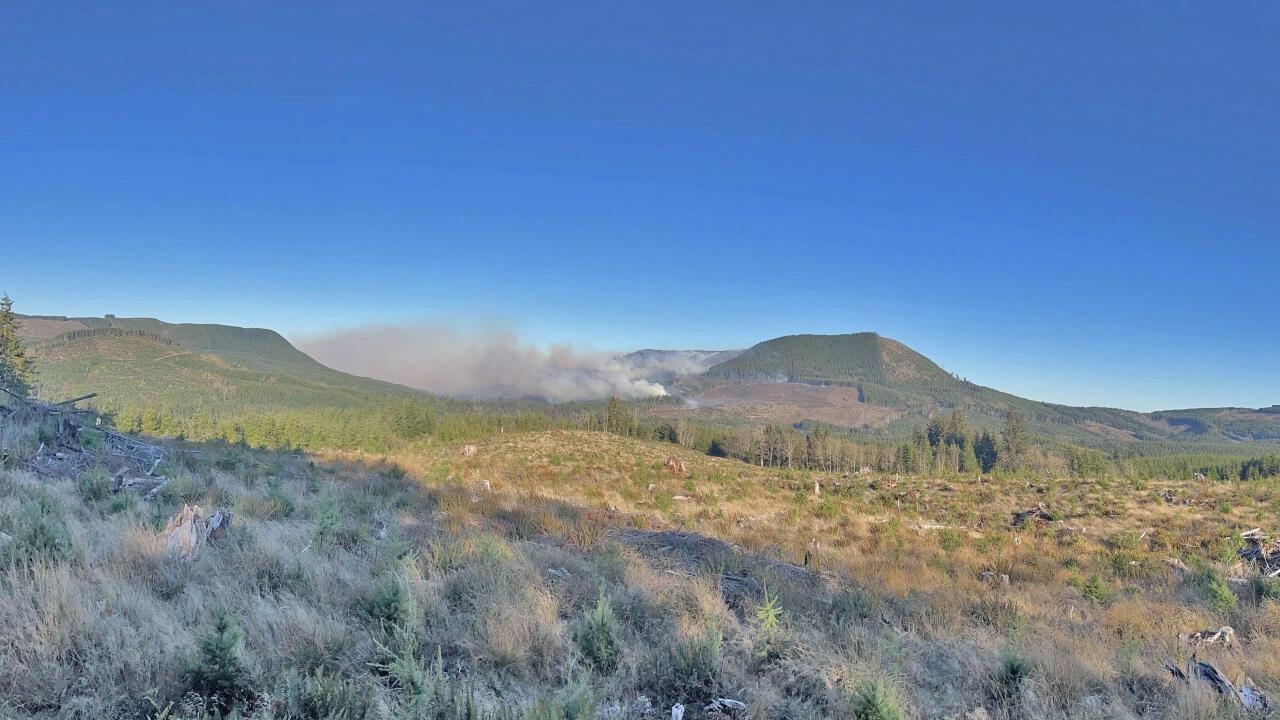
Recent wildfires within the Coast Range have had severe negative consequences on human communities and infrastructure, such as the 2020 Echo Mountain Fire Complex. The growth of the Wildland-Urban Interface and road systems are partly responsible for an increase in human-caused wildfires that have burned tens of thousands of acres. The Oregon Department of Forestry, rural fire districts and private industry strive to keep fires small to protect highly valued resources and assets such as timberlands. About 90% of fires are suppressed at under one acre in size.
Grasslands and meadows no longer experience frequent fires, which allow conifers and shrubs to encroach on these areas. This has reduced these important wildlife habitats. Research suggests that fires in the Coast Range are anticipated to become more frequent, with larger fires potentially becoming more prevalent.

Not all flame’s the same
Fire has played a significant role in shaping landscapes throughout history, sparked by both lightning and the intentional use of fire by Indigenous peoples. Fire enabled people to manage and adapt to their local ecosystems, helping them produce food, tools, materials and medicines, as well as maintain prairies, clearings and travel routes. It also helped reduce the risk of larger, more destructive fires by preventing the accumulation of excess fuel. Beyond human use, fire serves vital ecological functions, such as clearing dead vegetation, recycling nutrients, creating habitats for plants and animals, promoting germination and new growth and controlling insects and diseases.
Oregon is a very diverse state from the coast to the Cascade Mountains and the Great Basin. Because of this, it makes sense that the way fire behaves also varies across the state. In other words, fire happens in different patterns and has different effects. This resource explains the role of fire in seven ecoregions of Oregon.
Ready to learn more? https://beav.es/NAFTS
This publication was made possible with funding from the Oregon Forest Resources Institute in cooperation with the Forestry and Natural Resources Extension Program at Oregon State University.
About the authors


