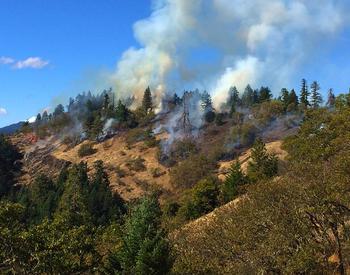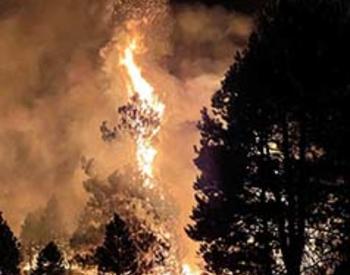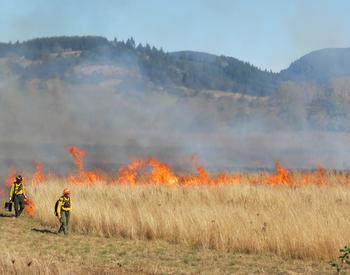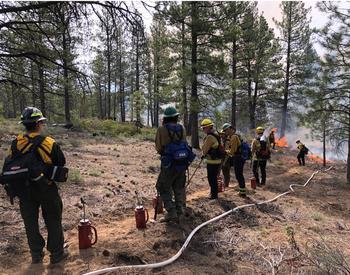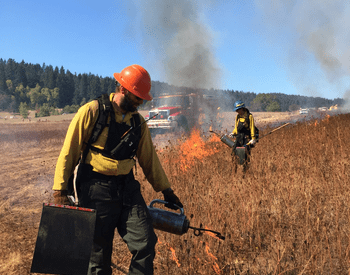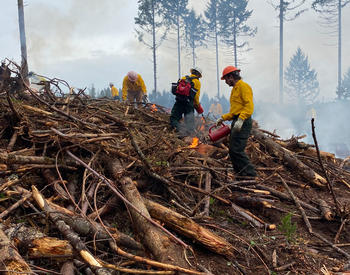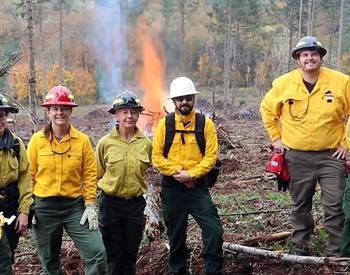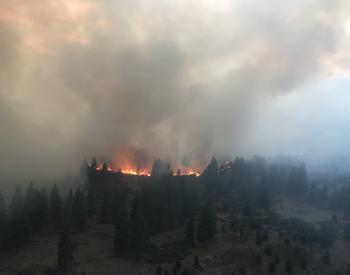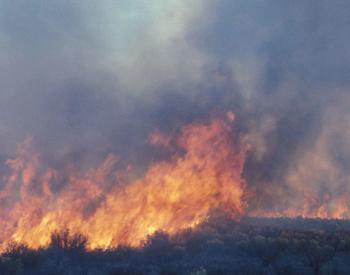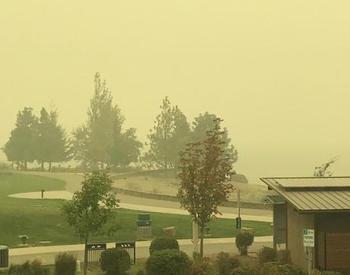
Know what to expect when reporting on wildfires in Oregon. This guide includes safety tips, gives historic context, and describes the agencies and groups you'll interact with.
Emily Jane Davis, Hollie Smith, Carrie Berger, Christopher Adlam, Dan Morrison |
Sep 2025 |
OSU Extension CatalogPeer reviewed (Orange level)
This guide explains how to tap bigleaf maple trees and make the sap into maple syrup. Includes tips on tree selection, sap collection, boiling procedures, and safe storage.
Peter Matzka, Sarah Cameron, Melanie Douville, Eric T. Jones, Carrie Berger, Tiffany Hopkins |
Aug 2025 |
OSU Extension CatalogPeer reviewed (Orange level)
Credit: Gretchen Bracher and Christina Friehauf (Cropped from original)
Wildfires behave differently across Oregon’s diverse regions, from dry grasslands to dense forests. This guide explains how those differences affect the land and why it matters for managing fire and protecting communities.
Fire shaped Oregon’s Coast Range through climate, vegetation and Indigenous burning. Today, changing land use, invasive plants and climate change are increasing wildfire risk and habitat loss.
Fire once shaped the Willamette Valley and Western Cascades through frequent Indigenous burning and occasional lightning fires, creating diverse habitats. Today, changes in land use, invasive species and climate have ...
Kayla Bordelon, Glenn Ahrens, Carrie Berger, Emily Jane Davis |
May 2025 |
OSU Extension CatalogPeer reviewed (Orange level)
Credit: Micah Schmidt, Oregon State University. (Cropped from original)
In the Blue Mountains, frequent low-severity fires once supported diverse, healthy forests through Indigenous burning and lightning. Today, denser vegetation, invasive species and a warming climate have increased fire ...
As wildfires increase across the West, community wildfire practitioners need tools to help people prepare. Learn how to engage with local community members in ways that deepen relationships, support shared learning and make the work more meaningful.
Emily Jane Davis, Kayla Bordelon, Yasmeen Hossain, Manuel Machado, Carrie Berger |
May 2025 |
OSU Extension CatalogPeer reviewed (Orange level)
Growing interest in prescribed fire is catching the attention of landowners. Learn what you need to know to apply the practice to your property — starting with defining your goals.
As wildfires become more frequent and intense, managing landscapes in Oregon's westside regions is crucial for both beauty and safety. The Oregon State University Extension provides key strategies for balancing fire risk reduction ...
Glenn Ahrens, Carrie Berger, Kayla Bordelon, Stephen Fitzgerald, Lauren Grand, Aaron Groth, John Punches |
Aug 2024 |
CollectionPeer reviewed (Gray level)
Discover how to make your coastal fog-belt forests more wildfire-resilient. This guide walks landowners through thinning, creating fuel breaks and managing species diversity to reduce fire intensity and protect homes while maintaining habitat values.
Learn how to reduce wildfire risk and restore resilience in Oregon’s oak woodlands through thinning, pile burning and careful use of fire. This guide connects past practices with modern strategies for healthy, fire-adapted landscapes.
Explore strategies to enhance fire resilience in the drier, mixed-severity fire-prone forests of Oregon's Willamette Valley margin. The brief emphasizes the importance of reducing fuel loads, creating defensible spaces ...
Explore wildfire risk and resilience in Oregon’s high-elevation Cascade forests, where unique terrain and climate influence fire behavior. This guide provides strategies for building fire-smart forests and protecting communities.
Discover wildfire resilience strategies for coastal and western Cascade forests. This guide offers practical advice on thinning, home hardening and habitat-informed planning to reduce fire risk while enhancing forest health.
Kayla Bordelon, Stephen Fitzgerald, Carrie Berger, Aaron Groth |
Aug 2024 |
OSU Extension CatalogPeer reviewed (Orange level)
Make your landscape more fire resistant by choosing and placing fire-resistant plants on your property. Visit a nursery with Paula Lupcho, OSU Master Gardener and Firewise Gardening expert, and Carrie Berger, OSU Extension Fire Program Manager, to know more.
The future of our families, homes and communities facing potential wildfires in Oregon is in our hands. Learn how you can prepare your home with simple actions before a wildfire strikes.
Aaron Groth, Carrie Berger, Emily Jane Davis, Kara Baylog |
Jun 2023 |
OSU Extension CatalogPeer reviewed (Orange level)
Credit: Christina Friehauf (Cropped from original)
Our Future in Our Hands: Make a Plan details what steps you can take to be prepared for when a wildfire strikes. This publication is part of the Our Future in Our Hands series.
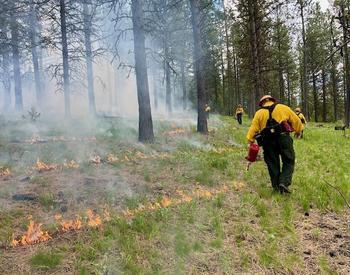
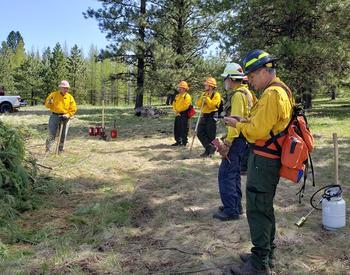
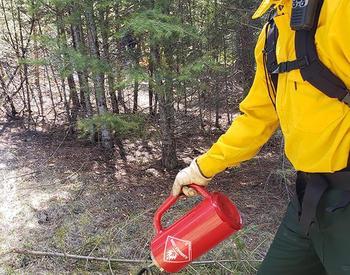
Prescribed fire, like any fire, entails risk. To stay safe, wear Personal Protective Equipment, take steps to prevent heat exhaustion, use the right tools and follow the burn plan. Here are more tips to keep you safe on the ground.
The right ignition technique will ensure that a prescribed fire meets objectives. Fuel, weather conditions, resources and topography are all part of the ignition plan. The plan calls for specific techniques, firing patterns and tools.
Prescribed fire focuses on addressing the overabundance of fuels on the ground. Fuels can include grass, leaf litter, sticks, shrubs and trees. Along with weather and topography, fuel is one of the key factors ...
Weather affects nearly every aspect of a prescribed burn. Weather is a matter of safety for those staffing the burn and the public. Understanding fire weather helps practitioners manage smoke and comply with regulations.
Aaron Groth, Steve Fanis, Emily Jane Davis, Carrie Berger |
Jun 2023 |
OSU Extension CatalogPeer reviewed (Orange level)
Presents research findings from the last ten years on the patterns of fire sizes since the 1980s. One in a series of fire FAQs that are based on questions Forest & Natural Resource Extension agents and ...
Max Bennett, Stephen Fitzgerald, Dan Leavell, Carrie Berger |
Oct 2022 |
OSU Extension CatalogPeer reviewed (Orange level)
In this episode, Lauren Grand gets to know the members of the OSU Extension Fire Program.
Lauren Grand, Aaron Groth, Carrie Berger, Ariel Cowan, Katherine Wollstein, Christopher Adlam, John Rizza, Emily Jane Davis |
May 2022 |
Podcast episode
When smoke fills the air during a wildfire event, do you know how to protect yourself and your family? Learn about smoke impacts to health, the air quality index, and simple steps you can do right now to reduce your risk from smoke exposure.
In this episode, Carrie Berger is joined by David Lewis and Amanda Rau to talk all things fire - including what is it, how it's used, and its benefits.
Carrie Berger, Amanda Rau, David G. Lewis |
Mar 2022 |
Podcast episode
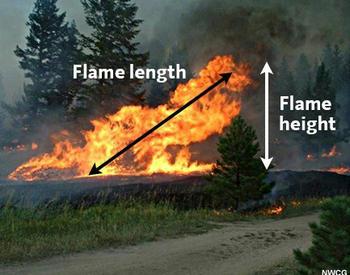
Credit: National Wildfire Coordinating Group (Cropped from original)
Fire behavior is a function of available fuel, site topography and weather. People who practice prescribed burning take all these elements into account to achieve the objectives of the burn.
Fire alters landscapes, plant communities, animal habitat, and even water and soil. Fire can sometimes be a force for good, boosting species diversity and ecological resilience. Examine how fire suppression and climate change are altering the ecological effects of fire.
Prescribed burns are an important tool in preventing wildfires, but the smoke they produce can be more than just a nuisance. Besides reducing visibility, smoke can affect the health and safety of firefighters and...
Amanda Rau, Stephen Fitzgerald, Emily Jane Davis, Carrie Berger |
Dec 2025 |
OSU Extension CatalogPeer reviewed (Orange level)
Carrying out a prescribed burn takes careful planning. A detailed burn plan lays out objectives and how to achieve them. Before putting fire on the ground, conduct briefings and test fires. Once the burn begins,...
Prescribed burning is the practice of intentional burning to obtain specific results. People practice prescribed fire to improve habitat, improve the health of forests and rangelands, and to reduce wildfire risk. ...
Prescribed burning practitioners follow a detailed burn plan that spells out objectives and ways to achieve them safety. Burn plans cover equipment, site preparation, smoke management, contingencies, communication and cleanup.
John Rizza, Christopher Adlam, Dan Leavell, Jacob Putney, Carrie Berger |
Jun 2023 |
OSU Extension CatalogPeer reviewed (Orange level)
The use of prescribed fire is a critical tool in both range and forest land management. OSU Extension and partners got together to provide prescribed burning awareness, education and training. The prescribed fire training gives ...
Emily Jane Davis, Carrie Berger, Amanda Rau, Andrew Owen, Tom Synder |
Jan 2022 |
Video
If your property has been affected by a wildfire, here is a step-by-step guide for what to do when you return after the fire. The steps will provide some organization for the process.
Dan Leavell, Stephen Fitzgerald, Carrie Berger |
Nov 2024 |
OSU Extension CatalogPeer reviewed (Gray level)
We now need to consider structures themselves as a fuel type contributing to wildfires, along with other potentially hazardous fuel such as wood piles, propane tanks and automobiles. In this context, the home ...
Dan Leavell, Stephen Fitzgerald, Carrie Berger, Gavin Horn |
Jun 2023 |
OSU Extension CatalogPeer reviewed (Orange level)
Photo: EESC slide collection (Cropped from original)
A red flag warning means high fire danger. The National Weather Service issues red flag warnings to alert land management agencies to critical conditions that could lead to rapid increases in wildfire activity. The forecasts are critical information for planning prescribed burns.
Wildfire smoke is more than a nuisance. It is a public health hazard that can harm the lungs and cardiovascular system. Here's a look at what makes smoke dangerous and what can be done about it.
Oregon's wildfire landscape is clouded by the mix of public and private interests that control more than 30 million acres. Forests make up nearly half of Oregon, and most forests fall under federal management. ...
Lauren Grand, Carrie Berger, Stephen Fitzgerald, Dan Leavell |
Aug 2023 |
OSU Extension CatalogPeer reviewed (Orange level)
Forest fuel is combustible biomass—everything from needles and twigs to shrubs, downed trees, and logs. Wildland fire managers reduce and rearrange fuel to reduce the probability of forest fires. Fuel treatments ...
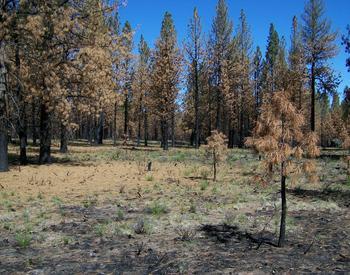
Fire severity is a measure of the effects of fire on the environment—both in damage to vegetation and impacts on the soil. Fire severity is driven by weather conditions, the topography of the landscape, and the fuels that are present. Of these, weather is the overriding factor.
Carrie Berger, Lauren Grand, Stephen Fitzgerald, Dan Leavell |
Oct 2022 |
OSU Extension CatalogPeer reviewed (Orange level)
Photo: Andrea Holland, Upper Colorado River Interagency Fire Management Unit (Cropped from original)
Prescribed fires are subject to strict air-quality standards. But wildfire smoke is harder to predict and control. Learn how the effects of these two very different forms of fire compare.
Carrie Berger, Stephen Fitzgerald, Dan Leavell, Janice Peterson |
Feb 2026 |
OSU Extension CatalogPeer reviewed (Orange level)