REDMOND, Ore. — Although Central Oregon’s climate creates a shorter, less predictable growing season, several berries, fruit trees, roses and native plants can still be grown successfully in the region.
Amy Jo Detweiler, a horticulturist with the Oregon State University Extension Service in Central Oregon, has written four online Extension publications that provide details:
- Selecting berry crop varieties for Central Oregon (with the late Bernadine Strik)
- Selecting fruit tree varieties for Central Oregon landscaping and home orchards
- Roses: planting and care in Central Oregon
- Selecting native plants for home landscapes in Central Oregon
Why Central Oregon is different
A typical growing season in Central Oregon ranges from 70 to 100 days, depending on location, Detweiler said. “Frost can occur at any time of the year in this region, including when plants are flowering or setting fruit — with possible damage to potential crops. Although a plant may grow well, fruit production can vary from year to year.
“At lower elevations, the milder climate can increase the chance of a successful fruit crop,” she said.
Choosing plants for a short growing season
Some general guidelines from the publications can help Central Oregon home gardeners and orchardists. Select cold-hardy, short-season varieties. Plant in full sun and well-drained soil. Whenever possible, choose a slightly higher spot in the landscape that allows good air flow to reduce frost damage.
Berries
Many berry crops thrive in Central Oregon, especially raspberries, strawberries, gooseberries, currants and serviceberries. Gardeners can also try cold-hardy, early-season varieties of table grapes, blueberries and blackberries.
To improve fruit production:
- Select cold-hardy, short-season varieties.
- Choose a site with full sun and well-drained soil.
- Plant on a high spot with good air flow to reduce frost damage.
Fruit trees
The apple tree is the most reliable fruiting tree in Central Oregon, followed by hardy Asian pear, European pear, plum and sour cherry. Gardeners can also try peach, apricot, sweet cherry, hardy kiwi and some kinds of nuts, but these trees may not bear consistently.
To increase fruit production:
- Consider the pollination requirements of plants before purchasing.
- To prevent killing bees or other pollinators, do not spray insecticides during bloom.
- Use dwarfing rootstock and semi-dwarf trees when possible; they bear sooner, take less space and are easier to maintain.
Roses
With thoughtful attention to planting and care, many types of roses can be grown successfully in Central Oregon. Select a rose suited to the area’s USDA hardiness zone and look for disease-resistant varieties. Choose a spot that receives at least six to eight hours of sunlight daily; morning sun is ideal. A site protected from the wind is also recommended.
Roses prefer moist, well-drained soil. In Central Oregon, native soils are predominantly sandy and can benefit from additions of organic matter.
Native plants
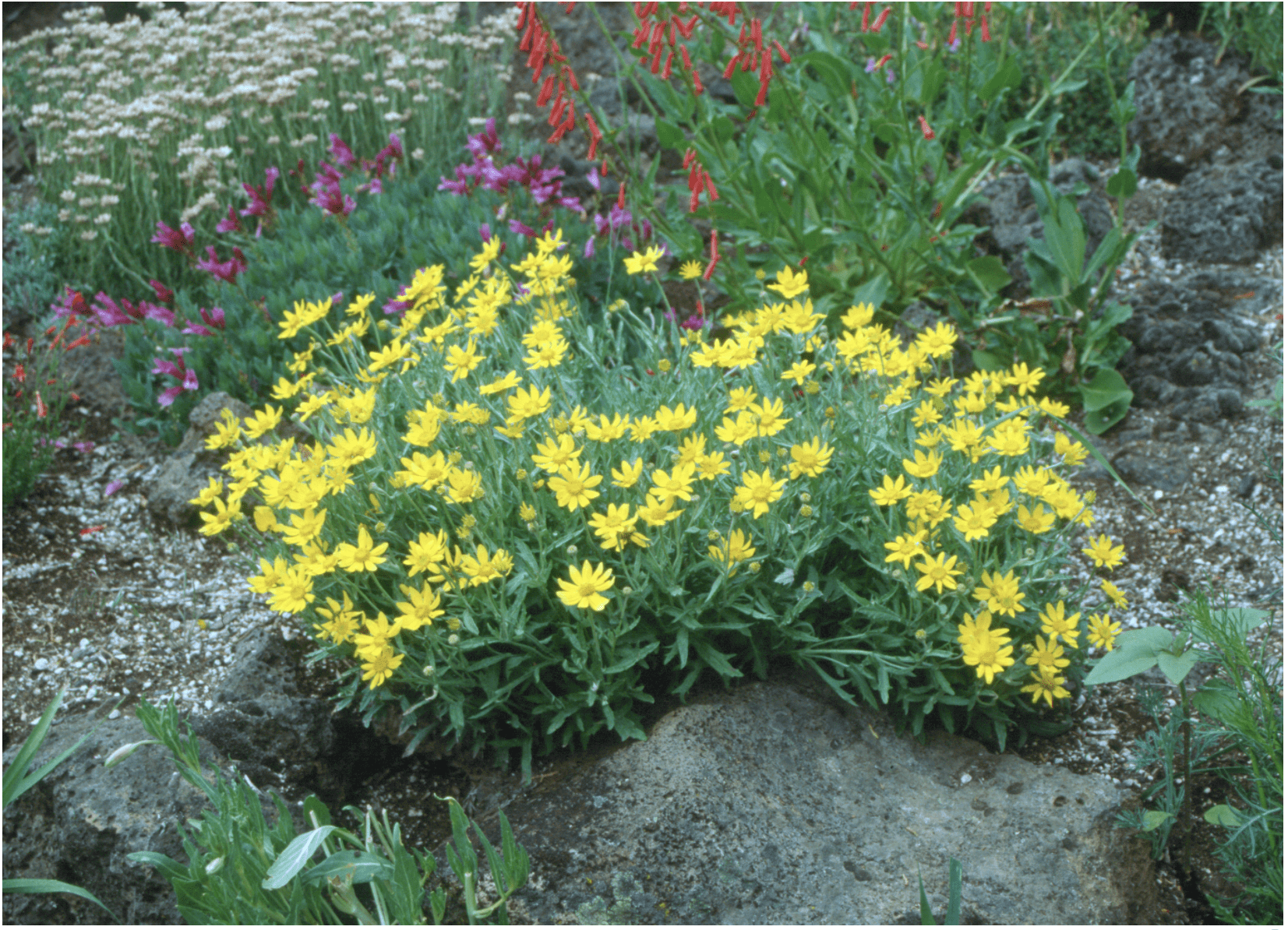
Native plants add beauty with colorful flowers, foliage, texture and scent. If planted in a suitable habitat, they adapt well to local soils and climate, which reduces the need for supplemental water (once established) and maintenance.
When grown in the right conditions, native plants typically experience less environmental, insect and disease damage than nonnative plants. Native plants also create strong environments for local pollinators and wildlife. They tend to be minimally invasive when planted in the right environment.
The lists of trees, shrubs, grasses and perennials in the online publication focus on native plants that are readily available from local nurseries and adapt easily to an urban landscape environment. These are not complete lists of Central Oregon native plants.
When selecting native plants, choose those whose natural habitat is similar to conditions in your landscape. For example, select plants native to riparian areas for a wet area of the landscape, or choose dryland plants for a rock garden.