CORVALLIS, Ore. — People often have a love-hate relationship with fruit trees. The fruit they love; the work they don’t.
"Everyone wants to minimize spraying. Low input means it’s better for the people eating the fruit, better for the environment in the backyard, better for the safety of the pets and family running around out there.”
The regimen of spraying turns off many home gardeners, said Steve Renquist, retired horticulturist with the Oregon State University Extension Service. But thanks to decades of research, easier methods are available — from resistant trees to low-toxicity products.
For years, Extension horticulturists have recommended integrated pest management, or IPM, an approach that uses the most effective, least-toxic methods first.
“You don’t need to coach people nearly as vigorously as in the past,” Renquist said. “Everyone wants to minimize spraying. Low input means it’s better for the people eating the fruit, better for the environment in the backyard, better for the safety of the pets and family running around out there. It’s a pretty easy sell.”
When teaching low-input gardening, Renquist begins by recommending that home gardeners choose disease- and pest-resistant varieties. Extension Master Gardener volunteers and knowledgeable nurseries can provide guidance.
“If you start from that point, you’ve got a much better chance of having a low-input orchard,” he said. “You don’t have to be constantly spraying for something.”
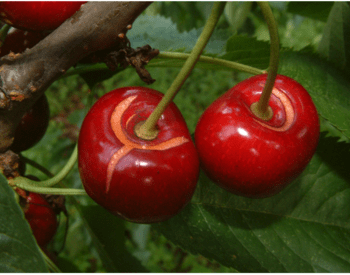
Apples and pears are Oregon’s most common fruit trees because they grow well across most of the state. Many people want to grow cherries, Renquist noted, but they require significant effort.
“Everybody has the desire to grow cherries,” he said. “But after you try to grow them and keep the birds away, you realize you’re putting a lot of effort into feeding the birds. And they get a number of diseases, too, which compounds it. One of the real tortures of home gardeners is wanting to grow cherries.”
Instead, Renquist suggests apples, pears, plums and — in suitable regions — peaches and nectarines. Figs and persimmons are also excellent low-maintenance choices.
Monitor with pheromone traps
The next step is monitoring for insect pests. Pheromone traps, available at farm stores or online, are effective for codling moth in apples and pears; peach tree borer in peaches, nectarines and apricots; and filbert worm in hazelnuts.
Tent-shaped traps are lined with a sticky base and baited with pheromone lures. Beginning in late spring, gardeners should hang the traps and check them weekly. If insects exceed the recommended threshold in a given week, apply the least-toxic spray. If not, clear the trap and start counting again the following week.
“Scientists make it pretty simple,” Renquist said. “They determine the number of insects to look for. It’s something hard and fast you can follow; you don’t have to extrapolate. You’re applying on the basis of need rather than the basis of prevention.”
Low-impact spray options
Extension’s recommendations focus on low-impact sprays, many of them organic. Renquist cautioned, however, that even organic products have risks and should be used carefully.
A key resource is Extension’s Managing Diseases and Insects in Home Orchards, which lists cultural practices and least-toxic products for common pests and diseases. Gardeners can also contact their local Master Gardener volunteers for product guidance.
Renquist emphasized rotating sprays — ideally three per season — to prevent pest resistance. For codling moth, for example, he suggests Cyd-X (a virus that targets only the moth), organic forms of spinosad, and Surround, a kaolin clay compound that deters insects.
Another strategy is applying dormant oils before buds emerge. The oils smother eggs and larvae of many insects, reducing problems later in the season.
Keep trees healthy
Tree health remains the foundation of low-input gardening.
“A lot of it is the health of the tree,” Renquist said. “Well-timed sprays, good pruning, good fertilization. You really can have fruit produced with far fewer inputs than people lead you to believe.”
For more information, consult Extension’s Growing Tree Fruits and Nuts in the Home Garden and Training and Pruning Your Home Orchard.
Previously titled Love them or leave them: Fruit trees take plenty of work