Interest in growing olives — a high-value specialty crop — is increasing in Oregon. However, research-based information on cultivar selection and production practices for the state is limited. Primary challenges include damage from low winter temperatures and a lack of information on the yield, fruit characteristics and harvesting challenges of individual cultivars.
By testing olive cultivars and production practices under Oregon conditions, OSU Extension provides growers with research-based guidance needed to reduce risk when establishing orchards.
Most commercial olive production occurs in regions with warmer, mild winters. To support the emerging industry in Oregon, growers need data on how various olive cultivars respond to winter conditions and whether they can produce quality fruit during the state’s relatively short ripening season. In addition, growing techniques must be adapted to Oregon’s climate.
To address these challenges, Oregon State University, with strong support from Oregon’s olive industry, launched the Olea: Olive Research for Oregon project. The goal is to evaluate as many olive cultivars as possible and identify those best suited to regional growing conditions while improving economic feasibility for growers by reducing establishment losses from winter injury.
The project sourced cultivars from the U.S. Department of Agriculture Germplasm Repository in Davis, California, as cuttings or small plants. Hundreds of cuttings were propagated for a multi-year, replicated field trial at the OSU North Willamette Research and Extension Center in Aurora.
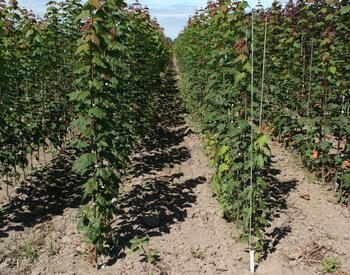
By July 2021, a 1-acre plot was prepared with drip irrigation and weed mat, and 116 cultivars — totaling 420 plants — were planted, replicated when available. The site is irrigated during the summer and lightly fertilized as necessary in late spring.
Annual data collection includes plant growth, flowering, fruit set, yield, fruit maturation and size, fruit quality parameters and cold injury. Findings are shared with growers, stakeholders and the public through site visits, classes, media and events.
Survey shows expanding olive industry in Oregon
In 2024, a statewide survey launched to gather information on olive producers and assess industry needs. Survey results were presented at Olive School in June 2025, helping growers understand how the industry is changing and what producers see as top challenges.
Thirty-two farms participated in the survey. Most reported 5 acres or less in production, and 30% reported more than 5 acres. Responses also showed that olive farms are spreading across the Willamette Valley and are less concentrated in Yamhill, Polk and Marion counties, with Clackamas and Lane counties now hosting multiple farms.
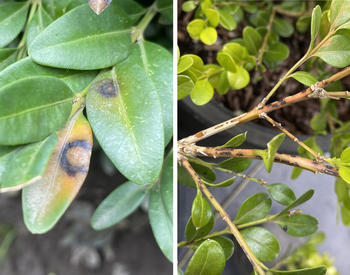
Cold damage remained producers’ No. 1 priority, while water management and economic feasibility emerged as increasingly important concerns.
Field days and outreach support growers
The Olea team participated in multiple events in 2025, including an open house at the North Willamette Research and Extension Center and a harvest event. The team also hosted an Olive Field Day at the center in June 2025 with 41 attendees. Participants received an orchard tour and research updates, and 94% of respondents said they learned something they planned to apply to their olive operation.
First olive oil and national recognition
In 2025, the project produced its first olive oil from the North Willamette Research and Extension Center harvest. Volunteers helped pick fruit over two days, and the team harvested an estimated 900 pounds of fruit. About 700 pounds were milled to produce 11 gallons of oil, which was bottled for analysis of sensory and chemical qualities.
Olive oil produced from the project’s November harvest at the center later earned a bronze medal in the “Other Region Blends” category at the Los Angeles International Extra Virgin Olive Oil Competition.
Collaboration expands olive research
New collaborations began in 2024, including with Wright State University to evaluate olives’ susceptibility to the emerald ash borer — an invasive pest detected in Oregon in 2022 — and with OSU’s Southern Oregon Research and Extension Center in Central Point to explore olive production as a potential future crop in that region.
Collaboration with Wright State University continued, and findings on olives and emerald ash borer susceptibility were presented at the Entomological Society of America meetings in Portland in November 2025. The project team is also working with the Oregon Department of Agriculture on a grant application focused on pests of concern in olives.
The Olea team also traveled to Seville, Spain, to collaborate with researchers at the Instituto de la Grasa and the Cordoba Germplasm Repository. With continued industry support, the Olea project aims to build a strong foundation for successful olive production in Oregon and share results with growers and the public through publications, field days and presentations.
Public value
By testing olive cultivars and production practices under Oregon conditions, OSU Extension provides growers with research-based guidance needed to reduce risk when establishing orchards.
Identifying cold-tolerant cultivars and effective management practices helps farmers make informed decisions about investing in a new specialty crop. This work supports small and diversified farms, strengthens rural economies and expands opportunities for value-added agricultural products such as Oregon-produced olive oil.