CORVALLIS, Ore. — Lilac lovers eagerly await the pink, lavender and white blossoms of spring. But an outbreak of lilac blight can quickly turn that joy into disappointment.
Cool, wet springs favor development of lilac blight, especially if rains follow a late frost or winter injury, according to Jay Pscheidt, Oregon State University Extension plant pathologist.
Known to scientists as lilac bacterial blight, the disease is caused by the bacterium Pseudomonas syringae pv. syringae. The same organism causes bacterial blight on pear, blueberry, cherry, maple and many other woody plants.
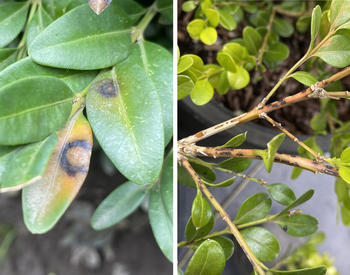
At first, leaves appear healthy, then suddenly look as if they’ve been singed by an open flame. Dark black streaks form on one side of young shoots. Flowers wilt and turn brown, and unopened buds become blackened. Symptoms resemble fire blight in fruit trees.
Prevention and resistant varieties
To reduce the risk of blight, avoid fertilizing late in the season and don’t overfertilize young plants, since excess nitrogen favors disease development, Pscheidt said. Spacing and pruning lilacs to allow for air circulation also helps.
Lilac blight is difficult to control, so planting resistant varieties is recommended. Species with demonstrated resistance include Syringa josikaea, S. komarowii, S. microphylla, S. pekinensis and S. reflexa.
Most cultivars of S. vulgaris — the most commonly grown lilacs — are susceptible. However, some have shown less disease in gardens, including ‘Edith Cavell,’ ‘Glory,’ ‘Ludwig Spaeth’ and ‘Pink Elizabeth.’
Managing infections
If your lilac is infected, prune and burn affected parts as soon as you notice them. A copper-based pesticide, which is organic, applied in early spring each year can help prevent infection before buds break.
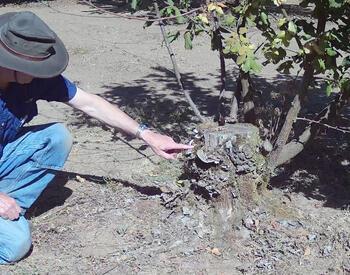
Lilac blight bacteria overwinter on diseased twigs and even on apparently healthy wood. Factors that weaken plants — including wounds, frost damage, poor soil pH, inadequate nutrition or other pathogens — increase susceptibility.
Sources and spread
The bacteria can persist in old cankers, healthy buds, leaf surfaces, and nearby weeds and grasses. Wind, rain, insects, pruning tools and infected nursery stock all spread the disease.
The disease typically begins as brown spots on stems and leaves of young shoots in early spring. Spots may have a yellow halo, then quickly darken and expand during rainy periods. On young stems, infection can girdle the shoot, causing it to bend and die.
On leaves, infection progresses differently depending on age. Young leaves blacken rapidly from the margins downward, while spots on older leaves enlarge slowly. Several spots may merge, causing leaf edges to crinkle. Flower clusters may also blight and blacken, and buds may fail to open or die soon after opening.
To see photos of this disease, visit the PNW Plant Disease Management Handbook.
Previously titled How to recognize, treat and avoid lilac bacterial blight