What is a managed wildfire?
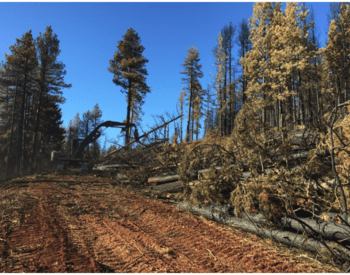
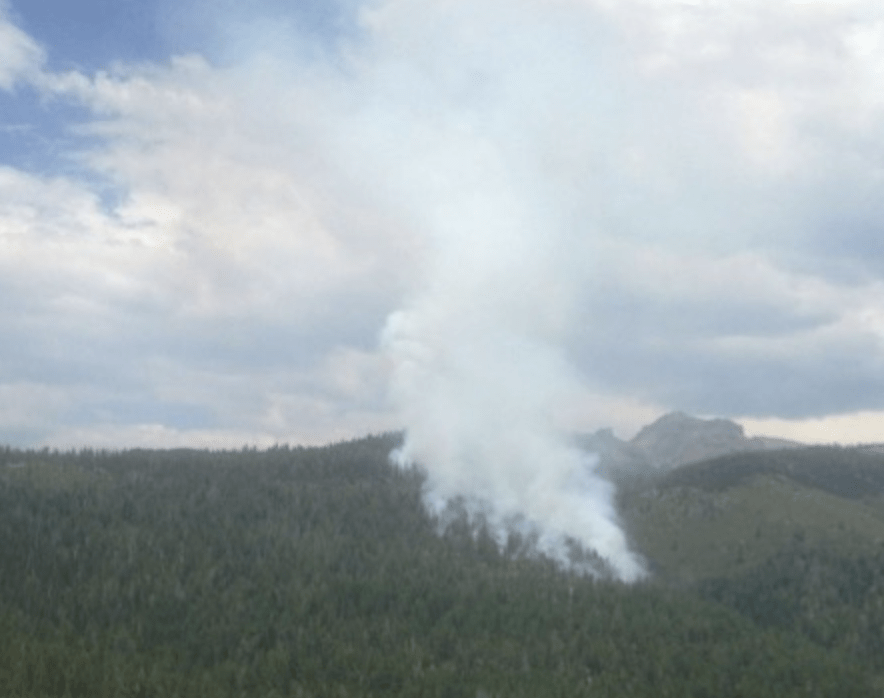
Managing a wildfire is a strategic choice to use naturally ignited fires to achieve resource management objectives, when deemed safe and prudent, and when part of an overall approved plan. Under these conditions, fire managers shape, nudge and corral wildfire to accomplish the ecological and fuel-reduction objectives for a designated area.
For example, some wild plants and trees need fire for their seeds to germinate. Fire also contributes to the process of nutrient cycling, stimulating growth of grasses, herbs, and shrubs and creating new habitat for wildlife. In addition, wildfire can help reduce built-up fuels (such as needles and downed wood) that could lead to an even bigger wildfire in the future if left unchecked.
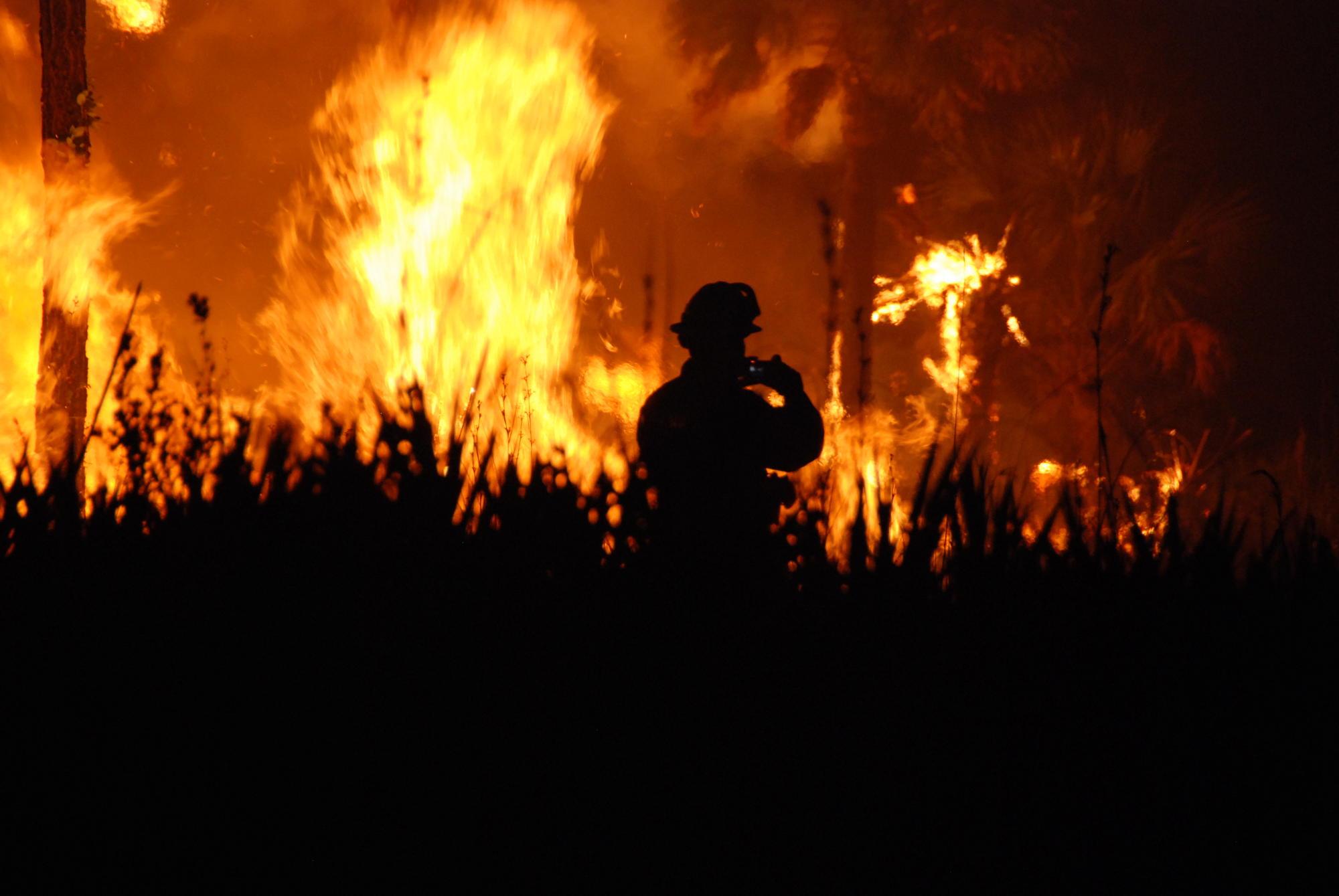
Legendary forest fires of the late 1800s and early 1900s bolstered the argument that forest fires threatened commercial timber supplies and contributed to the belief that fire is a danger that, without exception, needed to be stopped. Following the 1910 fire season, the U.S. Forest Service adopted a policy of total fire suppression. By 1935, the “10 a.m. rule” was in place, stating that all wildland fires were to be completely out by 10 o’clock on the morning following the initial report.
In 1968, the National Park Service shifted its policy to recognize fire as an ecological process. In 1974, the U.S. Forest Service similarly changed its strategy, moving away from total fire suppression to a wider variety of fire management tools. This allowed certain fires in some wilderness areas to burn without active, direct suppression and with minimal management. Terms such as “let burn,” “prescribed natural fire,” and “wildland fire use” were used to describe unplanned ignitions as a way to achieve a range of resource management objectives. “Managed wildfire for resource benefit” is the widely accepted term used today and is a broader framework that applies inside and outside of wilderness areas.
In 2009, the Federal Wildland Fire Policy was implemented across agencies to ensure a consistent approach to managing wildfire. The policy allows wildfire to be managed for resource benefit on public land in one area of the fire while actively suppressing it in another area where people, homes, infrastructure, or other values at risk (e.g., ecologically important habitats, historically significant cultural sites) are potentially threatened. Local and state jurisdictions, however, are often bound by law to provide full wildfire suppression to protect private land and values at risk.
Managed wildfire requires extensive, advance land management planning that takes into account the risk of damage or loss from wildfire and the increased probability of positive outcomes. Location, available resources, predicted weather, topography, air quality, and predicted fire behavior are all factors that contribute to fire management decisions within the land management planning process. In her article on wildland fire use, Gail Wells describes some of the reasons fire managers might hesitate to allow a managed wildfire:
- Constraints within the organizational culture (such as a strong bias toward suppression or fear of liability, if a fire escaped, that would cost them their job)
- Political boundaries (concern that the fire would burn too close to neighboring lands)
- Organizational capacity (lack of time and resources to plan for the managed wildfire)
- Policy directives (a blanket suppression order at the regional level)
- Public perceptions (potential negative reactions to smoke or the risk of damage to private property)
Other risks fire managers consider include potential escape, damage to resources and adjacent private property, potential loss of life, and the cost of suppression if a wildfire “blows up” and then depletes suppression resources even further.
Resources
Kwart, M. and M. Warthin. 2010. Working toward a fire-permeable landscape: Managing wildfire for resource benefits in remote, rural, and urban areas of Alaska. Wildfire Management Today, 70(1): 41–43.
The Science Analysis of the National Cohesive Wildland Fire Management Strategy. Managing Wildfire for Resource Objectives.
Van Wagtendonk, J.W. 2007. The History and Evolution of Wildland Fire Use. Fire Ecology Special Issue, 3(2): 3–17.
Wells, G. 2009. Wildland Fire Use: Managing for a Fire-Smart Landscape. Fire Science Digest, Issue 4 (January 2009): 1–12.
About the authors


Related publications