Transcript
00:00 Patty Skinkis
This is the HiRes Vineyard Nutrition Podcast Series, devoted to helping the grape and wine industry understand more about how to monitor and manage vineyard health through grapevine nutrition research. I am your host, Dr. Patty Skinkis, Professor and Viticulture Extension Specialist at Oregon State University.
00:22 Patty Skinkis
In this season of the HiRes Vineyard Nutrition Podcast, we are focusing on the behind-the-scenes aspect of the project. A critical component of that story is how the project and the project team got started. Back in Season One, we heard from Dr. Russ Smithyman about the role he played in project development. Forming a group of 14 scientists across seven institutions did not happen overnight. It happened with community engagement that was led by the National Grape Research Alliance, or NGRA. This organization played a critical role in project ideation, coordination, and integration with industry stakeholders. I have been really fortunate to experience this process by serving on a couple of different committees over the years within NGRA, and I thought it would be great for our listeners to understand the role that the National Grape Research Alliance plays in this endeavor of developing research.
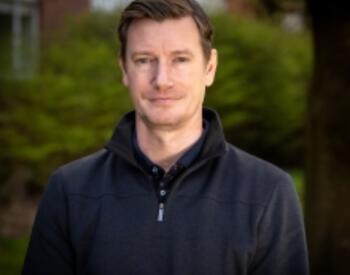
Joining us today is Donnell Brown. She is the president of the National Grape Research Alliance, and Donnell has served the organization since 2017. She has experience and expertise in organizational event and project management, and also is able to communicate really well [about] both marketing and science and technology for the industry.
01:43 Patty Skinkis
Thanks for joining us today, Donnell.
01:44 Donnell Brown
Thanks, Patty. Thanks for having me.
01:46 Patty Skinkis
I think it's a really interesting organization that you lead, and I know when I first started in my early career as a viticulturist, my major professor at Purdue, Dr. Bruce Bordelon, would talk about the NGWI and this new thing that was being developed. So when I first came into my position at Oregon State University, I started to learn more about NGWI (National Grape and Wine Initiative), which was the acronym before the NGRA, and it really opened my eyes to see how it evolved over time. From hearing stories in Dr. Bordelon's office about what this group was to then seeing it come into play and now working with you in this organization.
But for those who are listening, I'd like you to describe a little bit about what the NGRA is and how it formed.
02:39 Donnell Brown
I'd be happy to. It's a little bit of a story, and a lot of this people don't know. So, in late August 2003, I should say, about 20 wine industry stakeholders came together with scientists from the Viticulture and Enology Department at UC Davis to discuss a crisis of funding for great research. If you think about that, this is late August, so they're just going into harvest time. So, this was obviously a big enough deal for them to take time out of the most important, busiest season of the year, but they felt it was important to develop a process for establishing research priorities that would mutually benefit the wine industry, academic and government research organizations. Following that first meeting, all the participants agreed that they would establish something called the Wine Growers Critical Research Investment Initiative, which is a mouthful. WCRII, which is something, and an acronym you can't even make a word out of, I guess. But in 2005, the WCRII changed its name to the National Grape and Wine Initiative, or NGWI. And at that time, it also had broadened its purview to include table grapes, raisins, and juice, acknowledging the greater collective power in advancing the cause for the American grape industries at large. So, that was the year they filed paperwork to become a 501 (c) (3) nonprofit organization. And three years later in 2008, NGWI hired its first full-time president, and that was Jean-Marie Peltier, who many people who are listening will probably remember. Then, I succeeded Jean-Marie in 2017.
But after about 15 years in operation, it became apparent that a new, more inclusive name was in order. One that underscored our allied effort and made plain our research focus. So, in 2018, we changed our name to the National Grape Research Alliance, or NGRA. It's also sort of interesting to note that at the USDA level, an initiative is a specific thing. It's like a funding initiative, and it typically is time limited, so an initiative would be like a year, like something that would last a year, like a budget initiative. So, it was confusing to people, to some people, that this is an initiative that's going on forever and always. And also, I remember when I first started with NGWI, and people would say, ‘well, that's really, that's an interesting organization. What do you guys do?’, and I would have to explain our research mission. Now, when you say, ‘National Grape Research Alliance,’ it's much more clear that we do research. So, the first question is, ‘so what kind of research do you do?’ So, it's really helped be more directive from the beginning for people to understand what it is we do just right from the start.
05:44 Patty Skinkis
Can you talk a little bit about who comprises the NGRA?
05:48 Donnell Brown
Sure. So, we're an industry-led, nonprofit organization. We're a membership organization, so we're not a commission or a market order. The people who participate in NGRA and give to NGRA do so voluntarily. The folks involved in our organization are all industry organizations from across the grape and wine industry. We have winemakers, wine grape growers, table grape growers, juice grape growers and processors, and raisin grape growers and processors. So, you would recognize names like J. Lohr Vineyards & Wines, Gallo, Sun Maid Raisins, or Sun Maid Growers of California is the cooperative official name, and Welch's is the National Grape Cooperative. Then, state organizations like the New York Wine and Grape Foundation, Missouri Wine Board, Virginia Wine Board, so lots of different kinds of companies and industry organizations form our organization.
06:57 Patty Skinkis
And so that leads into my next question. What's the primary goal? What are you setting out to do each year?
07:03 Donnell Brown
Well, our mission is to drive research to maximize the productivity, sustainability, and competitiveness of the American grape industries. I'll dive in a little bit deeper on that. What that means, is NGRA advances the research needs of all sectors and all regions of the American grape and wine industry, so that spans wine grapes, juice grapes, table grapes, and raisins nationwide. We connect industry, academic scientists, and federal and state research agencies to initiate novel research projects and programs to solve industry challenges.
Since our founding in 2005, we've been instrumental in securing about $65 million dollars in funding for scientific solutions to grape and wine industry issues. And these tend to be larger scale, big tent projects that affect the entire industry. So, they're of a scope and scale that no one sector or company could achieve effectively on its own.
08:05 Patty Skinkis
Yeah, and I think that's the big thing that a lot of people ask me when they're talking about [NGRA], they think (academics), ‘So they fund things.’ No, no, no, you help us achieve funding from different sources.
08:17 Donnell Brown
Right. Yeah.
08:19 Patty Skinkis
So, maybe you could talk a little bit about what those sources are, because NGRA itself is not generating the research dollars. It's just helping collate all of the ideas, or the needs, and conveying those to the necessary people.
08:35 Donnell Brown
Yes, exactly. That’s sort of a nuanced thing that’s not super easy to understand if you're not really involved with NGRA, but we are more of a strategic planning organization for grape research, because we're not a grant funding organization, as you just said. We work with funding agencies like USDA's National Institute for Food and Agriculture, which is the agency that administers the specialty crop research initiative, which is very important to grape research. But we work with those agencies to help them understand, ‘what are the priorities for research for the grape and wine industry?’, so that when they are giving out those research dollars, they have a better understanding of what will really make an impact and move the needle for us.
09:25 Patty Skinkis
So, how does the NGRA collaborate with industry stakeholders to identify and address those key research needs or challenges?
09:35 Donnell Brown
Well, it's a little bit of an involved process. So to understand it, I'll step back a little bit. The way that we start to advance research is by starting with our research priorities. NGRA has four research focus areas, or theme areas. Those are genetics and grapevine improvement, integrated production systems, natural resources and environment, and extension and outreach. And behind each of those themes are a committee of people, and that is academic and industry representatives, each appointed by our research chair, who is Nick Dokoozlian. Within each theme area, and within that committee, there are research priorities, which we review and refresh about every five years. Those research priorities come from brainstorming and a prioritization process, so that's how we keep those current and vibrant, ongoingly. Then, every two years or so, each of the research theme committees engages in a process to brainstorm projects that address those priorities. We start with this sort of blue sky, blank slate, and talk about what are projects that would address each of those theme areas. Then, we winnow it down until we find a project whose time has come, if you will. It's sort of like panning for gold. We start with that broad slate of blue sky research ideas and just keep narrowing that funnel down until we find the project, or two, that seems most urgent, or most achievable, given the current state of the science or the scientific bandwidth in that area.
11:17 Patty Skinkis
So, once you find that, how do you go from that point of, ‘OK, here's the idea we really want to champion.’ How do you take it to the next step?
11:25 Donnell Brown
Well, it actually gets a little bit easier from there. Once a research topic is identified, typically an academic member of that research committee takes on the role of what we call project champion, and he or she scopes out a high-level overview of what that work would look like. Then, we work together to identify who might be best positioned to lead the project, and that may or may not be the project champion. We would work with the champion and/or the project director, if we figured out who that is, to also identify scientific collaborators who would be on the team. And we pay a lot of attention to the question of compatibility. As you know, researchers will be working together for four to six years, so it's important that they pass the pizza test or the beer test. That is, if you wouldn't want to hang out with a beer, you know, having a beer or a pizza with someone, you probably don't want to be stuck with them on a project for year after year. We really try to work together to make sure that those project teams are cohesive and that the players kind of get one another and get along well.
12:37 Patty Skinkis
Of course, I went through this whole process in the High-Res Vineyard Nutrition Project, just for listeners- full disclosure, I was on one of those committees. I was on the integrated production system committee. That was my first committee I was ever on for NGRA, and we had talked about three or four other different projects, and we were told by Russ [Smithyman] at the time, we were supposed to come up with tools. Not just doing physiology work or the basic [viticulture] stuff, we had to actually think of what could we produce a tool for. And then, of course, it went through that process of, ‘um okay, so we're going to hang our hat on vineyard nutrition. Okay, so who's the next [lead]?’ I didn't volunteer straight away. I think everybody wanted me to. And I said, ‘well, but let's look at who else is there’ because I will look at vineyard nutrition, but I don't lead vineyard nutrition research quite like my colleagues, and that's why we reached out to Markus Keller and Paul Schreiner.
We ended up building a co-project director team, although it's ultimately led by Markus, because he was the one who stepped up and said, ‘Okay, I'll do it guys.’ So, it worked out well, but it was that experience. I think you hit the nail on the head, you have to be able to work well with people. But, also the challenge is, who's got the time for it?
13:57 Donnell Brown
Right.
13:58 Patty Skinkis
And that's always, you know, if you've got lots of projects going, who's available that can step up to the plate for the timeline that we want to do those sorts of things?
Then, we have our team formed. The next step is we have to go find the money, right? So, I'll have you talk more generally about that process, and then I'll kind of jump in with some of the experience from the High-Res Vineyard Nutrition Project.
14:21 Donnell Brown
We typically like to kick off NGRA initiated projects for the planning meeting where we bring the researchers and industry advisors together to create powerful, highly relevant project objectives and outcomes that hopefully shine through in the grant making process. We do have money set aside in our research fund to cover the cost of travel for our academic partners, knowing that it's much more productive to meet in person, if we can, to figure these things out. We also help to solicit letters of support from stakeholders across the country and in each sector of the industry to underscore our project's reach and impact. And of course, we provide our own NGRA letters of support, as well, which some scientists consider a vital part of their application packages. We always ensure that one or more NGRA members serves as advisors to each project we support to help keep the research focused on industry objectives, and make sure that the resources needed to accomplish the work are there for the project.
15:29 Patty Skinkis
That's really helpful, the flow through, because that, I think, was critical in forming the team. At least for me, and in the experience of the HiRes Vineyard Nutrition Project, you know, if you're a single PI wanting to go at it alone and say, ‘Okay, build a team,’ it's just harder to do. I think it's kind of scary from the standpoint of balancing all these other projects and stepping forward with this new project. For me, I felt like the having NGRA lead it got more buy-in from people because it wasn't one single person leading the effort--like the one sheriff holding the badge saying, ‘Ah, I'm going to lead this whole thing,’ you know? Researchers are very independent, so they want to know what's in it for them, so I think the NGRA helped make it much better for building the team because it wasn't just one person. It was, ‘Okay, let's come together.’ That's my experience in going through that process and having somebody else to go up to bat for somebody who says, ‘Oh, I don't have time for that. I don't want to do that,’ because there were some people who said that, you know? They shied away from these large federal group projects, and it was nice to have both you, and myself, and other people, like Nick Dokoozlian, saying, ‘Oh, yeah, I think this person would be great,’ and encouraging those people to come to the table. It worked out really well.
16:58 Donnell Brown
Yeah, to have more of a team. That's great to hear.
17:01 Patty Skinkis
And then, of course, we all had to put together the research project. And, of course, we put it into the Specialty Crops Research Initiative, which is federal funding. It was in the Coordinated Agricultural Projects program. In the world of academia, we rattle off all the acronyms, and I'm trying to avoid that and actually say the words here.
We met as a group and first started with a planning grant. We weren't expecting it to be successful [for funding] the first time around, but it was. So, we then, of course, got funded right around 2020, and the pandemic hit. Then we found out we had funding, but we still started. I think the really helpful thing was that we still had the advisory group, the advisory committee. And that was something you mentioned earlier, as another part, that you always like having people from NGRA on the advisory committee. I think a lot of times some of these projects will have an idea of who's filling that role, but they don't actually have a committee. So, I also thought that was really helpful, and that we have this identified committee where it's not just lip-service or on paper. We actually do meet and solicit feedback during our quarterly meetings as well as annual meetings, which has been really helpful. This is even more helpful now that we're starting to get results. Not just in the beginning, to guide us, but once we're having results, researchers sometimes have trouble seeing the purpose. ‘Ok, what can we do with this?’ We have our ideas, but the industry has better ideas, I think, because that's who we're serving.
18:46 Donnell Brown
Yeah.
18:46 Patty Skinkis
We're doing this work to serve them. I think that's been really helpful to have the advisory committee involved in a formal way, and a more regular way.
18:55 Donnell Brown
Yeah, and that kind of keeps you, pulls you forward, to have those expectations. But, not just an expectation like, sitting out there, like it's all on you. It's a collaborative approach to how do we make this work, and how will it work to achieve results in the end.
19:11 Patty Skinkis
Absolutely. It's that two-way street. And of course, I'm an extension specialist, so this is what I do all the time, but in this project in particular it's my role to help bring the other scientists [from the project] along who are more separated. They don't have that role. It's been really helpful to have the advisory committee there to say, ‘Okay, this makes sense and let’s get the rest of the team to come along.’ Just because you're working in different universes, you know, and in numbers, and more focused research, and we're pulling a team together with different expertise, you know, how do we pull it together in a way that makes sense for what the industry really needs, not just what we think needs to happen.
19:58 Donnell Brown
Right. Yeah.
19:59 Patty Skinkis
I know that NGRA has been a part of a number of different projects, not just the nutrition project, but can you share some examples of some recent innovations, or technologies, that have been developed through NGRA supported research that have really impacted the industry significantly?
20:20 Donnell Brown
Sure. I'll try not to just go on and on here so we can keep within a reasonable time for people to listen, but other than the HiRes Vineyard Nutrition Project, which we're very proud to have launched, the two projects that NGRA has initiated and supported that have been probably most visible to the industry have been the Efficient Vineyard Project and Vitis Gen.
Of course, Terry Bates was the project director for Efficient Vineyard and is also involved in the HiRes project. His work was one of the first kind of proof points for NGRA, I would say. Terry applied for SCRI funding, I think, three times? It was on his third time that he finally got that project funded. But we, NGRA, quote-unquote “passed the hat” to fund a pilot project for Efficient Vineyard, because it seemed that the people reviewing the project application just couldn't see how precision viticulture in the variable rate management wasn't a really accepted thing quite yet, at that time. This was in, oh gosh, 2010, I think?
When Terry finally received that funding we needed a pilot project to demonstrate that this was a real thing and that it would really work. So, we collected about just under a million dollars to get that research off the ground, and that was what launched Efficient Vineyard into an SCRI project, and that work was funded. I think there was only one round of funding, but Terry has continued that work, and it has grown many legs. A sensor came out of that, out of that work, that's on its path to commercialization. There's also, measure, model, manage frameworks that Terry has put together. There's the My Efficient Vineyard tool online. Terry has gone on to, applying some of those principles to robotics now, so there's a lot of spin-off to the Efficient Vineyard Project that just continues.
Vitis Gen is more of a genetics project and its initial focus was on powdery mildew resistance and finding those resistance genes in grape cultivars but also developing cultivars with those resistant genes. So, several varieties have been developed from that project that are in field testing now. We'll start to see those varieties coming online, I would say in the next few years. Some other unanticipated things that came out of Vitis Gen was a phenotyping robot that's being used in other specialty crops now.
That's also been put on an autonomous robot, so a phenotyping robot that's now going through the field, identifying diseased vines.
23:28 Patty Skinkis
Is that the Blackbird? Is that what they call it?
23:29 Donnell Brown
Well, the Blackbird was the original, that sort of desktop phenotyping robot.
23:32 Patty Skinkis
Okay.
23:35 Donnell Brown
And now, there's the PatholoBot [PhytoPatholoBot], I think I'm saying that right, that the Cornell team has put on a robot, that can trundle itself through the through the vineyard and spot disease.
23:47 Donnell Brown
The other things that are interesting that come out of these research projects are graduate students--scientists that come through that funnel to go on to work on grape in their own right. So, VitisGen is on its third iteration of SCRI funding, so that project's been going on for more than 10 years now. There are scientists who are now working on the project as one of the co-PIs who were graduate students originally on the project. So, it's been really interesting to see how these projects have grown legs and become really impactful research in ways that you don't expect.
24:34 Patty Skinkis
So, it definitely allowed for expansion of research capacity, and certainly, duration.
24:39 Donnell Brown
Yes.
24:41 Patty Skinkis
And long-term research is, I think anybody would say, is one of the most critical things, so it's really, neat to see it happening. We started out talking about the history and how NGRA came about. Do you talk as a group about how successful you've been? I’m just hearing these projects, I'm thinking to myself, ‘Wow, you've come a long way and in a relatively short period of time in the world of research.’
25:05 Donnell Brown
Yeah.
25:09 Patty Skinkis
So, does that often come up?
25:10 Donnell Brown
Yeah.
25:11 Patty Skinkis
Does the group pat themselves on the back a little bit?
25:15 Donnell Brown
I'm not sure we pause very often to look back and congratulate ourselves. We have talked about trying to do some sort of spider diagrams to show how projects overlap and expand, and go on. One of the outcomes of any good research is more research questions. So, you just keep going with the more solutions you find, the more questions you find, as well. It just goes on and on.
25:46 Patty Skinkis
Very cool. So, what are a few important observations you've made in your time serving as NGRA director?
25:55 Donnell Brown
I would say, one of the most salient things, having come out of a corporate background when I first started in my career, is that the people I work with now, people who view science as a means to advance the industry, tend to be big picture thinkers with a long view of the world. They believe that the rising tide truly does lift all boats, and they understand that research is a long process, as you just said, one that may not even yield results in their lifetime. So, for them, whether they're in industry or academia, this is their life's work.
It's not just a job. It's a lot more than that. And a lot of that is also a question of faith. You know? You're investing your time, and your resources, and your energy, into something that's much bigger than you that, as I said, you may not even see it yield results, but to believe that those results will come, and that there are people working on it, it's really beautiful. It's a really beautiful thing.
26:57 Patty Skinkis
Well, that maybe is why you don't pause to look back, or the group doesn't pause to look back, too often, because you're always looking. You're not expecting the big changes.
But, you know, I'd say my benchmark of success, just looking back at NGRA, is to see a PI who tried to do a project and wasn't successful on their own, and see the collaborative effort, and buy-in from a larger group, and see that project advance over time to a bigger research effort. It’s great to see, and it'll be exciting to see how it continues in the future.
27:35 Donnell Brown
Well, I think one of my most proud moments in this job, was knowing, you know, Markus Keller is a rock star scientist, and, you know, he's done so much work on his own, but he had never gotten an SCRI grant before until this one. When we first asked him to lead this project, he was like, ‘you know me, I'm not going to be able to get that get that work funded.’ But, it was the first SCRI application that he put in that he was successful, and I’m really glad that we could work together with him and make that happen.
28:09 Patty Skinkis
So, I want to wrap up with a fun question. What is the most interesting thing you've observed in your time working with research at NGRA?
28:20 Donnell Brown
You know, most people would think, I suppose, that industry folks are only interested in applied research. I've been really surprised to find they really want to know how things work fundamentally. The group has been very supportive of basic research and answering fundamental questions of life, and how great minds do what they do and how they don't want just the easy answer. They want to know why is it like that, and how does that work, and how can we change it or can it be changed? It's been really fun to see and be in the room with those sort of ‘aha’ moments, and those big questions that aren't easily answered or solved.
I remember some of us went on a field trip to visit research funding organizations and one of them was the National Science Foundation. We had a meeting with a few of the key contacts in the PGRP. It's the genetics program of NSF. And one of the first things they said to us was, ‘We don't really understand why you people are here.’ And we were like, ‘What do you mean?’ and they said, ‘Well, we don't usually interact with industry. We usually only hear from scientists, so the fact that your industry representatives are coming to us and wanting to make sure that we understand your research needs is quite unique and different for us. We don't quite know what to do with you.’ So, it was really fun to surprise some scientific types with our own curiosity and research questions. I think that's cool.
30:01 Patty Skinkis
And they still met with you, right?
30:02 Donnell Brown
They did, yes.
30:03 Patty Skinkis
They didn’t close the door and say…
30:05 Donnell Brown
Yeah, they did say, well, have your scientists follow up with us later. And so we did, but.
30:10 Patty Skinkis
It's crazy. I'm glad to hear that NGRA exists and that it's breaking that barrier between academia and industry and really forming a partnership.
30:22 Donnell Brown
Yeah.
30:23 Patty Skinkis
So, that's really what I had hoped to accomplish in having you speak with us today and talk about the process, and what NGRA is, and really appreciate your efforts and that of NGRA, and all that you do to realize these bigger picture research questions for the wine grape, well, not just wine grape, but grape industry in the United States.
30:43 Donnell Brown
Grape industries, yes.
30:45 Patty Skinkis
Well, thank you so much, Donnell, for joining us today.
If you have interest in learning more about NGRA, I'll have some links with the episode, as well as our links to our High-Resolution Vineyard Nutrition Project. Thanks again.
Show notes and links:
Learn more abut the National Grape Research Alliance & Supported Projects
Learn more about the HiRes Vineyard Nutrition Project:
- HiRes Vineyard Nutrition Website
- HiRes Vineyard Nutrition Instagram
- HiRes Vineyard Nutrition LinkedIn
Related podcast episodes:
- Season 1, Episode 1 | How it All Started (Russ Smithyman)
- Season 3, Episode 4 | Vineyard Nitrogen and Potassium Impacts on Wine Quality (Emily Hodson)
- Season 3, Episode 5 | Tailoring Vineyard Nutrition from Soil to Wine (Anji Perry)
If you are enjoying this podcast, please fill out a brief survey.
This podcast is funded through the National Institute of Food and Agriculture’s (NIFA) Specialty Crop Research Initiative Coordinated Agricultural Projects (CAP) grant. Project Award Number: 2020-51181-32159.
Audio mixed by John Adams.
Donnell Brown, President of the National Grape Research Alliance, joins Dr. Patty Skinkis to reveal how NGRA fosters impactful research. Listeners will learn how collaborative projects like HiRes Vineyard Nutrition are built, funded, and sustained—plus insights into NGRA’s role in innovation, stakeholder engagement, and long-term industry advancement.