Youths in Malheur County face growing mental health challenges, but timely support can be hard to access in a rural county with too few providers. Local data underscores the need: 21% of adults report frequent mental distress, and residents report an average of 6.1 poor mental health days in the last month.
When more young people know how to recognize warning signs and connect peers to help, communities are better positioned to intervene earlier — before mental health concerns become emergencies.
Youths across the county have also identified stress, isolation and limited access to trusted adults as ongoing challenges.
Suicide and self-harm remain serious concerns for youths and young adults in rural Oregon. Even when deaths are not reported each year, hospitalizations show the level of distress in the community.
In Malheur County in 2022, 21 youths and young adults age 25 and younger were admitted to the emergency department or hospitalized due to suicide attempts, suicidal ideation or self-harm. In 2023, 19 youths under 25 were admitted for suicide-related concerns. Misconceptions — such as dismissing warning signs as “attention-seeking” — can further delay help and prevent early intervention.
Together, these factors point to a clear need for practical, community-based prevention that helps young people recognize warning signs and connect peers to support before a crisis escalates.
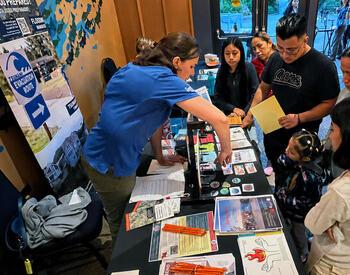
To support student well-being and strengthen early intervention, the Oregon State University Extension Service brought QPR suicide-prevention training directly to youths across Malheur County.
QPR stands for Question, Persuade, Refer. The training teaches participants how to recognize warning signs, ask directly about suicide, offer hope and connect someone to appropriate help.
Two Family and Community Health faculty members earned certification as QPR instructors to offer training for youths and adults across the county. Three OSU Extension interns also completed QPR training and support delivery. Extension partnered with local schools and youth-serving organizations to hold sessions in familiar, supportive settings, using guided practice, age-appropriate scenarios, and time for questions and reflection.
To date, 53 youths have completed QPR training across three Malheur County communities and schools. Trainings have been held at locations including the OSU Extension office, Four Rivers Senior Preparatory and Nyssa Christian Fellowship.
Participants reported increased confidence in recognizing suicide warning signs and a clearer understanding of how to access help for themselves or others. Youths also shared that the training helped them feel more prepared to support friends who may be struggling and more aware of mental health resources available in their schools and communities.
This work was supported by a grant from the Oregon-Idaho High-Intensity Drug Trafficking Area (HIDTA) program, which provides federal funding to strengthen coordinated drug prevention and public safety efforts.
When more young people know how to recognize warning signs and connect peers to help, communities are better positioned to intervene earlier — before mental health concerns become emergencies.
Expanding prevention training through trusted local partners builds local capacity, supports school and community safety and helps reduce avoidable crisis visits and hospitalizations in a county with limited behavioral health resources.