CORVALLIS, Ore. — Life can be tough for plants growing in full sun, poor soil and without supplemental water.
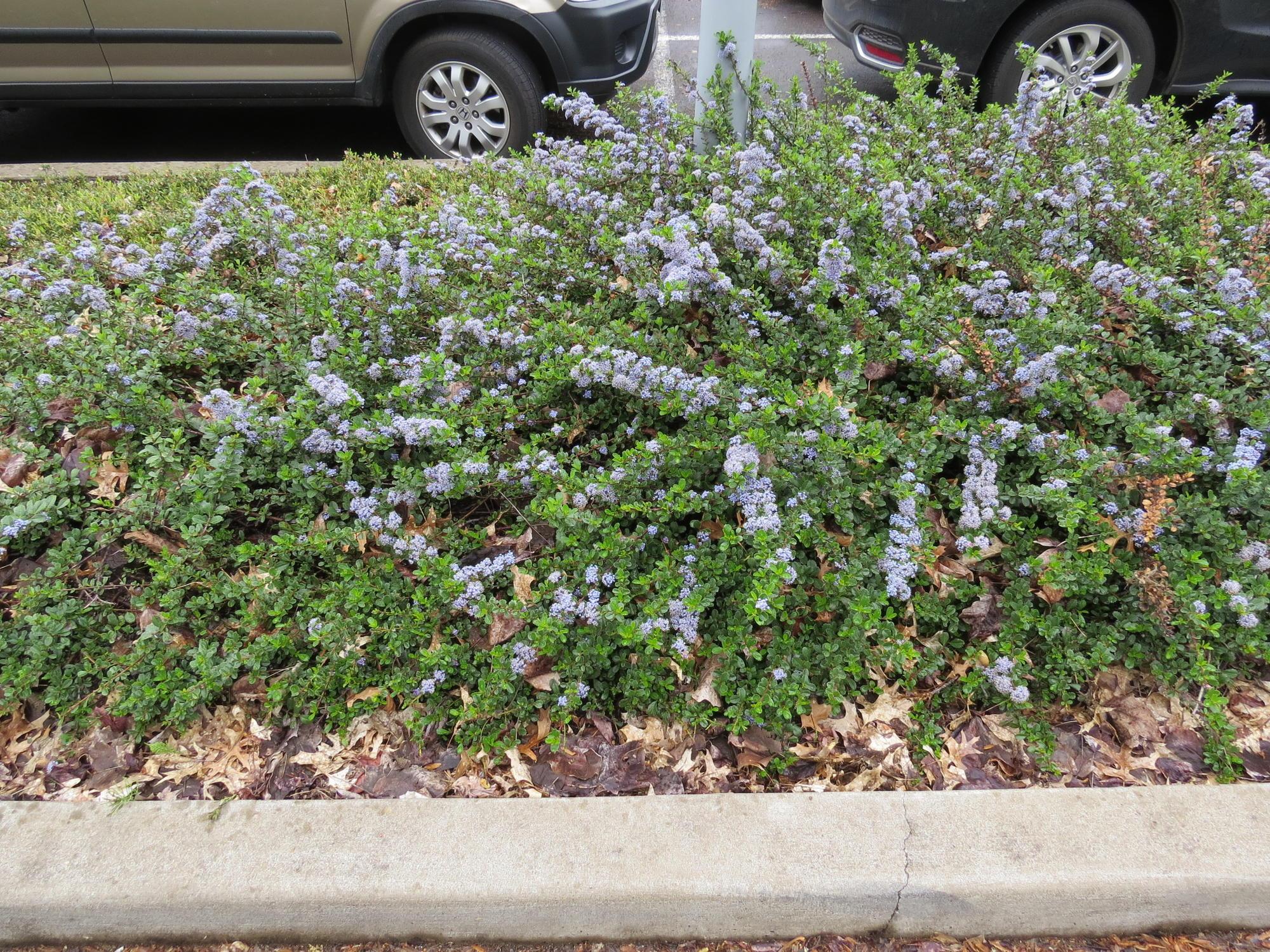
Evergreen shrubs in the genus Ceanothus proved they can handle the challenge when Neil Bell, a horticulturist with the Oregon State University Extension Service, evaluated 45 cultivars at The Oregon Garden.
Bell planted the shrubs with no fertilizer and no irrigation — conditions that mimic dry summer gardens in Western Oregon. At the time, the most widely available options included the large C. thyrsiflorus ‘Victoria’ (syn. ‘Skylark’), which grows to about 9 feet tall and 12 feet wide, and the ground cover species C. gloriosus.
Additional cultivars — including ‘Blue Jeans,’ ‘Marie Simon,’ ‘Dark Star,’ ‘Topaz’ and ‘Tilden Park’ — were also becoming more common in nurseries.
Most plants scored high in the trial. They showed good cold-hardiness through Willamette Valley winters in Zone 8 (10–15°F), abundant flower production and minimal pest or disease problems. A few showed leaf burn during especially early cold snaps before they had hardened off.
“‘Blue Jeans’ is one of the best,” Bell said. “It was never winter damaged and is one of the earliest to bloom.”
Bloom times and colors
Ceanothus generally begin blooming in early spring. ‘Blue Jeans’ starts in early April and continues into July depending on the cultivar. ‘Julia Phelps’ and ‘Dark Star’ bloom from late April through May. ‘Victoria’ follows in late May and into June. Semi-deciduous types such as ‘Marie Simon,’ ‘Gloire de Versailles’ and ‘Topaz’ often continue into July.
Bell noted that dependable blue flowers are a major benefit. “Getting blue into the landscape can be challenging. But when Ceanothus is in bloom, it’s solid, glowing blue.”
Care and planting considerations
Drought tolerance is another strong attribute. The shrubs in Bell’s evaluation received no irrigation. In home landscapes, they should be watered only during the first year as roots establish.
“Watering is the single worst thing you can do for these plants,” Bell cautioned.
Because Ceanothus prefer well-drained soil, gardeners should correct compaction before planting and incorporate 2–3 inches of organic matter at the start. No additional soil amendments or fertilizer are needed. Many species fix their own nitrogen, making them well suited to low-input landscapes in Western Oregon and along the Oregon Coast.
Native range and plant size
Though often associated with California — where they are commonly called California lilac — Ceanothus species grow naturally from Southern California to British Columbia, with deciduous species native to the Midwest and eastern United States. Most produce blue flowers, though white and pink cultivars are available.
Sizes vary widely.
“Because of ‘Victoria,’ everyone thinks of Ceanothus as a gigantic shrub,” Bell said. “But there’s a great range of sizes, from ground covers on up.”
Why gardeners choose ceanothus
“They’re tolerant of poor, dry soils,” Bell said. “They’re evergreen for the most part. You can get a long bloom season if you choose correctly. They attract swarms of beneficial insects and many are hardy in the Pacific Northwest. They’re pretty extraordinary plants.”
Sizes and shades of commonly available Ceanothus
- ‘Blue Jeans,’ 8 feet tall and wide, violet blue
- ‘Dark Star,’ 8 feet tall and wide, cobalt blue
- ‘Julia Phelps,’ 5 feet tall and wide, dark lilac blue
- ‘Victoria,’ 9 feet tall and 12 feet wide, cobalt blue
- C. gloriosus, 2 feet tall and 6 feet wide, light blue
- ‘Topaz,’ 6 feet tall and 8 feet wide, medium blue
- ‘Marie Simon,’ 4 feet tall and wide, pink
Previously titled Drought-tolerant Ceanothus makes a beautiful addition to the garden