In fall 2021, leadership at the Oregon Child Development Coalition (OCDC) identified a need to support healthy eating and positive mealtime environments across its early learning centers in Marion, Polk and Yamhill counties. They reached out to the Oregon State University Extension Service SNAP-Ed program for help providing professional development for their early childhood educators and food service staff.
OSU Extension SNAP-Ed helped early learning professionals build confidence in promoting nutrition and mealtime practices that support children’s well-being — creating positive ripple effects for classrooms, families and communities.
In response, the Extension SNAP-Ed team delivered four bilingual workshops in February and June 2022, reaching a total of 107 OCDC staff. The sessions were based on two lessons from the evidence-based Cooking Matters for Childcare Professionals curriculum: “Positive Mealtime Attitudes” and “Choosing Healthy Foods for Kids.”
The mealtime attitudes session helped participants explore how to create positive mealtime rituals and model supportive behaviors, such as using encouraging phrases to promote healthy food choices. The healthy food session introduced basic nutrition principles using the five food groups, and included instruction on reading nutrition labels — a skill staff could apply when selecting foods for meals and snacks.
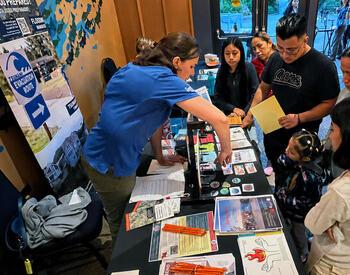
To support OCDC’s emphasis on hands-on “nutrition experiences” for children, the SNAP-Ed team included interactive elements throughout. Educators practiced reading labels to identify whole grains and healthy dairy options. Staff also participated in two sample nutrition experiences that they could later replicate with the children in their care.
Recognizing the language needs of participants, the SNAP-Ed team worked with OCDC to deliver the workshops in both English and Spanish. Presentation slides were updated to include both languages, simultaneous interpretation was provided, and all materials were available in Spanish and English. Bilingual SNAP-Ed staff supported small-group activities and discussions in both languages.
In the Choosing Healthy Foods for Kids sessions, participants were asked to share what they learned and what actions they planned to take. Their responses reflected practical ideas for home and classroom:
- “I learned that there are different ways to make trying new foods engaging and fun.”
- “I will be making an effort to make sure that half my plate is fruit and veggies.”
- “Aprendí a leer las etiquetas de los productos.”
- “Haciendo actividades con ellos como preparando un snack divertido con la ayuda de los niños.”
- “I think I will try the canned, frozen and fresh activity. I loved seeing the difference.”
- “Recetas para que las familias puedan hacer con los niños en casa.”
Participants in the Positive Mealtime Attitudes workshops also shared positive feedback about the training experience:
- “Me gustó mucho la clase por el bienestar de los niños para que reciban sus alimentos saludables en todo momento.”
- “Very informative presentation and love your positive feedback to people’s responses.”
- “Well thought out, provided great time and materials.”
Through this collaborative effort, OSU Extension SNAP-Ed helped early learning professionals build confidence in promoting nutrition and mealtime practices that support children’s well-being — creating positive ripple effects for classrooms, families and communities.