This content is part of a series based on the Northwest Plant Evaluation Program at Oregon State University. The research program has evaluated flowering shrubs for their suitability in landscapes in Western Oregon since 2000. This content highlights plants that were successfully grown without irrigation in the trials and techniques for growing and establishing drought-tolerant plants in the landscape. See more information about the study and drought-tolerant landscape plants for Western Oregon: site selection and preparation.
The trial compared 78 different types of plants within 38 different genera.
The research trial evaluating groundcover plants occurred from 2019 to 2025 at OSU’s North Willamette Research and Extension Center in Aurora, Oregon. The trial compared 78 different types of plants within 38 different genera. These groundcover plants were irrigated only during establishment in the fall of 2019 and 2021 (the trial consisted of 2 sub-trials planted in adjacent spaces two years apart), and were not pruned or fertilized. The plants were grown in full sun on ground with little slope. Information collected about the plants included bloom time, size, and cold hardiness. We have selected the top 5 performing plants for western Oregon landscapes based on our research and describe them below.
Overview of groundcovers
The groundcover plant trial includes a wide selection of shrubs and sub-shrubs which are from multiple plant families. The commonality between the plants is their growth habit of being wider than they are tall, as well as having low water needs and being tolerant of full sun.
However, most of these plants are not of diminutive stature as often comes to mind with the term “groundcover”. Instead, the trial included a number of plants with fairly tall (up to 3 ft), but spreading growth habits. In addition, a major goal of the trial is to evaluate the ability of these plants to thrive in our climate without irrigation, therefore drought-tolerance was an important selection factor.
The plants in the trial have physical adaptations which help them survive in our climate without summer rains or irrigation.
Drought-tolerant groundcovers can be water-wise selections for your garden. Rather than having an exposed area of bare soil, planting groundcover shrubs can provide multiple benefits. These benefits include preventing weed seeds from germinating and reducing potential weed growth, preventing soil erosion, improving soil structure and helping reduce moisture loss from the soil by shading and reducing wind contact with the ground.
The plants in the trial have physical adaptations which help them survive in our climate without summer rains or irrigation. Some characteristics of drought-tolerant plants include hairy leaves which reflect the sun’s bright rays and deep root systems to collect water held far down in the soil. Additional adaptations protect plants from water loss, such as small and/or narrow leaf shapes, and a thick waxy layer on the leaf surface (cuticle).
This trial compares strong-performing low-growing plant selections from previous evaluations, landscape industry standards, and ornamental plants collected in Europe. Plant selections evaluated in previous trials include California lilac, rockroses, manzanitas, and grevillea.
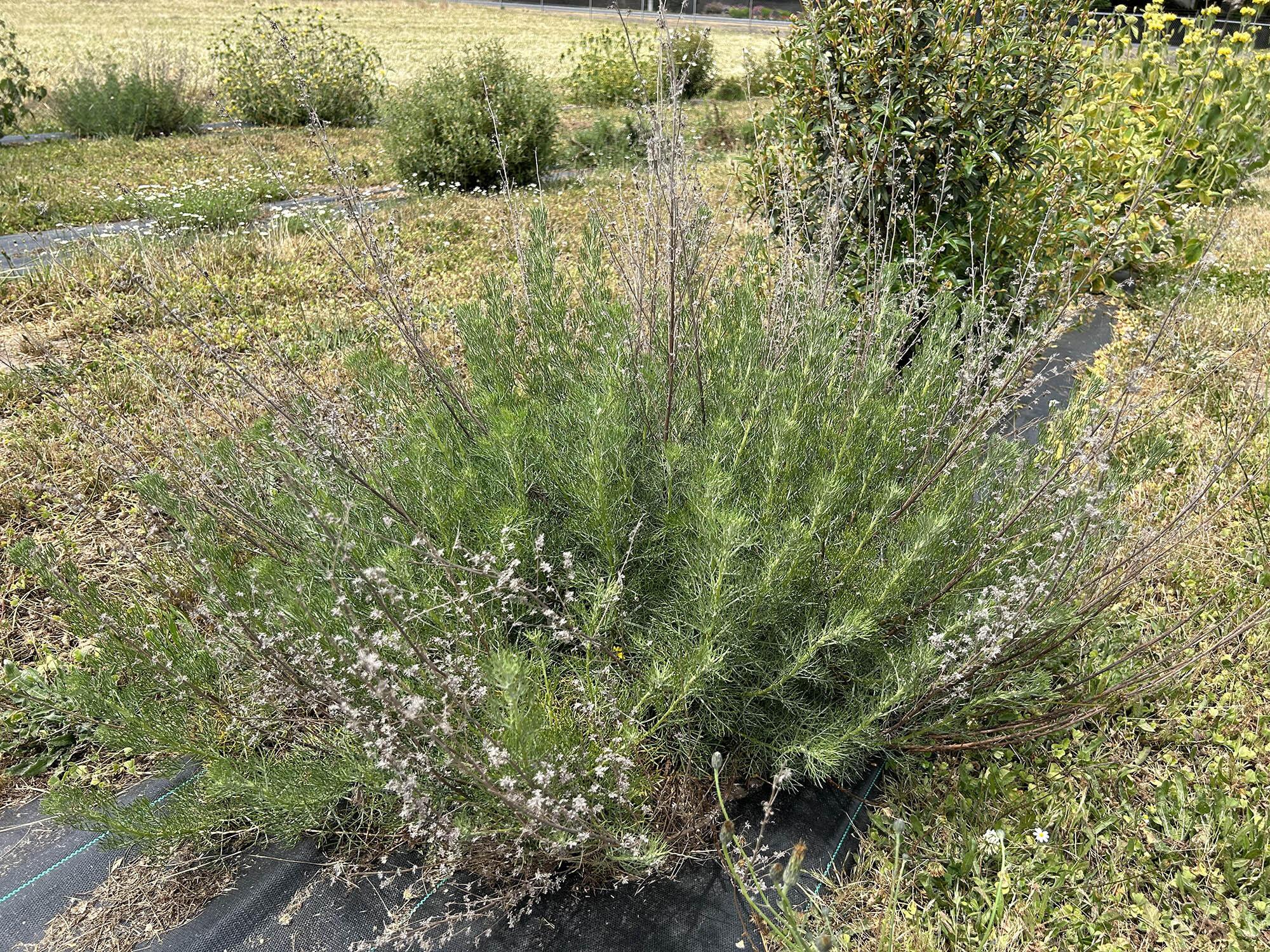
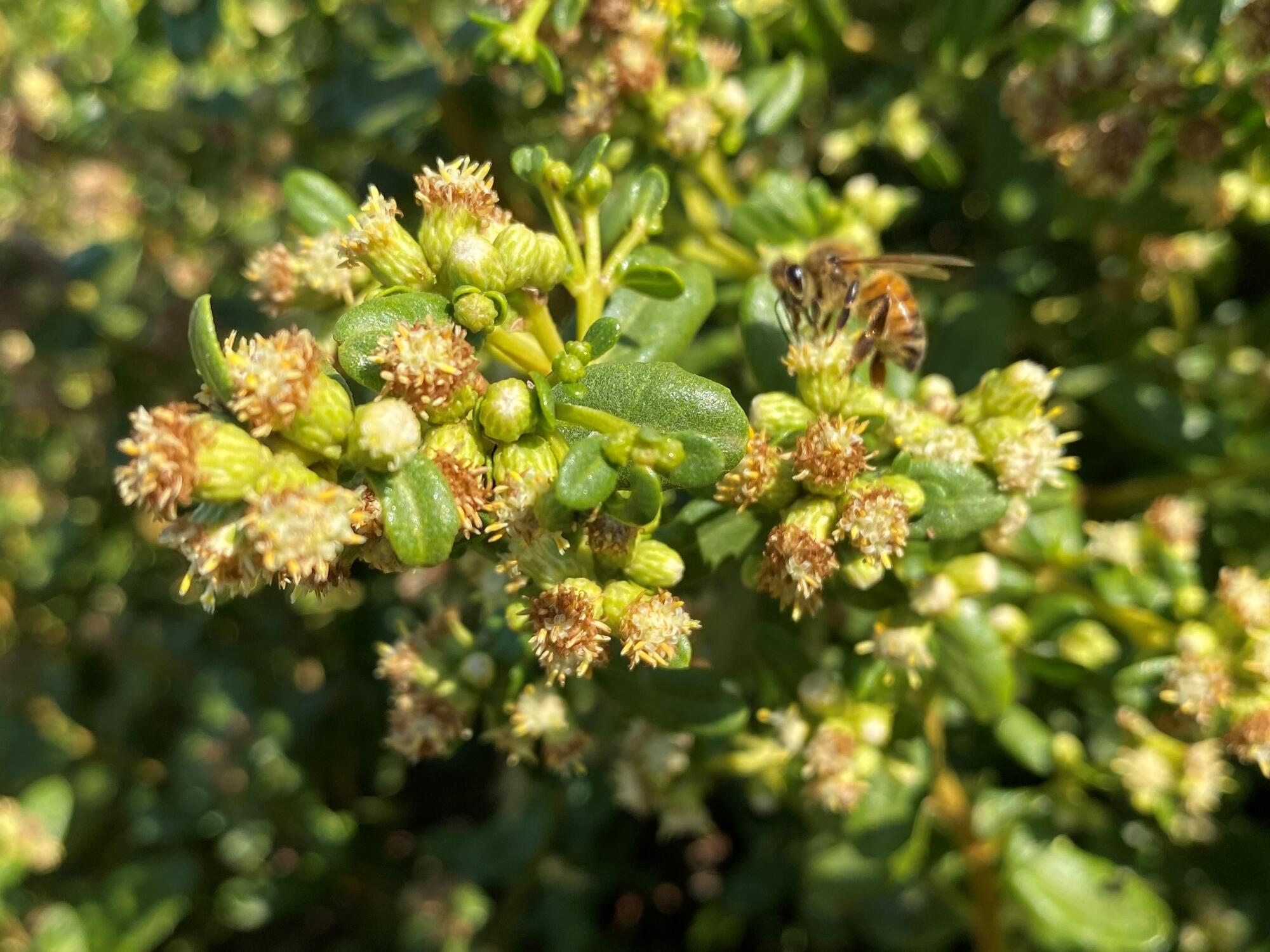
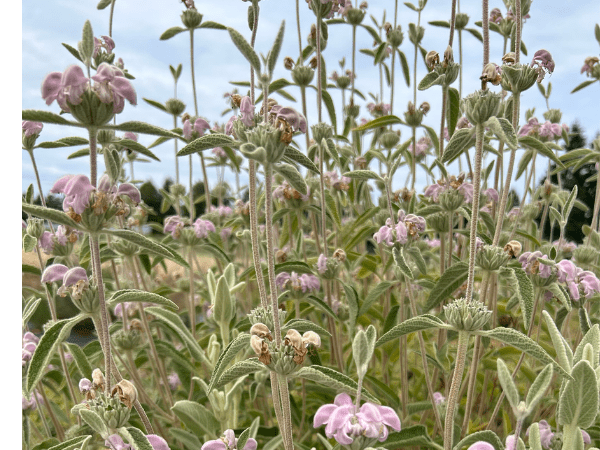
New plants to our trials included native plants such coyote brush, as well as Mediterranean plants collected in England and France such as hairy sage, lavender, and Jerusalem sage.
New plants to our trials included native plants such coyote brush, as well as Mediterranean plants collected in England and France such as hairy sage, lavender, and Jerusalem sage. Industry standard plants are those which are already commonly used in western Oregon landscapes. Industry standard plants chosen for the trial were those known to have lower water requirements. Examples include: wintercreeper euonymus (Euonymus fortunei), Heath (Erica sp.), Heather (Calluna vulgaris), English laurel ‘Mt. Vernon’ (Prunus laurocerasus) and Periwinkle (Vinca minor).
In most cases, these plants did not have the heat or drought tolerance to thrive in unirrigated situations in full sun. Damage was especially pronounced during the heat dome of June 2021 where temperatures in the plot reached 113 °F. The plants of native or Mediterranean origin experienced little to no visible damage from this event. Industry standard plants which maintained high landscape quality included Boxwood (Buxus sinica ‘Tide Hill’) and Sunrose (Helianthemum ‘Henfield Brilliant’).